 ProMapRanker
Best Platforms for Selling Digital Products in 2026

Key takeaways
- Gumroad, Payhip, Lemon Squeezy, and Ko-fi let you start for free, which makes them the lowest-risk way to test whether a digital product will sell.
- Shopify and WooCommerce give you the most control over a branded store, but they need more setup and, for Shopify, a monthly subscription.
- Podia and Kajabi suit course and membership businesses that want email, community, and checkout in one place, at a higher monthly cost.
- Fees are the real comparison, not only the monthly price. Add platform fees, payment processing, and any marketplace commission before you choose.
Quick comparison
| Pick | Great for | Pricing starts at | Free tier | |
|---|---|---|---|---|
 Gumroad | First-time sellers of downloads | Free | Yes | Visit |
 Payhip | Ebooks, templates, and small courses | Free | Yes | Visit |
 Lemon Squeezy | Software and SaaS with global tax handling | Free | Yes | Visit |
 Shopify | Full branded ecommerce stores | $39 per month | Free trial | Visit |
 Podia | Courses, downloads, and community | $39 per month | Free trial | Visit |
 Kajabi | Premium course and coaching businesses | See website | Free trial | Visit |
 Etsy | Printables and templates with built-in traffic | Free | Yes | Visit |
 WooCommerce | WordPress users wanting full control | Free | Yes | Visit |
 Ko-fi | Artists and small creators | Free | Yes | Visit |
 Sellfy | Digital files plus print on demand | $29 per month | Free trial | Visit |
The best platforms for selling digital products
Selling a digital product can mean a PDF, a template, a course, a software licence, or a membership. The platforms below differ mainly in fees, control, and how much marketing help they provide. Start with your product type, then compare the total cost per sale.
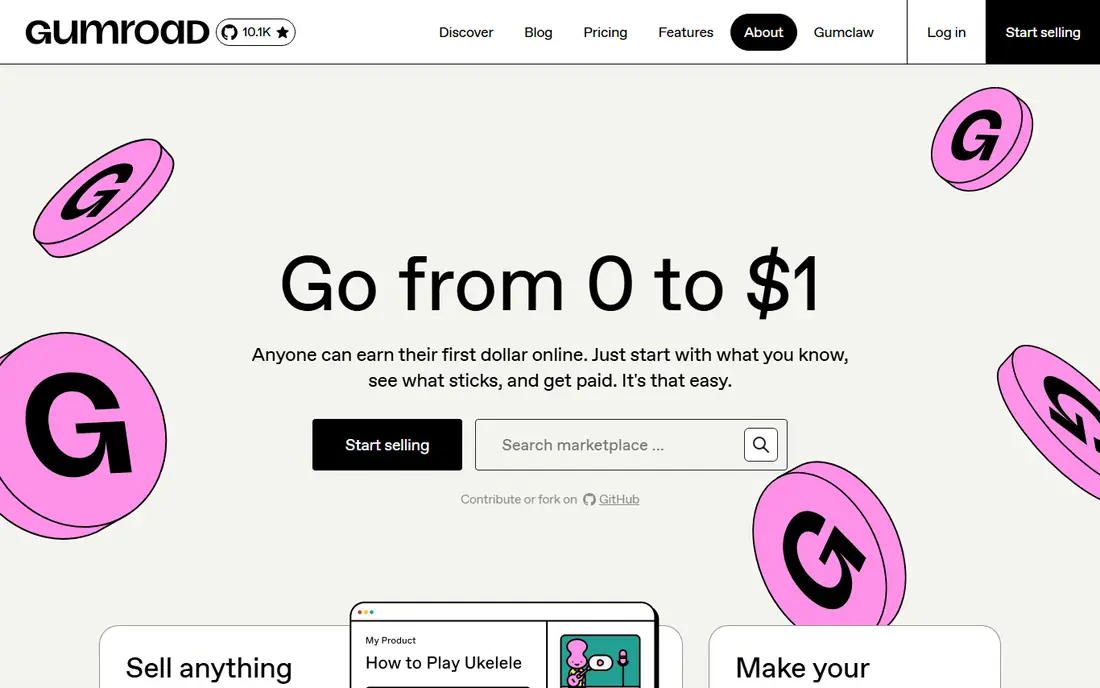
Gumroad is the easiest way to start selling a digital download. You can list a file, set a price, and share a link, without building a store or paying a monthly subscription. As merchant of record, Gumroad also handles sales tax in many cases, which removes a major headache for small sellers. That simplicity is why many first-time creators choose it. The cost appears at scale. A 10 percent fee plus 50 cents per direct sale is high once you sell regularly, and Discover sales cost more. Gumroad is best for testing a product and for low-volume sales. Once sales grow, compare Payhip, Lemon Squeezy, or a self-hosted store on total fees.
- Free to start with no monthly fee
- Handles checkout and sales tax as merchant of record
- Simple product pages
- 10 percent fee plus 50 cents per direct sale, higher on Discover sales
- Limited store customisation
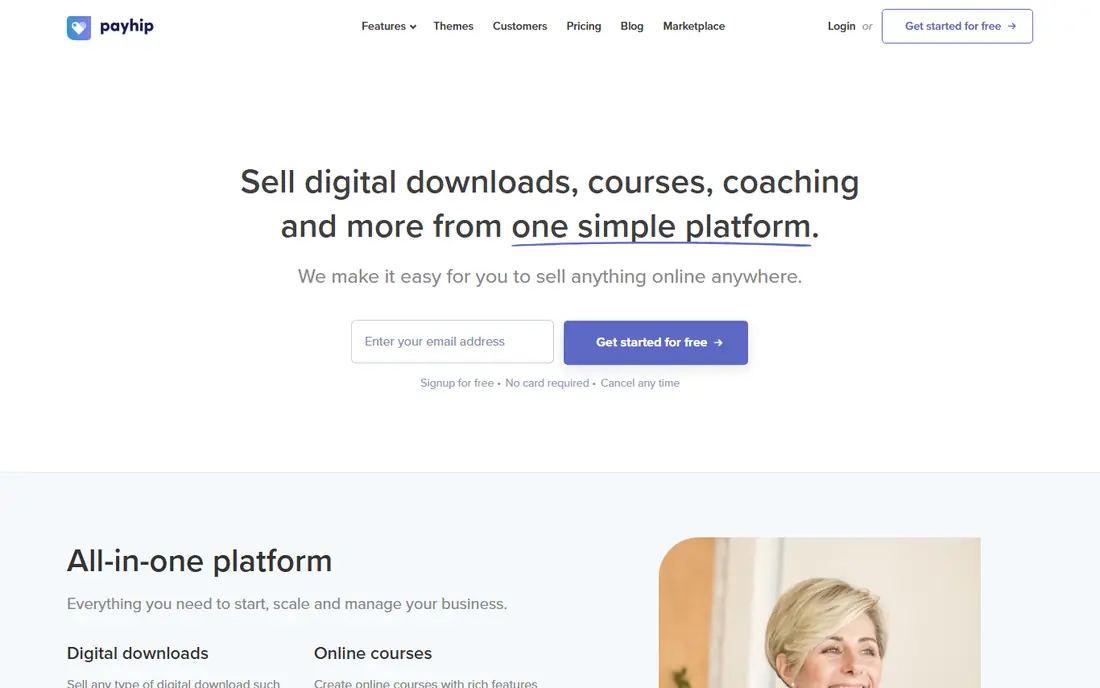
Payhip is a strong low-cost alternative to Gumroad for ebooks, templates, and small courses. The free plan charges a transaction fee per sale, while paid plans reduce that fee to zero on the highest tier. VAT handling for EU and UK sales is a practical benefit for sellers with international buyers. Affiliate support also helps if others promote your products. The storefront is functional rather than polished, and you will still need to drive your own traffic. Payhip does not provide a large marketplace audience like Etsy. If you already have an audience on email or social media, however, the lower fees and simple setup make it easy to recommend.
- Free plan available
- Lower transaction fees than Gumroad
- EU and UK VAT handling
- Affiliate tools
- Storefront design is basic
- Fewer built-in marketing tools than larger course platforms
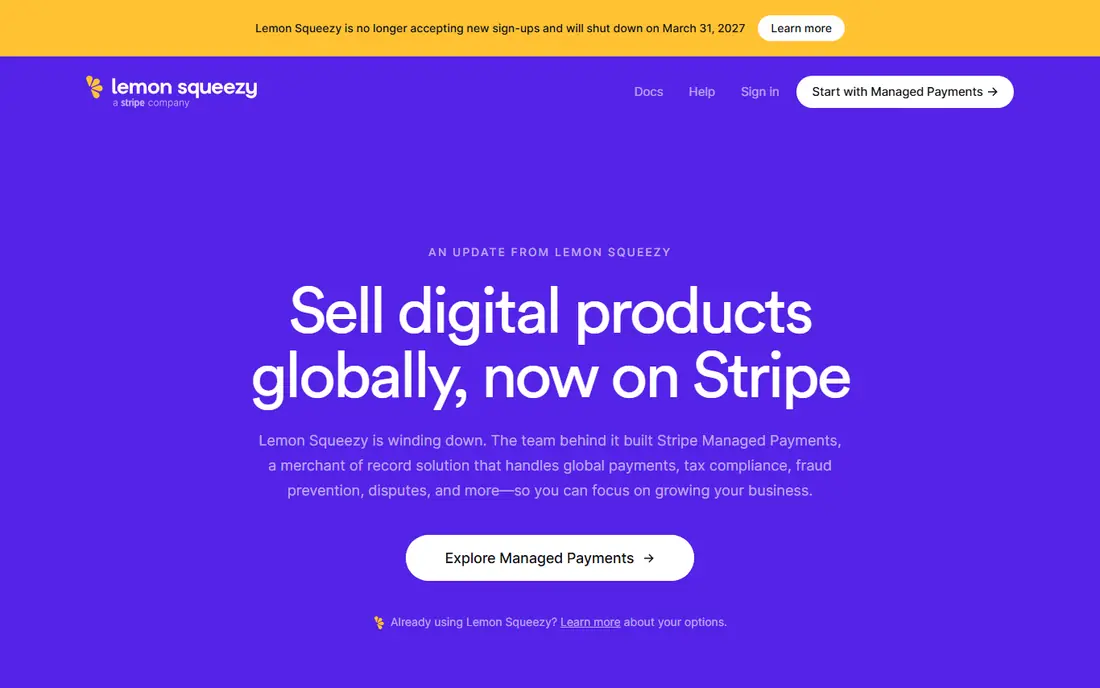
Lemon Squeezy suits software sellers, SaaS founders, and developers selling licences, plugins, or digital tools. As merchant of record, it handles global sales tax, which is a major advantage when selling software worldwide. Licence key delivery, subscriptions, and checkout are built for software workflows rather than adapted from a general store. The per-sale fee, reported as 5 percent plus 50 cents, hurts on very low-price items, where the fixed fee takes a large share. For higher-price software and subscriptions, the tax handling often outweighs that cost. Check the current fee schedule before you list, because platform fees in this category change.
- Merchant of record handling global sales tax
- Licence key support
- Free to start with per-sale fees
- Per-sale fee adds up on low-price items
- Less suited to large course businesses than Podia or Kajabi
Shopify is the right choice when you want a full store under your own brand, with control over design, pages, and customer experience. It handles physical and digital products, supports discount codes, email, and multi-channel selling, and offers a large app library for extra features. For a growing brand, that control and scale matter. Digital delivery is the weak point out of the box. You will usually need an app for secure file delivery or licence handling, and that adds cost and setup. The $39 per month Basic plan is also a fixed cost before you make a sale, so Shopify suits sellers with a product range and a marketing plan, not a single test product.
- Full branded store and checkout
- Huge app ecosystem
- Multi-channel selling
- Monthly subscription plus payment fees
- Digital delivery usually needs an app
- More setup than Gumroad
Podia is an all-in-one platform for creators who sell courses, downloads, and memberships together. Email marketing, community, and checkout are included, so you do not need to connect several tools to run a small course business. Paid plans charge no platform transaction fee, which helps once sales are regular. The monthly price means Podia is not ideal for testing a single low-price product. It also lacks the depth of a specialist learning platform or a full ecommerce store. Choose Podia when you plan to sell courses and memberships over time and want one system for content, email, and community.
- Courses, downloads, memberships, and email in one place
- No transaction fees on paid plans
- Community features
- Monthly cost before sales
- Site builder and analytics are simpler than specialist tools
Kajabi is built for premium course and coaching businesses that want funnels, email automation, websites, courses, and community in one platform. Its marketing tools, including landing pages and email sequences, are more complete than those on Podia or Teachable-style platforms. For a business that sells high-price courses, that integration can justify the cost. The price is the main barrier. Kajabi plans have been reported in the $149 to $179 per month range and higher, so confirm the current plan on the site before you budget. It is also more system than a seller of a single ebook or template needs. Shortlist Kajabi only when courses and coaching are your main business.
- Complete course, funnel, email, and community system
- No platform transaction fees on Kajabi Payments
- Strong marketing tools
- Highest monthly cost on this list
- Learning curve
- Overkill for a single download
Etsy is the marketplace option for printables, planners, templates, and digital art. Buyers already search Etsy for those products, so a new seller can get traffic without building an audience first. Listing is simple, checkout is trusted, and digital delivery is handled for instant downloads. For design-led products, that traffic is hard to match. Fees stack up: a listing fee, a transaction fee, and payment processing, plus advertising costs if you promote listings. Competition is also intense in popular categories such as planners and wedding templates. Etsy works best as a discovery channel, often paired with your own store for repeat buyers.
- Large built-in buyer traffic
- Trusted checkout
- Easy listing for printables and templates
- Transaction and listing fees plus payment processing
- High competition
- Limited store branding
WooCommerce is a free WordPress plugin that turns a WordPress site into a store, with no platform fee per sale beyond payment processing. You own the store, the customer data, and the design, and you can add extensions for digital delivery, subscriptions, memberships, and courses. For WordPress users, that control and low ongoing platform cost are major advantages. The cost is time and responsibility. You need hosting, updates, backups, and security, and you must configure digital delivery yourself. WooCommerce suits sellers who already run WordPress or who want full ownership and are comfortable with technical setup. If you want a hosted, hands-off start, Gumroad or Payhip will be easier.
- Free plugin with no platform transaction fees
- Full ownership of store and data
- Huge extension library
- Needs WordPress hosting and maintenance
- Setup and security are your responsibility
Ko-fi started as a tipping platform and now lets creators sell digital downloads, offer memberships, and take commissions. The free plan is genuinely useful for small creators, with no platform fee on donations and, on the paid Gold plan, no platform fee on shop sales either. Payment processing fees still apply. For artists selling a few digital items alongside tips, Ko-fi is a low-friction home. It is not a full course platform or software store. Product pages, checkout, and delivery are simpler than Gumroad or Payhip in some respects, and there is no large marketplace audience. Choose Ko-fi when tips and small digital sales matter more than a full store or course system.
- Free to start
- No platform fee on donations and on Gold
- Tips, shop, and memberships in one place
- Shop and course features are basic
- Not built for large course or software businesses
Sellfy suits creators who sell digital files and also want print-on-demand merchandise from the same store. There are no platform transaction fees beyond payment processing, which helps sellers with regular sales. The storefront is simple to set up, and product pages, discount codes, and basic marketing tools are included. The $29 per month starting price means Sellfy is not the cheapest way to test a single product. Its course and community features are also thinner than Podia or Kajabi. It fits best when you already sell, or plan to sell, both digital files and physical merchandise under one brand.
- No platform transaction fees
- Digital products plus print on demand in one store
- Simple storefront
- Monthly cost before sales
- Smaller ecosystem than Shopify
- Limited course depth
How we picked these
We compared official pricing pages, fee schedules, and product documentation, and we selected platforms that are active in October 2026 and clearly support digital product sales. We included free-start platforms, marketplaces, course platforms, and self-hosted options, because product type decides the right platform more than brand alone. Where fees were conflicting across sources, we noted the range or wrote See website rather than presenting a disputed figure as fact.
How to choose a platform for your product
Start with the product, not the platform. A PDF or template needs simple delivery and low fees, which points to Gumroad, Payhip, or Etsy. A course needs lessons, progress, and community, which points to Podia or Kajabi. Software needs licence keys and tax handling, which points to Lemon Squeezy. A brand with many products needs a full store, which points to Shopify or WooCommerce. Then work out the total cost per sale at your expected volume and price. A free plan with a 10 percent fee can cost more than a $39 monthly plan with no fee once you sell regularly. Finally, check who brings the buyers. Marketplaces bring traffic but take fees and limit branding, while your own store keeps control but needs your own marketing. Many sellers use both: a marketplace for discovery and their own store for repeat sales.
Frequently asked questions
What is the best platform for selling digital products?
It depends on the product. Gumroad and Payhip lead for simple downloads, Podia and Kajabi lead for courses, Lemon Squeezy leads for software with global tax handling, and Etsy leads for printables with built-in traffic. Shopify and WooCommerce lead when you want a full branded store. Match the platform to product type first, then compare fees.
Can I sell digital products for free?
Yes, Gumroad, Payhip, Lemon Squeezy, Etsy, WooCommerce, and Ko-fi all offer a free way to start, though most charge a transaction fee, listing fee, or payment processing fee per sale. Free plans are best for testing a product. Once sales grow, a paid plan with lower or no transaction fees often costs less overall.
How much does Shopify cost to sell digital products?
Shopify Basic starts at $39 per month, plus payment processing fees, and digital delivery usually needs an app. That fixed cost makes sense for a brand with regular sales, but not for testing a single product. Gumroad or Payhip are cheaper starting points for a first product.
Do I need to handle sales tax when selling digital products?
It depends on where you sell and which platform you use. Merchant-of-record platforms such as Gumroad and Lemon Squeezy handle sales tax in many cases, while Shopify, WooCommerce, and Payhip leave more tax responsibility with you, except for specific VAT handling. Check your platform's tax documentation and get professional advice if you sell internationally.
Is Etsy or my own store better for digital products?
Etsy gives you built-in traffic and trusted checkout, but charges listing and transaction fees and limits branding. Your own store on Shopify or WooCommerce gives you control and customer data, but you must bring your own traffic. Many sellers start on Etsy for discovery and add their own store as sales grow.
Sources
See where you really rank - block by block
ProMapRanker scans Google Maps across a grid of your service area. Simple monthly plans from $19, white-label on every plan.
Start freeKeep reading
 zoho inventory alternatives
6 Alternatives to Zoho Inventory, Compared on Price and Fit
Zoho Inventory alternatives: 6 tools compared on price, free plans and fit. Katana leads the list for manufacturers. Fit and flaws are laid out for each entry.
Read → zoho crm alternatives
Best Zoho CRM Alternatives (2026)
Need Zoho CRM alternatives? We compare 7 tools on cost, free access and who each suits. Every pick gets a straight assessment. Built for quick decisions.
Read → zelle alternatives
Best Zelle Alternatives in 2026
Compare the best Zelle alternatives for sending money to friends, paying sellers and moving funds abroad, with honest notes on fees, speed and safety in 2026.
Read →