 ProMapRanker
Best Platforms for MLOps for Generative AI (2026)

Open source model tracking and deployment · Pricing starts at: See website
Direct answer
MLflow is the first pick on this list for open source model tracking and deployment. Listed starting prices: Hugging Face from $9 a month. For a different need, Hugging Face covers open source model hub and community and Databricks covers unified data and AI governance. Details, prices and limits for the rest of the 6 tools are below.
Short on time? The summary and table above give the quick view of 6 tools for platforms for MLOps for generative AI, and the profiles that follow give the detail behind each entry.
Key takeaways
- MLflow is the opening pick, best for open source model tracking and deployment.
- Check the limits for IBM watsonx before you commit: may need IBM ecosystem integration.
- Google Cloud Vertex AI suits building and governing AI agents.
- Hugging Face is the only tool of the 6 with a free plan.
Quick comparison
| Pick | Great for | Pricing starts at | Free tier | |
|---|---|---|---|---|
| MLflow | Open source model tracking and deployment | See website | Not stated | Visit |
 Hugging Face | Open source model hub and community | $9 a month | Yes | Visit |
 Databricks | Unified data and AI governance | See website | Not stated | Visit |
 IBM watsonx | Enterprise AI governance and trust | See website | Not stated | Visit |
 Dataiku | Collaborative AI orchestration and governance | See website | Not stated | Visit |
 Google Cloud Vertex AI | Building and governing AI agents | See website | Not stated | Visit |
Every option for platforms for MLOps for generative AI explained
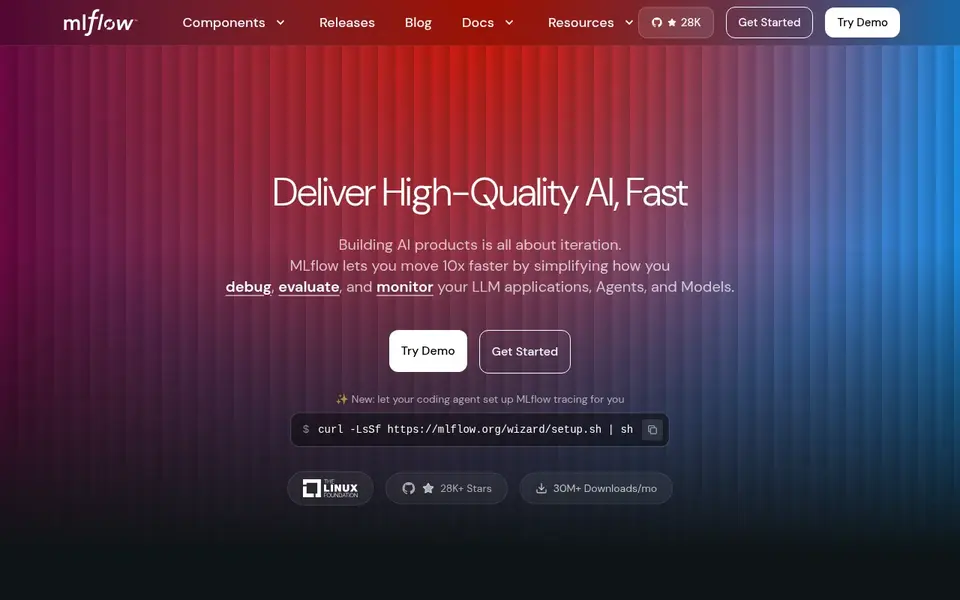
In short, MLflow is for open source model tracking and deployment. As an open source project, MLflow may need significant self-management and lacks the out-of-the-box enterprise features of commercial products.
Where it falls short: May lack enterprise support without extra services.
MLflow is an open source AI product for agents, LLMs, and models, offering tools for experiment tracking, model packaging, and deployment. Pricing for MLflow is not stated here, so ask the vendor for current figures. As for free access: Not stated.
- Open source AI product
- Supports agents, LLMs, models
- Needs self-management for full features
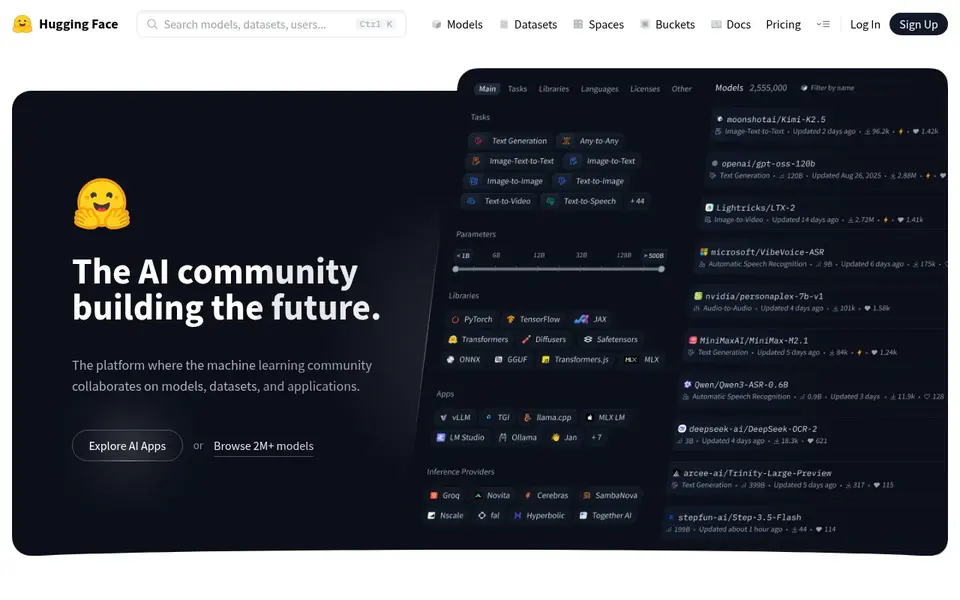
Hugging Face serves open source model hub and community. Hugging Face is a community system on a journey to advance and democratize artificial intelligence through open source and open science. It is well suited to teams that want access to a broad set of pre-trained models, datasets, and community-driven resources, and it frequently serves as a central hub for generative AI model discovery and experimentation.
Teams needing thorough pipeline management may have to complement it with other tools. Whereas Hugging Face supplies tools for model hosting and inference, it is not a full-fledged MLOps system for enterprise governance and orchestration. On cost, Hugging Face starts like this: $9 per month. Hugging Face has a free plan.
Where it is weaker: May need extra tools for deployment.
- Focus on open source and open science
- Large community and model hub
- Less emphasis on end-to-end MLOps
Databricks is designed for unified data and AI governance. The system's breadth means it can be complicated and may need dedicated resources to handle.
Teams seeking a lighter, more focused MLOps tool might consider alternatives, but Databricks is a good fit for enterprises already invested in Spark and Delta Lake ecosystems. Pricing for Databricks is not stated here, so ask the vendor for current figures. Trial and free access: Not stated.
Watch-outs: Can be complicated for small teams.
- Eases ETL, warehousing, governance
- Data-centric approach to building AI
- May need significant setup for full benefits
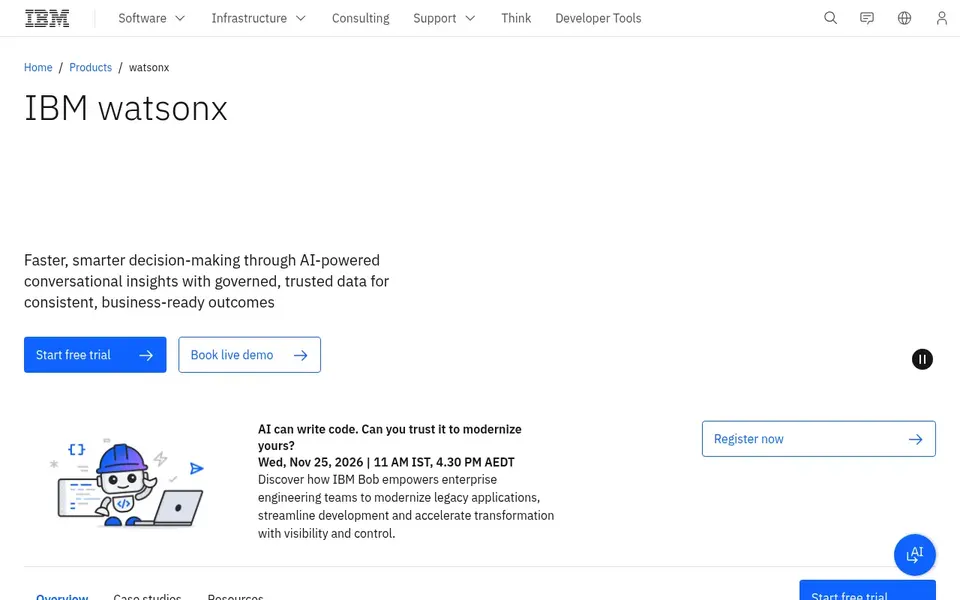
IBM watsonx was built for enterprise AI governance and trust. It fits organizations that prioritize governance and trusted data, especially those in regulated industries looking to deploy generative AI responsibly.
As a portfolio, watsonx may involve multiple components and integration efforts, which can be complicated. IBM watsonx does not show a starting price in this comparison, so check the vendor site for current pricing. Trial and free access: Not stated.
What to check first: May need IBM ecosystem integration.
- Portfolio of AI products for building applications
- Handles trusted data and governs AI
- Can be complicated for smaller organizations
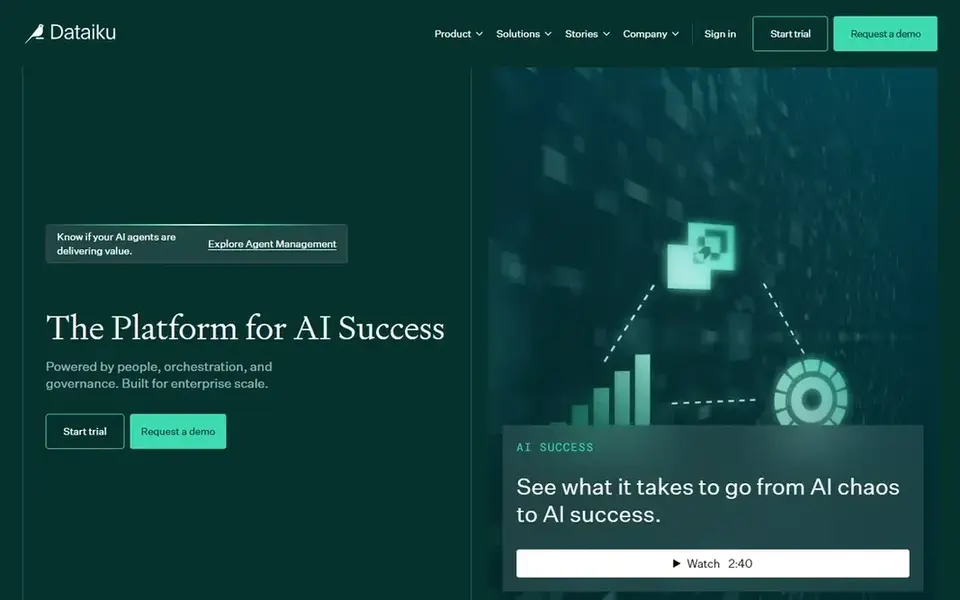
Dataiku targets collaborative AI orchestration and governance. It suits organizations looking for a collaborative environment that bridges data scientists, engineers, and business stakeholders, with governance features to handle generative AI projects responsibly.
Drawbacks to consider: Can be expensive for small teams.
Pricing for Dataiku is not stated here, so ask the vendor for current figures. On free options: Not stated.
- Supports collaborative workflows
- Unites people, orchestration, governance
- May have a ramp-up time for non-technical users
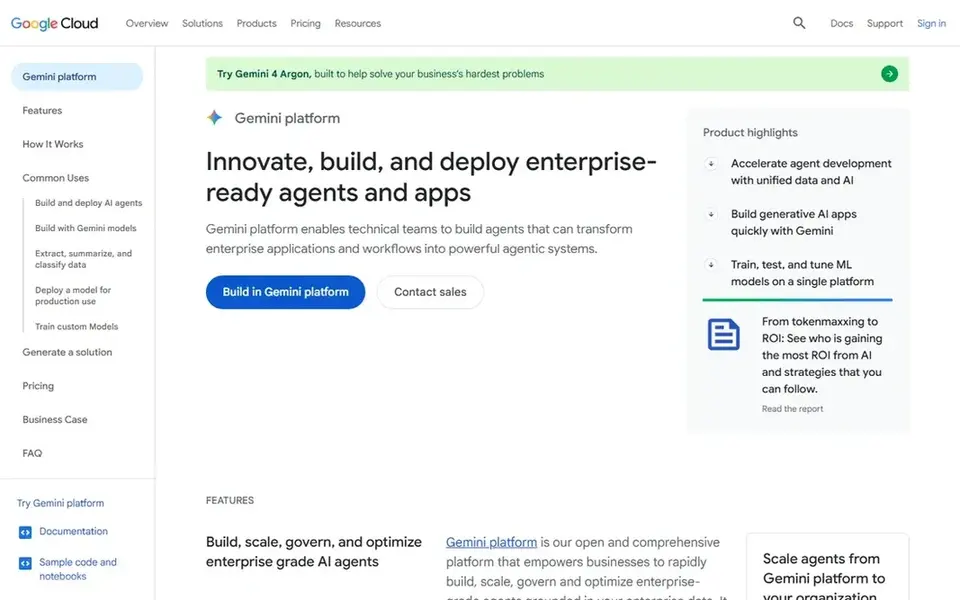
Choose Google Cloud Vertex AI for building and governing AI agents. Google Cloud Vertex AI is described as a full platform for developers to build, scale, govern, and optimize agents.
Drawbacks to consider: Tied to Google Cloud ecosystem.
Highlights: governing agents.
Beyond that, teams outside the Google Cloud ecosystem may find integration challenging, so consider it when your infrastructure aligns with Google Cloud. Vertex AI is closely tied to Google Cloud, which can be a limitation for multi-cloud or on-premises strategies. Check the vendor site for Google Cloud Vertex AI pricing; none is listed in this comparison. As for free access: Not stated.
- Integrated with Google Cloud services
- Supports building, scaling
- May have a ramp-up time for new users
What to check before you buy
- Confirm the entry price on the vendor page. For MLflow, Databricks, IBM watsonx and others that means a quote rather than a fixed price.
- Test the free plan from Hugging Face against your real workload before relying on it.
- Read the limits listed for MLflow first: needs self-management for full features.
- A short pilot of Google Cloud Vertex AI with your real workflow tells you more than a feature table.
- See whether Hugging Face offers onboarding or training, and whether it is included in the price.
Frequently asked questions
What is the cheapest option for platforms for MLOps for generative AI in this list?
On published monthly entry prices, Hugging Face is the lowest here at $9 per month. Entry price is only part of the cost, because seats, add-ons and billing terms can change the total. For the full picture, the cards above cover all 6 entries of this platforms for MLOps for Generative AI list, including price, free plan and limits.
How are the tools for platforms for MLOps for generative AI ordered?
MLflow sits first and Google Cloud Vertex AI last because the order follows typical fit for platforms for MLOps for generative AI, then price clarity and free access. It is a judgement call, so read each profile for fit and limits.
Can I try these tools before paying?
Often, yes. Hugging Face has a free plan. Use your own data and a real task during the test, and check what the free tier or trial limits before you rely on it.
Which options for platforms for MLOps for generative AI have a free plan?
Hugging Face is the only tool in this list with a free plan. Free plans usually cap users, projects or features, so check the limits on the vendor page. Prices, free plan details and limits for all 6 tools in this platforms for MLOps for Generative AI roundup sit on the individual cards above.
What governance features should I look for in a MLOps product?
Look for capabilities for example model lineage tracking, access controls, audit trails, and bias detection. Products like IBM watsonx and Dataiku highlight governance as a core strength, but evaluate based on your regulatory and organizational requirements.
Sources
See where you really rank - block by block
ProMapRanker scans Google Maps across a grid of your service area. Simple monthly plans from $19, white-label on every plan.
Start freeBrowse all guides
← Best Enterprise AI Assistants Software for Startups in 2026Top Elicit Alternatives for 2026, With Prices →
 best ai assistant apps in japan
Best AI Assistant Apps in Japan in 2026
Compare 5 picks for the best AI assistant apps in japan, with prices, free plans and who each fits. Weaknesses are named for every tool. Costs up front.
Read → best ai asset management software
Best AI Asset Management Software: 2026 Prices and Picks
Comparing the best AI asset management software? 6 contenders, each with entry cost, free tier and best-fit buyer. Pros and cons for every tool. Clear verdicts.
Read → best ai agent browser
Top 5 AI Agent Browser, Compared on Price (2026)
5 tools for the best AI agent browser, compared on pricing, free plans and best-fit use. Price notes and drawbacks come with each one. Read the profiles.
Read → best ai friend app
Best AI Friend App in 2026: 9 Apps Compared
Looking for the best ai friend app? We compared 9 AI companions on conversation quality, memory, privacy, and price to help you choose with confidence.
Read → best bot detection software
Best Bot Detection Software in 2026
Compare the best bot detection software in 2026 for legitimate defence against bots, scraping, and account abuse, with pricing and fit notes. See our picks.
Read → best ai search visibility optimization tools
Best AI Search Visibility Optimization Tools in 2026
Compare the best ai search visibility optimization tools for brands and agencies, from Profound and Peec AI to Otterly, Scrunch and AthenaHQ today now.
Read →More in AI Tools · All guides A to Z by date · Latest guides