 ProMapRanker
Best Platforms for Influencers in 2026

Key takeaways
- GRIN and Shopify Collabs are strongest for ecommerce brands, while Aspire suits ambassador and UGC programs that need repeat creator content.
- CreatorIQ suits enterprise programs with compliance needs, Upfluence suits brands that want customer-to-creator discovery, and Modash suits research-first teams.
- Creator.co and Heepsy lower the barrier for small brands and micro-influencers, though their campaign tools are lighter than enterprise suites.
- Most brand platforms use custom pricing, so request a quote for your creator volume and contract length before you compare totals.
Quick comparison
| Pick | Great for | Pricing starts at | Free tier | |
|---|---|---|---|---|
 GRIN | Ecommerce brands on Shopify | See website | No | Visit |
 Aspire | Ambassador and UGC programs | See website | No | Visit |
 CreatorIQ | Enterprise creator intelligence | See website | No | Visit |
 Upfluence | Finding customers who can create | See website | No | Visit |
 Creator.co | Small teams and micro-influencers | See website | Yes | Visit |
 Shopify Collabs | Shopify brands and affiliates | Free | Yes | Visit |
 Modash | Creator research and vetting | See website | No | Visit |
 Heepsy | Affordable creator discovery | $69 per month | Free trial | Visit |
The best platforms for influencers
We compared brand-side platforms for discovery and campaign management with creator-friendly tools, so both brands and influencers can see where each platform fits.
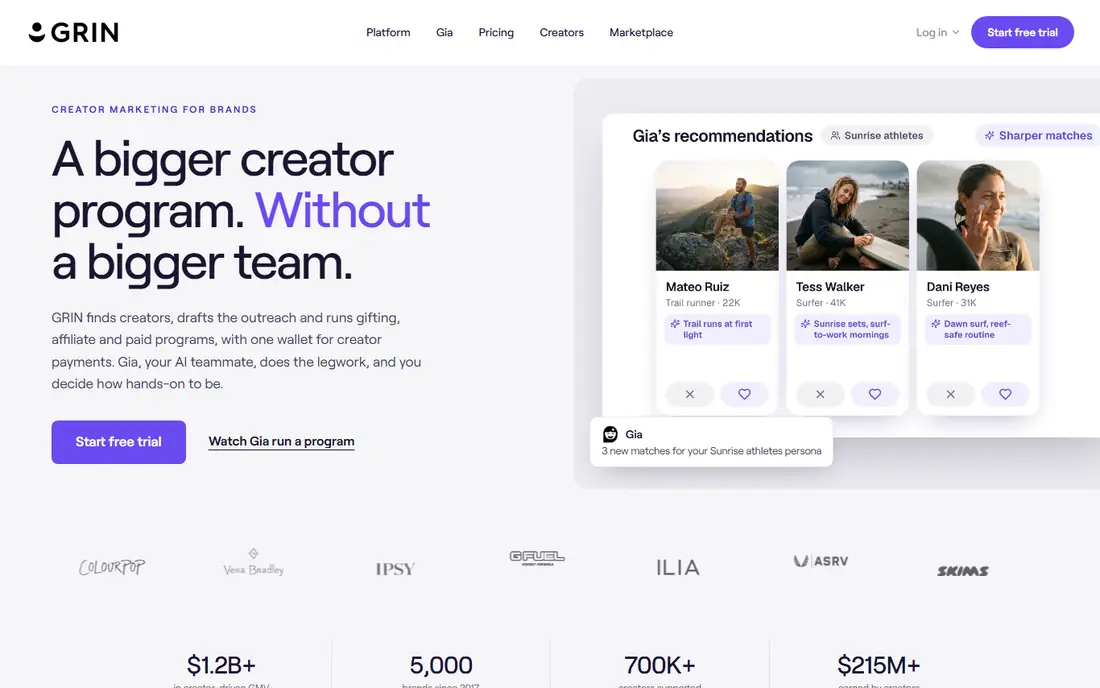
GRIN is built for ecommerce brands, with a creator CRM that ties influencer work to Shopify orders, product seeding, and affiliate sales. Brands can find creators, send products, track discount codes and links, and pay creators without juggling spreadsheets. That direct link to store revenue is why many direct-to-consumer brands choose it.
The main barrier is pricing: GRIN uses custom pricing, so small brands need a sales conversation before they know the cost. It is also less useful for brands without an online store, because much of its value comes from ecommerce tracking. For Shopify brands running regular creator programs, GRIN is a strong contender.
- Creator CRM with Shopify integration
- Product seeding and affiliate tracking
- Payments and reporting in one place
- Custom pricing with no public starting price
- Better for ecommerce than for non-store brands
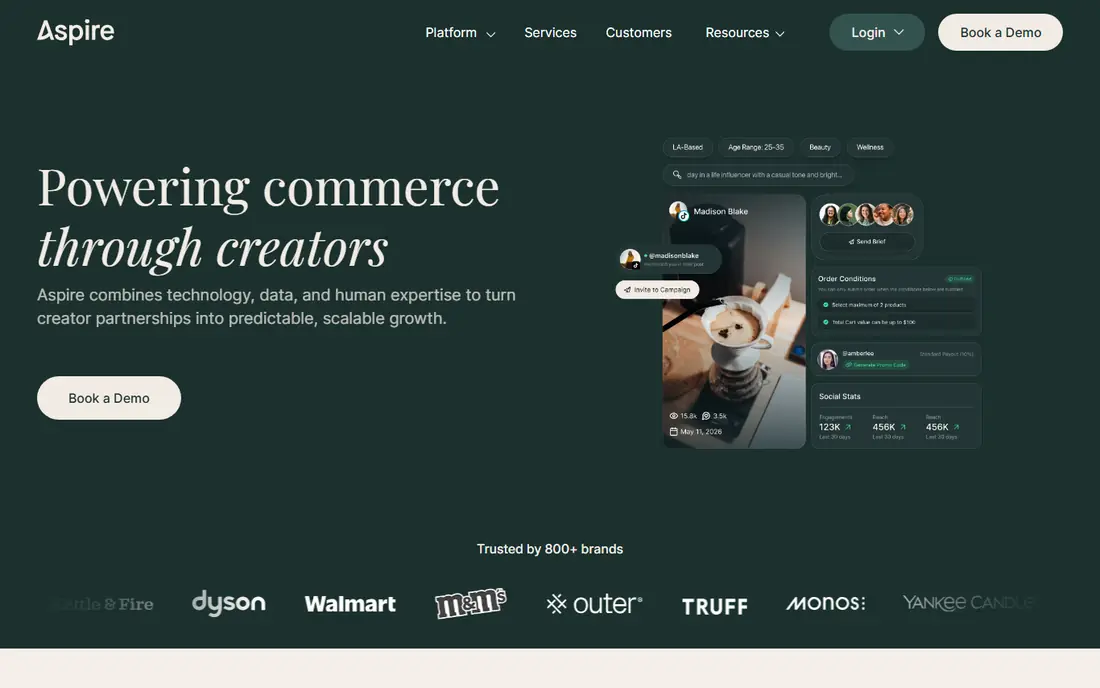
Aspire helps brands run ambassador programs and user-generated content campaigns, with a marketplace for finding creators and tools for briefs, content approval, and payments. Brands can build longer-term relationships rather than one-off posts, and they can reuse creator content in ads when rights are agreed. That focus suits brands that need steady content, not just reach.
Aspire uses custom pricing, and entry costs reported by third parties suggest it suits mid-size and larger brands better than tiny teams. Campaign setup also takes care: briefs, rights, and usage terms need to be clear before creators start. For brands that want repeat creator partnerships, Aspire is worth a demo.
- Creator marketplace and campaign workflow
- UGC and ambassador management
- Content rights and reporting tools
- Custom pricing
- Smaller brands may find entry costs high
- Campaign setup takes planning
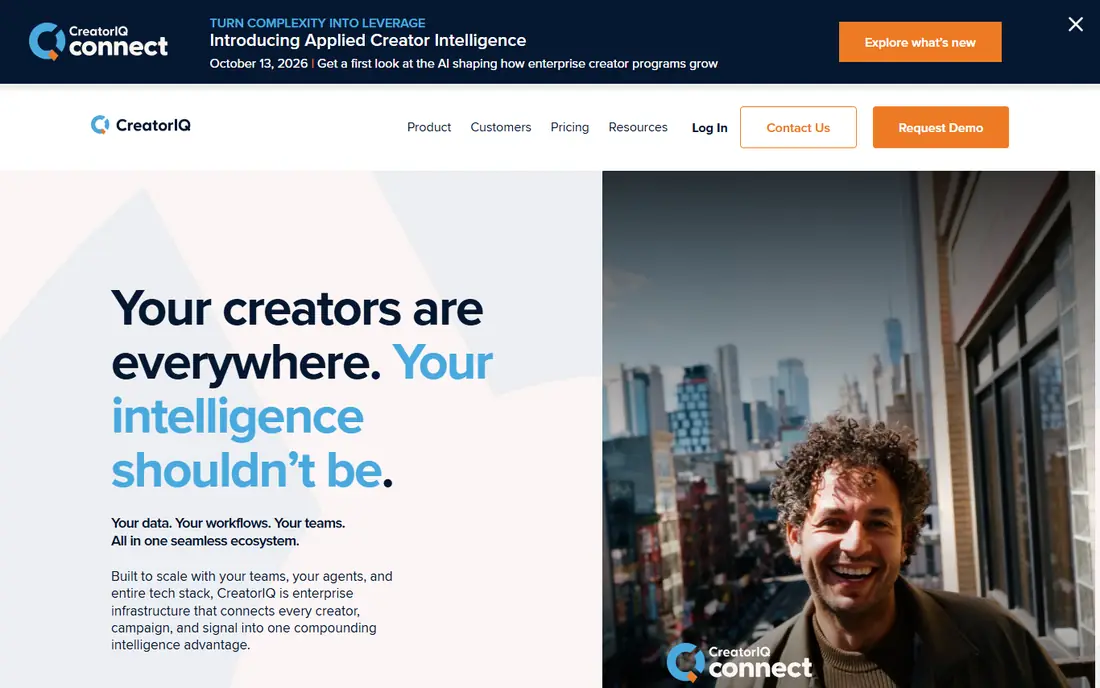
CreatorIQ is an enterprise platform for brands and agencies that manage many creators across regions and campaigns. It offers creator discovery, vetting, brand safety checks, compliance workflows, and reporting that ties creator activity to earned media value. Large teams use it to keep creator data, contracts, and results in one governed system.
CreatorIQ is priced for enterprise budgets, with custom quotes and annual commitments common in this category. Smaller brands will find it too costly and too complex for a handful of campaigns. For large programs where compliance and reporting matter as much as discovery, CreatorIQ is a leading option.
- Large creator database
- Brand safety and compliance workflows
- Earned media and campaign analytics
- Enterprise pricing
- Implementation takes time
- Overkill for small campaigns
Upfluence combines creator discovery with campaign management, and it has a distinctive feature: brands can find creators among their own customers. That customer-to-creator path can produce authentic advocates who already use the product. The platform also supports outreach, briefs, payments, and ecommerce integrations for store brands.
Upfluence uses custom pricing, and reported entry points vary, so budget planning needs a vendor quote. The database is powerful, but teams need time to learn filters and vetting, and weak briefs still produce weak content. For mid-size brands that want discovery plus campaign workflow, Upfluence is a solid choice.
- Creator discovery from social data and customer lists
- Campaign and payment tools
- Ecommerce integrations
- Custom pricing
- Learning the database filters takes time
- Results depend on campaign brief quality
Creator.co is a marketplace where brands post campaigns and creators apply, which suits small teams and micro-influencers who want a simpler path to paid work. Brands can run campaigns, manage content, and track results without enterprise software, while creators can find gigs and build a profile. That open marketplace model lowers the barrier for both sides.
Brand pricing has varied across roundups, so check the current plan on the vendor site before you budget. Creator.co is thinner on enterprise compliance and large-program reporting than CreatorIQ or GRIN. For small brands and creators starting out, its accessibility is the main appeal.
- Marketplace for creators and brands
- Campaign tools for smaller budgets
- Community features for creators
- Paid brand pricing varies across roundups
- Larger enterprise features are thinner than big suites
Shopify Collabs is a free tool for Shopify merchants that lets brands recruit creators, share affiliate links and discount codes, and track sales from creator traffic. Because it lives inside Shopify, setup is quick for store owners, and creators can apply to work with brands they already shop from. For a first affiliate program, it removes software cost entirely.
The limit is scope: it only works for Shopify stores, and its creator discovery is narrower than a large standalone database. Brands that need deep vetting, content rights management, or multi-channel campaigns will need another tool. For Shopify brands testing creator partnerships, Collabs is the lowest-risk starting point.
- Free for Shopify merchants
- Affiliate links and discount codes
- Creator discovery inside Shopify
- Only useful for Shopify stores
- Creator discovery is narrower than large databases
Modash is best known for creator research, with a large database that helps brands vet creators by audience, growth, and authenticity signals. Teams can check for fake followers, review past content, and shortlist creators before outreach. That research focus helps brands avoid paying for inflated audiences.
Modash is lighter on full campaign workflow than GRIN or Aspire, so teams may still manage briefs and payments elsewhere. Pricing for larger use needs a vendor conversation, though self-serve options exist for smaller research needs. For brands whose main problem is finding and vetting the right creators, Modash is a strong research tool.
- Large creator database for research
- Audience and fake-follower checks
- Campaign reporting tools
- Self-serve pricing needs a quote for larger use
- Campaign workflow is lighter than full suites
Heepsy offers affordable creator discovery, with search filters for location, niche, audience size, and engagement, plus a fake follower audit to flag suspicious accounts. Small brands can build lists, vet creators, and start outreach without an enterprise contract. That price point makes it accessible for a first influencer campaign.
Heepsy is not a full campaign suite: briefs, payments, and deep reporting are more basic than on GRIN or Aspire. Its database is also smaller than enterprise platforms, which can matter for very niche markets. For small brands that mainly need to find and vet creators, Heepsy is good value.
- Search filters for niche creators
- Fake follower audit
- Lists and campaign basics
- Database is smaller than enterprise platforms
- Campaign management is basic
How we picked these
We compared official feature pages, pricing pages, and public reviews for influencer platforms available in October 2026. We looked at creator discovery, vetting, campaign workflow, content rights, payments, ecommerce integration, and reporting. We included both brand-side suites and creator-friendly marketplaces, because the best platform for influencers depends on which side of the deal you sit on. Where pricing was not published, we wrote See website rather than repeating third-party estimates as facts.
How to choose an influencer platform
Start with your bottleneck. If finding creators is hard, prioritise discovery and vetting. If managing briefs, content, and payments is hard, prioritise campaign workflow. If proving return is hard, prioritise tracking for codes, links, and store orders. Buying a full suite for a discovery problem wastes money, and buying a discovery tool for a workflow problem leaves you in spreadsheets.
Next, check the creator experience. If onboarding is slow, briefs are unclear, or payments are late, good creators will not return. Read usage rights carefully: perpetual rights for a one-time fee is a common trap for creators, and vague rights are a risk for brands that want to reuse content in ads. Agree on deliverables, timelines, revisions, and payment terms before work starts.
For brands
Test a platform with a real campaign during a trial or pilot, not just a demo. Track cost per creator, content quality, and sales or signups from codes and links. Compare total cost, including seats, creator volume, and contract length, because annual commitments and notice periods vary. A platform that fits five creators may not fit fifty.
For influencers and creators
Join marketplaces that match your niche and audience size, and keep your media kit and past results ready. Check payout terms, fees, and usage rights on every brief, and keep copies of agreements. A platform that brings steady briefs and pays on time is worth more than a large database with no real gigs.
Ecommerce and affiliate fit
Ecommerce brands should check Shopify, WooCommerce, or store integrations, plus code and link tracking, before they choose. Affiliate programs need clear commission rules, return windows, and payout schedules. If the platform cannot tie creator traffic to orders, you will struggle to prove which creators drive sales.
Frequently asked questions
What is the best influencer marketing platform for small business?
Shopify Collabs is a strong free starting point for Shopify stores, while Heepsy and Creator.co offer lower-cost discovery and campaign options for small brands. GRIN and Aspire suit larger ecommerce and ambassador programs, but their custom pricing may be high for a first campaign.
What is the best influencer marketing software for ecommerce?
GRIN is a strong ecommerce choice because it ties creator work to Shopify orders, seeding, and affiliate tracking. Shopify Collabs is a free alternative for Shopify brands that mainly need affiliate links and codes. Upfluence also offers ecommerce integrations for mid-size brands.
What is the best platform for influencer marketing for creators?
Creator.co, Shopify Collabs, and marketplace-style platforms suit creators because they let you apply for campaigns and build a profile. Check payout speed, fees, and usage rights on each platform, because those terms matter more than signup cost, which is often free for creators.
What are the best influencer platforms for finding micro-influencers?
Heepsy, Creator.co, and Upfluence offer filters for smaller creators and niche audiences, which helps brands find micro-influencers with engaged followers. Vet audience quality, not just follower count, and review past content for fit before outreach.
What is the best influencer marketing tool for ecommerce brands on a budget?
Shopify Collabs is free for Shopify merchants and covers affiliate basics, while Heepsy offers affordable discovery for brands that need to vet creators first. Start with one of those, prove sales from creator traffic, then move to a paid suite when volume justifies it.
Sources
See where you really rank - block by block
ProMapRanker scans Google Maps across a grid of your service area. Simple monthly plans from $19, white-label on every plan.
Start freeKeep reading
 zendesk alternatives
Best Zendesk Alternatives in 2026
Compare the best Zendesk alternatives in 2026, from budget help desks to AI-first support tools, with current pricing, free plans, and honest trade-offs.
Read → wordpress alternatives
Best WordPress Alternatives in 2026
Looking for the best WordPress alternatives? We compare 8 free and paid options for blogs, business sites, stores, and developer-led projects in 2026.
Read → which real estate company has the best training
Best Real Estate Company Training in 2026
Compare which real estate company has the best training, from Keller Williams and eXp to Compass and Coldwell Banker, by program, mentor, and fit in 2026.
Read →