 ProMapRanker
10 Best Platforms for Football Game Analytics for 2026


Clubs and teams that need video analysis, tagging, and coaching workflows in one place · Pricing starts at: See website
Key takeaways
- Game analytics spans video, event data, tracking data, and physical data, and most clubs need more than one layer.
- Video linked to events helps coaches show players exactly what happened, rather than describing it from a stat sheet.
- Scouting platforms suit recruitment, while video coding tools suit match preparation and player development.
- Enterprise pricing is usually quote-based, so scope league coverage, video access, and user seats before comparing cost.
Quick comparison
| Pick | Great for | Pricing starts at | Free tier | |
|---|---|---|---|---|
| Hudl | Clubs and teams that need video analysis, tagging, and coaching workflows in one place | See website | No | Visit |
 Catapult | Performance teams tracking player load, speed, and physical output | See website | No | Visit |
 Wyscout | Scouting and opponent analysis with video and data across many competitions | See website | No | Visit |
 Stats Perform | Clubs, media, and analysts that need Opta event data and advanced models | See website | No | Visit |
 InStat | Scouting and performance analysis that links stats directly to video clips | See website | No | Visit |
 Second Spectrum | Tracking data, live match insight, and broadcast-ready visual analysis | See website | No | Visit |
 SkillCorner | Tactical analysis from broadcast video without wearable tracking hardware | See website | No | Visit |
 Veo | Smaller clubs and academies that need automated match recording and analysis | See website | Yes | Visit |
 Nacsport | Coaches and analysts who want structured video coding and timeline analysis | See website | No | Visit |
 Sportradar | Media, leagues, and clubs that need live data, feeds, and analytics at scale | See website | No | Visit |
The best platforms for football game analytics
Hudl
Great for: Clubs and teams that need video analysis, tagging, and coaching workflows in one place
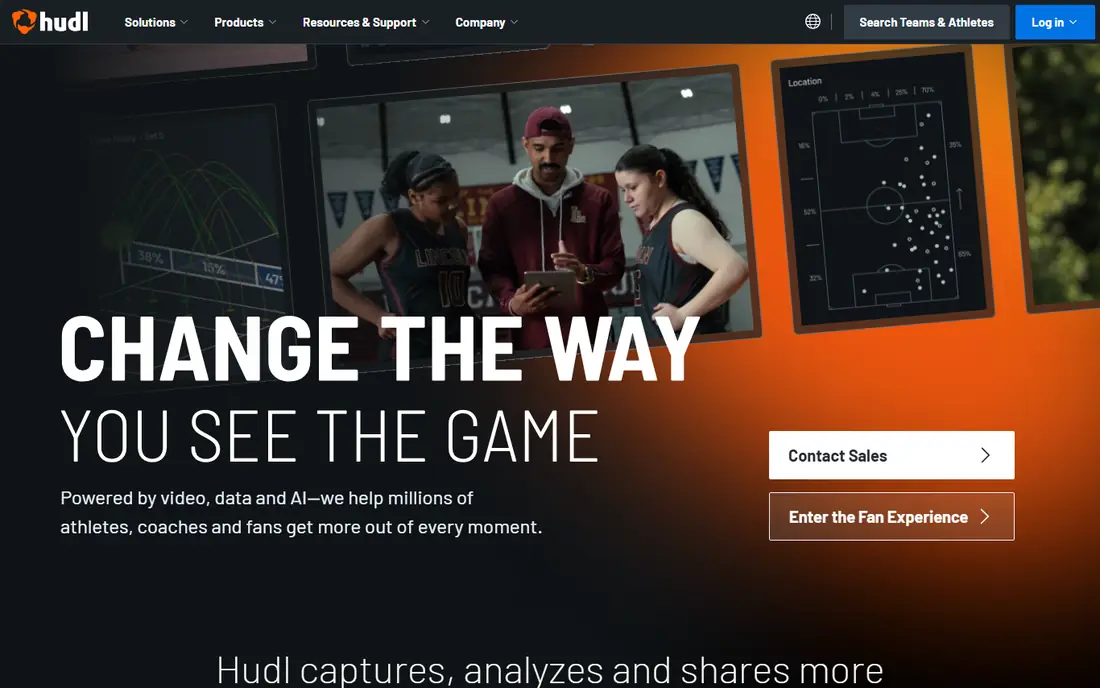
Hudl is the central video platform for many clubs, schools, and academies. Coaches can capture games, tag key plays, build playlists, and share clips with players for meetings and individual review. Drawing tools, custom code windows, and links to fitness data help staff connect a clip to a tactical point or a physical output. That video-first workflow is why Hudl remains a default choice for team analysis, even as data providers grow more advanced.
The platform has grown through acquisitions, including Wyscout and StatsBomb data, so buyers should clarify which Hudl products are included in a quote. A club that only needs video may not need the full data bundle, while a professional club may want the combined video, scouting, and event data pipeline. For most team environments, Hudl is the safest starting point for structured video review.
- Broad video tools, playlist sharing, and integration with scouting and data products
- Full value often requires several Hudl products, and pricing is quote-based
Catapult
Great for: Performance teams tracking player load, speed, and physical output
Catapult focuses on what players do physically, using wearable devices and tracking systems to measure speed, distance, accelerations, and load. Performance staff can monitor training and match load, compare players over time, and flag spikes that may raise injury risk. That physical layer complements video and event data, because it explains whether a tactical decision also carried a physical cost.
Catapult is not a replacement for video analysis or scouting data. Teams still need a video tool to show tactical moments, and a data provider for event context. Hardware, software, and support also add cost and setup time. For clubs that take load management seriously, however, Catapult provides the physical evidence that video alone cannot show.
- Wearable tracking, load metrics, and tools for injury risk management
- Hardware cost and setup, and it is not a video scouting database on its own
Wyscout
Great for: Scouting and opponent analysis with video and data across many competitions
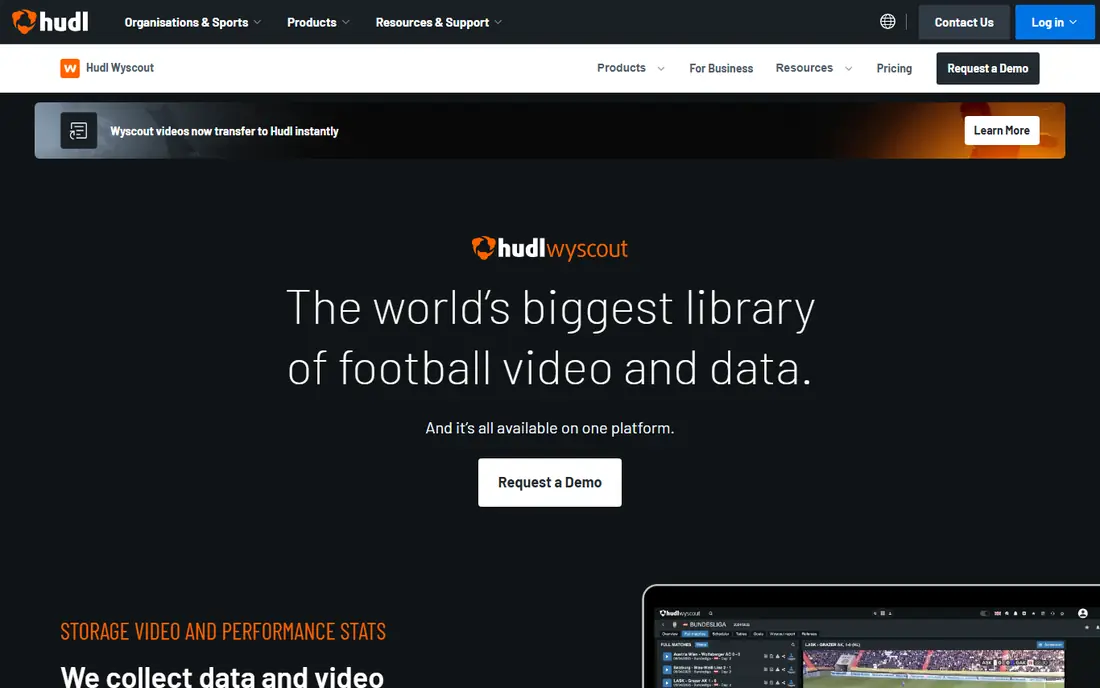
Wyscout, now part of Hudl, gives scouts and analysts access to video and data from a large number of competitions worldwide. Users can filter players and teams by events, positions, and trends, then build playlists that show the evidence behind a scouting note. That link between a filter result and a video clip is central to recruitment work, because a number alone rarely convinces a coach or sporting director.
Pricing for professional clubs is enterprise-level, and smaller clubs should check which competitions and seats are included before committing. Wyscout also fits best when paired with video analysis and event data tools, rather than used as a lone coaching platform. For recruitment and opponent scouting at scale, it remains one of the most widely used databases in football.
- Large match video library, searchable filters, and playlists for scouting reports
- Professional pricing is high, and it works best inside a wider Hudl workflow
Stats Perform
Great for: Clubs, media, and analysts that need Opta event data and advanced models
Stats Perform supplies Opta event data that underpins much of professional football analysis, media coverage, and betting-adjacent reporting. Its data covers detailed on-ball events, sequences, and advanced metrics that analysts use to model team style, player value, and match trends. Clubs can use that data for recruitment models, opponent reports, and performance reviews that go beyond basic counts of passes and shots.
The data is powerful, but it is not a coaching video tool on its own. Teams need analysts who can query, visualise, and explain the data, plus video tools to show players what the numbers mean. Pricing is enterprise and quote-based. For organisations that build models or publish advanced insight, Stats Perform is a foundational data source.
- Deep Opta event data, advanced metrics, and broad league coverage
- Enterprise pricing, and raw data needs analyst skill to turn into coaching insight
InStat
Great for: Scouting and performance analysis that links stats directly to video clips
InStat combines a match database with video, so analysts can filter by events, players, and teams, then watch the exact clips behind a statistic. That stat-to-video workflow suits scouting, opponent preparation, and player reports, because every claim can be checked against footage. Teams can also build structured reports for coaches, which helps turn a database search into a meeting-ready output.
New users need time to learn the filter system and report tools, and league coverage depends on package. InStat is therefore strongest for clubs and agencies with a defined scouting workflow, rather than for casual fans. For data-driven recruitment and opponent work, its searchable video link is a practical advantage.
- Searchable event filters, video breakdowns, and reports for teams and players
- Learning curve for new analysts, and coverage varies by league and package
Second Spectrum
Great for: Tracking data, live match insight, and broadcast-ready visual analysis
Second Spectrum uses tracking data and machine learning to produce detailed match insight, including player movement, spacing, and tactical patterns. Its tools support leagues, clubs, and broadcasters that need live or near-live analysis, plus visual outputs that explain complex patterns clearly. That tracking layer adds context that event data alone cannot provide, such as off-ball movement and defensive shape.
The platform is enterprise in scope and cost, and it requires data infrastructure that smaller clubs may not have. It is therefore best suited to top clubs, leagues, and media organisations. For those buyers, Second Spectrum offers tracking insight at a level that simpler video tools cannot replicate.
- Advanced tracking, machine learning insight, and visual tools for live and post-match use
- Enterprise scope and infrastructure needs suit leagues and top clubs more than small teams
SkillCorner
Great for: Tactical analysis from broadcast video without wearable tracking hardware
SkillCorner extracts tracking data from broadcast video using computer vision, so clubs can analyse player movement and tactical patterns without installing stadium tracking hardware. That approach helps scouts and analysts compare players and teams across leagues, including cases where GPS data is unavailable. Metrics cover running, positioning, and off-ball actions that matter for tactical evaluation.
The platform is football-only, which is a strength for focus but a limit for multi-sport organisations. Pricing is enterprise for professional use. For elite scouting and tactical departments that need tracking insight without hardware, SkillCorner is a specialised and valuable option.
- Tracking data derived from broadcast footage, plus tactical metrics for scouting and analysis
- Football-only focus, and enterprise pricing for professional packages
Veo
Great for: Smaller clubs and academies that need automated match recording and analysis
Veo solves a practical problem for smaller clubs. Its camera records matches automatically, follows play, and produces footage that coaches can tag, clip, and share. That removes the need for a dedicated camera operator and makes regular video review possible for academies, schools, and semi-professional teams. Highlights and player tracking features help coaches run useful review sessions without a professional analysis department.
Veo does not replace a scouting database or an enterprise tracking system. Its analysis depth is suited to team review and development, not to large-scale recruitment modelling. Camera hardware and subscription costs also need budgeting. For clubs that currently have no reliable match footage, Veo is often the most accessible first step into game analytics.
- Automated camera that follows play, plus highlights and analysis tools without a camera operator
- Camera and subscription costs, and analysis depth is below professional scouting databases
Nacsport
Great for: Coaches and analysts who want structured video coding and timeline analysis
Nacsport is a video analysis tool built around coding. Analysts create templates for events, tag matches on a timeline, and build reports and playlists from those tags. That structured approach helps coaches compare matches over time, track tactical patterns, and present findings in a consistent format. It is widely used by analysts who want control over their coding window rather than a fixed vendor template.
The workflow is more desktop-led than some cloud rivals, so teams that need fully cloud-based sharing should check current options and mobile access. Nacsport also requires analyst time to code matches well. For coaching staffs that value a repeatable coding process, it offers depth and flexibility at a more accessible price than enterprise data platforms.
- Custom coding templates, timeline tools, and reports built from tagged video
- Desktop-led workflow can feel less cloud-friendly than newer platforms
Sportradar
Great for: Media, leagues, and clubs that need live data, feeds, and analytics at scale
Sportradar supplies live sports data, APIs, and analytics to media, leagues, betting operators, and clubs. Its strength is scale and speed: live feeds, odds-related data, and match data that can power apps, broadcasts, and analysis systems. Clubs and analysts can use its data as an input to their own models and reports, rather than as a standalone coaching video tool.
Onboarding can be complex, and buyers should clarify data rights, league coverage, and API limits before committing. Sportradar is not a direct substitute for Hudl video review or a scouting database. For organisations that need reliable live data at scale, it is a major provider in this space.
- Broad live data coverage, APIs, and analytics for media and performance use
- Complex onboarding, and much of its strength is data supply rather than coaching video
How we picked these
We compared official feature pages, pricing pages, product documentation, and public reviews. We kept only platforms that support football game analysis through video, event data, tracking, or scouting, and that are sold and supported in October 2026. We excluded live-score-only apps and fantasy tools, because they do not support coaching or scouting workflows. Where pricing was quote-based, we wrote See website rather than presenting a third-party estimate as a vendor price.
How to choose a football game analytics platform for your level
Start by naming the job. If the job is match preparation, prioritise video tagging, playlists, and drawing tools. If the job is recruitment, prioritise searchable data, league coverage, and stat-to-video links. If the job is physical performance, prioritise tracking hardware, load metrics, and medical integration. Buying a scouting database for match preparation, or a video tool for recruitment modelling, wastes budget and frustrates staff.
Next, check footage and data rights for your leagues. Confirm which competitions, seasons, and video clips are included, how many seats you receive, and whether players can access clips on mobile. A platform with strong features but weak coverage for your league will not help your weekly work. Also confirm export options, because your analysis should not be trapped if you change vendors.
Finally, test the workflow on a real match. Tag a game, build a playlist, create a scout report, and present it in a team meeting. Measure how long each step takes and whether players understand the output. That live test reveals usability, report quality, and staff workload better than a sales demo on a polished example match.
Frequently asked questions
Sources
See where you really rank - block by block
ProMapRanker scans Google Maps across a grid of your service area. Simple monthly plans from $19, white-label on every plan.
Start freeKeep reading
 worlds best local seo company
8 Worlds Best Local SEO Companies for Map Pack Growth in 2026
Compare the worlds best local seo company options for Google Business Profile work, citations, reviews, and multi-location rankings and reporting in 2026.
Read → world's best web hosting company
World's Best Web Hosting Company in 2026
Searching for the world's best web hosting company? We compared 10 hosts on price, renewal rates, speed, and support to help you choose well today in 2026.
Read → who's got the best nanny tax services
Who's Got the Best Nanny Tax Services in 2026
We answer who's got the best nanny tax services, comparing full filing, back taxes, software, and pricing so families can handle nanny taxes correctly.
Read →