 ProMapRanker
Best Platform to Start a Podcast in 2026


First-time podcasters who want simple setup · Pricing starts at: $18 per month
Key takeaways
- Buzzsprout is our pick for most first-time podcasters because setup is simple and distribution to major apps is built in.
- Spotify for Creators is the strongest free starting point, with no upload limit stated on its free hosting.
- Podbean and Acast suit creators who want monetization early, while Transistor suits people running more than one show.
- Check the meter before you pay: some hosts limit upload hours, others limit monthly downloads.
- Keep control of your RSS feed and check that you can redirect it if you move hosts later.
Quick comparison
| Pick | Great for | Pricing starts at | Free tier | |
|---|---|---|---|---|
| Buzzsprout | First-time podcasters who want simple setup | $18 per month | Yes | Visit |
 Spotify for Creators | Free hosting with no upload limit | Free | Yes | Visit |
 Podbean | Monetization and unlimited storage on paid plans | $17 per month | Yes | Visit |
 Transistor | Creators running multiple shows | $19 per month | Free trial (14 days) | Visit |
 Captivate | Growth-focused independent shows | $19 per month | Free trial | Visit |
 Libsyn | Long-running and established shows | $8 per month | Free trial | Visit |
 Acast | Shows aiming for advertising income | Free | Yes | Visit |
 Spreaker | Live audio and on-demand episodes in one place | Free | Yes | Visit |
 RSS.com | Simple budget hosting for new shows | $19.99 per month | Yes | Visit |
The best platforms to start a podcast
These nine platforms all host a podcast feed, distribute episodes to listening apps, and give you basic listener data. The differences sit in price meters, monetization tools, and how much help you get at launch.
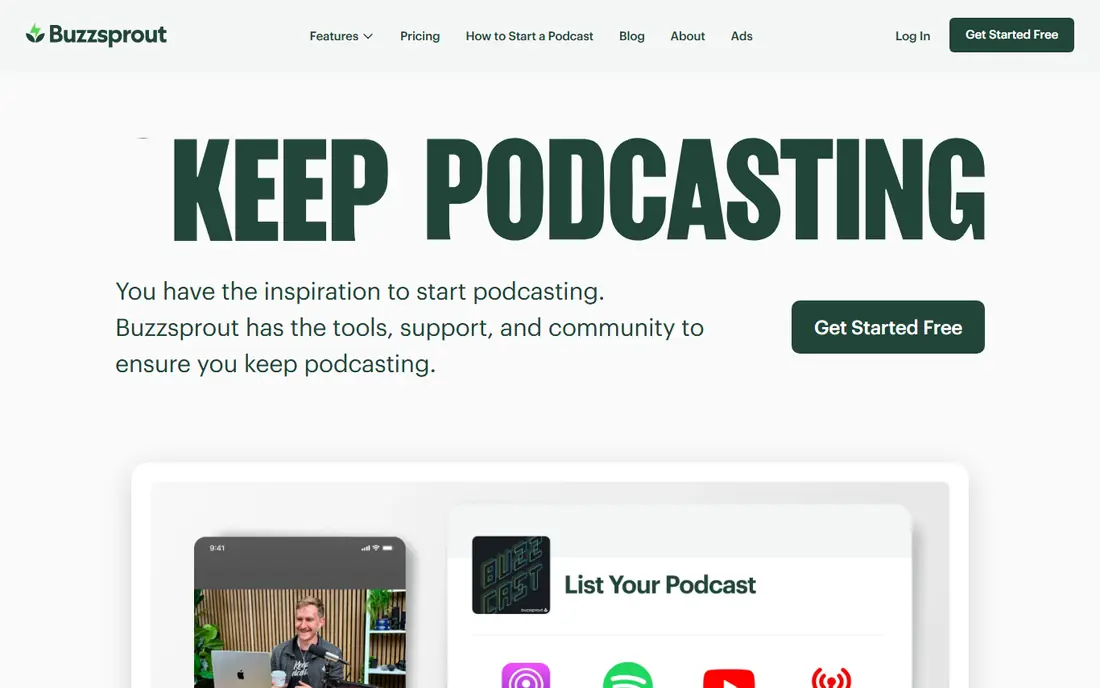
Buzzsprout walks a new podcaster through each step, from uploading audio to submitting the show to Apple Podcasts and Spotify. The dashboard stays plain and readable, which matters when you are learning terms like RSS feed, ID3 tags, and episode scheduling. Paid plans add features such as dynamic content, transcripts, and a podcast website.
The catch is the upload meter. The entry paid plan covers a set number of hours per month, so a weekly hour-long show fits, but a daily long-form show may need a larger plan. If you publish short episodes or one show a week, this limit rarely bites. For most beginners, ease of use outweighs that trade-off.
- Simple dashboard
- Automatic distribution
- Transcripts and soundbite tools on paid plans
- Paid plans limit upload hours
- Video plans cost more
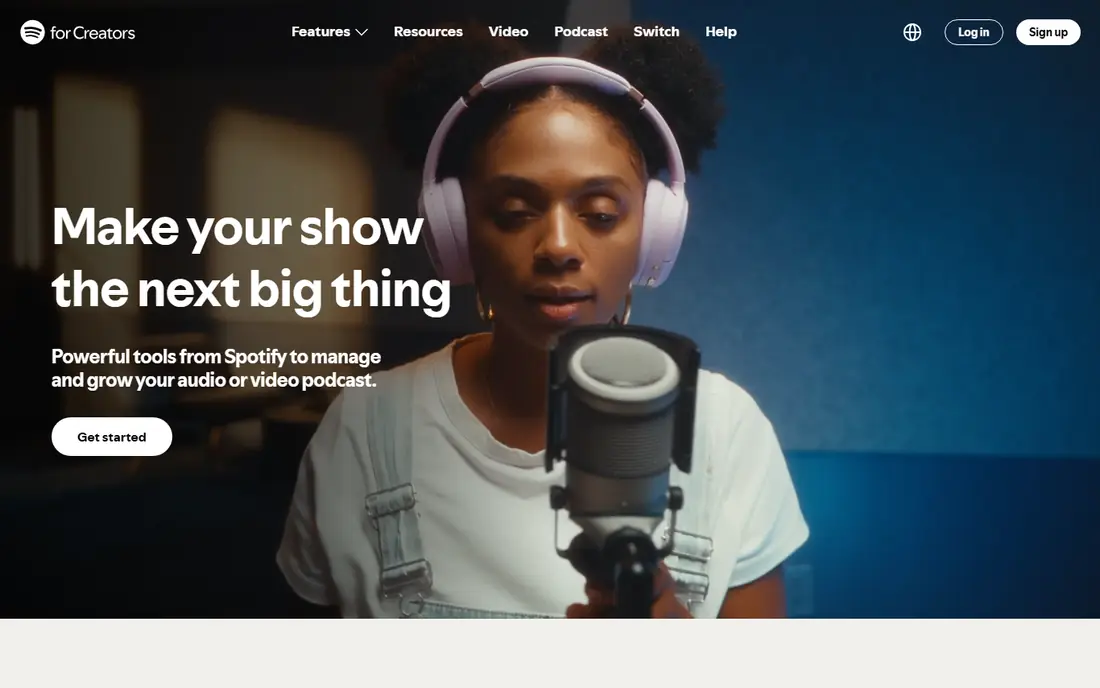
Spotify for Creators, formerly Spotify for Podcasters, lets you host and distribute a show without a monthly fee. That makes it a low-risk place to test an idea, learn editing, and build a habit before spending money. Distribution reaches Spotify directly, and episodes can also go to other apps through its feed tools.
The trade-off is control and depth. Analytics and monetization options are shaped around Spotify, and creators who later want private feeds or advanced dynamic ad tools may outgrow it. Still, for a first show on a tight budget, it is hard to beat free hosting with no stated upload cap.
- Free hosting
- Direct Spotify distribution
- Video podcast support on Spotify
- Fewer advanced monetization tools than some paid hosts
- Tied closely to Spotify
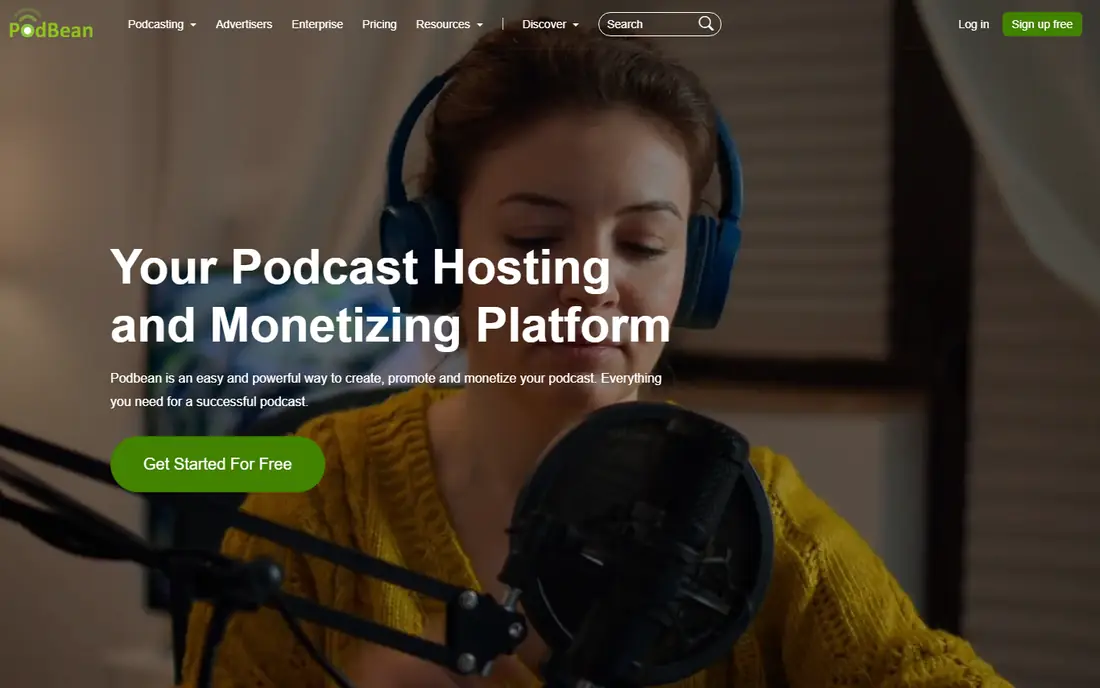
Podbean has been around long enough to cover the full path from first episode to paid show. Paid plans offer unlimited storage, and the platform includes an ads marketplace, dynamic ad insertion, and listener subscription options. It also supports video podcasting and live audio on higher plans, which suits creators who want more than a plain audio feed.
New users may find the dashboard busier than Buzzsprout. There are more settings to learn, and the free plan is best treated as a trial rather than a long-term home. If your plan includes earning from ads or subscriptions, Podbean gives you those tools without needing a second service.
- Unlimited storage on paid plans
- Ads marketplace
- Live streaming options
- Free plan is limited
- Interface has more menus than simpler hosts
Transistor charges by monthly downloads rather than by show, so one plan can host several podcasts. That structure suits networks, agencies, and creators who run a main show plus a short side series. Private podcast feeds are included, which helps for paid members, staff updates, or course audio.
The limit to watch is downloads. A small show will stay well under the entry allowance, but a show that grows fast may need to move up a tier sooner than expected. Team seats are generous, and the analytics pages are clear about which episodes bring listeners back. If you know you will run more than one feed, Transistor is a strong value.
- Unlimited podcasts on a plan
- Private podcasts
- Clear analytics
- No permanent free plan
- Downloads are metered by plan
Captivate is built for podcasters who treat growth as a job, not a hope. It offers unlimited uploads, a podcast website, dynamic ad insertion, and tools for guest booking and listener calls to action. Analytics go beyond raw download counts, with attention to listener retention and episode performance over time.
The entry plan caps monthly downloads, so a viral episode can push you toward a higher tier. That is a good problem to have, but it is worth knowing in advance. Captivate suits a creator who already publishes on a schedule and wants marketing features in the same place as hosting.
- Unlimited uploads
- Marketing tools
- Guest booking features
- No permanent free plan
- Downloads are metered
Libsyn is one of the oldest podcast hosts, and its strength is steady reliability. The lowest plan is cheap, and higher plans add more storage, video support, and monetization tools. Stats follow industry standards on suitable plans, which matters if you plan to pitch sponsors with listener numbers.
Storage is the main limit. Plans give a monthly storage allowance rather than unlimited uploads, so long episodes use it up faster. The interface is functional rather than pretty, and new podcasters may need more time to learn it. For a show that values stability over polish, Libsyn remains a solid choice.
- Low entry price
- Long track record
- IAB-compliant stats options
- Storage is metered
- Interface feels dated next to newer hosts
Acast started as an ad-focused network and still leads with monetization. A free starter plan lets you publish and distribute a show, while paid plans add unlimited episodes and stronger analytics. Its marketplace connects suitable shows with advertisers, which can turn a growing audience into income without you selling ads yourself.
Not every show will qualify for the same ad deals, and earnings depend on audience size and category. Paid monthly billing is notably higher than annual billing, so check both prices before committing. If ads are central to your plan, Acast deserves a close look.
- Free starter plan
- Ad marketplace
- Broad distribution
- Paid plans cost more month to month
- Advanced features sit on higher tiers
Spreaker covers both live radio-style broadcasting and standard on-demand podcasting. Creators can go live, take calls, and later publish the recording as an episode. Monetization includes programmatic ads and listener support options on suitable plans, and distribution reaches major listening apps.
The free plan is useful for testing, but serious shows will need a paid plan for unlimited episodes and fuller stats. Spreaker suits talk shows, music talk formats, and creators who like live interaction. Pure interview podcasters may find simpler hosts a better fit.
- Free plan available
- Live broadcasting tools
- Monetization options
- Entry paid plan is higher than some rivals
- Advanced analytics need higher tiers
RSS.com keeps the hosting job simple: upload episodes, publish to directories, and track basic performance. Paid plans offer unlimited audio, which removes the upload-hour worry that affects some rivals. A free plan lets you try the workflow before paying, and sponsorship and donation tools appear on paid tiers.
The platform is less rich in marketing extras than some competitors, so creators who want guest booking or deep funnel tools may look elsewhere. For a straightforward show that needs dependable hosting at a clear price, RSS.com is a sensible option. Always compare the monthly and annual prices, since annual billing lowers the monthly equivalent.
- Unlimited episodes and audio on paid plans
- Simple dashboard
- Automatic distribution
- Fewer advanced marketing tools than Captivate
- Monthly price is higher than annual price
How we picked these
We compared official pricing pages, plan limits, distribution features, and monetization options for leading podcast hosts in October 2026. We kept only hosts that still operate, offer a real podcast feed, and distribute to major listening apps. We favored hosts with clear pricing and a free plan or trial, and we noted where a meter, such as upload hours or downloads, could change the true cost.
What to check before you choose a host
Start with your publishing pace, not the feature list. A weekly 30-minute show has very different needs from a daily two-hour show, and the meter on your plan should match that pace. Next, list where your listeners actually are. Most hosts distribute to Apple Podcasts and Spotify, but check for the smaller apps your audience uses, plus YouTube if video matters to you.
Think about money early, even if you do not plan to earn yet. Some hosts include an ads marketplace, subscriptions, or donations, while others need third-party tools for the same job. Also check who owns your feed. A good host lets you redirect your RSS feed if you leave, so your subscribers follow you rather than staying with the old host. Finally, use a trial or free plan to upload a test episode, check the player on your site, and read the analytics before you pay for a year.
Frequently asked questions
Which podcast platform is best for beginners?
Buzzsprout is our pick for most beginners because the setup steps are clear and distribution is guided. Spotify for Creators is the best free starting point if budget is the main concern. Try a free plan or trial first and publish one test episode before committing.
What is the best podcast hosting platform for monetization?
Podbean and Acast both offer ad marketplaces and subscription tools, while Transistor and Captivate support dynamic ads on suitable plans. Ad income depends on audience size, category, and location, so no host can promise earnings. Check eligibility rules on the host pricing page before you choose based on ads alone.
Is there a best hosting platform for podcast shows with more than one feed?
Transistor is a strong choice because one plan can host unlimited podcasts, with downloads as the main meter. Captivate also supports more than one podcast on paid plans. If each show has its own team, check team seats and private feed options too.
Can I start a podcast for free?
Yes. Spotify for Creators offers free hosting, and Acast, Podbean, Spreaker, and RSS.com offer free plans with limits. Free plans often limit episodes, storage, or features, so read the limits and plan an upgrade path if the show grows.
Do I need a website for my podcast?
No, but it helps. Several hosts include a basic podcast website, and a simple site gives listeners a place to find episodes, show notes, and contact details. If you already have a site, check that the host player embeds cleanly on your pages.
Sources
See where you really rank - block by block
ProMapRanker scans Google Maps across a grid of your service area. Simple monthly plans from $19, white-label on every plan.
Start freeKeep reading
 zoho inventory alternatives
6 Alternatives to Zoho Inventory, Compared on Price and Fit
Zoho Inventory alternatives: 6 tools compared on price, free plans and fit. Katana leads the list for manufacturers. Fit and flaws are laid out for each entry.
Read → zoho crm alternatives
Best Zoho CRM Alternatives (2026)
Need Zoho CRM alternatives? We compare 7 tools on cost, free access and who each suits. Every pick gets a straight assessment. Built for quick decisions.
Read → zelle alternatives
Best Zelle Alternatives in 2026
Compare the best Zelle alternatives for sending money to friends, paying sellers and moving funds abroad, with honest notes on fees, speed and safety in 2026.
Read →