 ProMapRanker
Best Platform to Sell Tickets in 2026

Key takeaways
- Eventbrite and Ticketmaster offer the largest built-in audiences, which helps public events that need discovery more than the lowest fee.
- Ticket Tailor, TicketSpice, and Tix suit organisers with their own audience who want flat or low per-ticket costs and control over checkout.
- Dice, Humanitix, and Universe suit music, community, and mission-led events where audience experience and values matter as much as price.
- Showpass and TicketLeap suit smaller teams that want simple setup, box office tools, and clear reporting without enterprise complexity.
Quick comparison
| Pick | Great for | Pricing starts at | Free tier | |
|---|---|---|---|---|
 Eventbrite | Public events needing discovery | See website | Yes | Visit |
 Ticketmaster | Large concerts and venues | See website | No | Visit |
 Dice | Music and live events | See website | No | Visit |
 Ticket Tailor | Low flat fees with own audience | See website | Yes | Visit |
 TicketSpice | Custom checkout and seat maps | See website | No | Visit |
 Humanitix | Nonprofits and community events | See website | Yes | Visit |
 Universe | Simple event pages and discovery | See website | Yes | Visit |
 TicketLeap | Simple setup for small organisers | See website | Yes | Visit |
 Tix | Box office and online sales together | See website | No | Visit |
The best platform to sell tickets
Selling tickets is a mix of fees, audience reach, and door control. The right platform depends on whether buyers will find you, or whether you will bring the audience yourself.
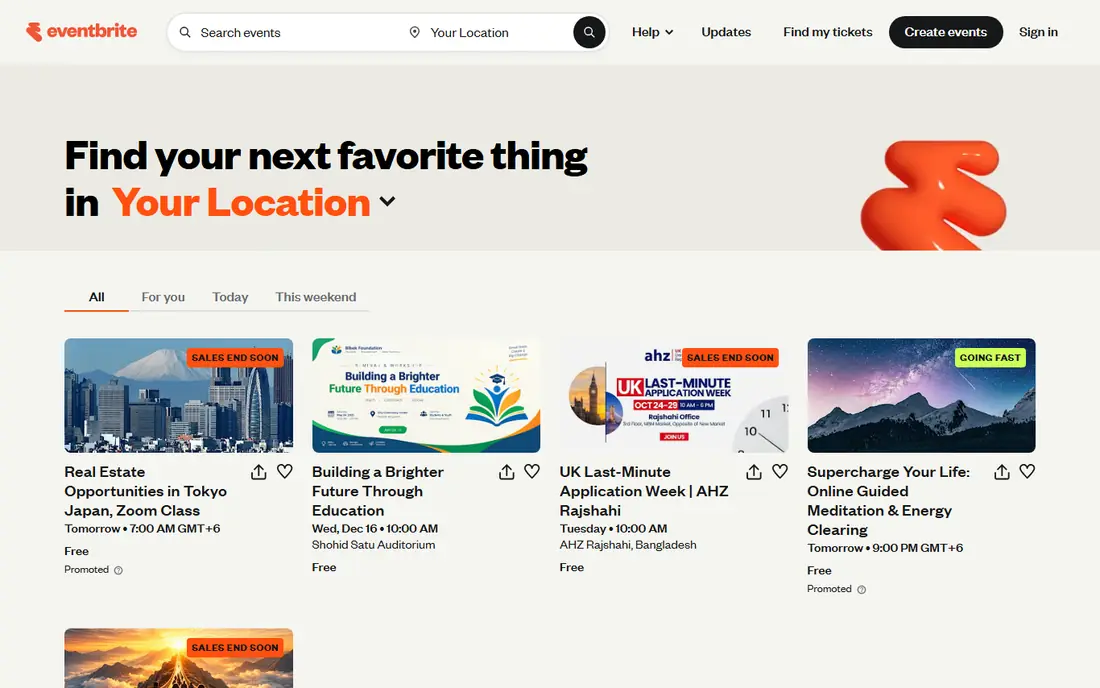
Eventbrite is the default choice for many public events because buyers already search there. A concert, workshop, class, or festival can gain discovery beyond the organiser's own mailing list, and the event page, checkout, and check-in tools are familiar to many attendees. Free events can be listed without platform fees, which makes it easy to test a new series or a community night. The organiser app also helps at the door, with scanning and attendee lists in one place.
The cost is the honest trade-off. Paid tickets carry a service fee plus payment processing, and the total depends on ticket price and whether the organiser or the buyer absorbs the fee. For high-price tickets or large volumes, that percentage model can cost far more than a flat-fee tool. Eventbrite still makes sense when discovery brings real extra sales, but organisers with a loyal audience should compare the total fee on their actual ticket mix before committing.
- Large marketplace audience
- Free events are free
- Broad event types and check-in app
- Per-ticket service and processing fees add up
- Fee structure needs careful reading
Ticketmaster suits major concerts, arena shows, and venue-led events where scale and control matter most. Its audience is vast, its venue systems are widely used, and its resale and transfer tools are built for high-demand shows. For an artist or promoter already working with a Ticketmaster venue, it may be the only practical route, and the system handles demand, queues, and entry at a level smaller tools cannot match.
For independent organisers, Ticketmaster is often out of reach or a poor fit. It is not a simple self-serve signup for a small gig, and buyer-facing fees can draw complaints even when the organiser does not set them. Smaller events should treat Ticketmaster as a venue and major-tour platform, not as a general tool for a local show, and should confirm access and terms before planning around it.
- Huge buyer audience
- Venue and artist integrations
- Strong fraud and resale controls
- Buyer fees can be high
- Access often depends on venue or promoter deals
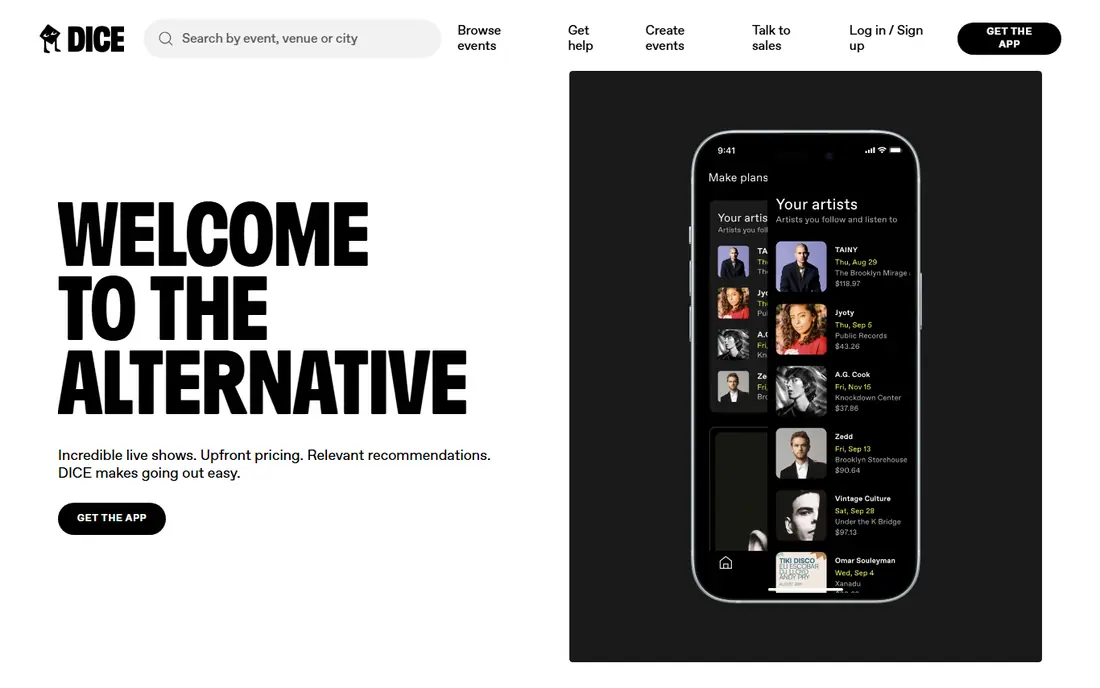
Dice has built its name around music fans, clubs, and live shows. Its app-led discovery helps a gig reach people who already browse for live music, and mobile tickets tied to an account reduce some resale and transfer problems. For a promoter, that audience fit can matter more than a generic event listing, since the buyers arriving are already looking for a night out. The checkout flow is also designed for phones, which suits last-minute ticket buyers.
The limits are scope and access. Dice is strongest for music and live entertainment, and less natural for a trade show, a school fair, or a seated theatre season. Terms and fees can also vary by partnership, so an organiser should confirm the exact deal for their event rather than assuming a published rate. When the event is music-led, Dice deserves a shortlist place. When it is not, a broader platform will serve better.
- Music-first audience
- Mobile tickets tied to the buyer
- Discovery for gigs and clubs
- Less suited to conferences or general events
- Fees and terms vary by deal
Ticket Tailor suits organisers who already have an audience and want to keep more of each sale. Its flat per-ticket model avoids a percentage that grows with ticket price, which helps for higher-priced shows, courses, and galas. Organisers can connect their own payment processor, brand the checkout, and use credits to lower the per-ticket cost further. For a regular series with a mailing list and social following, those savings add up across a season.
The trade-off is discovery. Ticket Tailor does not bring the same marketplace traffic as Eventbrite, so promotion stays with the organiser. That is fine for a venue with repeat buyers, a school with parents on a list, or a promoter with a strong following. It is a weaker pick for a first-time public event that depends on strangers finding it through search. Weigh the fee saving against the cost of reaching buyers yourself.
- Flat per-ticket pricing
- Own payment processor option
- Clean checkout and branding
- Less built-in discovery than Eventbrite
- Organiser manages more promotion
TicketSpice fits events that need more than a basic ticket button. Reserved seating, timed entry, multi-day passes, and custom questions can all be built into the checkout, which helps theatres, attractions, and festivals with complex layouts. Organisers can also choose who pays the fee, which makes pricing clearer for buyers or for the budget. The page builder gives more control over branding than a standard marketplace listing.
That flexibility comes with effort. A simple free community event may not need seat maps or timed entry, and the setup time can feel heavy for a one-off show. TicketSpice also does not replace marketing, so the organiser still needs to drive traffic. For complex or seated events, the control is worth it. For a simple general admission gig, a lighter tool may be faster.
- Flexible page builder
- Reserved seating support
- Fee control for organiser or buyer
- Less marketplace discovery
- Setup takes more time than a simple listing
Humanitix appeals to nonprofits, schools, and community organisers who want fees to support a social purpose. The platform donates its profits to education charities, and eligible nonprofits can access a lower booking fee. That story can help with donors, sponsors, and community trust, and the event pages and check-in tools cover the basics well. Free events are supported, which suits fundraisers with a mix of free and paid entry.
The cost model still needs checking. Paid tickets carry a percentage plus a fixed booking fee, so high-price gala tickets will cost more than on a flat-fee platform. Humanitix also has less general discovery than the largest marketplaces. For mission-led events, the charity model and the community fit may outweigh a small fee difference. For a purely commercial high-volume event, compare the total fee first.
- Booking fees fund charity work
- Nonprofit rates
- Free events supported
- Percentage fee model
- Smaller marketplace than Eventbrite
Universe, part of the Ticketmaster group, suits organisers who want a simple public event page with some discovery. Setup is quick, ticket types are easy to create, and the page can be shared widely. It works well for concerts, parties, classes, and community events that need a clean listing without a long setup process. The connection to a larger ticketing network can also help buyers find the event.
The limits are fee tiers and depth. Pricing can vary by plan, and organisers should check the service fee and processing terms for their ticket prices. Universe is also less specialised than a full box office system for complex seating or multi-venue seasons. For a straightforward public event, it is a practical middle ground between a basic form and a large venue platform.
- Simple creation flow
- Discovery through its network
- Good for smaller public events
- Fee tiers vary
- Less control than specialist box office tools
TicketLeap is a friendly pick for small organisers, schools, churches, and local promoters. Event pages can be built quickly, free events carry no platform fee, and the dashboard covers sales, attendee lists, and door check-in. That simplicity matters when one person runs marketing, sales, and the door. The tool does not force a complex setup for a simple show, class, or fundraiser.
Paid events carry per-ticket fees, so a high-volume organiser should compare the total against flat-fee options. TicketLeap also brings less built-in discovery than Eventbrite, so the organiser should plan promotion through email, social channels, and local listings. For a small team with a known audience, the ease of use often outweighs those limits.
- Free for free events
- Simple event pages
- Built-in reporting and check-in
- Per-ticket fees on paid events
- Less marketplace reach than larger rivals
Tix suits venues and festivals that sell both online and at a physical box office. The system can handle reserved seating, season passes, and door sales in one place, which avoids reconciling separate lists on show night. Reporting helps a venue track sales by price level, show, and channel, and the box office view gives staff a clear picture at the counter. That combined workflow is the main reason to choose it over a purely online tool.
The drawback is fit for very small events. A one-off free or low-price show may not need box office depth, and pricing should be confirmed before planning a budget around it. Tix also relies on the organiser for audience building, like most specialist tools. For a venue with regular programming, though, the unified sales picture is a real advantage.
- Box office and online in one system
- Reserved seating
- Reporting for venues
- Pricing needs a quote or plan check
- Less suited to a single tiny event
How we picked these
We compared official pricing pages, fee explanations, and product documentation for platforms that let an organiser create an event, sell paid tickets, and manage entry. We kept only platforms that operate in the United States in October 2026 and that truly support ticket sales, not just event listings or resale alone. We favoured a mix of large marketplaces, flat-fee tools, music-first platforms, and box office systems, so readers can match the platform to their audience and ticket type. We did not claim hands-on testing that did not happen.
How to choose for concerts, online sales, and general events
Start with who brings the audience. If buyers must discover the event, a marketplace such as Eventbrite, Ticketmaster, or Dice can justify a higher fee through extra sales. If you already have a mailing list, a following, or a venue audience, a flat-fee tool such as Ticket Tailor or TicketSpice usually keeps more revenue. Run the fee math on your real ticket prices and volumes, not on a headline rate, and include payment processing, since that cost sits outside some platform fees.
Next, check the door and the seating. General admission shows need fast mobile scanning and a clear attendee list. Seated theatre, festivals with zones, and timed attractions need seat maps, timed entry, or box office sales. A platform that looks cheap online can become costly on show night if door staff cannot scan quickly or if seating must be managed by hand. Test the check-in app, the refund flow, and the transfer rules before tickets go on sale.
Finally, read the payout and refund terms. Some platforms pay out after the event, while others pay as sales arrive through a connected processor. That timing affects cash flow for venue hire, artist fees, and marketing. Also confirm who sets refund policy, how fees are handled on a refund, and what happens if an event is cancelled. A clear policy protects both the organiser and the buyer, and it should be published on the event page before sales open.
Frequently asked questions
What is the best platform to sell concert tickets?
For large concerts, Ticketmaster and Dice suit venue shows and music audiences, while Eventbrite suits smaller public gigs that need discovery. For a promoter with a loyal following, Ticket Tailor or TicketSpice can keep more revenue per ticket. The best choice depends on venue deals, audience size, and ticket price.
What is the best app to sell tickets?
For buyers and organisers on phones, Eventbrite and Dice offer familiar mobile apps for discovery, purchase, and entry. For door control, look for a platform with a dedicated check-in app, offline scanning where offered, and a clear attendee list. Test the app at a small event before a large show.
What is the best platform to sell tickets online?
Eventbrite is the broadest online option for public events, while Ticket Tailor and TicketSpice suit organisers who drive their own traffic and want lower or flat fees. Humanitix suits nonprofits, and Universe suits simple public listings. Compare total fees, payout timing, and refund terms on your own ticket mix.
What is the best app to sell concert tickets?
Dice is a strong music-first app for gigs and club shows, with discovery built for music fans. Eventbrite also works well for concerts that need a wider public audience. If resale control matters, check how each app handles transfers, since rules vary by platform and event.
Do free events cost anything on these platforms?
Many platforms list free events without a platform fee, including Eventbrite, Humanitix, and TicketLeap. Payment processing only applies when money changes hands, so a truly free event should not incur card fees. Always confirm the current free-event terms, since plans and limits can change.
How do ticket platform fees work?
Fees usually combine a platform or service fee with payment processing. Some platforms charge a percentage plus a fixed amount per ticket, while others charge a flat amount. The organiser can often choose whether the buyer or the organiser absorbs the fee, which changes the price buyers see and the net revenue per ticket.
Sources
See where you really rank - block by block
ProMapRanker scans Google Maps across a grid of your service area. Simple monthly plans from $19, white-label on every plan.
Start freeKeep reading
 zoro.to alternatives
Best Zoro.to Alternatives in 2026
We compare the best zoro.to alternatives in 2026, listing only legal licensed anime streaming services, from Crunchyroll to free options for fans today.
Read → zip alternatives
Best Zip Alternatives in 2026
We compare the best zip alternatives for buy now, pay later in 2026, covering pay-in-4 plans, fees, spending limits, and credit reporting options today.
Read → yesware alternatives
Best Yesware Alternatives in 2026
Compare the best yesware alternatives for sales email tracking, templates, and sequences, with current pricing and honest tradeoffs for small sales teams.
Read →