 ProMapRanker
Best Platform for Tokenization in 2026


Regulated funds and digital securities · Pricing starts at: See website
Key takeaways
- Securitize and Tokeny suit issuers who need regulated, compliance-controlled token issuance and investor servicing.
- Polymesh stands apart as a chain built for regulated securities, while RealT and DigiShares focus more narrowly on property.
- Most pricing is quote based, so compare onboarding, custody, transfer rules, and secondary market access before you commit.
- Tokenization does not create liquidity on its own. A trading venue, eligible investors, and clear legal terms still matter.
Quick comparison
| Pick | Great for | Pricing starts at | Free tier | |
|---|---|---|---|---|
| Securitize | Regulated funds and digital securities | See website | No | Visit |
 Tokeny | Compliant European securities | See website | No | Visit |
 Polymesh | Regulated security tokens on a purpose-built chain | See website | No | Visit |
 DigiShares | Real estate tokenization | See website | No | Visit |
 Brickken | Smaller issuers using a software platform | See website | Free trial | Visit |
 Tokensoft | Enterprise issuance with compliance controls | See website | No | Visit |
 tZERO | Tokenized securities with a trading venue | See website | No | Visit |
 RealT | Fractional US rental property | See website | No | Visit |
The best platform for tokenization
Tokenization turns a share, fund interest, bond, or property interest into a digital token that can be tracked, transferred under set rules, and serviced online. The best tokenization platforms handle more than minting. They also handle investor checks, transfer restrictions, distributions, and reporting. This is not financial advice, and tokenized assets carry risk, including illiquidity and loss.
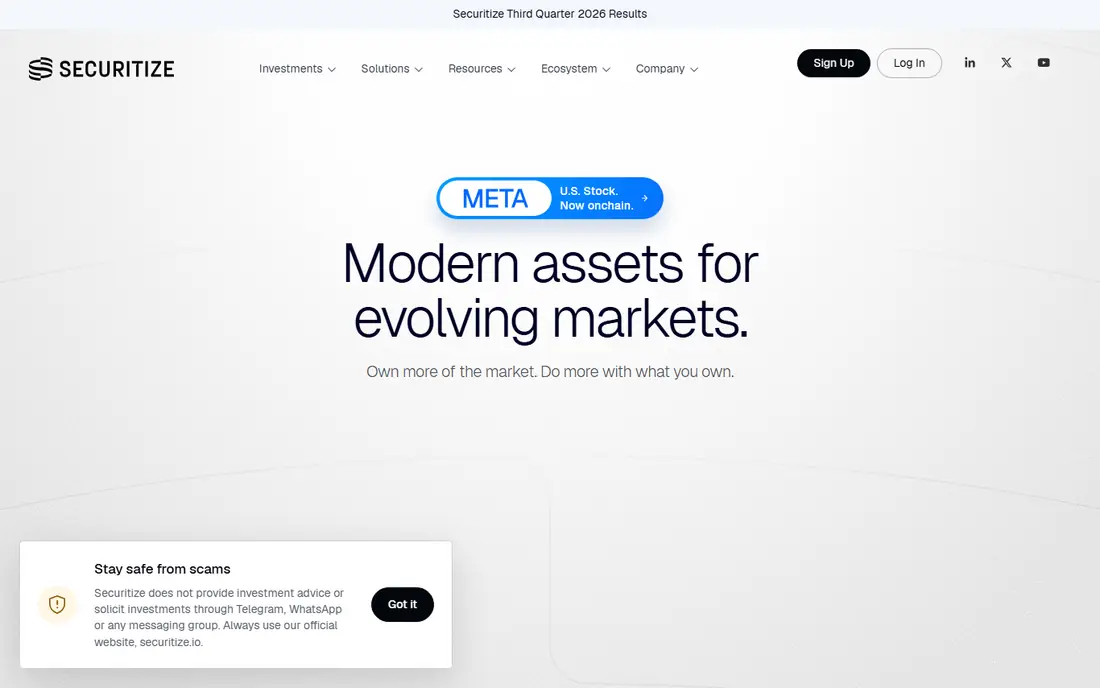
Securitize is our pick for larger issuers who want a full stack service rather than a token minting tool alone. It covers issuance, investor onboarding, compliance controls, fund administration, and secondary market infrastructure in one regulated setup. That breadth matters for funds and private companies that need transfer agent work and ongoing servicing, not just a launch day token.
The trade off is access. Securitize is built for institutional and professional issuers, so a small property owner or startup may find the process heavier than a software-only platform. Pricing is quote based, and terms will depend on asset type, jurisdiction, and services needed. Ask early about custody, chain choice, and which investors can hold the token.
- Regulated market structure
- Fund administration and transfer agency services
- Support for multiple chains
- Enterprise focus
- Pricing is not published
- Onboarding can be involved for smaller issuers
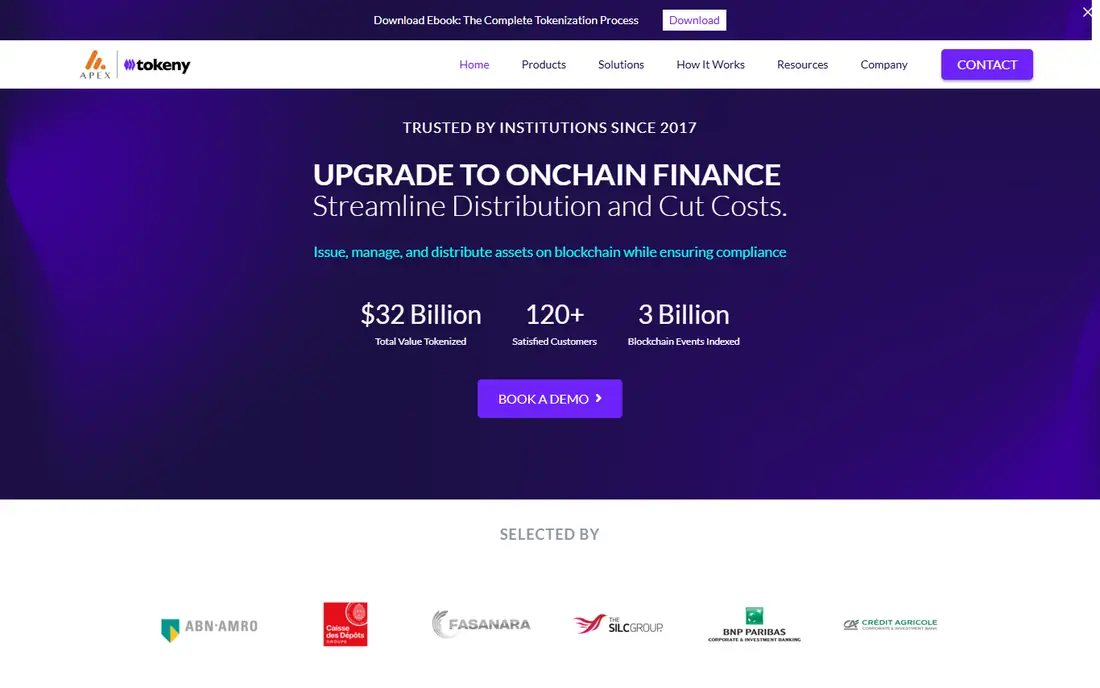
Tokeny is a strong choice for issuers working under European securities rules. Its platform is built around ERC-3643, a standard for permissioned tokens that lets issuers control who can hold and transfer a token. That control is central to compliant securities, where eligibility, lockups, and jurisdiction limits cannot be left to an open token contract.
Tokeny also covers onboarding, identity checks, and ongoing servicing, which keeps the issuer from stitching together separate tools. The limit is scope. It is a securities platform first, so teams looking for a general token launchpad for consumer tokens will find it a poor fit. Confirm which chains, custodians, and registrar services are included in your quote.
- ERC-3643 permissioned token standard
- Investor onboarding and servicing tools
- Strong European focus
- Pricing is not published
- Best suited to securities use cases
- Smaller issuers may need guidance
Polymesh takes a different route from the platforms above. Instead of adding compliance on top of a general chain, it is a chain built for regulated securities, with identity, permissioning, and settlement features in its design. For issuers who want those controls at the base layer, that structure is appealing.
The catch is ecosystem size. General chains have more wallets, custodians, and trading venues, while Polymesh depends on partners who support its standard. Issuers should map the full route to investors before choosing it, including custody, transfer agent services, and any trading venue. Polymesh fits best when compliance design matters more than reaching the largest possible crypto audience.
- Chain designed for regulated assets
- Identity and compliance features at protocol level
- Governance tools
- Smaller ecosystem than general chains
- Issuers still need legal and custody partners
- Pricing varies by project
DigiShares focuses on real estate, and that focus shows in its workflow. It covers token issuance, investor onboarding, cap table style management, and tools for ongoing investor relations. For a property fund or developer, a workflow built around property deals can save time compared with a generic securities platform.
The limit is also the focus. DigiShares is not the best pick for a fund tokenizing private equity or a company tokenizing shares, even though the underlying mechanics overlap. Liquidity is another honest caveat. A tokenized property interest is still an illiquid asset unless a venue and buyers exist. Check fees, legal structuring support, and which jurisdictions are covered.
- End to end real estate workflow
- Investor management and trading support
- White label options
- Property focused
- Pricing is quote based
- Secondary liquidity depends on venue and demand
Brickken suits teams that want to run tokenization as a software project rather than a fully managed institutional mandate. Its platform covers token creation, investor management, and cap table style tracking for equity, debt, and real estate assets. That makes it a practical option for smaller companies testing a tokenized raise.
The honest catch is that software does not replace legal work. Issuers still need counsel on offering structure, disclosures, and investor eligibility in each jurisdiction. Brickken is best viewed as the operating layer, with lawyers, custodians, and any trading venue added around it. Trial the platform with a realistic asset structure before committing to a full issuance.
- Software-led approach
- Tokenization for equity, debt, and real estate
- Self service tools
- Smaller issuers still need legal advice
- Secondary market access varies
- Enterprise features may need a higher plan
Tokensoft is aimed at enterprises and larger issuers that need strict compliance controls across jurisdictions. It combines token issuance with investor onboarding, eligibility checks, and distribution controls, which suits regulated offerings where a compliance miss is costly. Teams with complex cap tables or cross border investors will value that discipline.
Smaller issuers may find Tokensoft heavier than they need. Pricing is not published, and the sales and onboarding process reflects an enterprise product. If your raise is small and simple, a software-led platform may move faster. For a large, regulated offering, Tokensoft belongs on the shortlist alongside Securitize and Tokeny.
- Enterprise grade issuance
- Compliance and investor onboarding tools
- Multi jurisdiction experience
- Enterprise pricing and process
- Not built for casual token launches
- Onboarding can take time
tZERO matters because issuance without a place to trade leaves investors locked in. It operates a regulated venue for digital securities, alongside custody and settlement services, so issuers and investors can think about the full lifecycle. That combination is rare, and it is the main reason to consider tZERO over a pure issuance platform.
The caveat is that a venue does not guarantee buyers. Liquidity depends on which assets are listed, how many eligible investors participate, and market conditions. Issuers should ask which assets are currently supported, what listing requirements apply, and how settlement and custody work in practice. tZERO fits issuers who plan for secondary trading from the start.
- Regulated trading venue for digital securities
- Custody and settlement services
- Issuer services
- Trading depends on listed assets and demand
- Onboarding is regulated and involved
- Fees vary
RealT takes a retail friendly angle on tokenization. It offers fractional interests in US rental properties, with rental income distributed to token holders. For readers who want property exposure without buying a whole building, that model is easy to understand, and the entry point is far lower than direct ownership.
Risk still applies in full. Property values can fall, tenants can leave, and tokens may be hard to sell quickly. RealT is also US property focused, so it is not a general tokenization platform for other asset classes. Treat it as a property investment product first and a tokenization example second, and read the offering terms, fees, and property details before buying.
- Fractional property ownership
- Rental income distribution
- Lower entry point than direct property purchase
- Property and market risk
- Token liquidity varies
- US focused offering
How we picked these
We compared official platform pages, product documentation, and public descriptions of issuance, compliance, custody, and trading services. We kept only platforms that operate in October 2026 and fit regulated or property tokenization, and we left out general token launchpads and closed projects. Where pricing was not published on the vendor site, we wrote See website rather than repeating a third party figure.
What to check before you choose a tokenization platform
Start with the legal structure, not the token standard. Ask what the token represents, who can legally hold it, and which jurisdictions are covered. A platform that cannot answer those questions clearly is not ready for a regulated offering, no matter how polished its dashboard looks.
Custody, transfers, and servicing
Check who holds the assets, how transfers are approved, and how distributions and reporting work after issuance. Confirm whether the platform provides transfer agency services itself or relies on partners, and what happens if an investor loses access to a wallet. Ongoing servicing often costs more attention than launch day, so price it into the decision.
Liquidity and investor reach
Ask where tokens can trade, who is eligible to buy, and what volume that venue actually sees. A private placement with no secondary venue may be fine for a closed fund, but it is a poor fit if investors expect an exit. Compare onboarding friction too, since heavy identity checks can slow a retail offering even when the technology works well.
Frequently asked questions
Which tokenization platform is the best?
There is no single best platform for every issuer. Securitize and Tokeny suit regulated funds and securities, DigiShares and RealT suit property, and Brickken suits smaller software-led issuers. Match the platform to asset type, jurisdiction, and whether you need a trading venue.
What are the best tokenization platforms for real estate?
DigiShares and RealT are the most property focused options in this list. DigiShares serves developers and funds running their own offerings, while RealT sells fractional interests in specific US rental properties. Both still carry property risk and limited liquidity.
Are tokenized assets regulated?
Many tokenized securities are regulated as securities, which is why platforms add investor checks and transfer restrictions. Rules vary by country and by offering type, so issuers need legal advice in each jurisdiction where investors are based. Retail buyers should read offering documents and check the issuer and venue status.
Do tokenization platforms charge published prices?
Most do not publish a standard price, because fees depend on asset type, jurisdiction, services, and deal size. Expect a quote after a scoping call, and ask for a full fee schedule covering issuance, custody, servicing, and any trading or transfer fees.
Can anyone buy tokenized securities?
No. Many offerings are limited to accredited, professional, or otherwise eligible investors, and transfer rules enforce those limits on chain. Retail fractional property products have their own eligibility and offering terms. Check eligibility before assuming you can participate.
Sources
See where you really rank - block by block
ProMapRanker scans Google Maps across a grid of your service area. Simple monthly plans from $19, white-label on every plan.
Start freeKeep reading
 zoho inventory alternatives
6 Alternatives to Zoho Inventory, Compared on Price and Fit
Zoho Inventory alternatives: 6 tools compared on price, free plans and fit. Katana leads the list for manufacturers. Fit and flaws are laid out for each entry.
Read → zoho crm alternatives
Best Zoho CRM Alternatives (2026)
Need Zoho CRM alternatives? We compare 7 tools on cost, free access and who each suits. Every pick gets a straight assessment. Built for quick decisions.
Read → zelle alternatives
Best Zelle Alternatives in 2026
Compare the best Zelle alternatives for sending money to friends, paying sellers and moving funds abroad, with honest notes on fees, speed and safety in 2026.
Read →