 ProMapRanker
Best Platform for Swing Trading in 2026

Key takeaways
- Our pick for most readers is Fidelity, because it covers the core job well without a steep learning curve.
- Charles Schwab is a strong second choice when you need more control or a different way of working.
- Prices and free tiers change often, so check the vendor pricing page before you pay for a plan.
- The right choice depends more on your workflow and budget than on any single headline feature.
- This is not financial advice. Trading carries risk, and you can lose money.
Quick comparison
| Pick | Great for | Pricing starts at | Free tier | |
|---|---|---|---|---|
 Fidelity | All-round swing trading and research | $0 trades | No | Visit |
 Charles Schwab | Full-service trading with thinkorswim | $0 trades | No | Visit |
 Interactive Brokers | Serious and global swing traders | $0 trades | No | Visit |
 E*TRADE | Clean trading with strong tools underneath | $0 trades | No | Visit |
 TradeStation | Backtesting and automated strategies | See website | No | Visit |
 Webull | Mobile-first active trading | $0 trades | No | Visit |
 TradingView | Charting and screening for swing traders | See website | Yes | Visit |
 tastytrade | Active traders and options strategies | $0 stocks | No | Visit |
 Robinhood | Simple mobile swing trading | $0 trades | No | Visit |
The best platform for swing trading
We compared brokers and charting tools on commissions, charting, screening, research, and ease of use for trades held over days or weeks. This is not financial advice. Trading carries risk, and you can lose money.
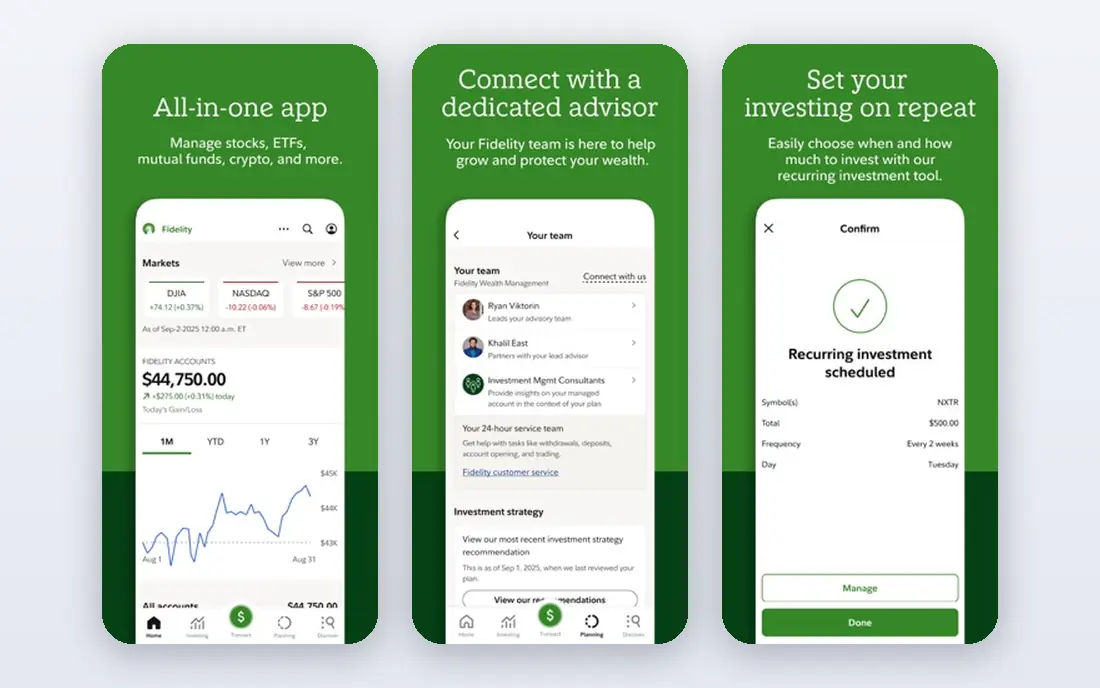
Fidelity suits swing traders who want strong research, screeners, and a full brokerage account behind their trades.
Its strength is breadth, because research, planning tools, fractional shares, and active trading tools sit in one account. That helps swing traders who hold positions for days or weeks and want to check fundamentals, news, and charts before entry.
The honest catch is options cost, since options carry a per-contract fee, so frequent options traders should compare that cost carefully. Before you commit, try the free tier or trial on a small real project and check export, sharing, and billing terms.
- Zero commission stock and ETF trades
- Deep research
- Active Trader Pro
- Desktop platform feels dated
- Options cost per contract
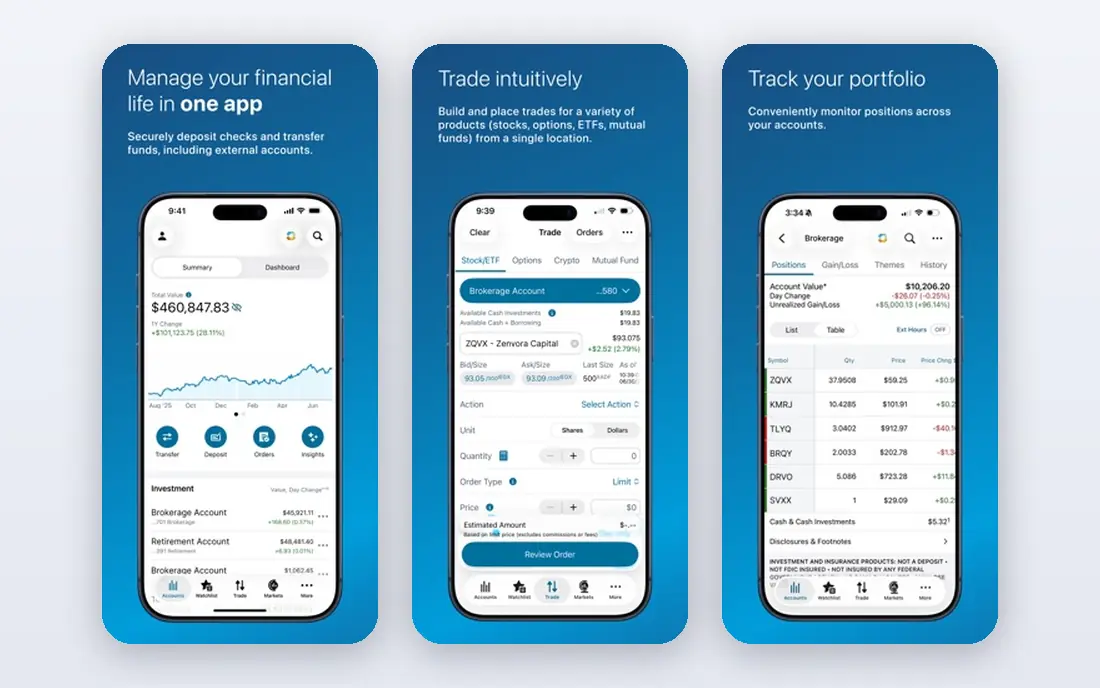
Charles Schwab suits swing traders who want a large broker, human support, and the thinkorswim platform for charts and analysis.
Its strength is the platform pairing, because thinkorswim gives charting, scanning, and paper trading tools that suit multi-day strategies. Branch and phone support also help when an account question needs a person rather than a help article.
The honest catch is complexity, since thinkorswim has a learning curve, so new users should start with paper trading and basic layouts. Before you commit, try the free tier or trial on a small real project and check export, sharing, and billing terms.
- Zero commission stock and ETF trades
- Thinkorswim tools
- Branch support
- Platform learning curve
- Options cost per contract
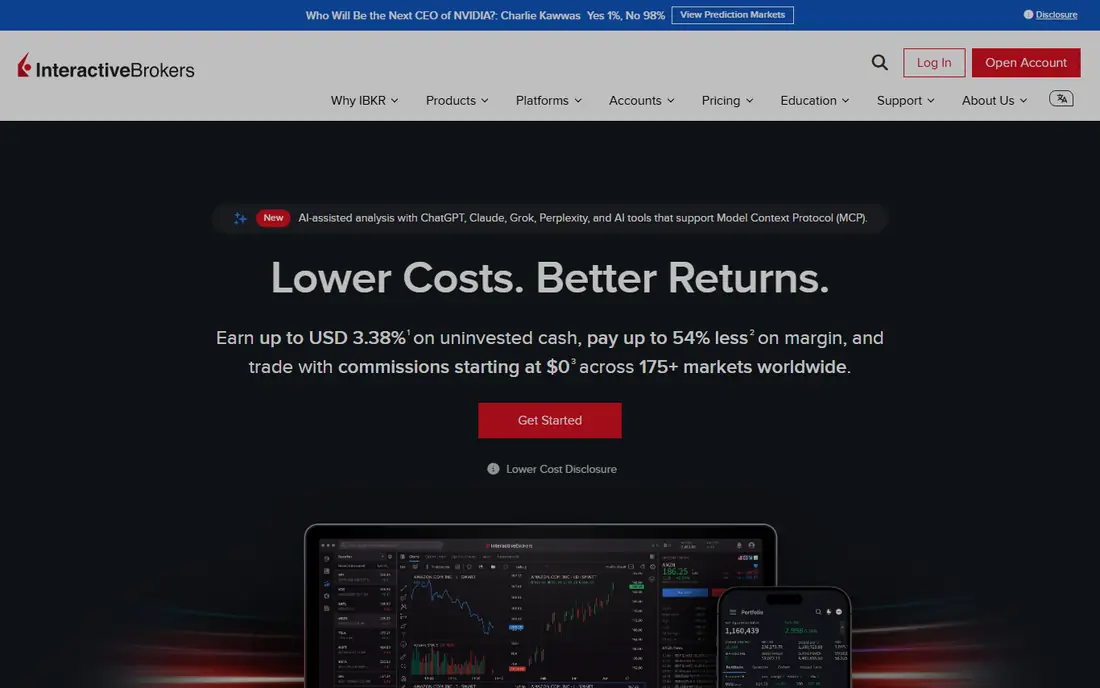
Interactive Brokers suits experienced swing traders who trade across markets and want advanced orders and global access.
Its strength is depth, because it covers many markets and order types, with pricing plans for casual and professional traders. That range helps traders who move beyond US stocks into futures, forex, or international shares as strategies grow.
The honest catch is the interface, which can feel dense for beginners, so it is best for traders who already know order types and risk controls. Before you commit, try the free tier or trial on a small real project and check export, sharing, and billing terms.
- Global market access
- Low margin rates
- Advanced order types
- Interface is complex
- Lite and Pro pricing needs care
E*TRADE suits swing traders who want a clean mobile and web experience with serious tools available when needed.
Its strength is balance, because everyday trading stays simple while Power E*TRADE adds charting and analysis for active work. Research and screeners help traders build watchlists for multi-day setups without switching to a separate tool.
The honest catch is options pricing, since options carry a per-contract fee, so check the fee schedule against your expected trade count. Before you commit, try the free tier or trial on a small real project and check export, sharing, and billing terms.
- Zero commission stock and ETF trades
- Power E*TRADE tools
- Research
- Options cost per contract
- Advanced tools take time to learn
TradeStation suits swing traders who test ideas on past data and want automation rules for entries and exits.
Its strength is strategy testing, because backtesting and automation tools let traders check an idea before risking real money. That discipline helps swing traders who follow rules over days, rather than reacting to each intraday move.
The honest catch is learning time, since automation and scripting need study, so start with simple rules and paper trading. Before you commit, try the free tier or trial on a small real project and check export, sharing, and billing terms.
- Strategy backtesting
- Automation tools
- Active trader platform
- Pricing varies by plan
- Learning curve for automation
Webull suits mobile-first swing traders who check charts, screeners, and positions from a phone during the day.
Its strength is the mobile app, with advanced charts and screeners that go beyond a basic buy and sell screen. Paper trading lets new swing traders practise multi-day ideas without risk, which is a useful step before live trades.
The honest catch is account range, since it does not cover every asset type, so check that it supports the securities you plan to trade. Before you commit, try the free tier or trial on a small real project and check export, sharing, and billing terms.
- Zero commission trades
- Advanced mobile charts
- Paper trading
- No mutual funds
- Support is mainly digital
TradingView suits swing traders who need charting, screening, and alerts, and who may trade through a connected broker.
Its strength is charts, with indicators, drawing tools, and screeners that help traders spot multi-day patterns and set alerts. Many traders use it as a research layer, then place orders through a broker, which keeps analysis and execution separate.
The honest catch is execution, since it is not a full broker on its own, so confirm which brokers connect in your region before relying on it. Before you commit, try the free tier or trial on a small real project and check export, sharing, and billing terms.
- Strong charts
- Screeners
- Community ideas and alerts
- It is not a broker by itself
- Broker connection varies
tastytrade suits active swing traders, especially those who use options as part of a multi-day strategy.
Its strength is options clarity, with per-contract pricing to open and no fee to close, plus education on strategy mechanics. That structure helps traders who trade options in size and want to know the cost before they place a trade.
The honest catch is focus, since the platform leans toward active and options traders, so long-term investors may prefer a broader broker. Before you commit, try the free tier or trial on a small real project and check export, sharing, and billing terms.
- Zero commission stocks
- Clear options pricing
- Education content
- Options focus may suit experienced traders more than beginners
Robinhood suits beginners who want simple mobile swing trading without a complex desktop platform.
Its strength is simplicity, because buying, selling, and tracking positions takes few taps, and fractional shares lower the entry amount. That ease helps new traders focus on position size and holding period rather than platform settings.
The honest catch is research depth, since advanced screeners and reports are thinner than at larger brokers, so many traders pair it with a charting tool. Before you commit, try the free tier or trial on a small real project and check export, sharing, and billing terms.
- Zero commission trades
- Simple mobile app
- Fractional shares
- Limited research depth
- No mutual funds in the main account
How we picked these
We compared official fee schedules, platform pages, and tool docs for brokers and charting tools live in October 2026. We focused on needs that matter for swing trading, such as charting, screeners, alerts, order types, and research, rather than day-trading speed alone. We did not invent returns, win rates, or performance claims, since past results do not predict future results.
How to choose a swing trading platform
Match the platform to your holding period. Swing traders hold for days or weeks, so charting, screeners, alerts, and research matter more than ultra-fast execution alone. A simple broker plus a strong charting tool can beat a complex platform you never learn.
Count the full cost, not only stock commissions. Options per-contract fees, margin interest, data fees, and transfer fees all affect results, especially for frequent traders. Check the fee schedule with your expected trade size and frequency.
Set risk rules before you fund an account. Decide position size, stop levels, and how many positions you will hold at once, and use paper trading to test the platform. Never trade with money you cannot afford to lose.
Frequently asked questions
What is the best swing trading platform?
For most traders, Fidelity or Charles Schwab is a strong all-round start, with research and solid platforms. Interactive Brokers suits experienced global traders, while TradingView is a strong charting layer to pair with a broker.
What is the best app for swing trading?
Webull and Robinhood offer simple mobile trading, while Fidelity, Schwab, and E*TRADE offer fuller mobile and desktop tools. The best app depends on whether you need deep research or just clean order entry.
Do swing trading platforms charge commissions?
Many US brokers now charge $0 for online stock and ETF trades, but options usually carry a per-contract fee, and margin, data, and transfer fees may still apply. Check the fee schedule before you trade.
Is swing trading risky?
Yes. Prices can move against a position overnight, and borrowed money increases both gains and losses. This article is not financial advice, and traders should only risk money they can afford to lose.
Should I use TradingView as my broker?
TradingView is mainly a charting and screening tool, not a full broker by itself. Many traders use it for analysis and place orders through a connected broker, so check broker connections in your region.
Sources
See where you really rank - block by block
ProMapRanker scans Google Maps across a grid of your service area. Simple monthly plans from $19, white-label on every plan.
Start freeKeep reading
 zscaler alternatives
Best Zscaler Alternatives in 2026
Looking for zscaler alternatives? We compare 9 SASE and zero trust platforms on architecture, data protection, pricing, and fit for your network and team.
Read → zapier alternatives free
Best Zapier Alternatives Free in 2026
Nine automation tools for zapier alternatives free in 2026, all with genuinely free tiers, plus free plan limits, starting prices and upgrade paths explained.
Read → which platform is best for online reputation
Which Platform Is Best for Online Reputation in 2026
Wondering which platform is best for online reputation? We compare 8 review, listing, and response tools for small and multi-location businesses and agencies.
Read →