 ProMapRanker
Best Platform for Organizing Employee Travel in 2026

Key takeaways
- Navan and TravelPerk suit smaller and mid-size teams best, because booking is open to travelers while policy and approval controls stay with managers.
- SAP Concur Travel and Egencia suit large, global programs best, because they handle complex policy, reporting and travel management support.
- Spotnana and AmTrav sit in the middle, with strong inventory and service for teams that want help from travel specialists as well as a booking tool.
- Pricing varies a lot, so ask for a written quote that covers booking fees, support tiers and any expense tools before you commit.
- Availability, inventory and pricing vary by country and supplier, so confirm coverage for the routes your team actually flies.
Quick comparison
| Pick | Great for | Pricing starts at | Free tier | |
|---|---|---|---|---|
 Navan | Travel plus expenses in one place | Free | Yes | Visit |
 TravelPerk | Flexible booking and cancellations | Free | Yes | Visit |
 Spotnana | Deep inventory and traveler service | See website | No | Visit |
 AmTrav | Specialist support for growing teams | See website | No | Visit |
 SAP Concur Travel | Large enterprise travel programs | See website | No | Visit |
 Egencia | Global managed travel programs | See website | No | Visit |
 TravelBank | Finance-led travel and expense | See website | Free trial | Visit |
 Ramp | Spend control with travel booking | Free | Yes | Visit |
The best platforms for organizing employee travel
Employee travel breaks down when booking, approvals and expenses live in separate places. The platforms below bring those steps together, with different strengths for small teams, growing companies and large enterprises. We compared official feature pages, pricing pages, app store listings, privacy policies and public reviews to build this list.
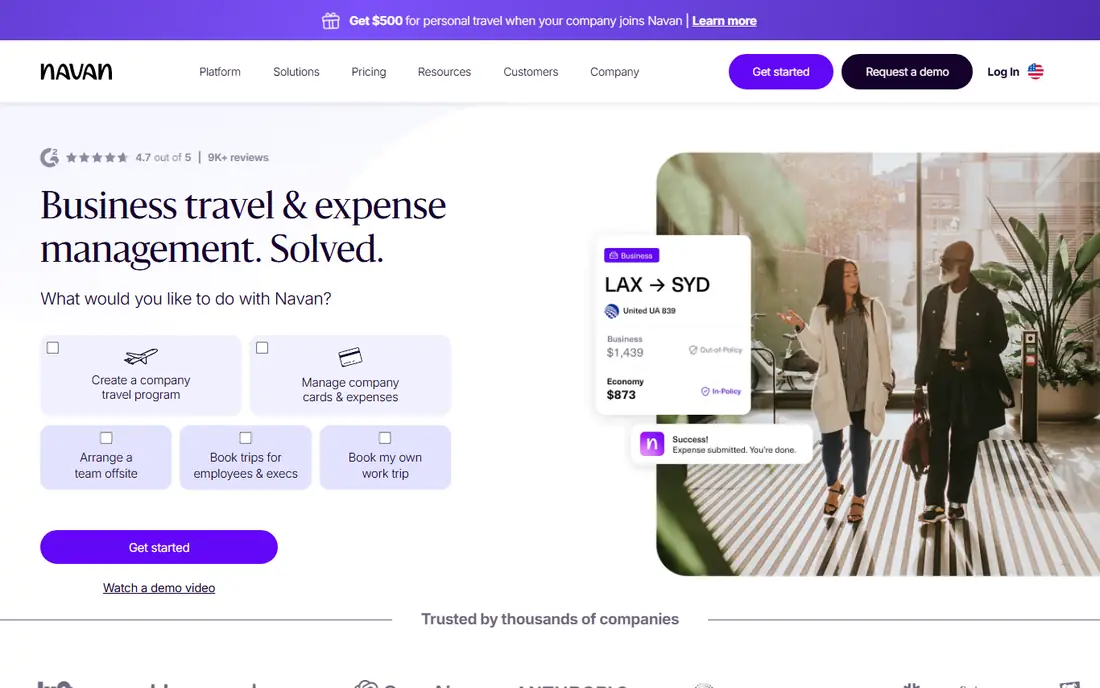
Navan works well when a company wants travelers to book for themselves without losing control of spend. Travelers search flights, hotels, cars and trains in one place, and policy rules flag options that fall outside the agreed limits. Managers see trips and spend in the same system, which cuts down on chasing receipts after the trip ends.
The catch is scale. The free travel offer applies to eligible companies up to a set headcount, and larger companies move to quoted pricing. Expense is free for the first five monthly users, then charged per user per month. That still suits many small and mid-size teams, but finance should model the cost at full headcount before rollout.
- Travel booking is free for eligible smaller companies
- Combines travel, expenses and cards
- Clear policy controls for managers
- Full pricing for larger companies is quoted
- Expense pricing rises after the first free users
- Phone support depends on plan tier
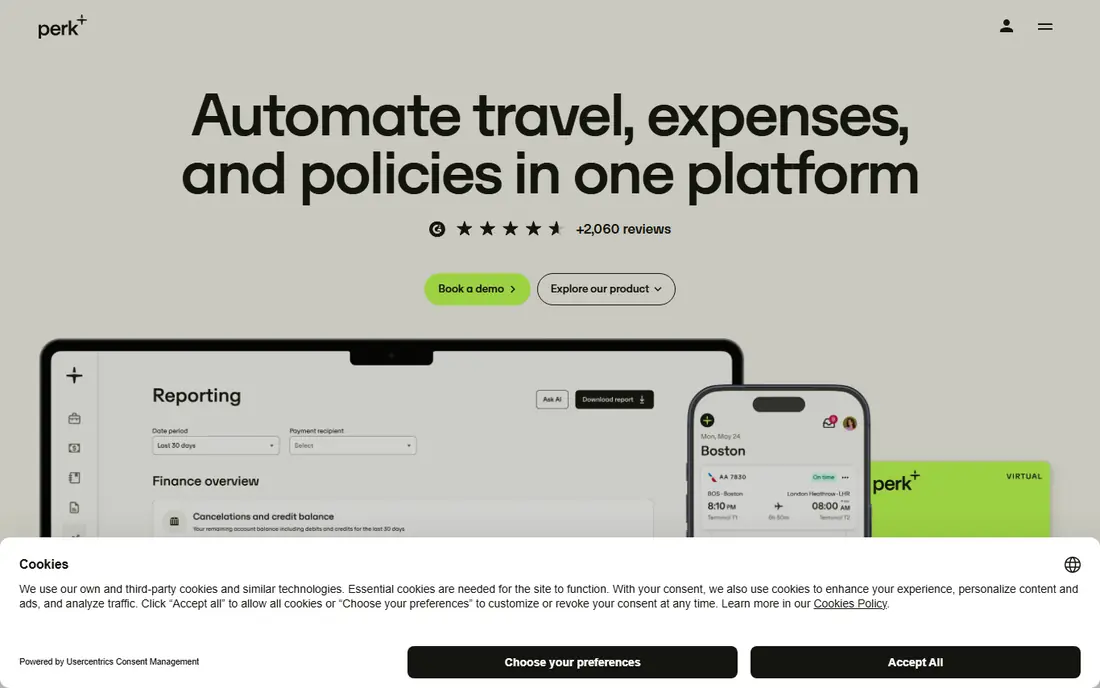
TravelPerk stands out for teams whose plans change often. The Starter plan has no monthly platform fee and charges a percentage per booking, while paid plans lower that percentage for a monthly fee. Its cancellation cover is a clear draw for sales teams and consultants who rebook at short notice.
The trade-off is arithmetic. A team booking many low-value trips can pay more in booking fees than it would on a flat subscription, so compare total booking fees against a paid plan before choosing. Approval flows and reporting are strong, but the cheapest route is not always the cheapest total once volume grows.
- Free Starter plan with per-booking fees
- Wide flight, hotel and rail inventory
- Flexible cancellation cover as an add-on
- Per-booking fees add up at high volume
- Paid plans are needed for lower booking fees
- Some features vary by plan
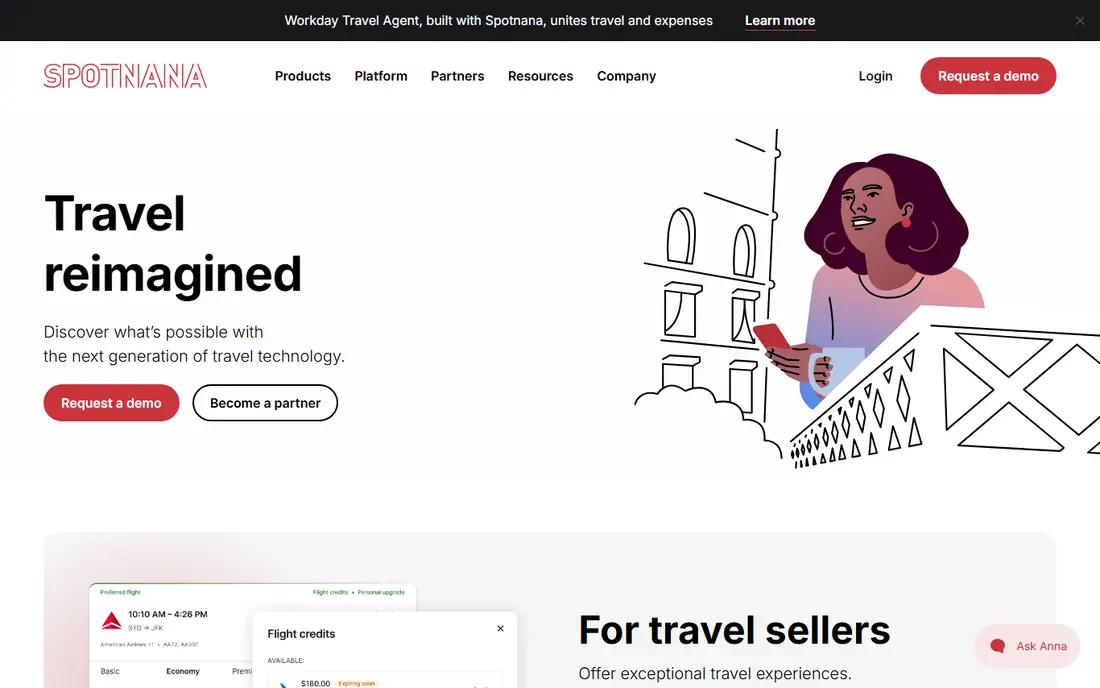
Spotnana is built for companies that book a wide mix of flights, hotels and ground transport and want reliable inventory in one place. Its direct connections aim to show more fares and options than a simple aggregator, and traveler profiles carry preferences and loyalty details forward. That matters for frequent travelers who repeat similar routes.
The honest weakness is transparency on price. Because pricing is quoted, a small team cannot budget from the website alone. Spotnana fits best when travel volume justifies a proper evaluation, a demo and a written quote, rather than a quick signup.
- Broad travel inventory through direct connections
- Traveler profiles and policy controls
- Support for complex itineraries
- Pricing is quoted, not published
- Setup takes more effort than a self-serve tool
- Best value needs a committed rollout
AmTrav pairs a booking platform with people who can help when a trip goes wrong. That combination appeals to companies moving beyond consumer booking sites but not ready for a full enterprise travel management contract. Travelers book online, and specialists can step in for group travel, complex routes or disruption help.
The limit is scale and price clarity. AmTrav does not publish a simple starting price, so buyers need a quote tied to trip volume and service level. Teams with very low travel volume may find a free self-serve tool cheaper, while teams with heavy travel will value the support.
- Human travel specialists alongside the booking tool
- Policy and approval controls
- Reporting for finance teams
- Pricing is quoted
- Smaller inventory feel than the largest platforms
- Service quality depends on account setup
SAP Concur Travel is the established choice for large companies with strict policy and audit needs. It connects booking to expense reporting, so a booked trip can flow into an expense claim with less manual entry. Finance teams get detailed reporting by department, cost center and traveler, which helps with budgeting and compliance.
The cost of that depth is complexity. Implementation, configuration and training take longer than with a modern self-serve tool, and smaller companies may find the system heavier than they need. For a large, global program, though, that depth is the point, and the platform is built to handle it.
- Deep policy, approval and audit controls
- Strong expense integration
- Global reporting for large companies
- Pricing is quoted and often substantial
- Implementation takes time
- Interface feels dated beside newer tools
Egencia, part of American Express Global Business Travel, suits companies that want a managed program rather than just software. Travelers book through the platform, and the service side covers support, negotiated rates and program management. That structure helps companies with travelers in many countries and a need for consistent policy.
The drawback for small teams is fit. Egencia is built for managed programs, so onboarding and contract terms reflect that. A company with only a handful of trips a month will likely do better with a free or low-cost self-serve platform, while a company with steady global travel will get more from Egencia.
- Managed travel service with global coverage
- Negotiated rates and traveler support
- Reporting for program managers
- Pricing is quoted
- Enterprise-focused onboarding
- Less suited to very small teams
TravelBank appeals to finance teams that want travel spend visible next to expense claims and budgets. Travelers book within policy, and managers can track spend against budgets without exporting data between systems. The platform also rewards booking under budget in some setups, which can nudge travelers toward cheaper options.
The weakness is feel. Travelers used to consumer booking sites may find the experience more functional than inspiring, and teams that need hands-on travel agent support should check what service level is included. For a finance-led rollout, though, the reporting and control are the main selling points.
- Travel and expense in one finance-friendly system
- Budgeting and reporting tools
- Rewards for under-budget bookings in some plans
- Pricing is quoted by plan
- Booking experience is finance-first
- Fewer travel specialist services than a managed provider
Ramp is a spend platform first, with travel booking attached, and that order matters. Companies already using Ramp cards and expense controls can add travel without a second vendor, and policy can be enforced through card and approval rules. The free tier makes it easy to trial for a small team.
The limit is specialization. Ramp does not replace a full travel management company for complex itineraries or high-touch traveler support. Teams with simple domestic trips and a strong focus on spend control will like it most, while teams with complex global travel may still want a specialist alongside it.
- Free entry tier includes travel booking
- Cards and expense controls in the same platform
- Clear spend visibility
- Travel is part of a wider spend platform, not a specialist travel agency
- Premium tiers add per-user cost
- Support depth varies by plan
How we picked these
We compared official feature pages, pricing pages, app store listings, privacy policies and public reviews for each platform. We kept only platforms that exist and work today, that book real business travel, and that offer policy or approval controls rather than just consumer search. We favored a mix of free self-serve tools, mid-market platforms and enterprise managed programs, so teams of different sizes can find a fit.
What to check before you sign
Start with your real travel pattern, not the feature list. Count trips per month, typical routes, how often plans change, and how many travelers need approval before booking. A platform that shines for weekly domestic trips may struggle with multi-city international itineraries, and a managed program may be overkill for ten trips a month.
Next, get the full price in writing. Ask about booking fees, per-user charges, support tiers, implementation fees and what happens when headcount grows. Free plans often carry limits on users, support or expense tools, so confirm the cost at your actual team size. Finally, pilot with one team for a month. Measure booking time, policy compliance, support response and expense clean-up, and only roll out wider if those numbers improve on your current process.
Frequently asked questions
What is the best platform for organizing employee travel for a small team?
Navan and TravelPerk are strong starting points, because both offer free entry options and let travelers book while managers keep policy control. Ramp also works when spend control is the main goal. Pilot one platform with a single team and compare booking time and total fees before rolling it out company-wide.
Do these platforms handle approvals and travel policy?
Yes, most of the platforms here include policy rules and approval flows, though depth varies. Smaller tools cover basic limits and approvals, while SAP Concur Travel and Egencia handle complex multi-level approvals and global policy. Check approval routing, spending limits and exception handling during a demo.
How much does a business travel platform cost?
Costs range from free entry plans to quoted enterprise contracts. Free plans may still carry per-booking fees, and expense tools often add a per-user charge. Always ask for a written quote covering booking fees, user charges, support and implementation before comparing totals.
Can travelers keep their loyalty points and preferences?
Most platforms store loyalty numbers and traveler preferences in profiles, though depth varies by supplier and integration. Ask during evaluation whether your main airline and hotel programs are supported, and whether loyalty details carry through to the booking automatically.
What happens when a trip is cancelled or disrupted?
Cancellation terms depend on the fare, the supplier and any flexible cover you buy. TravelPerk offers flexible cancellation cover, and managed providers offer traveler support for rebooking. Read the fare rules and support terms carefully, since a cheap fare can carry strict change rules.
Sources
See where you really rank - block by block
ProMapRanker scans Google Maps across a grid of your service area. Simple monthly plans from $19, white-label on every plan.
Start freeKeep reading
 worlds best local seo company
8 Worlds Best Local SEO Companies for Map Pack Growth in 2026
Compare the worlds best local seo company options for Google Business Profile work, citations, reviews, and multi-location rankings and reporting in 2026.
Read → world's best web hosting company
World's Best Web Hosting Company in 2026
Searching for the world's best web hosting company? We compared 10 hosts on price, renewal rates, speed, and support to help you choose well today in 2026.
Read → who's got the best nanny tax services
Who's Got the Best Nanny Tax Services in 2026
We answer who's got the best nanny tax services, comparing full filing, back taxes, software, and pricing so families can handle nanny taxes correctly.
Read →