 ProMapRanker
Best Platform for Content Ecommerce in 2026

Key takeaways
- Shopify and BigCommerce bundle content, checkout and hosting, which suits stores that want one system for selling and storytelling.
- WooCommerce suits WordPress stores where guides, reviews and product content drive search traffic and sales.
- Wix and Squarespace suit small, design-led stores where the brand story matters as much as the catalogue.
- Headless tools such as Contentful, Storyblok and Sanity suit larger stores publishing product content to a website, an app and marketplaces.
- The best platform for content for ecommerce teams balances easy editing, fast product pages and a checkout that does not get in the way.
Quick comparison
| Pick | Great for | Pricing starts at | Free tier | |
|---|---|---|---|---|
 Shopify | All-round store content | $29 per month | Free trial | Visit |
 WooCommerce | WordPress store content | Free | Yes | Visit |
 BigCommerce | Growing stores | $29 per month | Free trial | Visit |
 Wix | Small design-led stores | See website | Yes | Visit |
 Squarespace | Visual brand stores | See website | Free trial | Visit |
 Adobe Commerce | Enterprise catalogues | See website | No | Visit |
 Ecwid by Lightspeed | Adding a store to a site | See website | Yes | Visit |
 Contentful | Multi-channel product content | See website | Yes | Visit |
 Storyblok | Visual product storytelling | See website | Yes | Visit |
 Sanity | Custom store content | See website | Yes | Visit |
The best platform for content ecommerce
Ecommerce content is more than product descriptions. Guides, buying advice, lookbooks and reviews help shoppers decide, and they also bring search traffic. The tools below cover the best platform for content for ecommerce, from hosted stores to headless content layers.

Shopify handles product pages, blog posts, landing pages and checkout in one hosted system. That matters for content, because a guide can link straight to a product without a separate integration, and social and marketplace channels connect from the same dashboard. Editors can publish a story and attach products in the same workflow.
The cost grows with apps. Reviews, subscriptions, advanced search and email tools often need paid apps, and using a payment gateway outside Shopify Payments can add a fee. Shopify still suits most dedicated stores, since it removes hosting and security work and keeps content close to checkout.
- Hosted checkout and content in one place
- Large app range
- Strong sales channel links
- App costs add up
- Extra fee on some third-party payment gateways
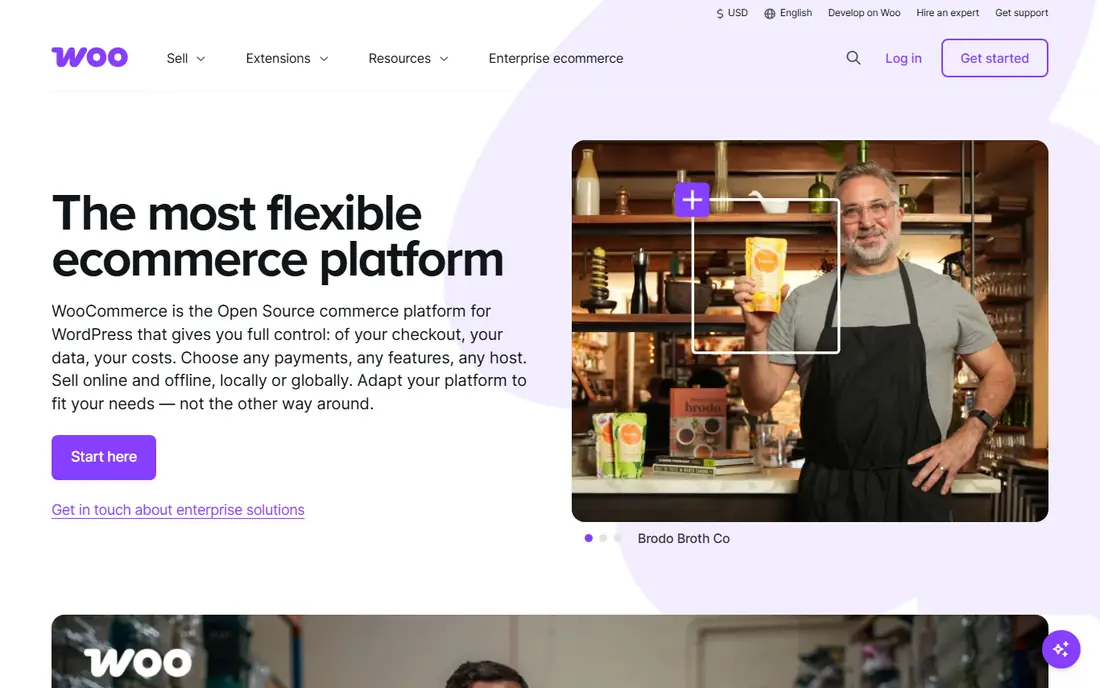
WooCommerce turns WordPress into a store, which makes it the strongest choice when content drives sales. A store can publish detailed guides, comparisons and reviews on the same platform as its products, with full control over search structure, categories and internal links. That control helps stores that rely on organic traffic.
The plugin itself is free, but hosting, themes, payment extensions and maintenance are separate costs and responsibilities. A neglected WordPress store can slow down or break, so someone must own updates. For content-led stores with WordPress skills, WooCommerce offers freedom that hosted platforms cannot match.
- Free core plugin
- Full control over content and data
- Huge WordPress ecosystem
- You pay for hosting and upkeep
- Extensions add cost over time

BigCommerce suits stores that are growing past a simple catalogue. Built-in features cover product options, discounts, search and multi-channel selling, which reduces reliance on paid apps. Its blog and page tools handle guides and brand stories, and product content can be structured for larger catalogues.
Plan upgrades tied to annual sales volume can surprise growing stores, so check thresholds before you commit. Themes also need design work to avoid a generic look. BigCommerce fits mid-market stores that want built-in power and content tools without a large app stack.
- Strong built-in selling features
- No extra gateway fee
- Multi-channel selling
- Sales thresholds can force plan upgrades
- Themes need care to look distinctive
Wix works well when a small store's brand story is the selling point. The same visual editor builds product pages, lookbooks, guides and a blog, so a founder can keep the whole site consistent without a developer. Setup is fast, and commerce plans accept payments without a separate platform.
Scale is the limit. Large catalogues, complex discounts and advanced content workflows feel cramped, and the app range is smaller than Shopify. Wix suits boutiques, makers and service sellers with a modest catalogue and a strong visual brand, rather than a high-volume catalogue business.
- Visual builder for store and content pages
- Many templates
- Simple setup
- Weaker at large scale
- Smaller app range than Shopify
Squarespace suits brands that sell through imagery and story. Product pages, editorial guides and lookbooks share the same polished templates, and blogging is built in rather than bolted on. That makes it easy to publish a seasonal guide that links to a small, curated catalogue.
Commerce depth is thinner than Shopify or BigCommerce, and lower commerce plans carry a transaction fee on top of payment processing. Squarespace fits creators and small brands with a focused range, not stores with complex variants, subscriptions or wholesale needs.
- Polished templates
- Blogging and commerce in one account
- Simple editing
- Fewer commerce extensions
- Transaction fees on lower commerce plans
Adobe Commerce, formerly Magento, is built for large, complex stores. It handles multi-store setups, large catalogues, customer segments and advanced merchandising, with content pages and product content managed in the same system. Enterprises with developers can shape almost every part of the buying journey.
That power comes with enterprise pricing and a real need for development support. Small stores will find it slow and costly compared with hosted platforms. Adobe Commerce suits large brands where catalogue complexity and custom workflows justify a dedicated team.
- Deep catalogue and multi-store control
- Flexible content and merchandising
- Enterprise integrations
- Enterprise pricing
- Needs developers to build and maintain
Ecwid takes a different path. Instead of rebuilding a site, it drops a store into an existing website, blog or social page. That suits a content site that already attracts readers and wants to sell a small range without moving platforms. The free plan covers a tiny catalogue, which is enough to test selling.
Ecwid is not a full content platform on its own. Blog posts, guides and brand pages stay on the host site, so content quality depends on that system. Choose Ecwid when the site already works and the store is the add-on, not when you need a new store and content home from scratch.
- Embeds a store into an existing site
- Free plan for tiny catalogues
- Social selling links
- Not a full site builder
- Content still lives on the host site
Contentful suits larger stores that publish product content in many places. Product stories, specifications, guides and campaign pages can be stored once and delivered through an API to a website, an app or a marketplace listing. That single source reduces errors when prices, images or descriptions change.
A front end must still be built, and paid plans cost far more than the free tier. Contentful is a content layer, not a checkout, so it pairs with a commerce platform rather than replacing one. It fits brands where consistent product content across channels is a daily operational need.
- One content source for website, app and channels
- Strong structure for product data
- Governance tools
- Front end built separately
- Paid plans are expensive
Storyblok gives marketers visual control over product storytelling on a headless base. Editors can build landing pages from reusable components, preview them before publishing, and reuse product blocks across campaigns. That speed helps seasonal stores that launch many campaign pages each year.
Like Contentful, Storyblok needs a commerce system and a front end to sell. Paid pricing also rises as a team grows. Storyblok suits marketing-led stores that want visual editing and multi-channel content without returning to a monolithic platform for every page change.
- Visual editing for product pages
- Reusable components
- Previews before publishing
- Paid plans rise with growth
- Needs a commerce front end
Sanity lets a store model product content exactly as the business needs it, from technical specifications to editorial guides and campaign blocks. Editors collaborate in real time, and content flows to any front end through an API. The free tier makes it practical for a small team to test a custom approach.
Developer support is required, since Sanity does not ship a storefront or checkout. For a store with a custom front end and a content-heavy catalogue, that flexibility is worth the build time. For a standard store, a hosted platform will be faster and cheaper.
- Flexible product content models
- Real-time editing
- Generous free tier
- Needs developers
- Setup is longer than a hosted store
How we picked these
We compared official pricing pages, content workflows and commerce features for platforms that support both selling and publishing. We favoured tools with a current trial or free tier, a clear way to link guides to products, and a realistic path from a small store to a larger catalogue. We left out pure blog tools with no commerce link and pure checkout tools with no content workflow. We compared feature pages, pricing and public reviews rather than claiming hands-on testing.
How to choose for your store
Start with how shoppers find you. If search and guides drive sales, favour WooCommerce or a headless content layer that gives you full control over content structure. If paid ads and social traffic drive sales, favour a hosted platform with fast checkout and simple landing pages. The traffic source should shape the content tool, not the other way round.
Next, count the catalogue and the team. A small catalogue with one editor suits Wix, Squarespace or Shopify. A large catalogue with a marketing team suits BigCommerce, Adobe Commerce or a headless layer. Check who can publish a guide, update a product description and fix a broken link, since content delays cost sales during a campaign.
Finally, check total cost. Add hosting, apps, themes, payment fees and any transaction fees to the monthly plan price. A platform that looks cheap can cost more once reviews, search, email and subscriptions are added. A short trial with a real product and a real guide will reveal more than a feature list.
Frequently asked questions
What is the best platform for content for ecommerce stores?
Shopify suits most dedicated stores because content, products and checkout sit together. WooCommerce suits content-led WordPress stores, and BigCommerce suits growing stores that want built-in features. The best choice depends on catalogue size, traffic source and team skills.
What are the best tools for content ecommerce on a small budget?
WooCommerce with affordable hosting, Ecwid on an existing site, and Wix or Squarespace for small catalogues all keep costs low. WooCommerce needs upkeep time, while hosted builders bundle hosting. For a tiny catalogue, Ecwid's free plan can test selling before a full store investment.
Should an ecommerce store use a headless content platform?
A headless platform helps when product content must appear on a website, an app and other channels from one source. It needs developer support and a separate commerce front end. A single-channel store will usually be faster and cheaper on a hosted platform.
Can I run guides and a store on Shopify?
Yes. Shopify includes a blog and pages, and guides can link directly to products. For advanced editorial workflows, larger stores often pair Shopify with a headless content tool, but most small and mid-size stores manage guides inside Shopify itself.
How do I keep product content consistent across channels?
Store product stories, specifications and images in one system and publish from there, rather than editing each channel separately. Headless tools such as Contentful, Storyblok and Sanity are built for this, while hosted platforms need careful manual checks when the same product appears in several places.
Sources
See where you really rank - block by block
ProMapRanker scans Google Maps across a grid of your service area. Simple monthly plans from $19, white-label on every plan.
Start freeKeep reading
 zscaler alternatives
Best Zscaler Alternatives in 2026
Looking for zscaler alternatives? We compare 9 SASE and zero trust platforms on architecture, data protection, pricing, and fit for your network and team.
Read → zapier alternatives free
Best Zapier Alternatives Free in 2026
Nine automation tools for zapier alternatives free in 2026, all with genuinely free tiers, plus free plan limits, starting prices and upgrade paths explained.
Read → which platform is best for online reputation
Which Platform Is Best for Online Reputation in 2026
Wondering which platform is best for online reputation? We compare 8 review, listing, and response tools for small and multi-location businesses and agencies.
Read →