 ProMapRanker
Best Platform for AI Contract Management in 2026

Key takeaways
- Ironclad and Icertis suit large legal teams with complex workflows and high contract volumes.
- DocuSign CLM suits firms already using DocuSign for signatures and wanting lifecycle tools in the same ecosystem.
- Agiloft, Juro and SpotDraft suit teams that want configurability or a faster start without enterprise implementation.
- AI contract tools help with drafting, clause review and obligation tracking, but a lawyer should still review high-risk terms before signing.
Quick comparison
| Pick | Great for | Pricing starts at | Free tier | |
|---|---|---|---|---|
 Ironclad | Complex legal workflows | See website | No | Visit |
 DocuSign CLM | DocuSign ecosystem teams | See website | No | Visit |
 Icertis | Global enterprise governance | See website | No | Visit |
 Agiloft | Configurable contract workflows | See website | Free trial | Visit |
 ContractPodAi | AI-first drafting and review | See website | Free trial | Visit |
 Luminance | AI contract analysis at scale | See website | Free trial | Visit |
 Juro | Fast contract creation for growing teams | See website | Free trial | Visit |
 SpotDraft | AI review for legal and business teams | See website | Free trial | Visit |
 LinkSquares | Repository, analysis and obligation tracking | See website | Free trial | Visit |
The best platform for AI contract management
AI contract management covers drafting, negotiation, approval, signature, storage and obligation tracking. The AI part usually helps in three places: drafting from templates, reviewing third-party paper against your playbook, and extracting dates, obligations and clauses from signed contracts. No tool removes legal judgment, and the best platform is the one that fits your contract volume, your approval complexity and the systems your sales, procurement and legal teams already use. This is general business information, not legal advice, and high-risk contracts still need a qualified lawyer.
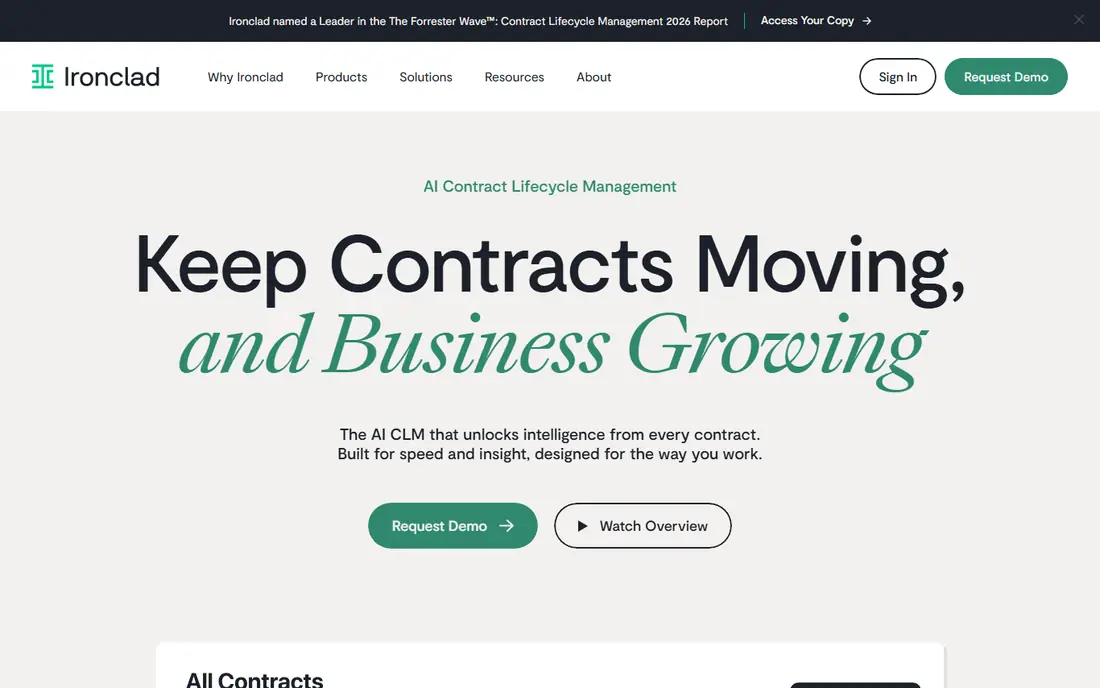
Ironclad is built for legal teams that handle many contracts across departments and need approvals to follow clear, auditable routes. Its workflow designer lets teams build conditional approval paths without code, so a sales contract, a vendor agreement and an employment offer can each follow different rules. AI features help review third-party paper against a playbook, suggest fallback language and search the repository for clauses, dates and obligations. For firms with high volume and complex routing, that combination saves legal time and reduces version chaos.
The cost and setup are the main barriers. Ironclad uses quote-based enterprise pricing, and implementation involves workflow design, template setup and integration work before value appears. Small teams with low volume will find it hard to justify. For mid-market and enterprise legal teams that need control, audit trails and CRM integration, Ironclad is a leading choice, provided the budget and implementation time are planned honestly.
- Visual no-code workflow designer
- AI-assisted redlining and repository search
- Deep Salesforce integration
- Enterprise pricing with no public price
- Implementation takes time and planning

DocuSign CLM extends the familiar DocuSign signature product into full contract lifecycle management. Teams can generate contracts from CRM data, route them for negotiation and approval, collect signatures and store signed copies in a searchable repository. AI features help extract clauses from signed documents and track obligations such as renewals and notice dates. For firms already using DocuSign eSignature, the shared identity, audit trail and user familiarity reduce training time.
DocuSign CLM is priced for enterprise and mid-market teams, and smaller firms may find the total cost high for basic needs. It also works best when paired with DocuSign signature and, for sales use, a CRM such as Salesforce. Firms that already rely on DocuSign for execution will get the most value. Firms that only need storage and simple signatures should compare a lighter tool first.
- Full lifecycle plus trusted e-signature
- Document generation from CRM data
- Clause extraction and obligation tracking
- Enterprise pricing
- Best value for firms already using DocuSign
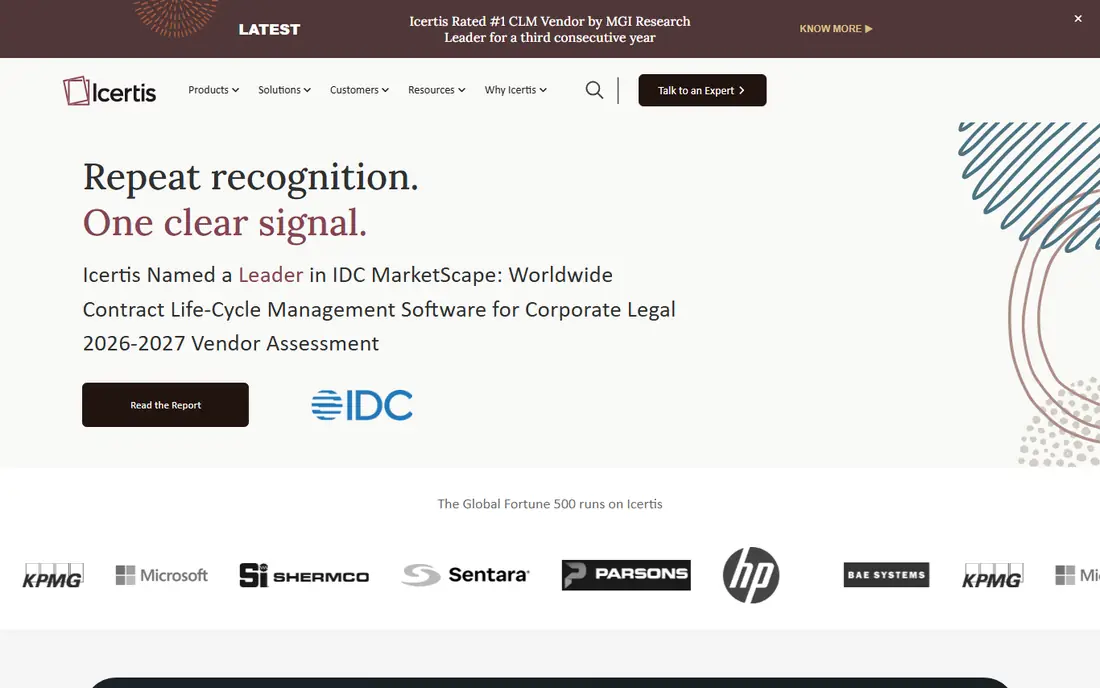
Icertis suits global enterprises that need one contract system across regions, business units and contract types. Its platform focuses on contract intelligence, turning signed agreements into structured data on obligations, commitments and risks that finance, procurement and legal teams can query. Governance controls, approval workflows and integrations with ERP and CRM systems help large firms keep contracts consistent across borders. For firms with thousands of contracts and strict compliance needs, that scale matters.
Implementation is not quick. Large estates need data migration, template design and governance setup, and pricing is enterprise-only. Smaller firms will find Icertis more than they need. For global enterprises that treat contracts as a source of business data, not just documents, Icertis is one of the strongest platforms available.
- Enterprise-scale contract intelligence
- Strong governance and obligation management
- Broad integrations
- Long implementation for complex estates
- Enterprise pricing only
Agiloft is known for configurability. Teams can build contract workflows, approval rules, templates and reports without code, and adapt the system as their process changes. AI features help extract key terms from contracts and route work based on those terms, while the repository supports search, alerts and obligation tracking. That flexibility suits firms with unusual workflows, such as complex service agreements or multi-stage procurement approvals, that a fixed template tool cannot handle.
Flexibility brings setup work. Teams need to design workflows, fields and permissions carefully, or the system can become complex to maintain. The interface is functional rather than polished, which matters less for legal and operations teams than for casual users. For firms that want a platform they can shape to their own process, Agiloft is a strong and often more affordable enterprise option.
- Highly configurable no-code platform
- AI extraction and workflow automation
- Flexible deployment
- Configuration takes planning
- Interface feels enterprise rather than consumer-simple
ContractPodAi positions AI at the centre of contract work, with tools for drafting, reviewing and managing contracts in one system. Its AI assistant helps draft clauses, review third-party paper and summarise key terms, while the repository and workflow tools handle approvals, signatures and obligation alerts. For legal teams that want AI help across the whole lifecycle, rather than a single review add-on, that breadth is appealing.
As with other AI-first platforms, results depend on setup. Playbooks, templates and clause libraries need to reflect your firm's positions, or AI suggestions will be generic. Pricing is quote-based and aimed at mid-market and enterprise teams. Firms willing to invest in playbook design will get more from ContractPodAi than firms that want an out-of-the-box tool with no setup.
- AI drafting and review in one platform
- Repository with smart search
- Workflow automation
- Enterprise pricing
- AI features need playbook setup to work well
Luminance is best known for AI analysis of large contract sets, which suits due diligence, audits, portfolio reviews and post-merger contract work. Its AI reads contracts, extracts clauses, dates and obligations, and highlights unusual terms or risks for human review. That speed matters when a team must review hundreds or thousands of agreements in a short window. Luminance also supports drafting and negotiation features, but its core strength remains analysis.
Teams that need a full workflow system for everyday sales and procurement contracts may prefer a broader CLM platform. Luminance pricing is aimed at law firms and enterprises, so smaller teams should check whether a trial covers their use case. For analysis-heavy work, where understanding a large contract portfolio quickly is the main goal, Luminance is a strong pick.
- Strong AI analysis for large contract sets
- Clause and obligation extraction
- Useful for due diligence and audits
- Less of a full workflow tool than some rivals
- Pricing aimed at firms and enterprises
Juro suits growing firms that want contracts created, negotiated and signed in the browser without heavy implementation. Its template system lets business teams generate contracts from approved language, while legal teams keep control of clauses and approvals. Negotiation happens in the browser with a clear audit trail, which reduces email version chaos. The interface is cleaner than many enterprise CLM tools, which helps adoption by sales and operations teams.
Very large enterprises with complex, multi-system workflows may outgrow Juro or need its higher tiers and integrations. It also works best when firms invest in good templates first, since template quality drives most of the time saving. For startups, scale-ups and mid-size firms that want a fast start and a modern experience, Juro is an appealing choice.
- Browser-based drafting and negotiation
- Template automation
- Clean user experience
- Less suited to very complex enterprise estates
- Advanced features need higher tiers
SpotDraft combines AI review, drafting support and contract management for legal and business teams that want faster turnaround without enterprise complexity. Its AI tools help review incoming paper, suggest redlines based on playbooks and extract key terms for the repository. Workflow and obligation features help teams track renewals and approvals after signature. Onboarding is more approachable than many enterprise CLM tools, which suits firms without a large legal operations team.
SpotDraft is not a substitute for legal judgment, especially on high-risk clauses, liability limits and indemnities. AI suggestions should be reviewed by a lawyer before signing, and playbooks need to be set up well to be useful. For firms that want AI review plus a usable repository and workflow system, SpotDraft offers a balanced middle path between simple storage and full enterprise CLM.
- AI contract review and redlining
- Repository and obligation tracking
- Approachable onboarding
- Enterprise depth varies by plan
- AI review still needs human checks on high-risk terms
LinkSquares focuses on what happens after signature, turning signed contracts into searchable data on obligations, renewals and risks. Its AI extracts key terms and dates, and its dashboards help finance and legal teams see upcoming renewals, expiring terms and exposure across the portfolio. That post-signature view is often missing in firms that store contracts in shared drives, where renewal dates are found too late. LinkSquares also offers drafting and workflow tools, but its repository strength is the main draw.
Teams that need deep pre-signature workflow automation should compare LinkSquares carefully with Ironclad, Agiloft or DocuSign CLM, since depth varies by plan. The repository also works best after a cleanup, since old, misfiled contracts need to be organised before AI extraction can be trusted. For firms whose main pain is lost renewals and unclear obligations, LinkSquares is a strong choice.
- Strong AI repository and search
- Obligation and renewal tracking
- Useful post-signature analytics
- Workflow depth varies by plan
- Best value when paired with a clear repository cleanup
How we picked these
We compared official product pages, AI features for drafting, review and extraction, workflow and repository tools, and pricing transparency for each platform. We favoured platforms live in October 2026 that cover a clear part of the contract lifecycle, from drafting to post-signature tracking, and that serve different team sizes. We did not test AI review accuracy ourselves, and we did not treat vendor claims about time saved as verified results. Trial each shortlisted platform with your own contracts and playbooks before committing.
How to choose an AI contract platform
Start with where contracts break today. If negotiation drags, weight redlining, playbooks and browser collaboration. If approvals stall, weight workflow design and parallel routing. If renewals are missed, weight repository search and obligation alerts. A platform that is strong in one area may be weak in another, so map your shortlist to your top two problems, not to the longest feature list.
Next, test AI with your own paper. Upload a real vendor agreement, a sales contract and a renewal-heavy agreement, and check whether the AI finds the clauses, dates and risks that matter to you. Ask how the vendor handles data privacy, whether your contracts train its models, and where data is stored. For regulated or confidential contracts, those answers matter as much as accuracy. Also check integrations with your CRM, ERP, signature tool and document storage, since a contract tool that sits apart from daily work will be ignored.
Finally, plan for setup and ownership. Templates, playbooks and approval rules need an owner, and AI tools need review by a lawyer on high-risk terms. Budget for implementation, training and template cleanup, not just the licence fee. Start with one contract type, prove the workflow, then expand. That staged approach avoids a large system that nobody uses, and it lets legal teams build trust in AI suggestions gradually.
Frequently asked questions
What is the best AI contract management software?
The best software depends on your team size and contract complexity. Ironclad and Icertis suit large enterprises, DocuSign CLM suits DocuSign users, and Juro, SpotDraft and Agiloft suit growing or configurable teams. Test two platforms with your own contracts before choosing, since workflow fit matters more than AI marketing.
What is the best AI contract management platform for small businesses?
Juro and SpotDraft are often better starting points for smaller firms, since they offer faster onboarding and clearer interfaces than enterprise CLM platforms. Small firms should still set up templates and playbooks, and use a lawyer for high-risk terms. If volume is very low, a template library plus e-signature may be enough for now.
What are the best AI contract analysis tools?
Luminance and LinkSquares stand out for analysis, with Luminance strong on large portfolio reviews and LinkSquares strong on repository search and obligation tracking. ContractPodAi and Ironclad also offer AI review inside a wider lifecycle platform. The best analysis tool depends on whether you need one-time review or ongoing portfolio tracking.
Can AI contract management replace a lawyer?
No, AI can draft, flag risks and extract terms, but it cannot replace legal judgment on high-risk clauses, liability, indemnity and regulatory terms. Use AI to speed routine work and surface issues, then have a qualified lawyer review contracts that carry material risk. This article is general information, not legal advice.
How much does AI contract management software cost?
Most enterprise platforms use quote-based pricing, with annual costs varying widely by users, volume and modules. Smaller and mid-market platforms may offer published tiers or trials, but total cost still includes implementation and template setup. Get quotes for your contract volume and check what AI modules are included versus add-ons.
What should I check before buying a contract platform?
Check data privacy and model training terms, integration with your CRM and signature tools, workflow fit for your top contract types, and obligation tracking after signature. Test AI review with your own contracts, confirm pricing for all modules, and plan who will own templates and playbooks after launch.
Sources
See where you really rank - block by block
ProMapRanker scans Google Maps across a grid of your service area. Simple monthly plans from $19, white-label on every plan.
Start freeKeep reading
 zscaler alternatives
Best Zscaler Alternatives in 2026
Looking for zscaler alternatives? We compare 9 SASE and zero trust platforms on architecture, data protection, pricing, and fit for your network and team.
Read → zapier alternatives free
Best Zapier Alternatives Free in 2026
Nine automation tools for zapier alternatives free in 2026, all with genuinely free tiers, plus free plan limits, starting prices and upgrade paths explained.
Read → which platform is best for online reputation
Which Platform Is Best for Online Reputation in 2026
Wondering which platform is best for online reputation? We compare 8 review, listing, and response tools for small and multi-location businesses and agencies.
Read →