 ProMapRanker
Best Places to Hire Mobile App Developers in 2026

Key takeaways
- Vetted networks such as Toptal, Arc and Lemon.io suit firms without a technical interviewer, because screening is built into the price.
- Open marketplaces such as Upwork, Freelancer and Fiverr suit firms that can screen portfolios, run a technical test and manage the hire directly.
- Turing and Gun.io suit firms that want senior, pre-screened developers for longer engagements, while Wellfound suits startups hiring full-time staff.
- This guide is based on publicly reported factors such as vetting, pricing models and hiring speed, not a verified ranking, and rates vary by region and seniority.
Quick comparison
| Pick | Great for | Pricing starts at | Free tier | |
|---|---|---|---|---|
 Toptal | Senior vetted developers | See website | Free trial | Visit |
 Arc | Vetted developers with fast matching | See website | Free trial | Visit |
 Upwork | Broad choice and budget control | See website | Yes | Visit |
 Lemon.io | Startup hires within days | See website | Free trial | Visit |
 Turing | Enterprise-grade pre-screened talent | See website | Free trial | Visit |
 Freelancer | Contest and project-based hires | See website | Yes | Visit |
 Fiverr | Fixed-price mobile tasks | See website | Yes | Visit |
 Wellfound | Full-time startup developers | See website | Yes | Visit |
The best places to hire mobile app developers
We compared vetting depth, hiring speed, pricing model and support for iOS, Android and cross-platform work. Rates are not fixed here, because platform fees and developer rates change by skill, region and engagement length.
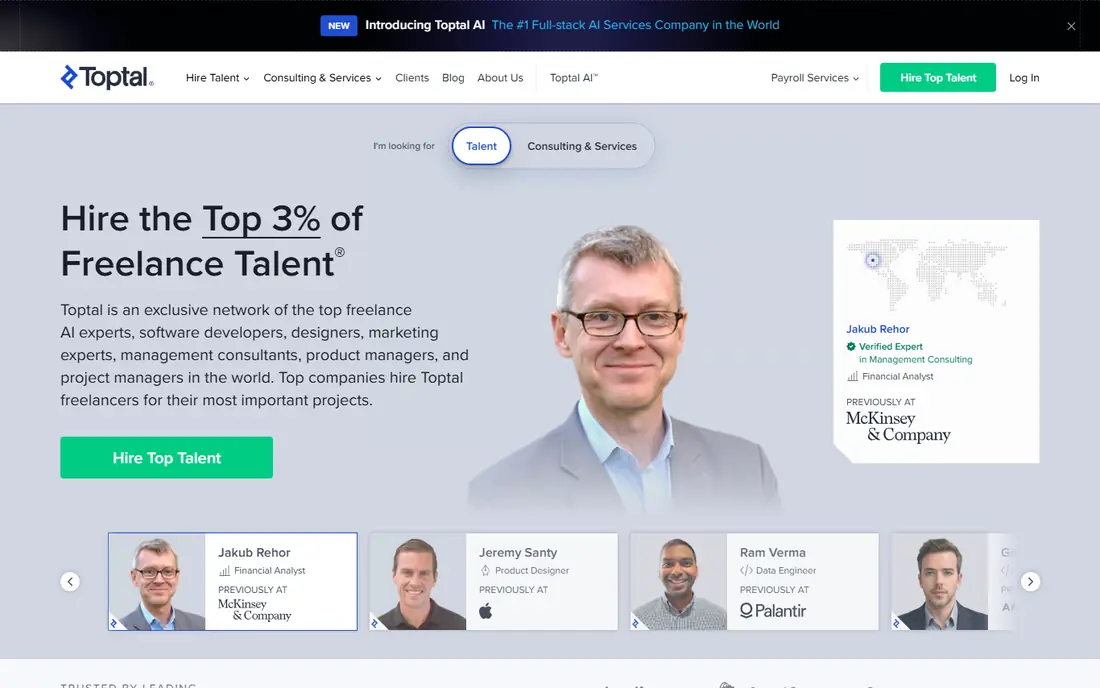
Toptal suits a firm that needs a senior mobile developer for a core product and cannot afford a weak hire. Candidates pass screening for skill, communication and past work, and clients often meet a first candidate within days. That vetting is the product, and it is why Toptal fits mission-critical work.
The trade-off is price and process. Rates are quoted after a call, a monthly subscription applies, and the model fits longer, higher-value work better than a one-week fix. If you have a technical reviewer in-house and a tight budget, an open marketplace may give better value.
- Rigorous multi-step screening
- Senior iOS, Android and cross-platform talent
- Trial period for the first engagement
- No public hourly rates
- Monthly subscription fee applies
- Premium pricing for senior talent
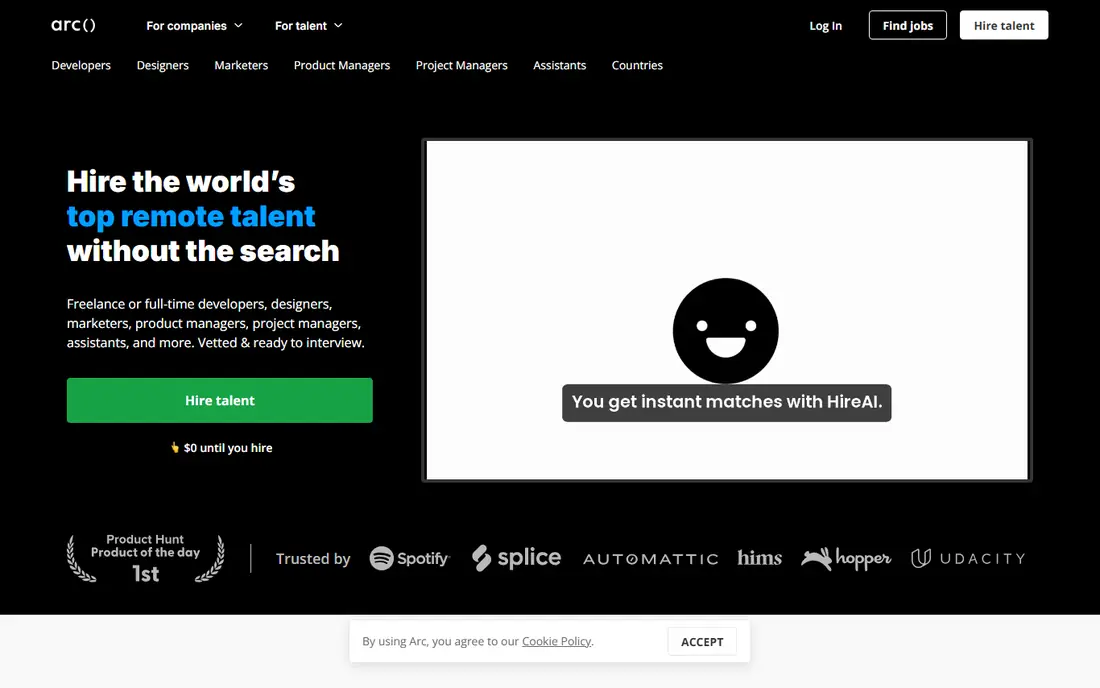
Arc suits firms that want vetted talent without the Toptal price or timeline. You describe the stack, such as Flutter, React Native or native iOS and Android, and Arc returns matched developers you can interview. Freelance and full-time paths sit in one platform, which helps when a contract turns into a permanent hire.
Check the deposit, trial terms and conversion terms before you start, because those details change by engagement type. For mid-to-senior mobile work with a clear brief, Arc is a strong balance of speed, vetting and choice.
- AI-assisted matching to vetted developers
- Freelance and full-time options
- Trial period for freelance hires
- Rates vary by developer and region
- Refundable deposit may apply
- Vetting depth varies by role
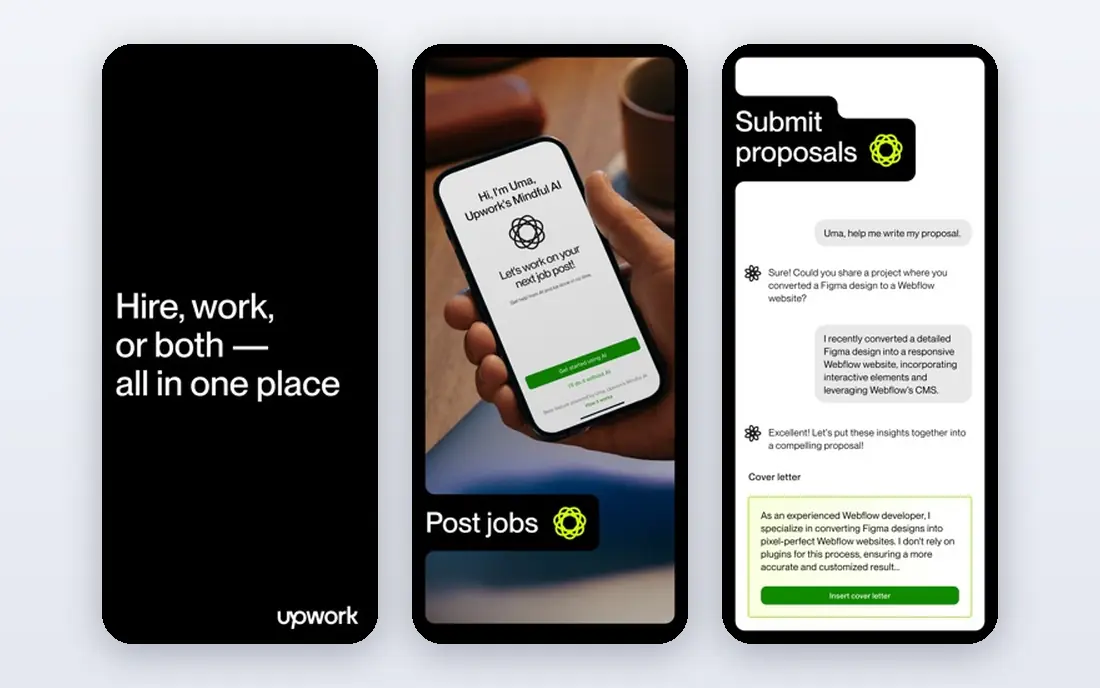
Upwork suits firms with a clear brief and someone able to run a technical screen. You can post a job, review portfolios and past client feedback, run a small paid test task, and hire hourly or for a fixed scope. That breadth covers native apps, Flutter, React Native and niche skills in one place.
The risk is screening load. A broad pool means strong and weak candidates sit side by side, and a rushed hire can cost more in rework than a vetted network would have cost upfront. Use a paid test task tied to your real stack, check references, and set milestones before full build work starts.
- Very large developer pool
- Hourly and fixed-price contracts
- Built-in contracts, time tracking and payments
- You must screen candidates yourself
- Quality varies widely
- Client marketplace fees apply on top of developer rates
Lemon.io suits a startup that needs a developer this week and wants screening done first. Developers are vetted for seniority and stack fit, and matching is built for speed rather than a long search. That combination fits an MVP, a feature sprint or a rescue task where delay costs more than a premium rate.
The limit is scale. A large firm hiring many developers across many stacks may prefer a bigger network or a staffing partner. For one to three mobile developers on a defined product, Lemon.io is a practical, fast route.
- Vetted developers with startup experience
- Fast matching, often within days
- Trial period for new hires
- Focus on startups may limit enterprise fit
- Rates are quoted per engagement
- Pool is smaller than open marketplaces
Turing suits firms that want a pre-screened, senior developer for a longer engagement and can run a structured onboarding. Screening combines automated tests with human review, and the platform supports remote work across time zones. That model fits firms building a product over months, not days.
Small, short tasks are a weaker fit, because the process and pricing suit sustained work. If your need is a single screen fix or a short audit, a marketplace or a vetted short-term network will move faster.
- Automated and human screening for senior talent
- Global developer pool
- Support for longer engagements
- Enterprise focus can feel heavy for a tiny project
- Rates are quoted, not public
- Onboarding takes planning
Freelancer suits project-based mobile work with a fixed scope, such as a small app, a prototype or a defined feature set. You can post a project, compare bids, and pay by milestone as work is delivered. Contests can also help when you need several design directions before you pick a developer.
Complex, long-term mobile products need more care here. Screen for shipped apps in your stack, ask for code samples or a live app link, and break the build into milestones with acceptance checks. Without that discipline, a low bid can turn into a costly rebuild.
- Large global pool
- Contests for design-led work
- Milestone payments for project work
- Quality varies and needs careful screening
- Fees apply to projects
- Contest work suits design more than complex code
Fiverr suits small, well-defined mobile tasks: a bug fix, a single screen, an app store asset set, or a short audit. Fixed packages make cost clear upfront, and seller reviews and portfolios help you judge fit for that narrow task. For a founder who needs a quick, bounded piece of work, that clarity is useful.
Do not use Fiverr as a substitute for a product team on a large build. Scope, ownership of code, testing and long-term support all need a written agreement, and a large app benefits from a developer who stays with the product. Use Fiverr for tasks, not for a whole product roadmap.
- Fixed-price packages for defined tasks
- Clear scope and delivery terms
- Fast start for small jobs
- Not built for large, ongoing product builds
- Quality varies by seller
- Revisions and scope changes need care
Wellfound, formerly AngelList Talent, suits startups hiring a full-time mobile developer. Candidates expect startup work, many listings show salary and equity ranges, and you hire directly rather than through a marketplace contract. That direct path fits a firm ready to add a permanent team member.
The trade-off is effort. Wellfound gives reach, not vetting, so you still need a technical interview, a work sample and reference checks. For a full-time hire where culture and long-term fit matter, that effort is worth it, and the startup focus keeps the candidate pool relevant.
- Startup-focused developer pool
- Direct hiring without marketplace fees on the hire itself
- Salary and equity transparency in many listings
- You handle screening and interviews
- Best for full-time roles, not short contracts
- Pool leans toward startups
How we picked these
We compared public platform pages, vetting descriptions, pricing models and hiring flows, and we kept only platforms that are active in October 2026 for mobile developer hiring. We treated this as a guide based on publicly reported factors, not a verified ranking, and we did not invent hourly rates, acceptance rates or placement counts. Where a platform quotes rates only after a call, we say so, and we flag where you must do your own screening.
How to hire well on any platform
Start with a one-page brief before you post anything. State the platforms, the stack, the core features, the timeline, the budget range and how you will judge success. A vague brief invites vague bids, while a brief with a real feature list and a test task invites serious developers to show relevant work.
Screen for shipped work, not only claims. Ask for live app links, a code sample or a short walkthrough of a similar feature, and check who actually built the work shown. A portfolio of polished mockups is not proof of a shipped, maintained app, and a developer who can explain trade-offs is usually safer than one who promises every feature at once.
Use a paid test task
Give finalists the same small, paid task from your real product, such as a screen, an API integration or a bug fix, with a clear deadline. Review code quality, communication and how they handle unclear requirements, not only whether the task works. That test predicts working style far better than a CV or a timed puzzle.
Agree terms in writing
Agree scope, milestones, code ownership, testing, app store submission, support period and payment terms before build work starts. State who owns accounts, keys and store listings, and how handover works if the engagement ends. A short written agreement prevents most disputes, and it protects both sides when a project changes direction.
Frequently asked questions
What is the best place to hire mobile app developers for a startup?
For a startup, Lemon.io and Arc suit fast, vetted hires, while Wellfound suits a full-time hire and Upwork suits a tight budget with in-house screening. Pick by whether you need speed, vetting or a permanent team member first.
How much does it cost to hire a mobile app developer?
Costs vary widely by region, seniority, stack and engagement length, and many vetted networks quote only after a call. Open marketplaces show a wider rate range, while vetted networks tend to cost more because screening is included. Get at least two quotes for the same brief before you judge price.
Should I hire a freelancer or an agency for a mobile app?
A freelancer suits a defined feature, an MVP or ongoing product work with one developer, while an agency suits a full product with design, backend and QA needs. Freelancers cost less and move faster for narrow work, while agencies cover more roles under one contract.
Is Upwork good for hiring mobile app developers?
Yes, if you can screen well. Upwork gives the broadest choice and flexible contracts, but quality varies, so use portfolios, live app links, a paid test task and milestone payments. Firms without a technical reviewer should consider a vetted network instead.
How long does it take to hire a mobile app developer?
Vetted networks often match within days, open marketplaces can move in days if your brief is clear, and full-time hiring usually takes weeks. A clear brief, a fast interview loop and a paid test task shorten every route, while a vague brief slows all of them.
Sources
See where you really rank - block by block
ProMapRanker scans Google Maps across a grid of your service area. Simple monthly plans from $19, white-label on every plan.
Start freeKeep reading
 zoro.to alternatives
Best Zoro.to Alternatives in 2026
We compare the best zoro.to alternatives in 2026, listing only legal licensed anime streaming services, from Crunchyroll to free options for fans today.
Read → zip alternatives
Best Zip Alternatives in 2026
We compare the best zip alternatives for buy now, pay later in 2026, covering pay-in-4 plans, fees, spending limits, and credit reporting options today.
Read → yesware alternatives
Best Yesware Alternatives in 2026
Compare the best yesware alternatives for sales email tracking, templates, and sequences, with current pricing and honest tradeoffs for small sales teams.
Read →