 ProMapRanker
Best PIM Software for Small Retail Business in 2026


Small retailers who want a free start and SKU pricing · Pricing starts at: Free
Key takeaways
- A small retail PIM should first fix one source of truth for product data, not promise every enterprise feature at once.
- Plytix, Ergonode, and open source tools offer the lowest-cost starts, while Sales Layer and Catsy suit teams that want guided setup.
- Quote-based pricing makes comparison hard, so ask for a total price for your SKU count, users, and channels.
- Channel feeds and marketplace connections matter as much as the PIM itself, since clean data only helps when it reaches the storefront.
Quick comparison
| Pick | Great for | Pricing starts at | Free tier | |
|---|---|---|---|---|
| Plytix | Small retailers who want a free start and SKU pricing | Free | Yes | Visit |
 Akeneo | Retailers who want an open source core | Free | Yes | Visit |
 Sales Layer | Teams that want an easy PIM with guided setup | See website | Free trial | Visit |
 Catsy | Retailers who need catalogue and channel publishing | See website | Free trial | Visit |
 Ergonode | Small teams that want a free hosted tier | Free | Yes | Visit |
 Pimcore | Retailers with developer help and complex data | Free | Yes | Visit |
 AtroPIM | Retailers who want open source flexibility | Free | Yes | Visit |
 Apimio | Small retailers focused on product experience | See website | Free trial | Visit |
The best pim software for small retail business
A PIM for a small retailer is a practical tool, not a trophy system. It should hold names, descriptions, images, prices, variants, and attributes in one place, then send that data to your store and channels without constant spreadsheet fixes.
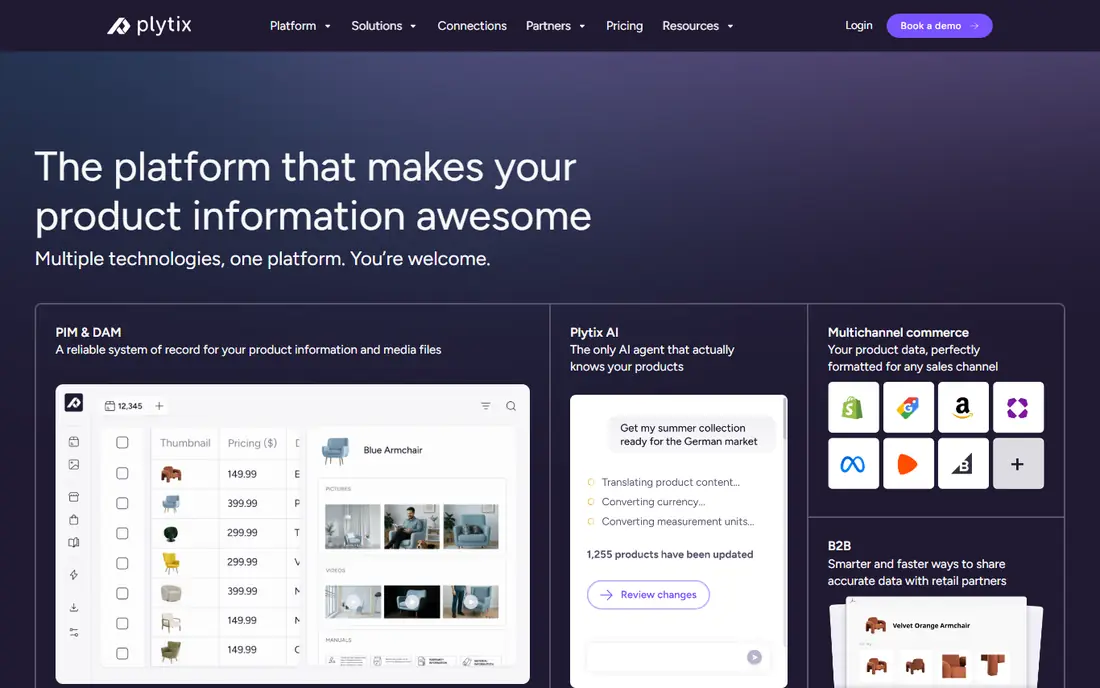
Plytix is the easiest small-retail starting point for many teams. The free tier covers a small catalogue, and paid tiers scale by SKU count rather than by seat, which suits a small team that shares the work. Built-in asset handling keeps images close to product records, so a listing update does not turn into a hunt through shared drives.
The watch point is add-ons. Product feeds, templates, brand portals, and data sheets can sit outside the base plan, so check what your channels actually need before you judge the price. For a retailer selling on a website and one or two marketplaces, Plytix gives a clean, affordable path from spreadsheets to a real PIM.
- Free tier for small catalogues
- Built-in digital asset handling
- Unlimited users on published plans
- Paid add-ons for some feeds and portals
- Higher tiers needed as SKU count grows
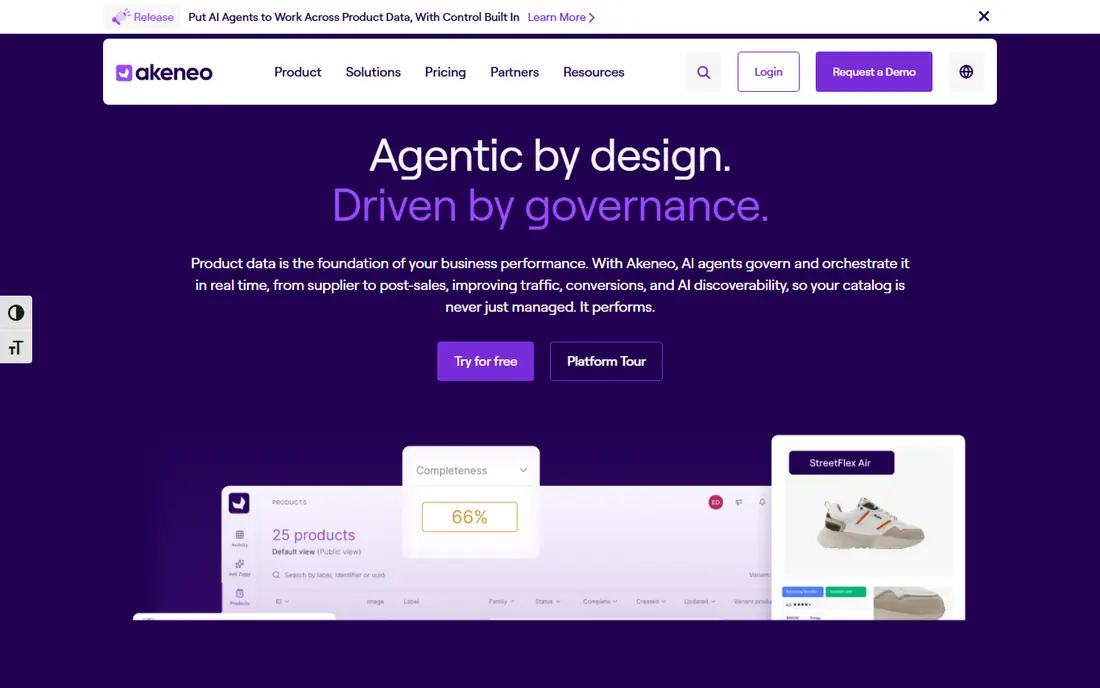
Akeneo is a good fit when a retailer wants a proven PIM core without paying a licence fee up front. The community edition is free to self-host, and its product modelling handles variants, attributes, and localisation well. A large community and partner network also means help is available when the catalogue gets complex.
Self-hosting is the trade. You or a partner must run servers, upgrades, and testing, so the free licence is not a free total cost. For a retailer with developer help, Akeneo is a strong long-term base. For a team with no technical help, a hosted tool such as Plytix may be simpler to run day to day.
- Free community edition for self-hosting
- Strong product modelling
- Large partner and user community
- Self-hosting needs technical help
- Commercial cloud pricing needs a quote
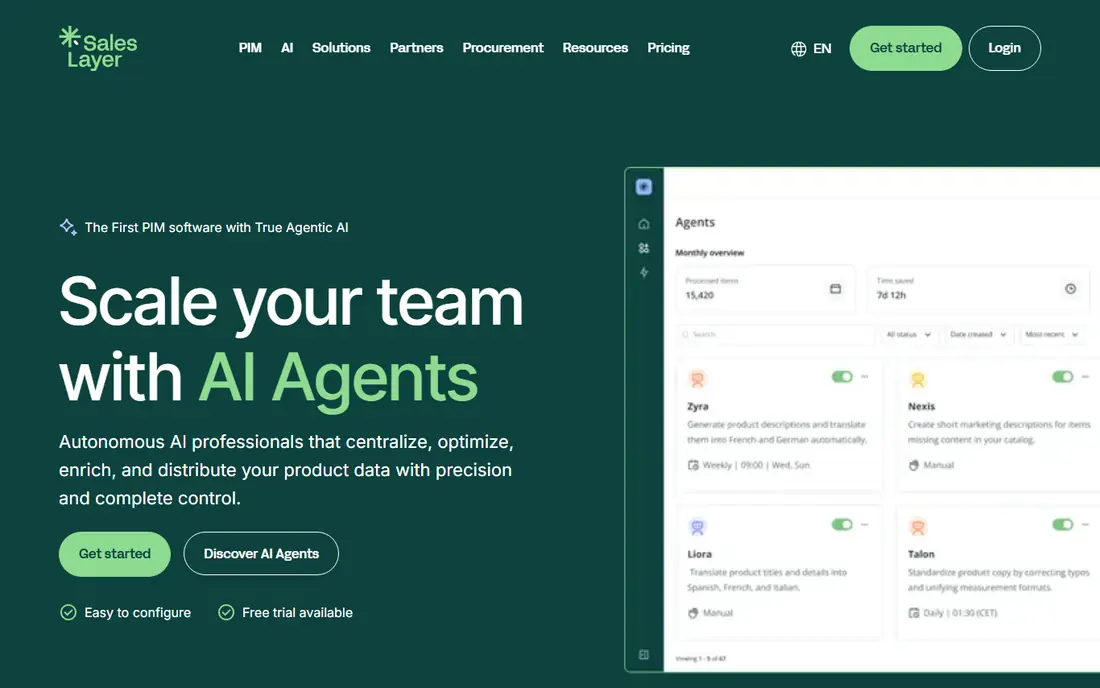
Sales Layer is built for business users rather than developers. Marketing and catalogue teams can update, enrich, and publish product data without filing IT tickets for every change, and the interface is easy to learn. Version control and permissions help a small team avoid overwriting each other's work.
Pricing is the main friction. Plans are quote-based, so a small retailer cannot judge cost from a price page alone. Ask for a quote tied to your SKU count, user count, and channels, and use the trial to test publishing to your actual store. If ease of use is your top need, Sales Layer is worth that extra quote step.
- Easy interface for non-technical teams
- Channel publishing and API
- Version control and permissions
- Quote-based pricing
- User limits vary by plan
Catsy suits retailers that need to turn product data into catalogues and channel listings, not just store it. Its publishing tools and API links help send consistent data to ecommerce platforms and marketplaces, which cuts down on manual re-entry. For a retailer with many variants or frequent catalogue updates, that publishing focus matters.
The limit is price transparency. Catsy pricing comes through a quote, so compare it on total cost for your catalogue size and channels rather than a headline figure. A trial focused on your top-selling products will show whether the publishing workflow fits your team. For catalogue-led retailers, Catsy is a practical contender.
- Catalogue creation and channel publishing
- API-first design
- Supports common ecommerce platforms
- Quote-based pricing
- Setup help may be needed for complex catalogues
Ergonode is notable for a genuinely free hosted tier, which is rare among PIM tools. A small retailer can start without self-hosting and without a licence fee, then move to a paid tier as product count and users grow. Product modelling is clear, and the hosted start removes the server work that open source tools demand.
Growth pricing is the caution. Paid tiers are annual and rise as the catalogue grows, so a retailer approaching the free limit should price the next tier early. Still, for a very small retailer testing whether a PIM helps at all, Ergonode offers one of the lowest-risk starts available.
- Free hosted tier for small catalogues
- Clear product modelling
- Paid tiers for growth
- Paid tiers rise steeply for larger catalogues
- Smaller community than Akeneo or Plytix
Pimcore is more than a PIM, since it combines product data, digital assets, and master data tools in one open platform. That breadth suits retailers with complex data, multiple sources, or a developer team that wants to shape the model exactly. The open source core keeps licence cost low, and the data model can handle unusual product structures.
The trade is effort. Pimcore rewards developer time, and a small retailer without that help can find setup slow. If you have technical support and a complex catalogue, it is a powerful long-term base. If you need a quick, hosted start, a simpler PIM will get you live sooner.
- Free open source core
- PIM plus digital asset and data tools
- Highly customisable data model
- Needs developer time to implement well
- Hosted and support pricing needs a quote
AtroPIM is an open source PIM that gives small retailers a flexible data model without a licence fee. You can shape entities, fields, relations, and workflows to fit your catalogue, and the API-first design helps connect stores and other systems. For retailers whose products do not fit a rigid template, that flexibility is a real advantage.
As with other open source tools, free licence does not mean free total cost. Implementation, hosting, and support can add up, especially for a complex catalogue. For a retailer with some technical help and a non-standard catalogue, AtroPIM is a strong, low-licence-cost option. For a no-code start, a hosted PIM may be easier.
- Free open source core
- Flexible data model and workflows
- API-first design
- Implementation and support costs can add up
- Smaller vendor team than the largest PIMs
Apimio focuses on the shopper-facing side of product data: complete, consistent listings that help products sell. It helps producers and retailers share product information, track product journeys, and publish better listings across stores. For a small retailer that struggles with incomplete or inconsistent listings, that focus is directly useful.
Pricing needs a direct check, since plans vary by catalogue size and features, and a trial is the best way to judge fit. Apimio is less flexible for developers than open source rivals, but it is simpler to start for a business team. If listing quality is your main problem, Apimio deserves a place on the shortlist.
- Product experience focus
- Channel and retailer sharing tools
- Guided onboarding for small teams
- Pricing varies by plan and catalogue size
- Fewer open source options than Akeneo or Pimcore
How we picked these
We compared official product pages, pricing pages, and documentation for PIM tools that suit small retail catalogues, and we kept tools with a free tier, a free trial, or a low-cost start. We used vendor prices where published and See website where pricing is quote-based or depends on SKU count. We did not claim hands-on testing, and we left out enterprise-only platforms with no realistic small-retail entry point.
What to check before you buy
Start with a sample of your real products, including your hardest variants, images, and attributes. Import that sample during a trial and publish it to your store, since a demo with clean sample data hides the messy cases that cause most PIM pain. Also check how the tool handles bulk edits, since small teams live or die by bulk updates.
Next, price the whole job. Ask for the total for your SKU count, users, channels, and any feed or portal add-ons, and check whether pricing changes sharply at the next SKU band. A tool that is cheap at 500 SKUs but costly at 5,000 SKUs needs a growth plan, not just a starting price.
Finally, check ownership. One person should own product data quality, even in a small team, and the PIM should make that job visible with completeness checks and change history. Without an owner, even a good PIM fills up with the same spreadsheet errors it was meant to fix.
Frequently asked questions
Do small retailers really need a PIM?
A PIM helps once spreadsheets start causing listing errors, duplicate work, or channel mismatches. If you sell a handful of products on one store, a spreadsheet may still be enough. If you sell many variants across stores and marketplaces, a PIM saves time and reduces errors.
Is there a truly free PIM for small retail?
Yes, with limits. Plytix and Ergonode offer free tiers for small catalogues, and Akeneo, Pimcore, and AtroPIM offer free open source cores. Free tiers cap SKUs or features, and open source tools still need hosting and setup time.
How many SKUs should I count?
Count every sellable variant, not just parent products, since most PIM pricing uses SKU or product count. Include variants for size, colour, and pack size, and leave headroom for seasonal products before you pick a tier.
Can a PIM feed Shopify and marketplaces?
Most tools here publish to ecommerce platforms and channels through built-in connectors, feeds, or APIs, but the exact channel list varies. Test publishing to your actual store and your top marketplace during the trial, not just in a demo.
How long does PIM setup take for a small retailer?
A simple hosted PIM can be live in days with a clean import, while a complex or open source setup can take weeks. The main time cost is cleaning product data, not learning the tool, so start with your best-selling products first.
Sources
See where you really rank - block by block
ProMapRanker scans Google Maps across a grid of your service area. Simple monthly plans from $19, white-label on every plan.
Start freeKeep reading
 zscaler alternatives
Best Zscaler Alternatives in 2026
Looking for zscaler alternatives? We compare 9 SASE and zero trust platforms on architecture, data protection, pricing, and fit for your network and team.
Read → zapier alternatives free
Best Zapier Alternatives Free in 2026
Nine automation tools for zapier alternatives free in 2026, all with genuinely free tiers, plus free plan limits, starting prices and upgrade paths explained.
Read → which platform is best for online reputation
Which Platform Is Best for Online Reputation in 2026
Wondering which platform is best for online reputation? We compare 8 review, listing, and response tools for small and multi-location businesses and agencies.
Read →