 ProMapRanker
Best Phone Services for Seniors in 2026


Best all-round senior value · Pricing starts at: $20 per month
Key takeaways
- Consumer Cellular is the strongest all-round value for most seniors, with no annual contract and US-based customer service.
- Lively is the safety-first pick, pairing simple phones with emergency response and health-related add-ons.
- T-Mobile, AT&T and Verizon 55-plus plans suit seniors who want a major carrier network, but age rules, line limits and taxes vary.
- Budget prepaid options such as Mint Mobile, Visible and Tello can beat 55-plus plans on price for a single line.
- Check coverage at your home address, the total price including taxes and fees, and whether the plan needs autopay before signing.
Quick comparison
| Pick | Great for | Pricing starts at | Free tier | |
|---|---|---|---|---|
| Consumer Cellular | Best all-round senior value | $20 per month | No | Visit |
 Lively | Safety features and simple phones | $19.99 per month | No | Visit |
 T-Mobile 55+ | Major carrier unlimited plan | $45 per month | No | Visit |
 AT&T 55+ | AT&T network unlimited plan | See website | No | Visit |
 Verizon 55+ | Verizon network for couples | $45 per month | No | Visit |
 Mint Mobile | Lowest prepaid cost | $15 per month | Free trial | Visit |
 Visible | Simple unlimited prepaid plan | $25 per month | No | Visit |
 Tello | Cheapest plan with data | $10 per month | No | Visit |
 US Mobile | Flexible custom plans | See website | No | Visit |
The best phone services for seniors
We compared these services on monthly cost, network, simplicity, customer support and safety features, using carrier pages and current senior plan roundups. Prices are starting prices and usually exclude taxes and fees unless stated.
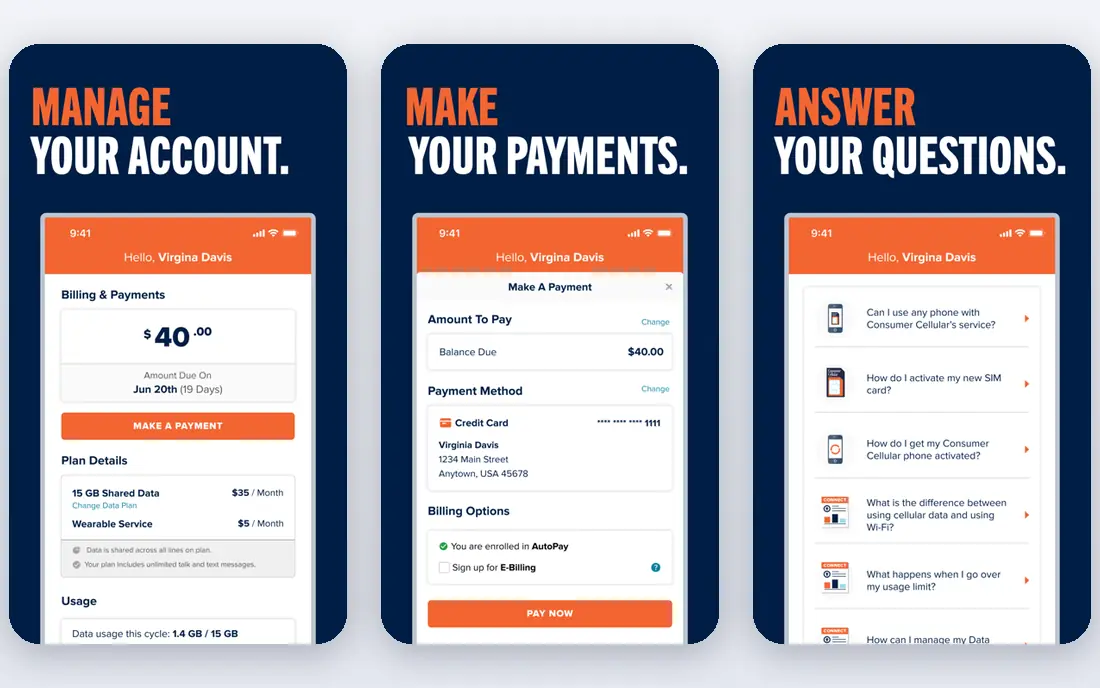
Consumer Cellular is our pick for most seniors because it balances price, support and flexibility. Plans start at 20 dollars a month for a limited data plan with unlimited talk and text, and an unlimited plan is available for heavier users. There is no annual contract, and plans can be changed if needs shift, which matters when data use changes over time.
Support is the other reason it ranks first. Consumer Cellular is known for US-based customer service, and AARP members get a discount on monthly service. The catch is that taxes and fees sit on top of the advertised price, so the bill is higher than the headline figure. Coverage runs on the AT&T and T-Mobile networks, so check coverage at your address before choosing a phone.
- No annual contract
- US-based customer service
- AARP member discount
- Plans that can change as needs change
- Taxes and fees are added to the advertised price
- Unlimited data costs more than the entry plan

Lively, formerly GreatCall, is the service to pick when safety matters as much as calling. Its Jitterbug phones use large buttons, simple menus and loud, clear sound, and its plans start at 19.99 dollars a month. Add-on safety services can connect the user to emergency response agents around the clock, and some devices support fall detection and medication reminders.
The trade-off is cost and choice. Safety packages are charged on top of the base plan, and the phone range is small compared with a major carrier store. Lively runs on the Verizon network, which suits many rural areas. For an older adult living alone, or for a family setting up a parent's phone, the safety layer justifies the narrower choice.
- Phones designed for older adults
- Emergency response and fall detection options
- Simple menus and large buttons
- Safety packages cost extra
- Phone and plan choice is narrower than major carriers
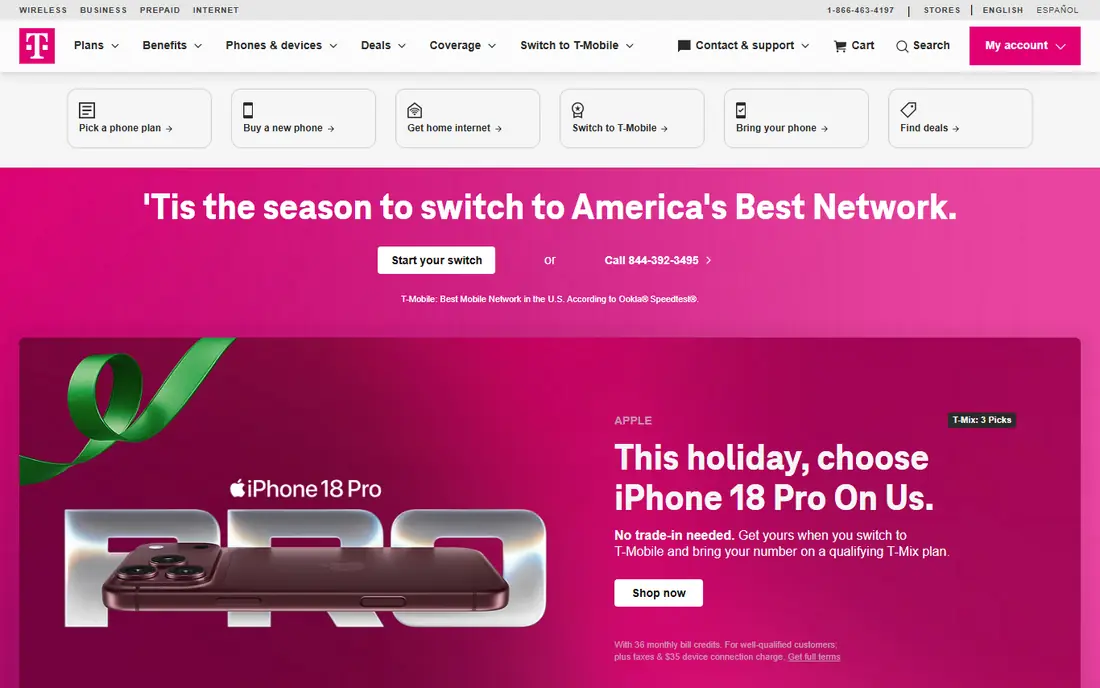
T-Mobile's 55-plus plans are the cleanest nationwide senior deal from a major carrier. The Essentials 55 plan starts at 45 dollars a month for one line with unlimited talk, text and data, and two-line pricing is lower per line. Higher tiers add more hotspot data, streaming perks and faster data allowances for heavy users.
Eligibility needs care. The account holder must be 55 or older, and T-Mobile may ask for verification. Taxes are added on some plans, and autopay is usually required for the advertised price. Seniors who travel to Canada or Mexico also get some included benefits on certain plans. For a senior who wants unlimited data without prepaying, T-Mobile is the strongest major carrier option.
- Unlimited talk, text and data
- Strong 5G coverage in cities and suburbs
- Hotspot included on some plans
- Requires age 55 or older and account verification
- Taxes and autopay terms affect the final price
AT&T's 55-plus plan gives existing AT&T households a senior-priced unlimited option without switching networks. It includes unlimited talk, text and data, with a hotspot allowance that suits travelers who tether a laptop or tablet. For a senior already using AT&T, keeping the same network and coverage avoids the hassle of moving numbers and learning a new carrier.
Pricing is the weak point. Published figures for AT&T 55-plus vary, with some sources listing lower single-line prices than others, so we list the price as see website and recommend confirming the current figure with AT&T directly. Age eligibility and autopay terms also apply. AT&T suits seniors who value its network and already have AT&T service more than bargain hunters.
- Unlimited talk, text and data
- Large AT&T network
- Hotspot allowance for travelers
- Price varies by plan and source, so confirm in store
- Taxes and fees added
- Age and eligibility rules apply
Verizon's 55-plus plan is worth checking for couples who want Verizon's network at a senior price. It starts at 45 dollars a month for one line in eligible areas, with unlimited talk, text and data. Verizon's network is often strongest in rural areas, which matters for seniors outside cities.
The major catch is availability. Verizon's senior plan is not offered nationwide and is notably tied to Florida residency in current reporting, so many seniors cannot buy it at all. Check eligibility by address before getting excited about the price. Seniors outside the eligible area should look at Visible, which runs on Verizon's network without an age or state restriction.
- Verizon network coverage
- Unlimited talk, text and data
- Straightforward option for two-line households
- Senior plan availability is limited by state, notably Florida
- Taxes and autopay terms apply
Mint Mobile is the cheapest way for a tech-comfortable senior to get a working phone plan. Its 5GB plan starts at 15 dollars a month when prepaid, and it runs on T-Mobile's network with 5G access. There is no contract, and a free trial lets new users test coverage before committing.
Prepayment is the catch. The lowest price requires paying for several months upfront, and the rate can rise on renewal. Support is online-first rather than phone-first, which suits confident users but not seniors who want to call for help. Mint fits a senior who uses modest data, is comfortable managing a plan online, and wants the lowest bill.
- Very low monthly cost
- Runs on the T-Mobile network
- Simple prepaid plans with no contract
- Requires prepaying for months in advance
- Support is mainly online
- Price rises after an introductory period
Visible is the simplest unlimited prepaid plan in this list. One plan at 25 dollars a month includes unlimited talk, text and data, with taxes and fees included, so the bill matches the advertised price. It runs on Verizon's network, which makes it a strong alternative for seniors who cannot get Verizon's own 55-plus plan.
The limits are modest. Mobile hotspot is unlimited but speed-limited, and support runs through digital channels rather than stores. Seniors who want in-person help should prefer Consumer Cellular or a major carrier store. For a single senior who wants unlimited data at a fixed, honest price, Visible is hard to beat.
- Unlimited talk, text and data
- Taxes and fees included in the price
- Runs on Verizon's network
- Hotspot speeds are limited
- Support is digital-first
- No in-store help
Tello is the cheapest plan in this list that still includes high-speed data. Its starter plan costs 10 dollars a month with unlimited talk and text and 2GB of high-speed data, running on T-Mobile's network. Plans can be customized, so a light user pays only for what they need, and there is no contract.
The cheapest plan is genuinely small on data, so it suits seniors who mainly call and text and use Wi-Fi at home. Support is online, and there are no stores. Tello fits a senior on a fixed income who wants the lowest possible bill and does not stream video over mobile data.
- Very low entry price
- Customizable talk, text and data amounts
- No contract
- Small carrier with online support
- High-speed data allowance on the cheapest plan is small
US Mobile rounds out this list for seniors who want to fine-tune a plan rather than take a fixed bundle. It lets users build plans by talk, text and data, and it offers a choice of networks, which helps when one carrier covers a home address better than another. Light users can build a low-cost plan, while heavier users can add data.
The trade-off is complexity. US Mobile is online-first, and its flexible plans take a little learning compared with a single senior plan. There is no senior-specific support line, so it suits a senior, or a family member helping them, who is comfortable setting up a plan online. For households with several lines at different usage levels, the flexibility can save real money.
- Custom plans by line
- Choice of networks
- Low-cost options for light users
- Online-first service
- Plan structure takes a little learning
- Prices vary by configuration
How we picked these
We compared carrier pages and current senior plan roundups on price, network, age rules, support style and safety features. We included major carrier 55-plus plans, senior-focused services and low-cost prepaid options, since the best deal for a couple differs from the best deal for a single senior. Prices change often and taxes, fees and autopay terms vary, so confirm the total monthly cost before signing.
How to choose a phone service for a senior
Start with coverage, not price. Check each carrier's coverage at the senior's home address and in places they visit often, since the cheapest plan is useless without signal. Next, look at real usage: how many minutes, texts and gigabytes per month, and whether video calls with family use mobile data or home Wi-Fi. A light user rarely needs unlimited data.
Then compare the total bill. Add taxes and fees to any price that excludes them, check whether autopay is required, and ask about the cost of the phone itself. Finally, weigh support. A senior who wants to call a person for help will value Consumer Cellular or a carrier store, while a confident user can save money with an online-first prepaid service. If safety is a concern, put Lively's emergency features ahead of a small price saving.
Frequently asked questions
What is the best cell phone company for seniors?
Consumer Cellular is the best all-round pick for most seniors, thanks to low prices, no contract and US-based support. Lively is better when safety features matter most, and T-Mobile 55-plus is better for seniors who want a major carrier unlimited plan.
What is the best phone service for seniors on a fixed income?
Tello and Mint Mobile offer the lowest monthly costs, starting at 10 dollars and 15 dollars a month respectively, though Mint requires prepayment. Seniors who qualify for the federal Lifeline program can also get a discount of up to 9.25 dollars a month on an eligible plan.
Do seniors need an unlimited data plan?
Many seniors do not. Light users who call, text and use Wi-Fi at home often manage fine on a small data plan from Consumer Cellular or Tello. Unlimited data suits seniors who stream video, video call often over mobile data, or travel without Wi-Fi access.
What age qualifies for a senior phone plan?
Most major carrier senior plans require the account holder to be 55 or older, with verification. Senior-focused services such as Consumer Cellular and Lively do not always enforce a strict age limit, since they market to older adults rather than gating by age.
Are Jitterbug phones easy to use?
Yes, Jitterbug phones from Lively are designed for older adults, with large buttons, simple menus, loud sound and optional emergency features. They suit seniors who want calling and texting without the complexity of a full smartphone.
Should a senior buy a phone from the carrier or separately?
Buying from the carrier is simpler, since the phone arrives set up for that network, and carriers often offer senior-friendly models. Buying a phone not tied to a carrier separately gives more choice and can save money, but it requires checking that the phone works on the chosen network.
Sources
See where you really rank - block by block
ProMapRanker scans Google Maps across a grid of your service area. Simple monthly plans from $19, white-label on every plan.
Start freeKeep reading
 zoro.to alternatives
Best Zoro.to Alternatives in 2026
We compare the best zoro.to alternatives in 2026, listing only legal licensed anime streaming services, from Crunchyroll to free options for fans today.
Read → zip alternatives
Best Zip Alternatives in 2026
We compare the best zip alternatives for buy now, pay later in 2026, covering pay-in-4 plans, fees, spending limits, and credit reporting options today.
Read → yesware alternatives
Best Yesware Alternatives in 2026
Compare the best yesware alternatives for sales email tracking, templates, and sequences, with current pricing and honest tradeoffs for small sales teams.
Read →