 ProMapRanker
Best Pharma Companies to Work in 2026

Key takeaways
- This guide is based on publicly reported factors such as therapeutic focus, scale, and career areas, not on a verified ranking, score, or salary survey.
- Pharma careers span research, clinical trials, manufacturing, regulatory affairs, sales, and medical affairs, and the best fit depends on role and location.
- Large pharma companies offer breadth and training resources, while smaller biotech firms may offer narrower focus and faster role changes.
- Readers should check current careers pages, role descriptions, and location details before applying, because teams and hiring vary by site.
Quick comparison
| Pick | Great for | Pricing starts at | Free tier | |
|---|---|---|---|---|
 Pfizer | Broad pharma scale | See website | No | Visit |
 Johnson & Johnson | Pharma and medtech breadth | See website | No | Visit |
 Roche | Oncology and diagnostics | See website | No | Visit |
 Novartis | Innovative medicines | See website | No | Visit |
 Merck | Vaccines and oncology | See website | No | Visit |
 AstraZeneca | Oncology and respiratory | See website | No | Visit |
 Eli Lilly | Diabetes and obesity medicines | See website | No | Visit |
 Amgen | Biotechnology therapies | See website | No | Visit |
 GSK | Vaccines and respiratory | See website | No | Visit |
 Novo Nordisk | Diabetes and obesity care | See website | No | Visit |
The best pharma companies to work
We selected large pharmaceutical and biotechnology companies with a current global presence, using publicly reported therapeutic focus, scale, and career areas. This is a guide to well-known employers in the sector, not a verified ranking of pay, culture, or satisfaction, and the order follows breadth of focus rather than a scored table. Readers should research the specific team, site, and role they are considering.

Pfizer is one of the largest pharmaceutical companies in the world, with medicines and vaccines across many therapeutic areas, including oncology, immunology, infectious diseases, and rare diseases. That breadth creates career options that a narrow specialist firm cannot match, from laboratory research and clinical development to manufacturing, regulatory affairs, and commercial roles. For early-career scientists and experienced professionals alike, Pfizer offers scale, training resources, and internal mobility across divisions and locations.
Scale also brings change. Large pharma companies regularly reshape portfolios, close or expand sites, and shift priorities as patents expire and new medicines advance, so a team that is hiring today may look different in two years. Applicants should research the specific therapeutic area, site, and hiring manager, and ask about team stability and pipeline focus during interviews. Pfizer is a strong starting point for breadth, but the role and site matter more than the company name alone.
- Very large global pharma company
- Broad therapeutic areas
- Many career paths across research, manufacturing, and commercial roles
- Large-company restructuring can affect teams
- Experience varies greatly by division and site
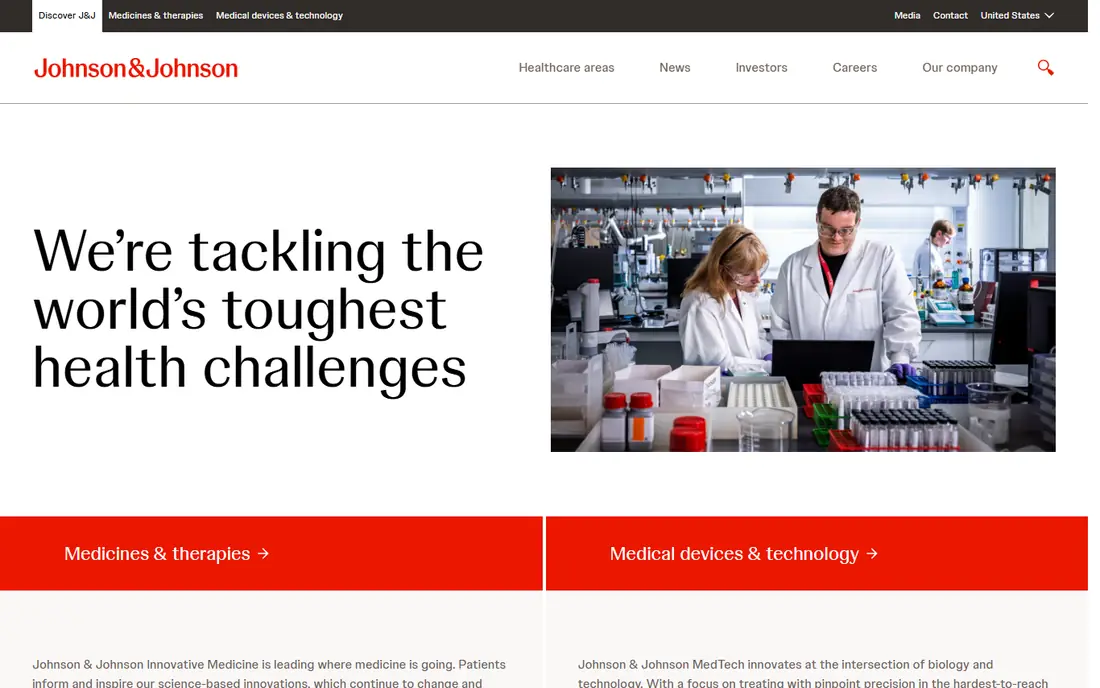
Johnson & Johnson combines a major pharmaceutical business, through its Innovative Medicine segment, with a large medical technology business, which gives employees a wider range of career paths than a pure pharma firm. Pharma roles span oncology, immunology, neuroscience, and other areas, while medtech roles cover surgery, orthopaedics, and cardiovascular devices. That breadth can suit professionals who want to move between pharma and device work, or who want corporate, supply chain, or commercial roles at scale.
The breadth also means the employee experience differs by segment and site. A pharma research team, a device manufacturing plant, and a commercial office can feel like different companies, with different pace, culture, and hiring needs. Applicants should identify the segment and business unit for the role, not just the Johnson & Johnson name, and check site location and team focus. For breadth across health care, Johnson & Johnson remains a major employer to research.
- Pharmaceutical and medical technology breadth
- Large global workforce
- Many functional career paths
- Business is split across segments, so experience varies
- Large-company processes can feel slow

Roche combines pharmaceuticals with diagnostics, which is a distinctive strength in personalised health care. Its pharma work is strong in oncology, immunology, and neuroscience, while its diagnostics business covers laboratory testing and tissue-based cancer diagnostics. That combination creates roles for scientists, diagnostic specialists, data professionals, and commercial staff who work across both sides of patient care, which is less common at pure pharma firms.
Specialisation is the limit. Many Roche roles require deep science, clinical, or diagnostics knowledge, and hiring is concentrated in major research and manufacturing hubs. Applicants without that background may find fewer entry points, although corporate, supply chain, and digital roles exist across the group. Roche is best for science and diagnostics professionals who want a research-driven employer with a long history in oncology and personalised care.
- Pharmaceuticals plus diagnostics under one group
- Strong oncology and personalised health care focus
- Research scale
- Many roles need specialised science or diagnostics skills
- Locations are concentrated in key hubs
Novartis is a focused innovative medicines company, with strengths in oncology, cardio-renal medicine, immunology, and newer areas such as gene therapies and radioligand therapies in public reporting. Its research footprint spans several countries, and its pipeline work creates roles for laboratory scientists, clinical trial staff, regulatory specialists, and medical affairs professionals. For researchers who want to work on novel mechanisms rather than a broad generic portfolio, Novartis is a natural employer to consider.
As with other large innovators, portfolio decisions matter. Programmes can be prioritised, partnered, or stopped as trial data arrives, which can change team hiring and structure. Applicants should ask about the specific programme area, trial stage, and site focus, rather than relying on the Novartis name alone. For innovative medicines research and development, Novartis offers depth that few smaller firms can match.
- Focused innovative medicines company
- Oncology, cardio-renal, and gene therapy interests
- Global research footprint
- Portfolio changes can affect teams
- Specialised roles dominate research hiring
Merck, known as MSD outside the United States and Canada, is a major pharmaceutical company with well-known strengths in oncology, vaccines, and infectious diseases. Its research and manufacturing scale supports roles across discovery, clinical development, vaccine production, regulatory affairs, and commercial operations. For professionals interested in vaccines or cancer immunotherapy, Merck is one of the most relevant large employers, with a pipeline and manufacturing base to match.
Applicants should be careful with naming, because Merck KGaA is a separate company, and Merck in this guide refers to Merck and Co. in the United States. Within Merck, experience also varies by therapeutic area and site, so role-specific research matters. For oncology and vaccines careers, Merck combines scale, research investment, and manufacturing depth in a way that smaller firms rarely offer.
- Known as MSD outside the United States and Canada
- Strong oncology and vaccines presence
- Large research and manufacturing base
- Naming and segment details confuse some applicants
- Experience varies by therapeutic area
AstraZeneca is a global biopharmaceutical company with major strengths in oncology, cardiovascular and renal medicine, metabolism, respiratory, and rare diseases. Its research centres in the United Kingdom, Sweden, and the United States, along with manufacturing sites worldwide, create a wide range of scientific, clinical, and operations roles. Public reporting on manufacturing investment, including in the United States, also points to continued hiring in production and quality roles in some locations.
Pipeline focus can shift as trial results arrive, so applicants should check which therapeutic area and site are hiring, and what stage programmes are at. AstraZeneca is also a hub-based employer for many research roles, which suits professionals willing to work in those centres, but less so those tied to other locations. For oncology and respiratory careers, AstraZeneca is a leading large employer to research closely.
- Strong oncology, cardiovascular, renal, metabolism, and respiratory focus
- Large research centres
- Manufacturing investment
- Growth areas shift with pipeline results
- Many roles are in major research hubs
Eli Lilly is a global health care company with a long history, now best known for diabetes and obesity medicines, along with neuroscience and oncology work. Its growth in metabolic medicine has made it one of the most closely watched pharma employers, with roles in research, manufacturing, clinical development, and commercial operations, particularly in the United States. For professionals interested in metabolic disease, Lilly offers a depth of focus that few rivals match.
That concentration is also a risk to weigh. A company heavily tied to diabetes and obesity markets can be affected by competition, pricing pressure, and supply constraints in those areas, even when overall demand is strong. Many roles are also concentrated in Indianapolis and other key sites. Applicants should research the specific team and location, and consider how a focused portfolio fits their long-term career goals.
- Strong diabetes, obesity, neuroscience, and oncology presence
- Long history
- Large United States base
- Concentration in diabetes and obesity means results are tied to those markets
- Hiring is concentrated in key sites
Amgen is one of the pioneering biotechnology companies, with therapies in oncology, bone health, cardiovascular disease, and inflammation, built on biologics and newer modalities. Its work suits scientists, process engineers, and manufacturing specialists who want to work on complex biological medicines, rather than small-molecule drugs alone. Amgen manufacturing and research sites support a full chain from discovery to large-scale production, which creates varied technical career paths.
Advanced training is often needed. Many Amgen research and process roles require a science degree and, in some cases, postgraduate training, so entry can be harder for generalist applicants. Locations are also concentrated in key United States hubs and selected international sites. For biotechnology specialists, Amgen remains a benchmark employer, and for generalists, its corporate, supply chain, and commercial roles are worth checking alongside technical openings.
- Biotechnology pioneer
- Oncology, bone health, and cardiovascular focus
- Manufacturing and research scale
- Biotechnology roles often need advanced science training
- Site locations are concentrated
GSK is a global biopharma company focused on vaccines, respiratory and immunology, oncology, and specialty medicines, with research and manufacturing sites in several countries. Its vaccine strength makes it relevant for infectious disease professionals, while its respiratory work covers asthma and chronic lung disease. For applicants interested in prevention as well as treatment, GSK offers a vaccine career path that is less central at some rivals.
Readers should note that GSK consumer health business is now a separate company, Haleon, so consumer roles are not part of GSK in the same way as before. Portfolio changes in recent years have also reshaped some teams. Applicants should confirm the business unit, therapeutic area, and site for any role, and ask about pipeline focus during interviews. For vaccines and respiratory careers, GSK is a major employer to consider.
- Strong vaccines, respiratory, and specialty medicines focus
- Global manufacturing and research presence
- Consumer health history through a separate company
- Portfolio reshaping has affected some teams
- Experience varies by therapeutic area
Novo Nordisk is a Danish pharmaceutical company and a global leader in diabetes and obesity care, with additional work in rare blood and endocrine disorders. Its focus has made it one of the most prominent employers for metabolic disease professionals, with roles in research, large-scale manufacturing, clinical development, and commercial operations. Manufacturing scale is a particular strength, because diabetes and obesity medicines require complex production and supply chains.
Concentration is the main caveat. Novo Nordisk results are closely tied to diabetes and obesity markets, where competition from Eli Lilly and other firms is intense, and supply constraints have been a public topic. Many roles are based in Denmark or in major manufacturing hubs, which affects relocation decisions. For metabolic disease specialists willing to work in those hubs, Novo Nordisk offers unmatched focus, and for others, its commercial and supply roles are worth a closer look.
- Global leader in diabetes and obesity care
- Strong manufacturing scale
- Long focus on metabolic disease
- Concentration in diabetes and obesity creates market risk
- Many roles are in Denmark and key manufacturing sites
How we picked these
We used publicly reported information on therapeutic focus, company scale, and career areas, along with official company careers and corporate sites. We did not use invented salaries, satisfaction scores, or rankings, and we did not claim hands-on testing or a verified best-employer table. We favoured companies with a current global pharma presence, a clear therapeutic focus, and a careers route that readers can verify through official postings.
How to choose a pharma employer for your career
Start with role and therapeutic area, not with company size. A laboratory scientist, a clinical trial manager, a regulatory specialist, and a sales representative will have very different experiences at the same company, because teams, managers, and pipeline stages differ. List the skills you want to build, the disease areas that interest you, and the locations you can work in, then check which companies on this list are hiring for that combination right now. A company with a strong pipeline in your area is usually a better fit than a larger company with no openings in your field.
Next, research the site and team. Check the careers page for the exact role description, required qualifications, and location, and look for recent company news on that therapeutic area, such as trial results, approvals, or manufacturing investment. During interviews, ask about team size, manager style, training, internal mobility, and how success is measured in the first year. Those answers tell you more about daily work than any general employer reputation.
Finally, think about career stage and risk tolerance. Large companies often offer structured training, internal moves, and benefits that suit early-career professionals, while smaller biotech firms may offer broader roles and faster change, with higher uncertainty if a programme fails. Neither path is right for every person, and many careers mix both over time. Use this guide to shortlist two or three companies that match your role and location, then verify each one through current postings and interviews before applying.
Frequently asked questions
What qualifications do most pharma jobs require?
It depends on the role. Research and clinical roles often require a science degree, and many senior roles require postgraduate training or relevant industry experience. Manufacturing, quality, regulatory, sales, and corporate roles have different requirements, including engineering, pharmacy, business, or data backgrounds. Check the exact role description, because requirements vary widely within the same company.
Is it better to work for a large pharma company or a small biotech firm?
Large companies often offer more training, internal mobility, and role stability, while small biotech firms may offer broader responsibilities and faster decisions, with higher programme risk. The best choice depends on career stage, risk tolerance, and therapeutic interest. Many professionals work in both types of company over a career, moving as their skills and goals change.
Which therapeutic areas are hiring most in pharma?
Hiring varies by company and year, but oncology, immunology, metabolic disease, vaccines, and rare diseases are major focus areas across the companies in this guide, based on public pipeline reporting. Within those areas, clinical development, manufacturing, regulatory affairs, and data roles are commonly in demand. Check current careers pages for the latest openings in your field.
Do pharma companies hire non-scientists?
Yes. Pharma companies hire extensively in manufacturing operations, quality, supply chain, regulatory affairs, medical affairs, sales, marketing, finance, legal, data, and technology, alongside laboratory and clinical roles. Non-scientists should look for functional roles that match their background, rather than assuming every pharma job requires a laboratory degree.
Sources
See where you really rank - block by block
ProMapRanker scans Google Maps across a grid of your service area. Simple monthly plans from $19, white-label on every plan.
Start freeKeep reading
 zscaler alternatives
Best Zscaler Alternatives in 2026
Looking for zscaler alternatives? We compare 9 SASE and zero trust platforms on architecture, data protection, pricing, and fit for your network and team.
Read → zapier alternatives free
Best Zapier Alternatives Free in 2026
Nine automation tools for zapier alternatives free in 2026, all with genuinely free tiers, plus free plan limits, starting prices and upgrade paths explained.
Read → which platform is best for online reputation
Which Platform Is Best for Online Reputation in 2026
Wondering which platform is best for online reputation? We compare 8 review, listing, and response tools for small and multi-location businesses and agencies.
Read →