 ProMapRanker
Best Pet Insurance Companies in 2026

Key takeaways
- Lemonade is a strong digital-first pick for fast claims, while Spot offers wide customization for owners who want to tune deductible and reimbursement.
- Trupanion stands out for direct payment to vets, but its per-condition deductible works differently from the annual deductible used by most rivals.
- Healthy Paws keeps its plan simple with no payout caps on covered claims, which can matter for long or costly illnesses.
- Pet insurance premiums vary sharply by breed, age, location, and coverage choices, so a quote for your own pet matters more than any average price.
- Pre-existing conditions, waiting periods, and exclusions decide real value. Read the sample policy before you buy, not just the marketing page.
Quick comparison
| Pick | Great for | Pricing starts at | Free tier | |
|---|---|---|---|---|
 Lemonade | Fast digital claims | See website | No | Visit |
 Spot | Customizable coverage | See website | No | Visit |
 Trupanion | Direct vet payment | See website | No | Visit |
 Healthy Paws | No payout caps | See website | No | Visit |
 Embrace | Hereditary and exam cover | See website | No | Visit |
 Pets Best | Budget-friendly options | See website | No | Visit |
 Fetch | Dental and behavior cover | See website | No | Visit |
 Figo | 100 percent reimbursement option | See website | No | Visit |
The best pet insurance companies
Pet insurance is not one product. Accident-only plans, accident and illness plans, and wellness add-ons cover different bills, and the best company for a young cat may not be the best for an older dog. The eight companies below are all established United States providers with accident and illness options for dogs and cats.
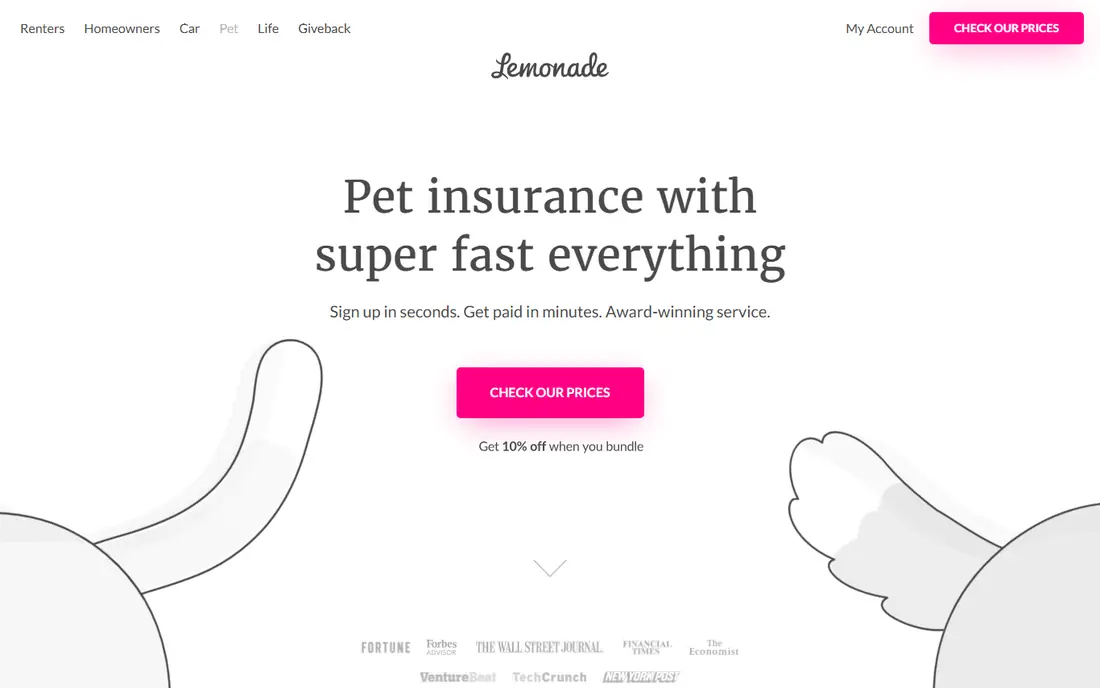
Lemonade fits owners who want to manage everything from a phone. You can get a quote, buy a policy, file a claim, and track payment in the app, and the company says many claims are paid quickly. Its own pet page lists prices from $10 per month, but your quote will depend on breed, age, location, deductible, and reimbursement choice, so treat that figure as a starting point, not a promise.
Coverage includes diagnostics, procedures, medication, and hospitalization for new accidents and illnesses, with optional add-ons for vet visit fees, physical therapy, and behavioral conditions. Waiting periods listed on its site are 2 days for accidents, 14 days for illnesses, and 6 months for cruciate ligament events. Lemonade also offers preventive care packages for routine exams, vaccines, and dental cleaning. The main limits are state availability and the need to check whether your state, breed, and age group are covered on the terms you expect.
- Fast app-based claims
- Customizable annual limits and reimbursement
- Bundle and multi-pet discounts
- Availability varies by state
- Orthopedic waiting period can be long for cruciate ligament events
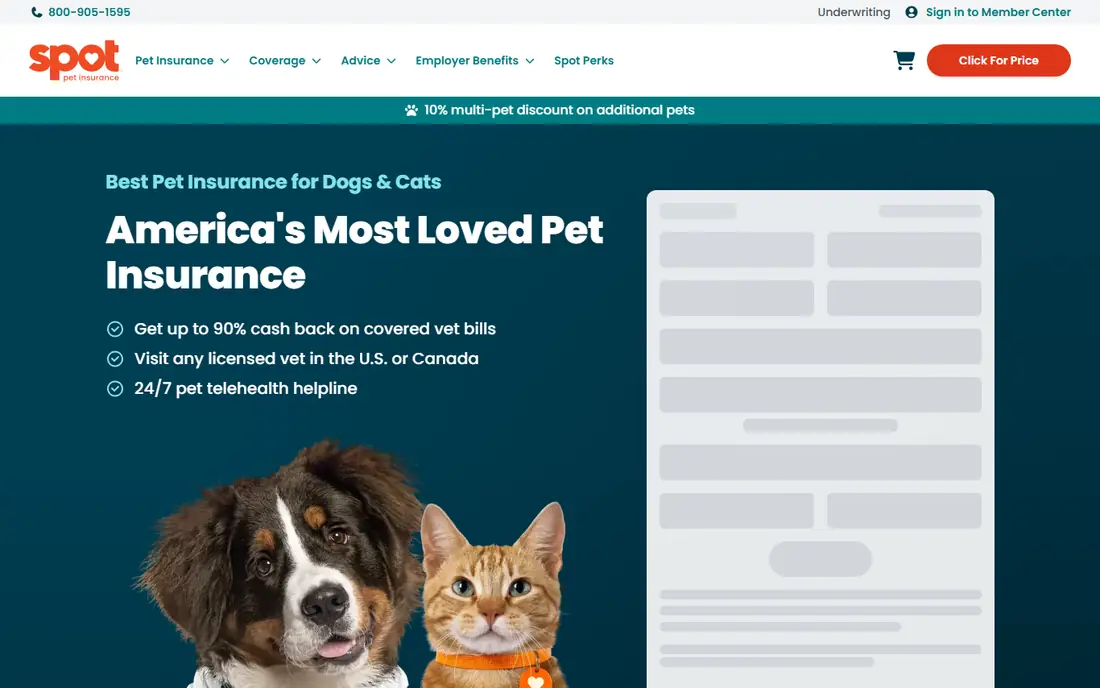
Spot is a good pick for owners who want to shape a policy around a budget. You can adjust the annual limit, deductible, and reimbursement rate, and add preventive care for routine vet visits. That flexibility helps when you are balancing a monthly premium against how much you could pay out of pocket after a large bill.
Spot covers accidents and illnesses, including hereditary and chronic conditions in its accident and illness plans, subject to the policy terms and waiting periods. Current listings put starting prices from about $15 per month, with accident waiting periods around 2 days and illness waiting periods around 14 days in many states. The trade-off with any highly customizable plan is comparison work. Run the same deductible and reimbursement settings across two or three companies before you decide, or a low premium may simply reflect a lower limit.
- Wide choice of deductibles, reimbursement rates, and annual limits
- Preventive care add-ons
- No upper age limit for enrollment in many plans
- Quotes vary widely by pet and location
- Preventive care is an add-on, not part of the base plan
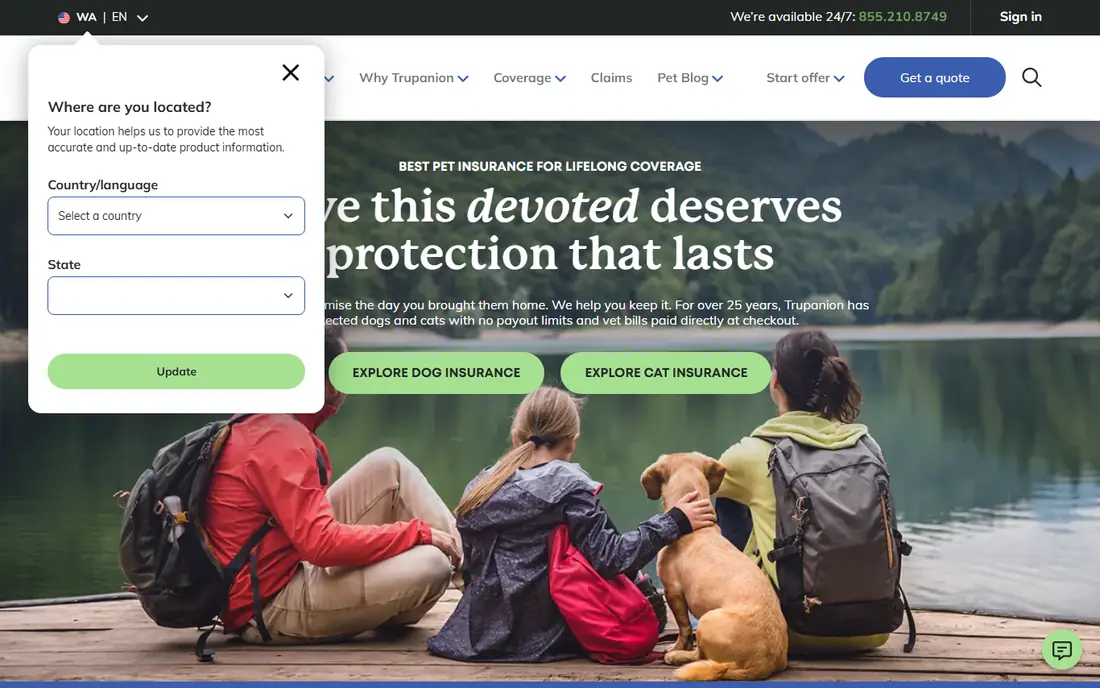
Trupanion takes a different approach to deductibles, and that difference matters more than the headline price. Instead of one annual deductible, Trupanion uses a deductible per condition for the life of the pet. Once you meet the deductible for a chronic condition, later claims for that same condition may not need a new deductible, which can help with long-term illness. For a pet with several unrelated problems in one year, though, multiple deductibles can add up.
Its best-known feature is direct payment to participating vets at checkout, which can reduce the amount you need to pay up front and then claim back. Trupanion lists a 5-day accident waiting period and a 30-day illness waiting period, and its standard reimbursement is 90 percent. It does not offer a separate wellness plan for routine care, so owners who want vaccines and exams covered need a different add-on or a different company.
- Can pay vets directly at checkout where available
- No payout limits for covered conditions
- 90 percent reimbursement on its standard plan
- Per-condition deductible, not an annual deductible
- Premiums can be higher than rivals for some pets
Healthy Paws keeps choice simple. It offers one accident and illness plan, with deductible and reimbursement choices, and no cap on payouts for covered claims. That simplicity helps owners who do not want to compare a dozen plan variants, and no payout cap can matter most for cancer, surgery, or a long chronic illness where bills keep coming.
The waiting period is 15 days for both accidents and illnesses on its standard terms, which is longer for accidents than some rivals. Healthy Paws does not offer routine wellness cover, so vaccines, exams, and dental cleaning for prevention stay out of pocket unless you buy separate cover elsewhere. It is a strong pick if your priority is protection against a very large unexpected bill, rather than help with routine vet costs.
- No annual or lifetime caps on payouts for covered claims
- Simple single accident and illness plan
- Fast claim processing
- Fewer customization and add-on options than Spot or Lemonade
- Waiting period is 15 days for accidents and illnesses
Embrace suits owners who want a broad base policy without buying many add-ons. Its accident and illness cover includes exam fees, hereditary conditions, chronic conditions, cancer care, and alternative therapies, subject to policy terms. That breadth can reduce surprise exclusions at claim time, which is often where cheaper plans disappoint.
A useful feature is the diminishing deductible, which falls by $50 for each year without a claim on many plans. Embrace also offers an optional wellness rewards add-on for routine care. The main catch is the annual limit, which varies by plan and is not unlimited on most options. Check the limit against the cost of surgery or cancer treatment in your area, and note that premiums for older or larger dogs can be much higher than the low starting prices shown in roundups.
- Exam fees can be covered
- Hereditary and chronic conditions included
- Deductible falls by $50 each claim-free year on many plans
- Annual benefit limits apply on most plans
- Premiums rise with age and breed risk
Pets Best is worth a quote if price is your first filter. It offers accident-only plans for owners who only want protection against injuries, plus fuller accident and illness plans, and an optional wellness add-on for routine care. That range lets you start with a lower premium and upgrade later, though a new policy may treat conditions found in the meantime as pre-existing.
Current listings put starting prices from about $9 to $16 per month for some pets, but those figures depend heavily on age, breed, and location. Pets Best also offers a direct vet payment option with participating vets. Read the exam fee terms carefully, since exam fees are a common vet bill and are not always included in the base plan. For a young, healthy pet, the value case is clear. For an older pet, compare the full premium and exclusions, not just the entry price.
- Accident-only and accident and illness plans
- Direct vet payment option
- Fast claims in many reviews
- Exam fees are not always covered
- Wellness cover costs extra
- Older pets can face higher premiums
Fetch, formerly Fetch by The Dodo, covers accidents and illnesses with features that many rivals sell as extras. Dental illness, behavioral therapy, and exam fees are included in its broader plans, subject to terms, which can matter for dogs with dental disease or pets with anxiety-related behavior problems. It also includes sick-visit virtual vet care in some plans.
Fetch offers a range of annual limits, deductibles, and reimbursement rates, including up to 90 percent on many plans. Waiting periods are commonly 15 days for accidents and illnesses in listings, so check your own policy for the exact terms. Fetch is a good fit if dental or behavior cover is a priority, but compare its annual limit and premium for your pet against Embrace and Spot, since a feature you never use should not drive the decision alone.
- Dental illness and behavioral therapy included in many plans
- Exam fees covered
- Virtual vet visits in some plans
- Premiums vary by pet and plan
- Annual limits vary, so check the tier you choose
Figo stands out for owners who want the highest possible reimbursement after a claim. While most companies top out at 90 percent, Figo offers a 100 percent reimbursement option on some plans, alongside 70, 80, and 90 percent choices. That can make a large bill much easier to absorb, but the premium for 100 percent cover will be higher, so the value depends on how much risk you want to keep.
Figo also has no upper age limit for enrollment in its standard terms, which helps owners of senior pets who are often turned away elsewhere. Its app includes a pet cloud for records and vet teletriage, which can help you decide whether a problem needs an urgent visit. As with every company here, pre-existing conditions and waiting periods apply, so enroll before a problem appears if you can, and read the dental, hereditary, and chronic condition terms for your pet.
- Reimbursement up to 100 percent on some plans
- No upper age limit for enrollment
- Pet cloud app with vet teletriage
- Higher reimbursement tiers cost more
- Some plans have annual limits that need checking
How we picked these
We compared official coverage pages, sample policy terms, waiting periods, reimbursement and deductible structures, and public reviews. We favored companies with clear accident and illness cover for dogs and cats, a usable claims process, and terms that a reader can actually check before buying. We did not claim hands-on testing, and we did not rank by a single average price, because premiums depend on pet, location, and coverage choices. Always get a quote for your own pet and read the full policy.
How to choose the right pet policy
Decide what you want covered
Start with the bill you fear most. If it is a broken leg or surgery, an accident and illness plan is the core product. If routine vaccines and exams matter too, look for a wellness add-on or a separate budget for those costs. Accident-only plans cost less, but they leave illness bills, including cancer and chronic disease, uncovered.
Compare the same settings, not just the premium
Set the same deductible, reimbursement rate, and annual limit across companies, then compare premiums and waiting periods. A low premium with a $1,000 deductible and a $5,000 annual limit is not the same product as a higher premium with a $250 deductible and unlimited cover. Also check whether the deductible is annual or per condition, since Trupanion differs here.
Check waiting periods and pre-existing terms
Waiting periods decide when cover starts, and they vary by accident, illness, and orthopedic condition. Some companies treat a curable pre-existing condition as covered again after a symptom-free period, while others exclude it for longer. If your pet already has a condition, ask each company in writing how it would be treated before you buy.
Read the exclusions before a claim, not after
Dental disease, hereditary conditions, behavioral therapy, exam fees, and alternative therapies are common exclusion points. This guide is general information, not insurance advice, and it does not replace the policy wording. If a feature matters to you, confirm it in the sample policy for your state and your pet, and keep that confirmation with your policy documents.
Frequently asked questions
What is the best pet insurance company?
There is no single best pet insurance company for every pet. Lemonade suits digital-first owners, Spot suits owners who want customization, Trupanion suits owners who want direct vet payment, and Healthy Paws suits owners who want no payout caps. Get quotes with the same settings and compare waiting periods and exclusions.
What are the best pet insurance companies reviews saying about claims?
Public reviews tend to praise fast app claims at Lemonade and Pets Best, direct vet payment at Trupanion, and simple cover at Healthy Paws, while complaints often focus on premium rises, pre-existing exclusions, and waiting periods. Reviews are useful for service patterns, but your own policy wording and quote matter more than a star average.
What is the best cat insurance company?
Cat premiums are usually lower than dog premiums, and the best cat insurance company depends on age, breed, and whether you want wellness cover. Lemonade and Spot often quote well for younger cats, while Figo and Embrace are worth checking for older cats or cats with chronic needs. Compare annual limits, since cat cancer and kidney care can still be costly.
Which pet insurance companies are the best for dogs?
For dogs, breed and size drive price and risk, so the best company for a small mixed breed may differ from the best for a large purebred dog. Embrace and Fetch cover hereditary and dental issues that matter for many breeds, Trupanion helps with chronic conditions through its per-condition deductible, and Healthy Paws helps when a single illness runs to very high bills.
What is the best company for pet insurance if my pet is older?
Figo and Spot are useful starting points because they have no upper age limit for enrollment in many plans, and Pets Best also covers older pets, though premiums can be higher. Enroll as early as you can, because conditions diagnosed before cover starts are usually treated as pre-existing, and older pets face higher premiums and sometimes lower reimbursement choices.
How much does pet insurance cost per month?
Monthly cost varies by pet age, breed, location, deductible, reimbursement rate, and annual limit. Listings often show starting prices from about $10 per month for cats and young dogs, with larger or older dogs costing much more. The only reliable figure is a quote for your own pet with the coverage settings you actually want.
Sources
See where you really rank - block by block
ProMapRanker scans Google Maps across a grid of your service area. Simple monthly plans from $19, white-label on every plan.
Start freeKeep reading
 youtube alternatives
Best YouTube Alternatives in 2026
Looking for youtube alternatives in 2026? We compare Vimeo, Dailymotion, Twitch, Rumble, and more on price, audience, monetization, control and privacy.
Read → what's the best ai tool for photo editing
What Is the Best AI Tool for Photo Editing in 2026
What is the best AI tool for photo editing? We compare ten tools for 2026, from Photoshop and Lightroom to Luminar, Topaz, Canva and mobile editors today.
Read → twitter alternatives
Best Twitter Alternatives in 2026
Compare the best twitter alternatives for 2026, from Bluesky, Threads, and Mastodon to Reddit, Tumblr, and Micro.blog, with free plans and audience notes.
Read →