 ProMapRanker
Best Personal Finance Apps in India in 2026


Beginners starting mutual fund SIPs and stocks in India · Pricing starts at: Free
Key takeaways
- Groww and ET Money are strong starting points for SIPs, with different strengths in simplicity and goal planning.
- INDmoney gives the broadest single view across accounts, funds and holdings.
- Jupiter, Fi Money and Money View suit daily budgeting and expense tracking more than investing.
- Kuvera and Scripbox focus on planned direct mutual fund investing for long term goals.
- Check permissions, partner bank terms and charges before linking accounts or investing.
Quick comparison
| Pick | Great for | Pricing starts at | Free tier | |
|---|---|---|---|---|
| Groww | Beginners starting mutual fund SIPs and stocks in India | Free | Yes | Visit |
 ET Money | Investors who want goals, expenses and funds in one app | Free | Yes | Visit |
 INDmoney | People who want one view of many accounts and holdings | Free | Yes | Visit |
 Paytm Money | Paytm users who want simple mutual fund investing | Free | Yes | Visit |
 Kuvera | Long term direct mutual fund investors | Free | Yes | Visit |
 Scripbox | Investors who want planned mutual fund portfolios | Free | Yes | Visit |
 Jupiter | Daily banking users who also want budgeting help | Free | Yes | Visit |
 Fi Money | Young savers who want smart banking and tracking | Free | Yes | Visit |
 Money View | People who want automatic expense tracking from SMS alerts | Free | Yes | Visit |
The best personal finance apps in India
This is not financial advice. Investing carries market risk, and returns are never guaranteed. Check charges, terms and permissions before you invest or link an account. We compared official pricing, free tiers and core features for each option below. Start with the best fit for your main job, then check limits before you pay.

Groww stands out for beginners starting mutual fund sips and stocks in india. It gives a clear route into personal finance without forcing a full platform change on day one.
We compared its official pricing and feature pages with the other options in this list. The value case is strongest when you use its main strengths often and accept its limits. Check the current plan page before you buy, because tiers and credit rules change. A short trial or free tier, where offered, is the safest way to confirm fit.
- Simple interface for SIPs and stocks
- Direct mutual funds with no commission stated
- Easy portfolio view
- Trading and investing carry market risk
- Advanced research tools are limited
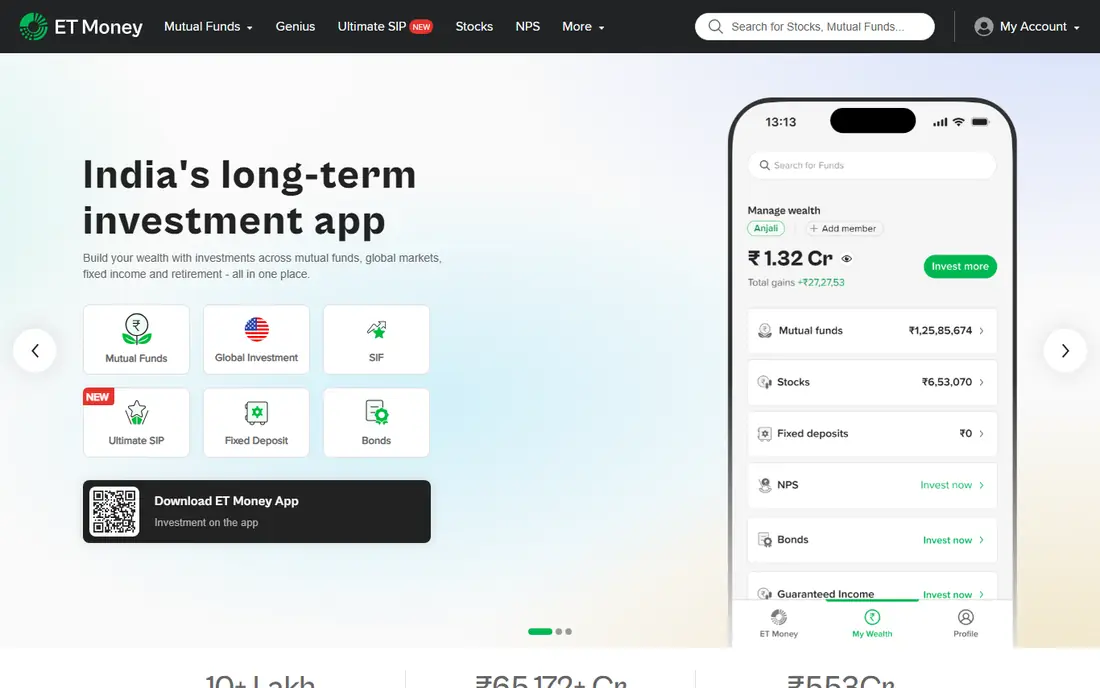
For investors who want goals, expenses and funds in one app, ET Money is a practical place to start. The core tools cover the daily job, and the limits show up mainly as you scale.
Our check focused on official pricing, free tiers and the features that matter most for this topic. ET Money is not the cheapest choice in every case, and it is not the most complete either. Its appeal is the balance it strikes for a defined group of users. Read the plan limits and any credit or contact caps before you commit.
- Goal based SIP planning
- Expense tracking
- Fund comparison tools
- Some advisory style features may sit behind paid options
- Investing still carries risk

INDmoney earns its place here for people who want one view of many accounts and holdings. The setup is direct, and the main question is how well its limits fit your volume.
We looked at what INDmoney includes at its starting price and what sits behind higher tiers. That gap matters more than the headline price. If your main need is already included, the value is strong. If you need the higher tier features, compare the full cost across two or three rivals before you sign up.
- Net worth view across stocks, funds, NPS and more
- Goal tracking
- US stock access stated
- Account linking needs care with permissions
- Loan features should be checked separately
If paytm users who want simple mutual fund investing is the priority, Paytm Money deserves a close look. It handles the central tasks well, with a few trade offs to weigh.
The honest catch is the limit set out below. It does not make Paytm Money a poor choice, but it does set the boundary for who should pick it. Small teams with a clear use case tend to get the most from it. Larger teams should test volume, permissions and support before rolling it out widely.
- Familiar app flow for Paytm users
- Direct mutual funds
- Goal tools
- Feature depth is lighter than specialist platforms
- Market risk applies
Kuvera stands out for long term direct mutual fund investors. It gives a clear route into personal finance without forcing a full platform change on day one.
We compared its official pricing and feature pages with the other options in this list. The value case is strongest when you use its main strengths often and accept its limits. Check the current plan page before you buy, because tiers and credit rules change. A short trial or free tier, where offered, is the safest way to confirm fit.
- Direct mutual funds
- Goal based SIPs
- Portfolio health checks
- No stock trading focus
- Returns are never guaranteed
For investors who want planned mutual fund portfolios, Scripbox is a practical place to start. The core tools cover the daily job, and the limits show up mainly as you scale.
Our check focused on official pricing, free tiers and the features that matter most for this topic. Scripbox is not the cheapest choice in every case, and it is not the most complete either. Its appeal is the balance it strikes for a defined group of users. Read the plan limits and any credit or contact caps before you commit.
- Planned portfolios by goal
- Simple SIP setup
- Portfolio reviews
- Choice is more guided than fully open
- Market risk applies
Jupiter earns its place here for daily banking users who also want budgeting help. The setup is direct, and the main question is how well its limits fit your volume.
We looked at what Jupiter includes at its starting price and what sits behind higher tiers. That gap matters more than the headline price. If your main need is already included, the value is strong. If you need the higher tier features, compare the full cost across two or three rivals before you sign up.
- Banking plus budgeting in one app
- Spending insights
- Savings tools
- Banking features depend on the partner bank
- Investing options are narrower than a broker app
If young savers who want smart banking and tracking is the priority, Fi Money deserves a close look. It handles the central tasks well, with a few trade offs to weigh.
The honest catch is the limit set out below. It does not make Fi Money a poor choice, but it does set the boundary for who should pick it. Small teams with a clear use case tend to get the most from it. Larger teams should test volume, permissions and support before rolling it out widely.
- Banking with spending insights
- Savings rules
- Clean app design
- Full banking depends on partner bank terms
- Not a full investment platform
Money View stands out for people who want automatic expense tracking from sms alerts. It gives a clear route into personal finance without forcing a full platform change on day one.
We compared its official pricing and feature pages with the other options in this list. The value case is strongest when you use its main strengths often and accept its limits. Check the current plan page before you buy, because tiers and credit rules change. A short trial or free tier, where offered, is the safest way to confirm fit.
- Automatic categorisation from transaction messages
- Bill reminders
- Budget views
- SMS based tracking needs message access permission
- Loan products need separate care
How we picked these
We compared official feature pages, pricing pages and app store listings, and we checked that each product exists and fits the topic in October 2026. We favoured products with clear pricing, a usable free tier or trial where stated, and features that match the main job in the title. We left out products that did not fit, products with unclear availability, and any product we could not tie to an official homepage. Prices change, so confirm the live pricing page before you buy.
Choosing the right option
Start with the job you will do most often, not the longest feature list. Write down your list size or volume, the tools you already use, and the one feature you cannot do without. Then test two options on a free plan or trial with real data. Check three limits before you pay: the contact, credit or seat cap, what sits behind a higher tier, and how the price moves when you grow. Ask about support hours and cancellation terms too. The best choice is usually the tool that covers your main job at a price you can keep paying, rather than the tool with the most features you may never use.
Frequently asked questions
Which are the best personal finance apps in India?
Groww, ET Money, INDmoney, Paytm Money, Kuvera, Scripbox, Jupiter, Fi Money and Money View cover investing, budgeting and tracking. Pick investing apps for SIPs and budgeting apps for daily spending control.
What is the best personal finance app for India for SIPs?
Groww is a simple starting point for direct mutual fund SIPs, while ET Money adds goal planning and expense tracking. Kuvera and Scripbox suit investors who want planned portfolios.
Are these apps free?
Most apps in this list are free to download and use for core features, with charges possible for trades, advisory style features or partner services. Check the charges page inside each app before you invest.
Is it safe to link bank accounts to finance apps?
Use apps that explain permissions clearly, use official account linking methods, and never share banking passwords or one time codes. Review linked accounts regularly and remove access you no longer need.
Do these apps give financial advice?
No. This article is general information only and is not financial advice. Investing carries market risk, and past performance does not guarantee future results. Consider independent advice for large decisions.
Sources
See where you really rank - block by block
ProMapRanker scans Google Maps across a grid of your service area. Simple monthly plans from $19, white-label on every plan.
Start freeKeep reading
 zscaler alternatives
Best Zscaler Alternatives in 2026
Looking for zscaler alternatives? We compare 9 SASE and zero trust platforms on architecture, data protection, pricing, and fit for your network and team.
Read → zapier alternatives free
Best Zapier Alternatives Free in 2026
Nine automation tools for zapier alternatives free in 2026, all with genuinely free tiers, plus free plan limits, starting prices and upgrade paths explained.
Read → which platform is best for online reputation
Which Platform Is Best for Online Reputation in 2026
Wondering which platform is best for online reputation? We compare 8 review, listing, and response tools for small and multi-location businesses and agencies.
Read →