 ProMapRanker
Best Period Tracker App in 2026

Key takeaways
- Clue is our privacy-minded mainstream pick, with science-based predictions, a usable free tier, and data governed under European privacy rules.
- Flo offers the largest content library and community features, but its privacy history deserves a careful read of its current policy.
- Natural Cycles is the only app here cleared by regulators as a contraceptive method, and it requires daily temperature tracking to work as intended.
- Free tiers cover basic period prediction on most apps, so pay only when a premium feature solves a specific problem for you.
- Health data privacy varies widely. Read the privacy policy, check data sharing settings, and choose local-only options if that matters most to you.
Quick comparison
| Pick | Great for | Pricing starts at | Free tier | |
|---|---|---|---|---|
 Clue | Science-based tracking and privacy | Free | Yes | Visit |
 Flo | Content and community | Free | Yes | Visit |
 Natural Cycles | App-based birth control | $149.99 per year | No | Visit |
 Stardust | Daily insights and friend syncing | Free | Yes | Visit |
 Ovia | Trying to conceive | Free | Yes | Visit |
 Glow | Fertility community | Free | Yes | Visit |
 Apple Health | Built-in iPhone tracking | Free | Yes | Visit |
 Euki | Local-only nonprofit tracking | Free | Yes | Visit |
 Drip | Open-source local tracking | Free | Yes | Visit |
The best period tracker apps in 2026
We compared official feature pages, app store listings, privacy policies, and public reviews for apps that operate today. Our focus was on prediction quality, symptom logging, fertility features, premium pricing, and how each app handles sensitive health data. These apps are tracking tools, not medical advice, and predictions are estimates, not guarantees.
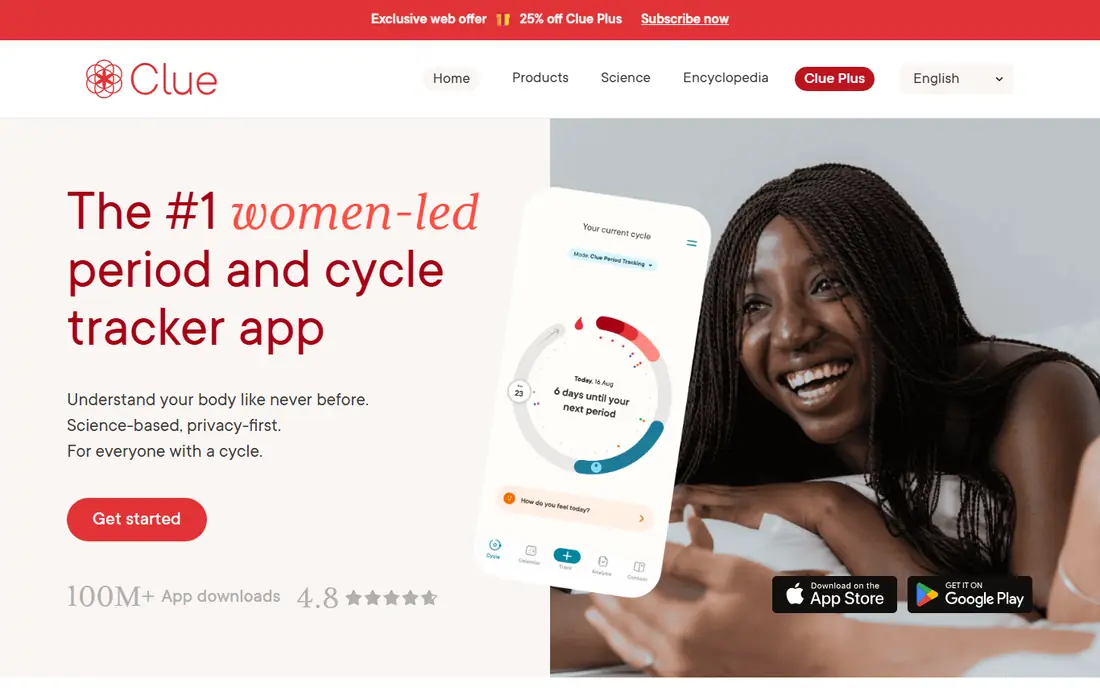
Clue is our top mainstream pick because it balances useful predictions with a privacy posture that is easier to trust. The app logs periods, symptoms, mood, and related patterns, then shows how those patterns shift across cycles. Its design avoids pink clichés and gendered language, which many users prefer for a health tool they open every day.
The free tier covers core tracking well, while Clue Plus, at $39.99 per year, adds deeper analysis and wearable integrations. Clue is based in Berlin, and its data handling falls under European privacy rules, which is a meaningful difference for users worried about health data sharing. It is not a contraceptive on its own, so users seeking birth control should look at Natural Cycles or speak with a clinician.
- Research-grounded predictions
- Gender-inclusive design
- No ads and a clear stance against selling data
- Clue Plus adds deeper insights
- Premium features sit behind Clue Plus at $39.99 per year
- No community forum for peer support
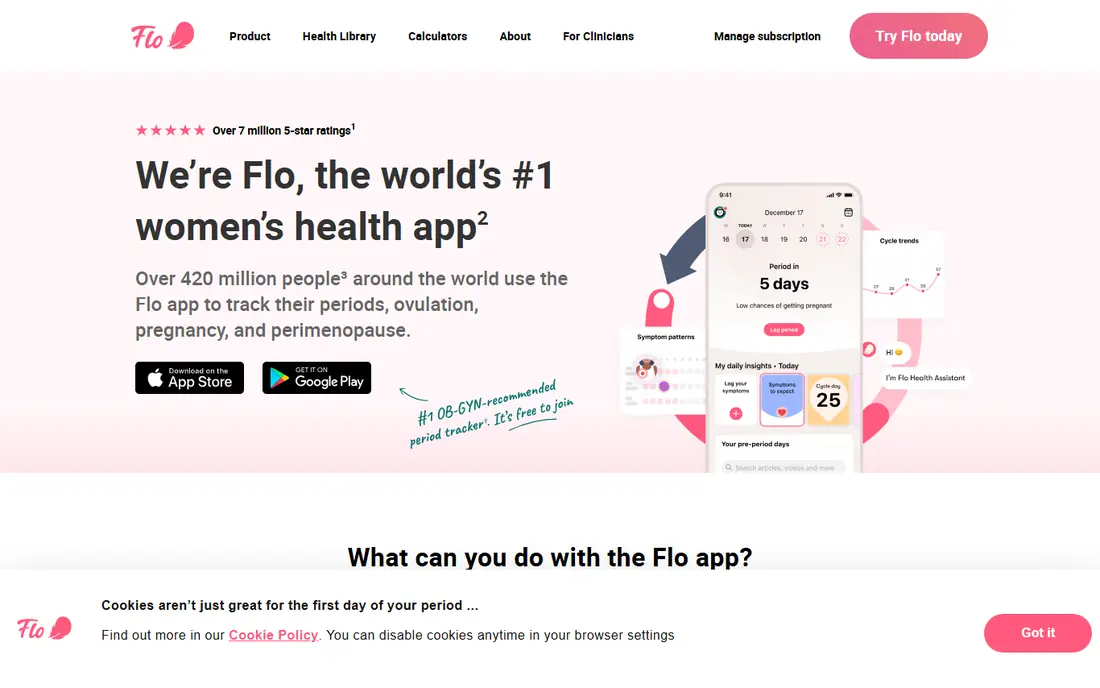
Flo is the most widely used period tracker, and its scale shows in the feature list. Beyond cycle predictions, it offers expert-reviewed articles, symptom insights, pregnancy tracking, and a community space called Secret Chats. For users who want education and peer discussion alongside tracking, Flo offers more in one app than most rivals.
The honest catch is privacy history. Flo has faced regulatory action and legal claims over past data sharing, and while it now offers Anonymous Mode, users should read its current policy and settings before logging sensitive data. Premium pricing varies by plan, with annual options listed around $47.99 to $59.99, so check the in-app price for your region before subscribing.
- Large health article library
- Pregnancy mode with week-by-week guidance
- Anonymous Mode option
- Secret Chats community
- Privacy history includes regulatory action
- Many useful features sit behind Premium
- Free tier includes upsell prompts
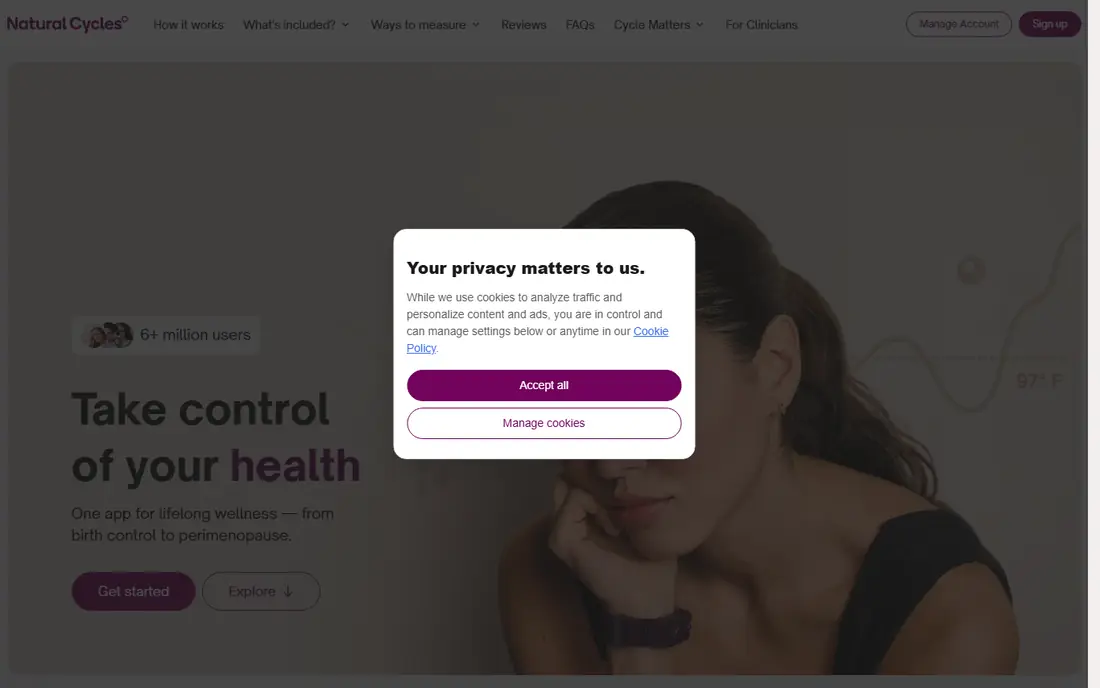
Natural Cycles is different from every other app on this list because it is a regulated contraceptive, not just a tracker. It uses basal body temperature readings to estimate fertile and non-fertile days, giving a daily status that users follow for birth control or for planning pregnancy. That clearance sets a higher bar for evidence than a standard prediction app.
That rigor comes with daily effort. You need to measure temperature consistently, and the annual plan, listed at $149.99 per year including a wearable band option in some plans, is the most expensive here. Users with irregular cycles, shift work, or inconsistent sleep should speak with a clinician first, since those factors can affect accuracy.
- FDA-cleared as a contraceptive method
- Temperature-based fertility status each day
- Pregnancy planning mode included
- No free tier
- Requires daily temperature measurement
- Less suited to highly irregular cycles
Stardust wins users through habit. Its daily readouts link hormone patterns to mood, energy, and symptoms in a short, readable format, which makes it easier to keep logging across a full cycle. Friend syncing lets close contacts compare cycles, a feature that appeals to users who track together or want a heads-up for support.
The app is lighter on deep symptom analysis than Clue, and its privacy record deserves the same careful read as any US-based health app. The free tier covers core tracking, while the annual plan is listed at $29.99. Stardust suits users who stopped opening plainer trackers because they felt like a chore.
- Engaging daily hormone insights
- Cycle syncing with friends
- Clean design that encourages regular logging
- Premium costs $29.99 per year or $6.99 per month in current listings
- Lighter symptom depth than Clue or Flo
Ovia is a family of apps covering fertility, pregnancy, and parenting, which makes it a strong choice for users moving through those stages. The fertility app offers a daily fertility score, cycle predictions, and symptom logging, while the pregnancy app adds kick counters, contraction timers, and week-by-week guidance. Many users access premium coaching through an employer or health plan at no extra cost.
Ovia is owned by Labcorp, a large health company, so users should review its privacy policy and data sharing terms before logging detailed health information. For users focused only on period tracking without fertility goals, a simpler app may feel less cluttered.
- Dedicated fertility, pregnancy, and parenting apps
- Daily fertility score
- Employer-sponsored plans for some users
- Owned by a health data company, so privacy terms deserve review
- Fewer period-only features than Clue
Glow is built around trying to conceive, with basal body temperature charts, cervical mucus logging, ovulation predictions, and active community forums. The forums are the standout feature: users share experiences, ask questions, and support each other through fertility journeys that can feel isolating. A single membership can cover fertility, pregnancy, and parenting apps.
The free tier is ad-supported, and Premium, at $59.99 per year, adds advanced charts and insights. Glow also settled a past privacy matter with a state regulator, so read its current policy carefully. Glow suits users who want community support as much as predictions.
- Large community forums
- Detailed basal body temperature and cervical mucus logging
- One membership covers several life stages
- Premium is $59.99 per year
- Free tier includes ads
- Past privacy settlement deserves a policy check
Apple Health Cycle Tracking is the best period tracker app free option for iPhone users who want simplicity and privacy. It logs periods, symptoms, and cycle factors inside the Health app you already own, and data stays on your device unless you choose to share it. Apple Watch temperature data can improve retrospective ovulation estimates on supported models.
The trade-off is depth. Predictions are basic, symptom options are shorter than in dedicated apps, and there is no community, article library, or fertility planning suite. For users who want a private, no-cost calendar without another account, Apple Health is hard to beat.
- No new app or account needed
- Cycle data stays on device by default
- Integrates with Apple Watch temperature data
- Predictions and symptom options are basic
- IPhone only
- No community or content library
Euki is a nonprofit app that stores cycle data only on your phone, with no account and no cloud copy. That local-only design is the strongest privacy posture on this list for users who do not want health data on a company server at all. It also includes sexual health information, which suits users who want education alongside tracking.
Euki trades features for that privacy. Predictions are basic, there is no wearable sync, and losing your phone without a backup means losing your history. For users who rank data control above advanced predictions, Euki is a principled and genuinely free choice.
- Data stored only on your phone
- No account needed
- Built by a nonprofit with sexual health information
- Predictions are basic
- No cloud sync or wearable integration
- Smaller feature set than mainstream apps
Drip is an open-source period tracker that keeps data on your device and lets anyone inspect its code. That transparency appeals to users who want to verify, rather than trust, a privacy promise. There are no ads, no account, and no data sales, since the app is built to avoid collecting data in the first place.
The experience is more manual than mainstream apps. You enter dates and symptoms yourself, predictions are simpler, and availability varies by platform, with Android and F-Droid as the main routes. Drip suits privacy-focused users who are comfortable with a simpler, self-managed tracker.
- Open-source code anyone can inspect
- Local-only storage
- No account, ads, or tracking
- Android-focused availability varies
- Manual entry is heavier
- No fertility planning suite
How we picked these
We compared official feature pages, app store listings, privacy policies, and public reviews for period trackers that operate today. We favored apps with clear pricing, a working free or paid tier, and a distinct strength, whether privacy, fertility support, community, or built-in simplicity. We did not claim hands-on testing, and we treated prediction accuracy as an estimate that varies with cycle regularity and logging consistency.
How to choose the right tracker for you
Decide what matters most: privacy, fertility, or simplicity
If privacy matters most, start with Clue, Apple Health, Euki, or Drip, and read the policy before you log anything sensitive. If you are trying to conceive, Ovia or Glow offer deeper fertility tools. If you want birth control from an app, Natural Cycles is the regulated option, with daily effort required.
Test the free tier before paying
Most premium features, from deeper insights to wearable sync, only help if you use them every cycle. Log for a full month on the free tier, check whether predictions improve with your data, and only then pay for the tier that solves a problem you actually have.
Protect your health data
Use a passcode or biometric lock, review sharing settings, turn off data sharing where the app allows it, and consider Anonymous Mode or local-only storage if your region or situation makes health data sensitivity higher. Period tracker apps are not medical devices unless cleared as such, and they do not replace advice from a clinician for irregular cycles, pain, or fertility concerns.
Frequently asked questions
What is the best period tracker app free?
Clue, Apple Health, Euki, and Drip all offer strong free tracking without a subscription. Clue gives the best balance of predictions and privacy among mainstream free apps, Apple Health suits iPhone users who want no new account, and Euki and Drip suit users who want data to stay on their phone.
What is the best cycle tracking app for irregular cycles?
Clue handles irregular cycles more flexibly than temperature-based methods, since it adapts predictions from your logged history rather than requiring a regular pattern. Natural Cycles can struggle with highly irregular cycles, so users with irregular patterns should speak with a clinician and test predictions over several cycles before relying on them.
What is the best period tracking app for trying to conceive?
Ovia and Glow offer the deepest fertility features, including fertility scores, temperature charts, and community support. Natural Cycles also offers a pregnancy planning mode, but its strength is contraception through daily temperature tracking, so choose based on whether your goal is conception or birth control.
What is the best period app for privacy?
Local-only apps like Euki and Drip offer the strongest privacy, since data never leaves your phone. Among mainstream apps, Clue, based in Berlin under European privacy rules, is a strong choice, and Apple Health keeps cycle data on device by default. Always read the current privacy policy, since terms change.
Are free period apps safe to use?
Safety depends on the app's data practices, not on price alone. Free apps can sell ads or share data, while paid apps can still collect health information, so check the privacy policy, sharing settings, and whether the app offers anonymous or local-only modes before logging sensitive data.
What is the best period and ovulation tracker app if I want both?
Clue Plus and Flo Premium both cover period and ovulation predictions with symptom logging, while Ovia and Glow add fertility-focused ovulation tools. If you want ovulation tracking for birth control, Natural Cycles is the only regulated option here, and it requires daily temperature readings to work as intended.
Sources
See where you really rank - block by block
ProMapRanker scans Google Maps across a grid of your service area. Simple monthly plans from $19, white-label on every plan.
Start freeKeep reading
 youtube alternatives
Best YouTube Alternatives in 2026
Looking for youtube alternatives in 2026? We compare Vimeo, Dailymotion, Twitch, Rumble, and more on price, audience, monetization, control and privacy.
Read → what's the best ai tool for photo editing
What Is the Best AI Tool for Photo Editing in 2026
What is the best AI tool for photo editing? We compare ten tools for 2026, from Photoshop and Lightroom to Luminar, Topaz, Canva and mobile editors today.
Read → twitter alternatives
Best Twitter Alternatives in 2026
Compare the best twitter alternatives for 2026, from Bluesky, Threads, and Mastodon to Reddit, Tumblr, and Micro.blog, with free plans and audience notes.
Read →