 ProMapRanker
Best Performance Evaluation Software in 2026


Mid-size teams linking reviews to goals and pay · Pricing starts at: See website
Key takeaways
- Lattice and Culture Amp suit larger teams that want reviews tied to engagement data and compensation planning.
- PerformYard, Small Improvements, and 15Five give smaller teams a clearer path to a first structured review cycle.
- Most vendors price per user per month and keep exact totals behind a quote, so compare the included modules before you compare the headline price.
- Goal tracking, 360 feedback, and calibration tools matter more than a long feature list when reviews must stay fair across teams.
- A free plan is rare in this category, so use a demo or trial to test the review form, the manager view, and the reporting before you commit.
Quick comparison
| Pick | Great for | Pricing starts at | Free tier | |
|---|---|---|---|---|
| Lattice | Mid-size teams linking reviews to goals and pay | See website | No | Visit |
 Culture Amp | Engagement and performance in one system | See website | No | Visit |
 15Five | Manager check-ins and continuous feedback | See website | No | Visit |
 Leapsome | Reviews plus learning and development | See website | No | Visit |
 PerformYard | Flexible review cycles for lean HR teams | See website | No | Visit |
 BambooHR | Small businesses that also need an HR system | See website | No | Visit |
 HiBob | Growing companies that need core HR plus talent | See website | No | Visit |
 Small Improvements | Simple reviews, 1:1s, and pulse surveys | See website | No | Visit |
 Trakstar | Structured appraisals with clear audit trails | See website | No | Visit |
The best performance evaluation software
We compared review design, goal tracking, feedback tools, reporting, and pricing transparency. The nine tools below cover the main ways teams run evaluations today, from light check-ins to formal annual appraisals.
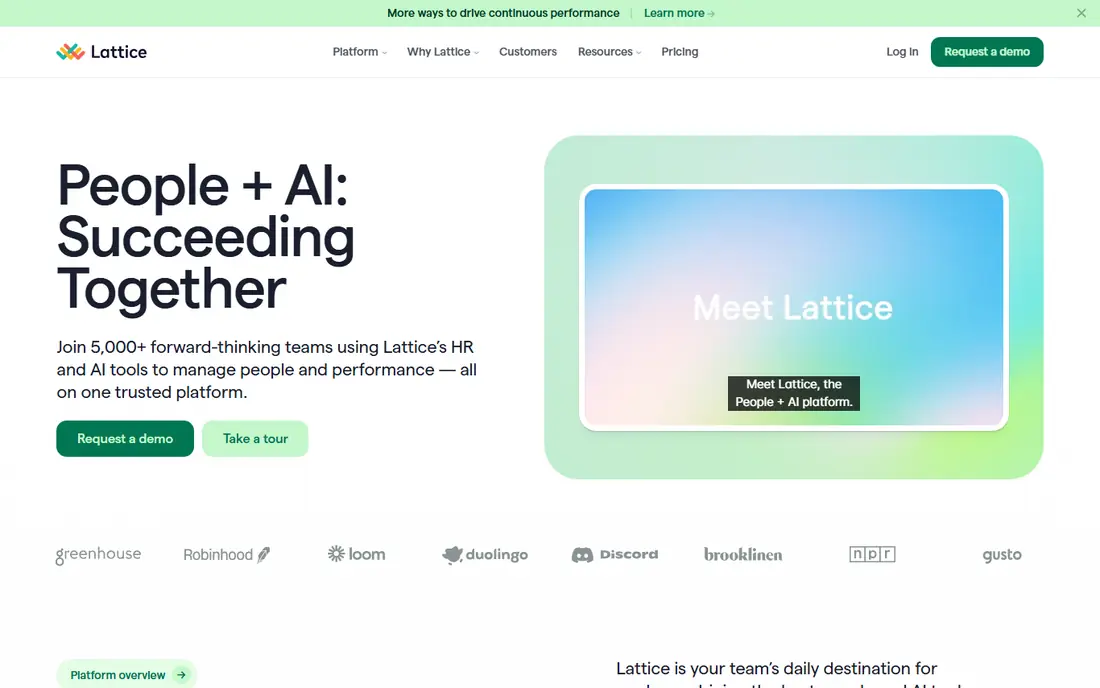
Lattice works well when a review should connect to more than a rating. Managers can link review results to goals, development plans, and later compensation decisions without moving data between separate tools. The review builder supports self, peer, manager, and upward feedback, and the cycle controls help HR keep deadlines, reminders, and visibility consistent across departments.
The trade-off is scope. Lattice covers engagement, goals, growth, and compensation in separate modules, so the final price depends on which parts you switch on. Teams that only need a twice-yearly review may find a narrower tool easier to run. For companies planning to grow past 100 people, that breadth can be a strength, since the same system can carry the next stage of people work.
- Clear review cycles
- Goal and OKR tracking
- Compensation tools on higher plans
- Pricing is modular
- Smaller teams may pay for breadth they do not use
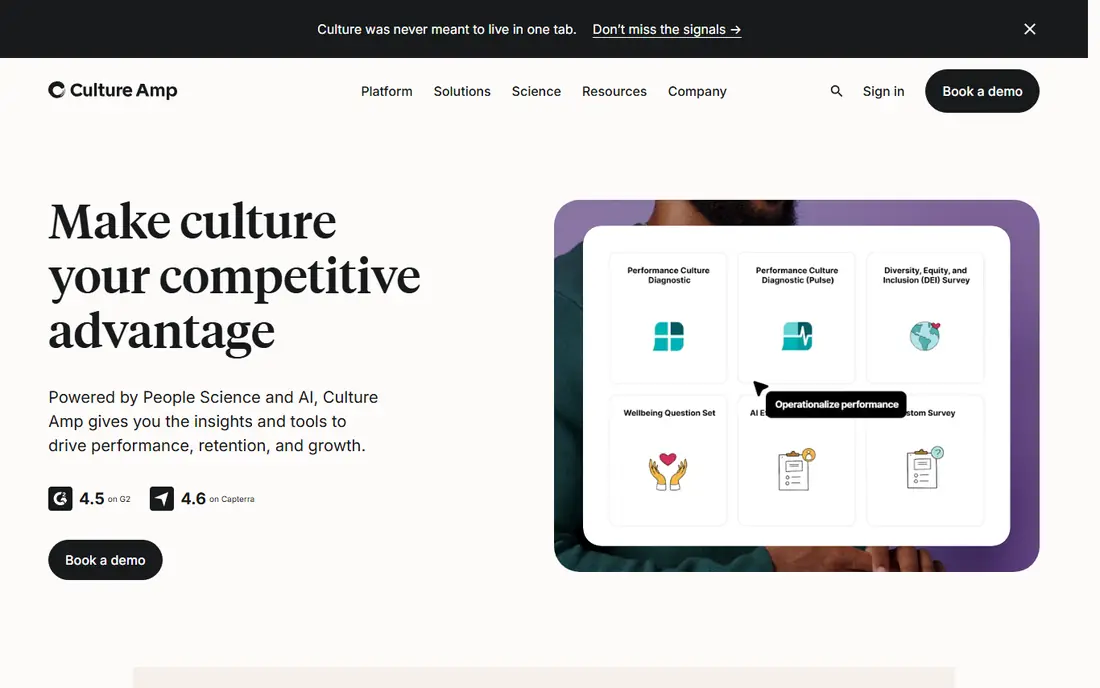
Culture Amp is best known for engagement surveys, and its performance tools benefit from that background. Review questions can draw on the same people data that surveys produce, which helps leaders see patterns across teams instead of treating each review as an isolated event. Managers get structured prompts, calibration support, and reporting that shows where ratings cluster or drift.
Pricing requires a sales conversation, which makes early comparison harder. Small teams may also find the survey depth more than they need if they only want a simple appraisal form. For mid-size and larger employers, the combination of survey insight and review structure is the main reason to shortlist Culture Amp, especially when leadership wants evidence behind people decisions.
- Strong survey science
- Useful benchmarks
- Clear performance workflows
- Quote-based pricing
- Performance tools often sit beside survey plans
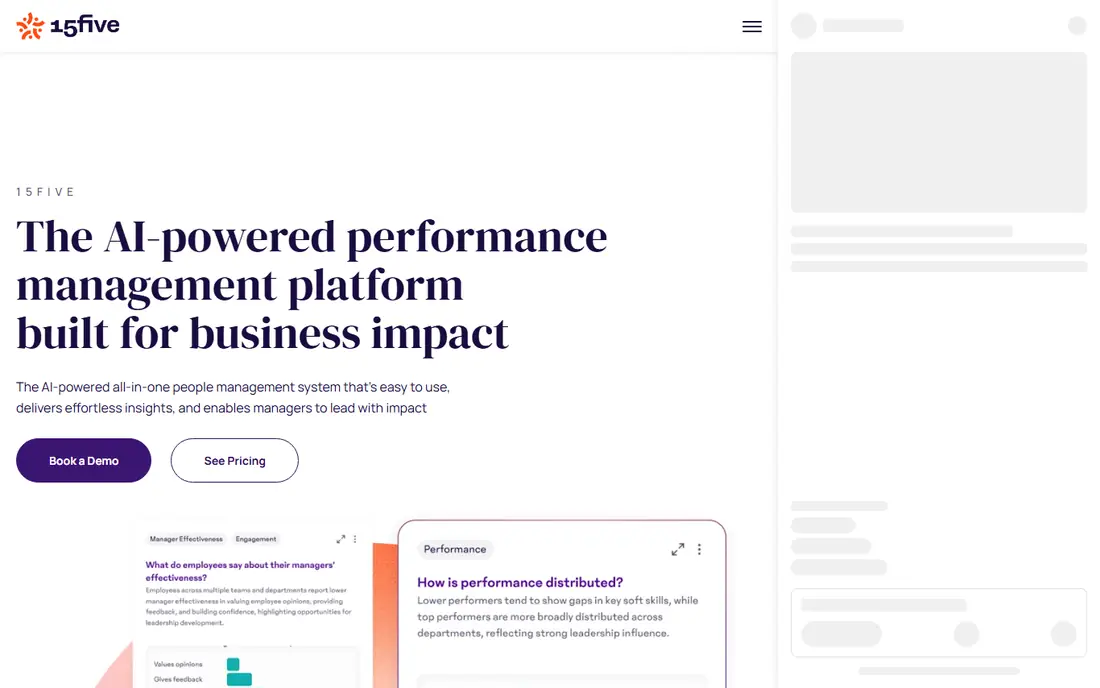
15Five suits teams that want performance work to happen all year, not only at review time. Weekly check-ins, short pulse questions, and 1:1 agendas give managers a steady view of workload, morale, and progress. When review season arrives, that history makes the formal assessment less reliant on memory and recent events alone.
The catch is adoption. If managers skip check-ins, the system loses much of its value, so leaders need to set a clear cadence and model it. Pricing also varies by module, with engagement, performance, and coaching features sold in tiers. Teams that commit to weekly habits will get more from 15Five than teams looking for a form they open twice a year.
- Weekly check-ins
- Manager coaching tools
- Goal tracking
- Annual billing on core plans
- Full value depends on regular manager use
Leapsome brings performance reviews together with goals, engagement surveys, and learning paths. That mix helps when a review uncovers a skill gap and the next step should be a course, a mentor, or a stretch assignment rather than a note filed away. Review templates, competency frameworks, and 360 feedback can be shaped to fit different roles and levels.
Customization is both the strength and the cost. A team can build a detailed framework, but someone needs to own that setup and keep it current as roles change. Pricing is quoted rather than published, so budget planning needs a demo and a written quote. Leapsome fits mid-size companies that want development to follow directly from evaluation, not sit in a separate system.
- Reviews, goals, surveys, and learning in one place
- Strong customization
- Quote-based pricing
- Setup takes time for larger configurations
PerformYard focuses on the review itself. HR teams can build custom forms, set different cycles for different groups, route approvals, and track completion without forcing every team into the same template. That flexibility matters for companies with varied roles, from office staff to frontline workers, where one form rarely fits all.
It does not try to be a full engagement or learning platform, so teams that want surveys and courses will need another tool or a higher-tier add-on. The interface is practical rather than flashy, which most HR users will accept if the workflow saves time. For lean teams that need control over the appraisal process above all else, PerformYard is a strong, focused choice.
- Highly configurable forms
- Clear cycle management
- Practical reporting
- Fewer engagement extras
- Design feels more functional than polished
BambooHR makes sense when performance is one part of a wider HR job. Employee records, time off, onboarding, and basic performance reviews live together, so a small team avoids stitching several systems into one workflow. Managers can run reviews, set goals, and see basic history without learning a specialist platform.
Specialist review needs, such as complex calibration, detailed competency libraries, or advanced 360 workflows, may stretch beyond what BambooHR offers. Performance depth also depends on the tier you choose, so check which plan includes the review features you need. For businesses under a few hundred people that want one HR home base, the convenience often outweighs the narrower review depth.
- Core HR and performance in one login
- Easy employee records
- Familiar interface
- Performance features are lighter than specialist tools
- Higher tiers needed for full depth
HiBob combines core HR, time, benefits, and talent tools, including performance reviews and goals. It suits companies that are outgrowing spreadsheets and point tools and want a single people system that can handle multiple locations and currencies. Review cycles, feedback, and goal progress sit beside headcount and org data, which helps planning.
The main limit is price transparency. HiBob quotes by company size and modules, so small teams cannot judge cost from the website alone. Teams that only need reviews may also find the wider platform more than they want to manage. For growing, distributed companies, HiBob offers a coherent step up from a patchwork of HR tools.
- Modern HR core
- Performance and workforce planning
- Good global support
- Quote-based pricing
- Best value when you adopt the wider platform
Small Improvements keeps the review process direct. Teams can run performance reviews, collect 360 feedback, hold structured 1:1s, and send short pulse surveys without a long implementation project. The design favors clarity, which helps adoption among managers who dislike heavy HR software.
That simplicity has limits. Compensation planning, deep analytics, and large-scale calibration are not its main strengths. Companies with complex pay structures or very large workforces may need a broader platform. For teams of roughly 20 to 500 people that want reviews running quickly and used consistently, Small Improvements offers a practical balance of function and ease.
- Clear and simple review flow
- 360 feedback
- Useful 1:1 tools
- Less depth for compensation planning
- Reporting is simpler than enterprise tools
Trakstar focuses on formal appraisal work. HR teams can set up review forms, rating scales, goal sections, and approval steps, then track who has finished and who is still outstanding. That structure helps organizations that need a defensible record of evaluations, especially in regulated or multi-site settings.
The product is less focused on continuous feedback or engagement surveys, so teams that want weekly check-ins may pair it with another habit or tool. Pricing is handled through sales, which slows early budgeting. For employers that value a clear, auditable appraisal cycle over social feedback features, Trakstar remains a solid specialist option.
- Configurable appraisal forms
- Goal tracking
- Clear completion reporting
- Pricing is not published
- Interface feels dated in places
How we picked these
We compared official feature pages, pricing pages, and public product documentation, and we checked that each vendor still offers performance review tools in October 2026. We favored tools that cover real appraisal work, such as structured forms, manager and peer input, goal links, and completion tracking, over tools that only offer surveys or chat. We also weighed pricing transparency, ease of setup, and fit for different company sizes, so the list includes both broad people platforms and focused review tools.
What to check before you buy
Start with the review form itself. Ask each vendor to show a full cycle, from form design to manager submission, calibration, and the final employee view. Look for rating scale controls, comment requirements, and safeguards against bias, such as calibration views that compare ratings across teams. If your company needs 360 feedback, confirm who can nominate reviewers, whether feedback can be anonymous, and how managers see the results.
Goals, feedback, and reporting
Decide how much of the year the tool should cover. A formal annual tool works for compliance-heavy settings, while check-in tools suit teams that want ongoing coaching. Check goal tracking, 1:1 templates, and whether feedback can be given outside a cycle. Reporting should answer simple questions: completion rates, rating distribution, goal progress, and gaps by team or manager.
Pricing and rollout
Add up the modules, not just the entry plan. Many vendors sell engagement, goals, and compensation separately, and per-user prices can rise sharply once you add them. Confirm minimums, contract length, implementation help, and data migration from your current HR system. Pilot with one department first, set a clear review calendar, and train managers on writing useful, specific feedback before the first full cycle.
Frequently asked questions
What is the best performance appraisal software for a small business?
Small Improvements and PerformYard are good starting points because they focus on reviews without a large platform commitment. BambooHR also works when you need core HR in the same system. Choose the tool whose review form your managers will actually complete, then check whether its pricing still fits as headcount grows.
How much does performance evaluation software cost?
Most tools in this list price per user per month, with totals that depend on modules, headcount, and contract length. Specialist tools often start in the low single digits to low teens per user per month, while broad platforms require a quote. Ask for a written quote that lists every module you plan to use.
Can these tools replace an annual review?
They can change how often feedback happens, but they do not remove the need for a fair, documented assessment. Check-in tools support ongoing coaching, while formal tools keep a clear record for pay and promotion decisions. Many teams use both: regular check-ins during the year and a structured review at year end.
Do these tools support 360 feedback?
Lattice, Leapsome, Small Improvements, and several others support peer and upward feedback, but the controls differ. Check nomination rules, anonymity settings, and how results are shared with the employee. A 360 process needs clear guidance, or feedback can feel vague and unhelpful.
What should HR check for fairness and bias?
Look for calibration views, rating distribution reports, and comment quality controls. Train managers to base ratings on documented goals and behavior, not recent impressions alone. Review results by team and manager before finalizing ratings, and keep a written record of any adjustments made during calibration.
Sources
See where you really rank - block by block
ProMapRanker scans Google Maps across a grid of your service area. Simple monthly plans from $19, white-label on every plan.
Start freeKeep reading
 zscaler alternatives
Best Zscaler Alternatives in 2026
Looking for zscaler alternatives? We compare 9 SASE and zero trust platforms on architecture, data protection, pricing, and fit for your network and team.
Read → zapier alternatives free
Best Zapier Alternatives Free in 2026
Nine automation tools for zapier alternatives free in 2026, all with genuinely free tiers, plus free plan limits, starting prices and upgrade paths explained.
Read → which platform is best for online reputation
Which Platform Is Best for Online Reputation in 2026
Wondering which platform is best for online reputation? We compare 8 review, listing, and response tools for small and multi-location businesses and agencies.
Read →