 ProMapRanker
Best Peer to Peer Fundraising Software in 2026

Key takeaways
- Givebutter and Zeffy suit smaller nonprofits that want low upfront cost, with donor tips or optional fees covering much of the bill.
- Classy, now GoFundMe Pro, and Bonterra DonorDrive suit large campaigns and endurance events with complex teams and CRM needs.
- RallyUp and Funraise cover many campaign types in one place, from peer pages to raffles and auctions.
- Donorbox and CauseVox suit grassroots teams that want simple pages and clear storytelling without a large contract.
- Fees matter as much as features, so compare platform fees, processing fees, and donor fee coverage before you pick.
Quick comparison
| Pick | Great for | Pricing starts at | Free tier | |
|---|---|---|---|---|
 Givebutter | Small and midsize nonprofits | Free | Yes | Visit |
 Classy | Large, growth focused nonprofits | See website | No | Visit |
 DonorDrive | Endurance and large events | See website | No | Visit |
 Bloomerang Fundraising | Multi channel campaigns | See website | Free trial | Visit |
 RallyUp | Mixed campaign types | Free | Yes | Visit |
 Funraise | Flat rate fundraising teams | $99 per month | Yes | Visit |
 Donorbox | Simple peer pages and recurring gifts | Free | Yes | Visit |
 CauseVox | Grassroots storytelling campaigns | See website | Yes | Visit |
 Zeffy | Zero fee fundraising | Free | Yes | Visit |
The best peer to peer fundraising platforms
Peer to peer fundraising lets supporters create their own pages and ask friends to give, so the best tool makes that step easy for fundraisers and clear for donors.
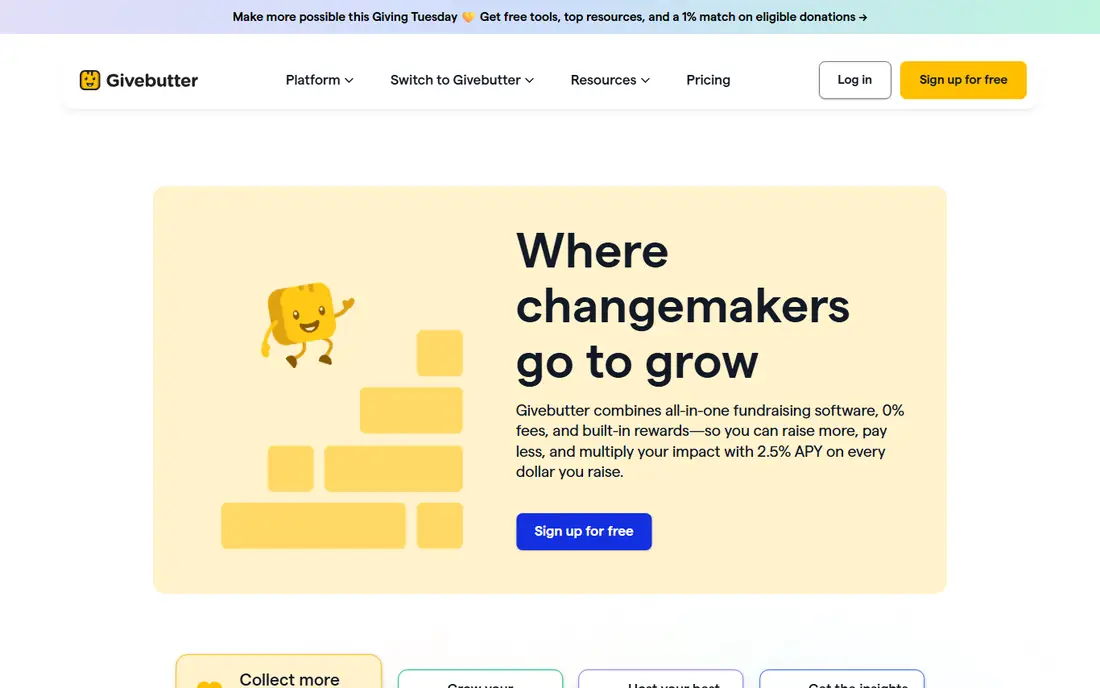
Givebutter is a popular first choice for smaller nonprofits because the core platform can start free, with donors offered a chance to cover fees through tips. Supporters can build personal pages, join teams, share links, and track progress without a long setup process. Events, auctions, and donation forms sit in the same account, which helps a small staff run several campaign types without learning many tools.
The tradeoff is that free does not mean free of all fees. Payment processing still applies in many setups, and advanced features sit behind paid plans. Read the fee page for your exact campaign type before you launch, and test a donor page yourself. For many grassroots teams, the low entry cost and friendly pages still make Givebutter hard to beat.
- Free core platform with donor tip option
- Peer pages, events, and auctions in one place
- Modern, friendly page design
- Paid Plus features cost extra
- Processing fees still apply in some setups
- Support depth varies by plan
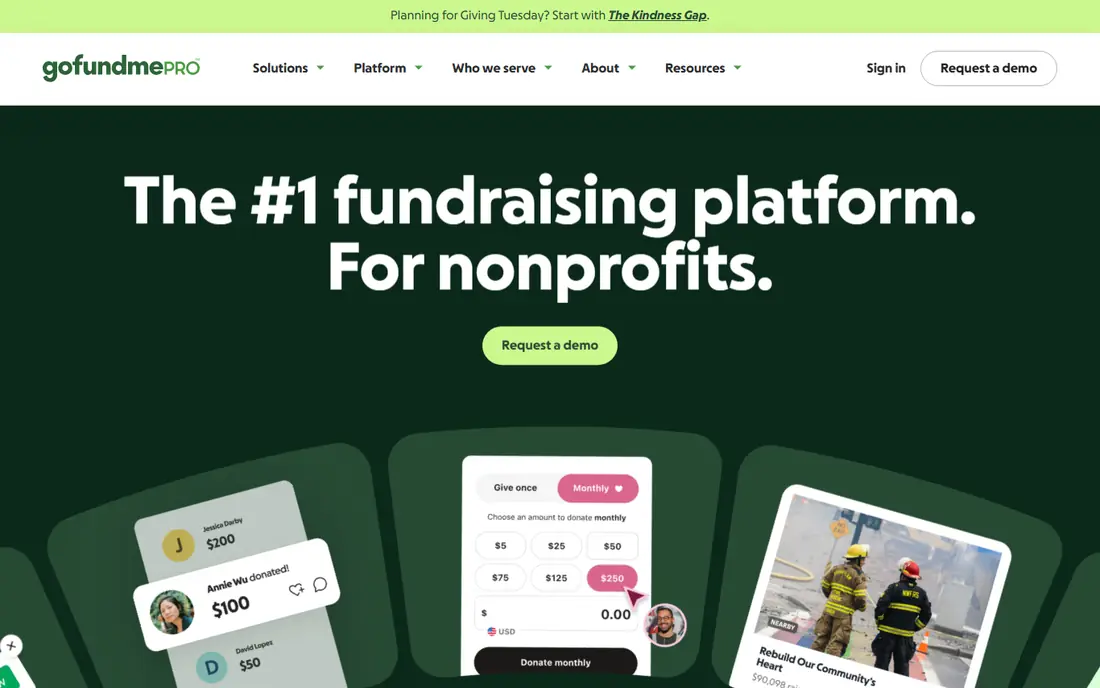
Classy, now sold as GoFundMe Pro, is built for nonprofits running repeated, large peer campaigns. Its page builder, team tools, and reporting suit organizations with dedicated fundraising staff and a CRM to connect. Recurring gifts, matching gifts, and branded pages help a large campaign look consistent across hundreds of fundraisers.
The price and effort reflect that scale. Pricing is custom and annual, and a small nonprofit may find the setup heavy for one walk or challenge. Classy fits best when peer fundraising is a core revenue line, not a one off experiment, and when staff can use the reporting and CRM features fully. For that profile, the depth is worth the contract.
- Mature peer to peer page builder
- Strong CRM and recurring gift tools
- GoFundMe brand reach after acquisition
- Custom annual pricing
- Setup and training take time
- Overkill for a single small campaign
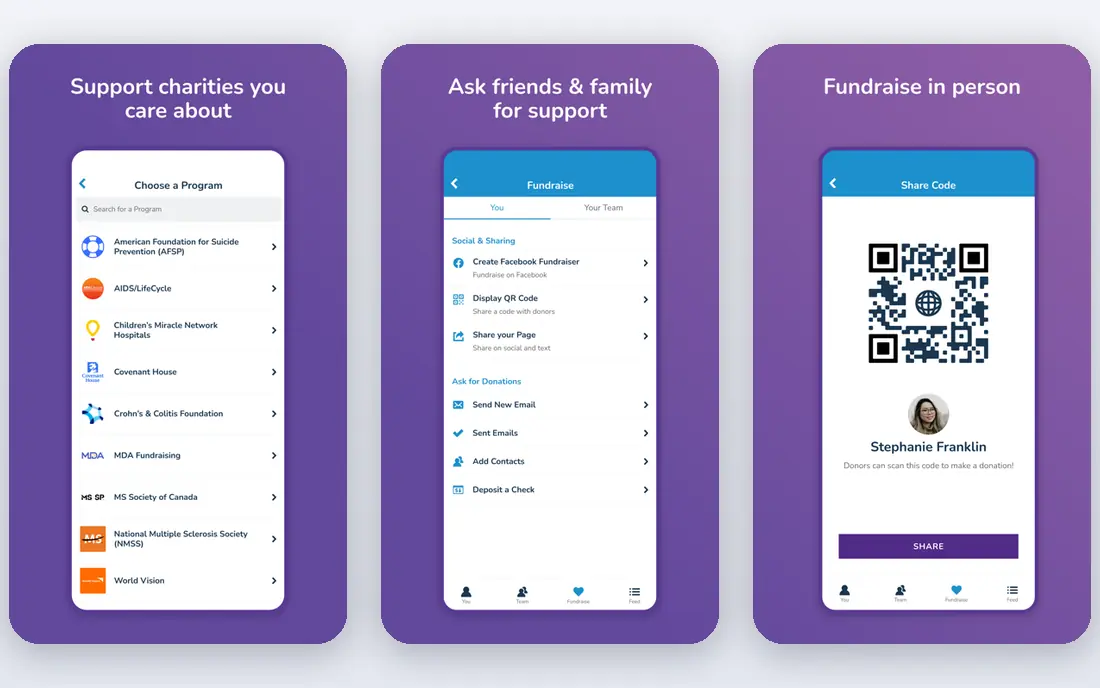
Bonterra DonorDrive is the specialist pick for endurance events and large charity challenges. Fundraisers get personal pages, activity tracking, team leaderboards, and social sharing tools that fit walks, runs, cycling events, and virtual challenges. Event staff get reporting and CRM links that help follow up with top fundraisers and lapsed donors.
That specialization is also its limit. A small nonprofit running one simple peer campaign may not need activity sync or complex team structures, and the custom enterprise price will reflect the extra depth. For a flagship event with hundreds or thousands of participants, DonorDrive gives event teams tools that general donation platforms often lack.
- Built for walks, runs, and rides
- Gamification and leaderboards
- Strong CRM integrations
- Enterprise custom pricing
- Setup is heavier than simple tools
- Best for event teams, not tiny campaigns
Bloomerang Fundraising, formerly Qgiv, covers peer campaigns alongside auctions, events, and text giving. That breadth helps a nonprofit that runs a gala, a peer challenge, and an appeal in the same year without switching systems. Leaderboards, progress thermometers, and donor tools keep fundraisers motivated and give staff a clear view of campaign health.
Pricing needs careful reading, since modules and add ons can push the total above the entry figure. Ask for a written quote that lists every module you plan to use, and test the fundraiser page flow before signing. For midsize teams that want one system for several campaign types, Bloomerang Fundraising offers a practical balance of breadth and donor management.
- Peer pages plus text giving and events
- Thermometers and leaderboards
- CRM links for donor follow up
- Pricing is modular and can climb
- Some features are add ons
- Learning curve for full feature set
RallyUp suits nonprofits that want to mix fundraising methods in a single campaign. A peer challenge can sit beside a raffle, an auction, or a simple donation page, and supporters see one branded experience. The free plan, supported by donor tips, lets a small team test the platform without a contract, while the Flex plan uses component fees for teams that prefer that model.
The tradeoff is depth. RallyUp does not match enterprise reporting or CRM depth from Classy or DonorDrive, and Flex fees need checking for each campaign component you use. For schools, clubs, and midsize nonprofits running varied campaigns, the flexibility and low entry cost often matter more than enterprise reporting.
- Raffles, auctions, and peer pages in one campaign
- Free plan with donor tips
- Donor profiles and branding options
- Flex plan fees vary by component
- Reporting is simpler than enterprise tools
- Best for smaller to midsize teams
Funraise appeals to teams that want predictable pricing. A free tier lets a small nonprofit start, and a flat rate Premium plan avoids fee structures that rise with every gift. Peer pages, donation forms, and campaign tools cover the core needs of a grassroots or midsize campaign without a complex contract.
The platform is less deep than enterprise rivals for large event operations or advanced CRM work, and design flexibility is more limited than some page builders. Test the fundraiser signup flow and the donor checkout on a phone, since most peer gifts arrive on mobile. For teams that value a clear monthly bill, Funraise is a straightforward option.
- Flat rate Premium plan
- Peer pages and donation forms
- Clear pricing for budgeting
- Feature depth varies by tier
- Smaller ecosystem than large rivals
- Design options are more limited
Donorbox is best known for donation forms, but its peer to peer pages give small teams a simple way to let supporters fundraise. Pages are easy to share, recurring gifts are well supported, and many payment methods help donors give without friction. A nonprofit that already uses Donorbox for appeals can add peer pages without learning a new system.
Peer tools are simpler than those in DonorDrive or Classy, with less event gamification and team structure. Platform fees also vary by plan, so check the tier that includes peer pages and the processing rate that applies. For a straightforward peer campaign tied to recurring giving, Donorbox keeps setup and cost low.
- Free Standard plan to start
- Strong recurring giving
- Many payment options and easy sharing
- Platform fees vary by plan
- Peer features are simpler than event specialists
- Advanced CRM work needs integrations
CauseVox suits grassroots teams that lead with story. Personal and team pages can carry strong branding, photos, and narrative, and embeds let a nonprofit add fundraising to an existing website without rebuilding it. The free limited plan helps a new campaign test the waters before committing to a paid tier.
The range is narrower than all in one platforms, so a team that also needs auctions, complex events, or deep CRM tools may need a second system. Paid plan pricing also starts above some tip funded rivals, so compare total fees for your expected gift volume. For a story led peer campaign, CauseVox gives a clean, donor friendly experience.
- Free limited plan to start
- Strong branded pages and storytelling
- Easy embeds for existing sites
- Paid plans start higher than some free tools
- Feature range is narrower
- Best for smaller campaigns
Zeffy stands out on cost, since it charges nonprofits no platform or processing fees and funds itself through optional donor tips. That model can save a meaningful amount for a small nonprofit, especially on a campaign with many small gifts. Peer pages, events, and donation forms cover the basics without a monthly bill.
The tradeoff is depth and scale. Zeffy does not match enterprise reporting, CRM depth, or event complexity from larger platforms, and its geographic focus is narrower. Donors should also see clearly that tips are optional, so a campaign page does not confuse a tip with a gift to the cause. For budget focused teams, Zeffy is worth a serious look.
- No platform or processing fees for nonprofits
- Peer pages and events included
- Simple setup for small teams
- Relies on donor tips to fund the service
- Feature depth is lighter than enterprise tools
- US and Canada focus
How we picked these
We compared official pricing and feature pages, peer campaign tools, and public nonprofit guides for each platform. We favored tools with live peer to peer pages in 2026, clear fee information, and a distinct fit for small, midsize, or large campaigns. We left out general donation tools without a real peer page product.
We also weighed the donor experience, since peer fundraising succeeds or fails on supporter pages. A tool with strong back end reporting but a clumsy fundraiser signup will raise less than a simpler tool that supporters actually use. That is why our notes stress page setup, mobile checkout, and sharing tools.
What to check before you choose a peer platform
Start with fees, then features. List the platform fee, the processing fee, and whether donors can cover fees, then model those rates against your expected gift count and average gift size. A free platform with a higher processing rate can cost more than a paid plan on a large campaign, while a paid plan can waste money on a tiny one.
Fundraiser experience and motivation
Ask a volunteer to create a page, share it, and make a test gift on a phone. Check how long signup takes, how the page looks when shared on social media, and whether team totals and leaderboards update clearly. Fundraisers who struggle at signup will not recruit donors, no matter how good the admin reports look.
Donor trust and follow up
Check receipts, thank you messages, and CRM exports before launch. Donors should get a clear receipt that shows the nonprofit name and gift amount, and staff should be able to thank first time peer donors quickly. A platform that exports clean donor data saves hours after the campaign and helps turn peer donors into repeat supporters.
Frequently asked questions
What is peer to peer fundraising software?
Peer to peer fundraising software lets supporters create personal pages and collect gifts from friends, family, and colleagues for a nonprofit. The nonprofit sets the campaign, and fundraisers share links, track totals, and often join teams. It differs from a simple donation form because the fundraiser, not just the nonprofit, drives outreach.
What are the best peer to peer fundraising platforms for small nonprofits?
Givebutter, Zeffy, RallyUp, and Donorbox are common starting points for small nonprofits, since they offer free or low cost entry and simple pages. The right choice depends on fees, campaign type, and whether you need events or auctions too. Test a fundraiser page and a donor checkout before you commit.
How much does peer to peer fundraising software cost?
Costs vary widely, from free tip funded platforms to custom annual enterprise contracts. Always add platform fees and payment processing fees together, and check whether donors can cover fees. A written quote that lists every module and fee avoids surprises after a campaign ends.
Do donors pay fees on peer fundraising pages?
It depends on the platform setup. Some platforms let donors add an optional tip or fee coverage, while others charge the nonprofit a platform fee, a processing fee, or both. Campaign pages should state clearly what portion goes to the nonprofit and what, if anything, is an optional extra.
Can peer fundraising work for a small campaign?
Yes, peer fundraising can work for a small campaign when a core group of supporters is willing to share pages and ask personally. A simple tool, a clear goal, and a short timeline often beat a complex platform for a first campaign. Start with a small group, learn what messages work, and expand the next time.
Sources
See where you really rank - block by block
ProMapRanker scans Google Maps across a grid of your service area. Simple monthly plans from $19, white-label on every plan.
Start freeKeep reading
 zscaler alternatives
Best Zscaler Alternatives in 2026
Looking for zscaler alternatives? We compare 9 SASE and zero trust platforms on architecture, data protection, pricing, and fit for your network and team.
Read → zapier alternatives free
Best Zapier Alternatives Free in 2026
Nine automation tools for zapier alternatives free in 2026, all with genuinely free tiers, plus free plan limits, starting prices and upgrade paths explained.
Read → which platform is best for online reputation
Which Platform Is Best for Online Reputation in 2026
Wondering which platform is best for online reputation? We compare 8 review, listing, and response tools for small and multi-location businesses and agencies.
Read →