 ProMapRanker
Best Pedal Platform Amp in 2026


Classic tube clean tone · Pricing starts at: See website
Key takeaways
- A good pedal platform amp stays clean at useful volume, with enough headroom for drive, delay, and modulation pedals to shape the tone.
- Fender Princeton Reverb and Deluxe Reverb lead for classic clean tones, while Tone Master versions add lighter weight and power scaling.
- Vox AC15C1 and Roland JC-40 suit players who want a different clean voice, with chime or pristine solid state clarity.
- For home use, power scaling, a smaller speaker, or a lower wattage amp matters more than maximum stage volume.
Quick comparison
| Pick | Great for | Pricing starts at | Free tier | |
|---|---|---|---|---|
| Fender 65 Princeton Reverb | Classic tube clean tone | See website | No | Visit |
 Fender 65 Deluxe Reverb | Gig ready clean headroom | See website | No | Visit |
 Fender Tone Master Deluxe Reverb | Lightweight Deluxe tone | See website | No | Visit |
 Fender Tone Master Princeton Reverb | Lightweight Princeton tone | See website | No | Visit |
 Vox AC15C1 | Chime clean tone | See website | No | Visit |
 Roland JC-40 | Pristine solid state clean | See website | No | Visit |
 Supro Delta King 12 | Small tube amp with character | See website | No | Visit |
 Fender Hot Rod Deluxe IV | Affordable tube headroom | See website | No | Visit |
 Orange Rocker 32 | Stereo tube pedal platform | See website | No | Visit |
The best pedal platform amps
A pedal platform amp is an amp that lets pedals do the tone shaping. It should offer a clean, full sound that does not break up too early, an effects loop or a front end that handles pedals well, and enough volume range for home, studio, and stage. The best pedal platform amps below cover tube, digital, and solid state routes to that goal.
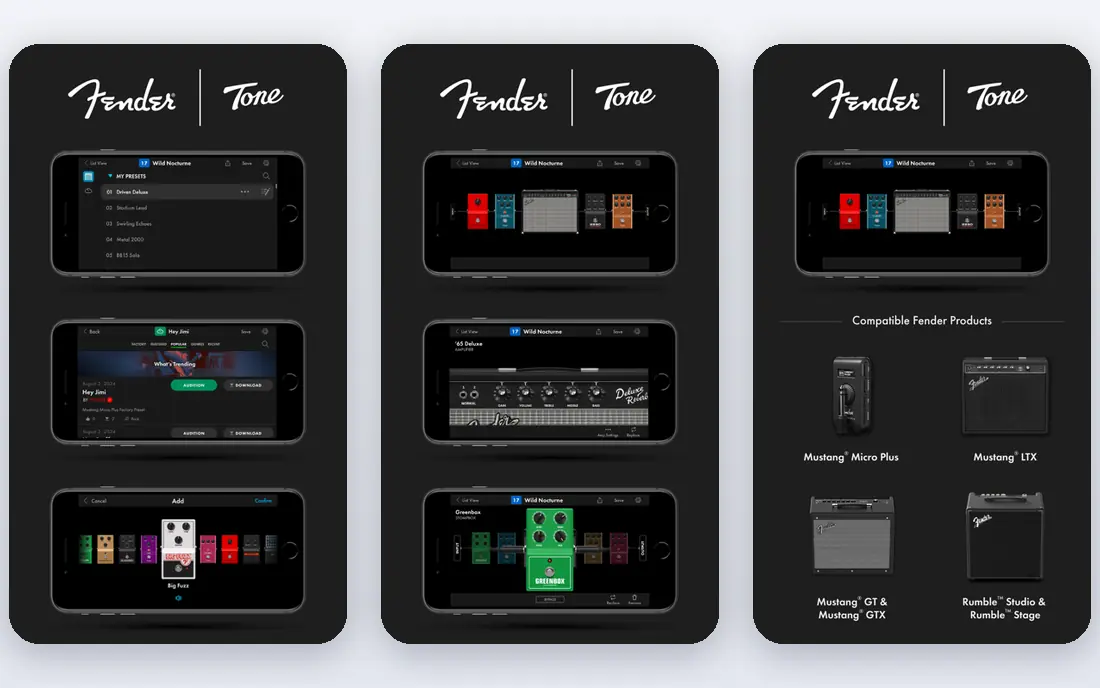
The 65 Princeton Reverb is our pick for many home and studio players. Its clean tone is warm and open, with room for pedals to add drive, modulation, and delay without fighting the amp voice. Built in reverb and tremolo also reduce the pedals needed for a classic sound.
The limit is volume. At band volume, the Princeton breaks up earlier than a Deluxe, so loud stage players may need a larger amp or a microphone through a PA. For home use, recording, and smaller gigs, its size and tone are hard to beat.
- Warm, open clean tone
- Long spring reverb and tremolo
- Ideal size for home and studio
- Limited clean headroom for loud band stages
- Single 10 inch speaker
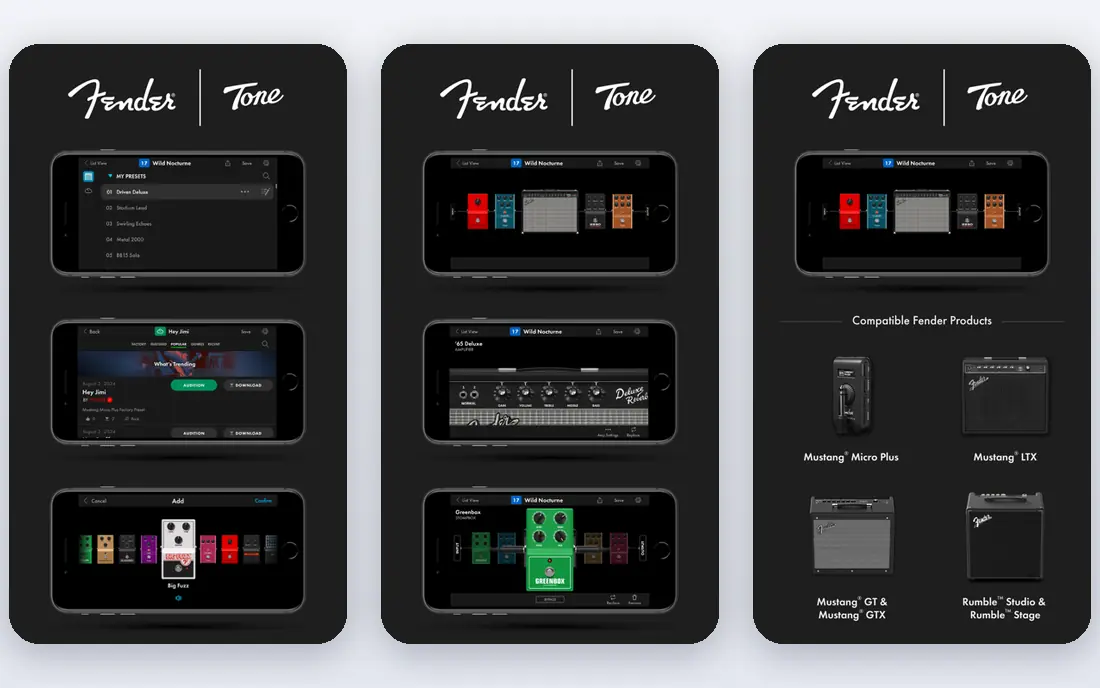
The 65 Deluxe Reverb suits players who need Princeton style tone with more clean volume. Its 12 inch speaker and higher power keep cleans intact at band levels, so drive pedals stay clear and defined rather than turning muddy. It remains a standard choice for pedal heavy players on stage.
Weight and tube upkeep are the trade offs. It is heavier to carry than a Tone Master version, and tubes need periodic replacement. For players who gig regularly and want a true tube Deluxe, those costs are part of owning a classic amp.
- More clean headroom than Princeton
- Classic Fender reverb and tremolo
- Proven stage amp
- Heavier than Princeton
- Tube maintenance and replacement costs over time
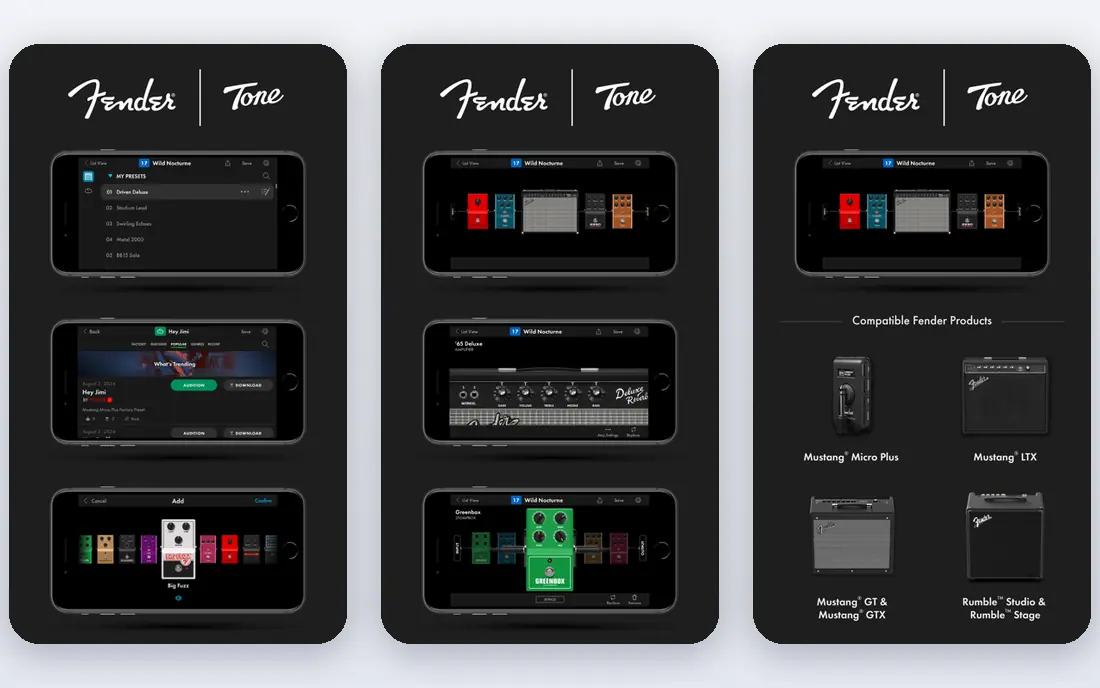
The Tone Master Deluxe Reverb suits players who want Deluxe tone without Deluxe weight. Its digital modeling recreates the tube Deluxe sound, while power scaling lets you play at home volume without losing tone shape. A balanced direct output with cabinet simulation also helps for recording and silent stage use.
Tube purists may notice a difference in feel at high volume, though many players find the Tone Master close enough for stage and studio work. For a pedal platform that must travel light and play quiet at home, it is a practical modern choice.
- Much lighter than tube Deluxe
- Power scaling for home volume
- Direct output with cabinet simulation
- Digital modeling feel differs subtly from tube version for some players
- No tube maintenance charm for purists
The Tone Master Princeton Reverb suits home players who love Princeton tone but want modern convenience. It keeps the small combo size, adds power scaling for bedroom volume, and offers a direct output for recording. That combination makes it one of the best pedal platform amps for home use.
Some players report that certain distortion pedals interact differently with the digital preamp than with a tube Princeton. Test your main drive pedals with it if possible before buying. For clean and edge of breakup pedal tones at home, it performs very well.
- Lighter than tube Princeton
- Power scaling
- Reverb, tremolo, and direct output in a small combo
- Digital preamp feel differs for some distortion pedals
- Smaller speaker limits low end at volume
The Vox AC15C1 suits players who want a clean voice with more chime and midrange character than a Fender. Its top boost channel adds sparkle that pairs well with delay, chorus, and light drive pedals. Many players choose Vox precisely because pedals sound different, and often more lively, through it.
Clean headroom is lower than a Deluxe, so loud clean stages may need a larger Vox or a mic through a PA. For studio, home, and smaller stages, the AC15 offers a characterful alternative to the Fender clean sound.
- Distinctive chime clean voice
- Responsive to pedals
- Classic British amp character
- Heavier than expected for 15 watts
- Clean headroom lower than Deluxe Reverb
The Roland JC-40 suits players who want a clean slate for pedals. Its solid state design stays clean at high volume, so modulation, delay, and drive pedals keep their own character without amp breakup coloring the sound. Its stereo chorus is a classic effect in its own right.
The trade off is tube character. Players who want natural tube breakup or warm compression will miss it here. For jazz, ambient, and pedal heavy players who prize clarity, the JC-40 remains a respected and reliable platform.
- Very clean solid state tone
- Famous stereo chorus
- Takes pedals with great clarity
- No tube warmth or breakup character
- Chorus sound is distinctive and not for every player
The Supro Delta King 12 suits players who want a small tube amp with its own voice, not a Fender copy. Its clean tone has midrange warmth, and it moves into edge of breakup nicely with a boost or light drive pedal. Size suits home and studio use well.
It is not the cleanest platform at band volume, so loud stage players should look at a Deluxe or JC-40 instead. For home players who want tube feel and a distinct tone, the Delta King offers strong value and character.
- Compact tube combo
- Characterful clean and edge of breakup tones
- Good home and studio size
- Less clean headroom than Fender Deluxe
- Smaller brand support network than Fender or Vox
The Hot Rod Deluxe IV suits players who need tube headroom on a tighter budget. Its clean channel handles pedals well, with enough volume for band use and a full 12 inch speaker sound. It is widely stocked, so parts and service are easier to find than for rarer amps.
Most pedal players use the clean channel and ignore the built in drive channel, which many find less refined. That is fine for a pedal platform, since pedals supply the drive. For a first tube pedal amp, the Hot Rod Deluxe offers proven performance at a lower price than a Deluxe Reverb.
- Strong clean headroom for the price
- 12 inch speaker
- Widely available and easy to service
- Drive channel is less loved than the clean channel
- Heavier than Tone Master options
The Orange Rocker 32 suits players with stereo delay, reverb, and modulation pedals who want true stereo spread from an amp. Its stereo effects loop and two speakers let stereo pedals shine in a way a mono combo cannot match. Tube tone adds warmth to the stereo image.
It is heavier and more complex than a Princeton or Deluxe, and it needs a stereo pedal chain to justify its design. For players already running stereo pedals, it is a standout platform. For mono pedalboards, a simpler amp will be cheaper and lighter.
- Stereo effects loop for stereo pedals
- Two 10 inch speakers
- Tube tone with stereo width
- Heavier and pricier than single speaker options
- Stereo setup needs two pedal outputs or a stereo pedal
How we picked these
We compared official product pages, amp designs, and pedal platform use cases for the best pedal platform amps, best pedal platform amp for home use, and best pedal platform tube amp options in current vendor and review sources. We favored amps that exist and work in October 2026, stay clean at useful volume, and serve distinct needs, from home practice to stereo stage rigs. We did not claim hands on testing. Our picks rest on published specs, design, and fit for pedal based tone shaping.
How to choose a pedal platform amp
Start with volume. Home players need power scaling, low wattage, or a small speaker, while stage players need clean headroom at band volume. An amp that is perfect at home may break up too early on stage, and an amp built for stage may be too loud at home.
Test your own pedals with the amp
Bring your main drive, delay, and modulation pedals to a store test if possible. Listen for how the amp handles stacked drives, how delay repeats sit in the mix, and whether modulation stays clear. An amp that sounds great clean can still struggle with a specific pedal combination.
Check the effects loop and speaker
An effects loop helps time based pedals sit after the preamp, while front end placement suits drive and fuzz pedals. Speaker size also shapes tone, with 10 inch speakers sounding tighter and 12 inch speakers sounding fuller. Match both to the pedals you use most.
Frequently asked questions
What makes a good pedal platform amp?
A good pedal platform amp offers a clean, full tone with enough headroom for pedals to shape the sound, without breaking up too early or coloring pedals too strongly. It should also handle your main pedals well at the volume you actually play.
What is the best pedal platform amp for home use?
The Fender Tone Master Princeton Reverb and 65 Princeton Reverb suit home use, thanks to small size and, for the Tone Master, power scaling. The Supro Delta King 12 also suits home and studio players who want tube character in a compact combo.
Is a tube amp better than a digital amp for pedals?
Tube amps offer natural feel and breakup that many players prefer, while digital amps like Tone Master models offer lighter weight, power scaling, and direct outputs. Both can work well as pedal platforms, so choose based on weight, volume needs, and feel.
Do I need an effects loop for pedals?
An effects loop helps delay and reverb pedals sit cleanly after the preamp, but many players run all pedals into the front of a clean amp with good results. A loop matters most for high gain or stereo time based pedals.
How many watts do I need for a pedal platform amp?
Home players often manage with 5 to 15 watts, especially with power scaling, while band players usually need 20 to 40 watts of clean headroom. Wattage alone does not tell the full story, since speaker efficiency and amp design also affect volume.
Can a solid state amp be a good pedal platform?
Yes. The Roland JC-40 is a classic example, offering pristine clean tone that lets pedals define the sound. Solid state amps also offer reliability and consistent tone, though they lack tube breakup character.
Sources
See where you really rank - block by block
ProMapRanker scans Google Maps across a grid of your service area. Simple monthly plans from $19, white-label on every plan.
Start freeKeep reading
 zscaler alternatives
Best Zscaler Alternatives in 2026
Looking for zscaler alternatives? We compare 9 SASE and zero trust platforms on architecture, data protection, pricing, and fit for your network and team.
Read → zapier alternatives free
Best Zapier Alternatives Free in 2026
Nine automation tools for zapier alternatives free in 2026, all with genuinely free tiers, plus free plan limits, starting prices and upgrade paths explained.
Read → which platform is best for online reputation
Which Platform Is Best for Online Reputation in 2026
Wondering which platform is best for online reputation? We compare 8 review, listing, and response tools for small and multi-location businesses and agencies.
Read →