 ProMapRanker
Best Paying Online Therapy Platforms in 2026

Key takeaways
- This article is about platforms therapists can work on, not platforms for finding therapy as a client, and the best fit depends on whether you want insurance billing help, client referrals, or a subscription client base.
- Headway, Alma, Grow Therapy, and SonderMind focus on insurance-based private practice support, handling credentialing, billing, and scheduling so therapists can set their own hours.
- BetterHelp and Talkspace offer large client bases and steady session flow, but therapists have less control over rates and client matching than in a private practice model.
- Pay varies by platform, licence, session type, and location, so do not judge a platform by a single advertised figure. Ask for the full pay terms in writing before you join.
- This is general information only, not career or medical advice. Check licence rules in your state, malpractice requirements, and contract terms before you sign up.
Quick comparison
| Pick | Great for | Pricing starts at | Free tier | |
|---|---|---|---|---|
 Headway | Insurance billing support | Free to join | Yes | Visit |
 Alma | Private practice with insurance | Free to join | Yes | Visit |
 Grow Therapy | Insurance clients and flexible hours | Free to join | Yes | Visit |
 SonderMind | Guaranteed pay and matching | Free to join | Yes | Visit |
 Rula | Insurance-based telehealth practice | Free to join | Yes | Visit |
 BetterHelp | Large client base | Free to join | Yes | Visit |
 Talkspace | Messaging plus video clients | Free to join | Yes | Visit |
 Brightside Health | Anxiety and depression care teams | Free to join | Yes | Visit |
 Cerebral | Therapy plus medication teams | Free to join | Yes | Visit |
The best paying online therapy platforms
These platforms all let licensed therapists work online, but they pay and operate in different ways. Some act as billing and practice support for your own clients, while others match you with clients from a subscription base. We compared joining rules, billing help, scheduling control, and support, using platform pages for therapists and current comparisons.

Headway is built for therapists who want to run an insurance-based practice without handling billing themselves. It helps with credentialing, verifies client insurance benefits, and handles claims, so therapists can focus on sessions rather than paperwork. Therapists set their own hours and choose whether to see clients in person or by telehealth.
Headway accepts independently licensed clinicians, including LPC, LCSW, and LMFT therapists, with licence types listed by state. It also offers practice management software, though therapists can use their own tools if they prefer.
The catch, reported by clinicians in 2026 comparisons, is that Headway works more like a billing service than a steady source of new clients in some areas. If you need a full caseload quickly, you may still need your own referral sources. Pay varies by platform, licence, session type, and location, so ask Headway for current terms for your state and licence before you join.
- Handles credentialing and insurance billing
- Therapists set their own hours
- No membership fees for clinicians in many cases
- Referrals can be inconsistent
- Therapists need their own malpractice insurance
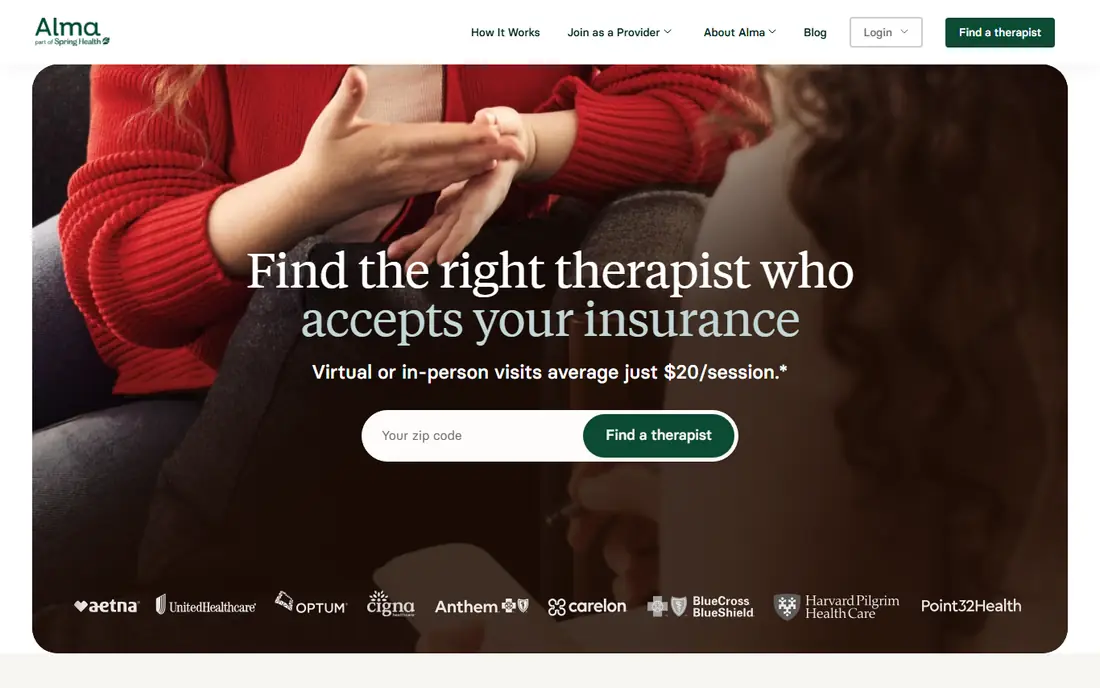
Alma supports therapists building an insurance-based private practice. It helps with credentialing, billing, and practice tools, and it offers a community of clinicians for peer support. Therapists keep control over their practice, schedule, and clinical work, which suits people who want independence with less admin.
Alma accepts fully licensed clinicians only, and it sets rates by degree tier, including MA, MD, NP, and PhD or PsyD levels. That structure means pay terms differ by credential, so therapists should confirm their tier and terms before joining.
The limits are eligibility and referrals. Alma does not accept provisionally licensed therapists in most cases, and clinician reports in 2026 describe referrals as strong at first and then uneven. If you already have a referral base, Alma's billing support may matter more than its client flow.
- Insurance credentialing and billing support
- Community and practice tools
- Therapists keep clinical control
- Accepts fully licensed clinicians only
- Therapists need their own malpractice insurance
Grow Therapy connects licensed therapists with clients who pay per session, often through insurance. It accepts a wide range of insurance plans, including Medicare and Medicaid in select states, which can lower the cost barrier for clients and widen the pool of people who can book.
Therapists can list their specialties, languages, and availability, and clients browse and choose their own provider. That directory model gives therapists more visibility than a matching-only system, and it supports both telehealth and in-person sessions in many areas.
The trade-off is that client costs, and therefore session economics, vary by plan and provider. Grow Therapy handles much of the insurance work, but therapists still need to keep their profile current and manage their schedule. Pay varies by platform, licence, session type, and location, so confirm terms for your area before you join.
- Broad insurance acceptance
- Pay-per-session model for clients
- In-person and telehealth options
- Client pay varies by insurance plan
- Therapists need to manage their own availability and profile
SonderMind pairs therapists with clients and handles billing, with guaranteed pay every two weeks for completed sessions, including no-shows in many cases. That pay structure reduces one of the biggest worries in private practice: unpaid time when a client does not attend.
SonderMind requires a master's degree or higher and full independent licensure, such as LPC, LCSW, LMFT, or LP, depending on the state. It offers a provider community, training resources, and tools for notes and client engagement between sessions.
The limits are practical. SonderMind does not provide office space, so therapists who want in-person sessions must arrange their own location. Pay also varies by licence, session type, session location, and state, so treat any single figure you see in a job listing as a local range, not a promise for your practice.
- Handles billing and guarantees pay for completed sessions, including no-shows in many cases
- Thoughtful client matching
- No fees for therapists
- Therapists need their own office space for in-person sessions
- Pay varies by licence, session type, and location
Rula, formerly Path Mental Health, helps licensed therapists build an insurance-based telehealth practice. It handles credentialing, billing, and client matching, so therapists can set their hours and work from home. That telehealth-first model suits therapists who want to avoid office costs.
Clients find therapists through Rula's directory and matching, and sessions run by video. The platform supports a range of specialties and client needs, which helps therapists fill a caseload in their area of focus.
The catch is coverage. Availability, insurance plans, and pay terms vary by state and licence, so therapists should confirm Rula's current terms for their state before joining. As with other platforms here, pay varies by platform, licence, session type, and location.
- Insurance credentialing and matching
- Telehealth-first practice
- Flexible scheduling
- Availability varies by state
- Therapists need to confirm current pay terms and licence rules
BetterHelp is the largest online therapy platform, and that scale is its main draw for therapists. A large client base means new therapists can often fill hours faster than they could through a new private practice alone. Sessions can run by video, phone, or messaging, with group sessions and journal tools also available.
Therapists are matched with clients based on client preferences and therapist specialties, and clients can switch therapists. That matching system reduces marketing work, which is a real benefit for therapists who do not want to run their own referral pipeline.
The trade-offs are control and pay structure. BetterHelp does not take insurance, and therapists have less control over rates than in an insurance-based private practice model. Pay varies by platform, licence, session type, and location, and therapists should read the full contract terms, including any retention incentives, before joining.
- Very large client base
- Steady session flow
- Messaging, phone, and video options
- Less control over rates and matching
- No insurance billing
- Subscription model shapes caseloads
Talkspace offers therapy by messaging, video, and phone, plus psychiatry services for clients who need medication management. It accepts insurance in many cases, which can lower client costs and widen access compared with subscription-only platforms.
For therapists, Talkspace provides a steady flow of clients from its subscriber and insurance base, without the need to market a private practice. Messaging plans also suit therapists who like asynchronous work alongside live sessions.
The limits are similar to BetterHelp. Therapists have less control over rates and client matching than in a private practice model, and session length can be shorter than a standard 45 to 60 minute session depending on the plan. Pay varies by platform, licence, session type, and location, so confirm current terms before you join.
- Insurance acceptance in many cases
- Messaging and video plans
- Psychiatry services alongside therapy
- Less control over rates than private practice
- Session length and plan rules vary
Brightside Health focuses on comprehensive care for anxiety and depression, combining therapy with psychiatry and medication management where needed. That team model suits therapists who want to work within a structured care programme, rather than carrying a general caseload alone.
Brightside tracks client progress with standard measures, which helps therapists see whether treatment is working and adjust care. It accepts insurance in many cases, and it offers both therapy-only and combined care plans.
The trade-off is focus. If your specialty sits outside anxiety and depression, a general platform such as Headway, Alma, or Grow Therapy will fit better. Pay and availability also vary by state and role, so confirm terms for your licence and location.
- Focused care for anxiety and depression
- Therapy plus psychiatry in one team
- Measurement-based care
- Narrower focus than general platforms
- Availability and pay terms vary by state
Cerebral combines therapy with medication management, which suits therapists who want to work alongside prescribers in a team model. Clients can access therapy, psychiatry, and ongoing care plans in one place, and Cerebral accepts insurance in many cases.
For therapists, that team structure can mean steadier referrals within a defined care programme, plus support tools for scheduling and documentation. The platform covers a range of mental health needs, with a focus on common conditions such as anxiety, depression, and insomnia.
The catch is diligence. Cerebral has faced regulatory scrutiny in the past over prescribing practices, so therapists should check its current terms, licence rules, and clinical governance carefully before joining. Pay varies by platform, licence, session type, and location, as with every platform on this list.
- Therapy and medication management in one platform
- Insurance acceptance in many cases
- Structured care plans
- Past regulatory scrutiny means therapists should check current terms carefully
- Narrower focus than general practice
How we picked these
We compared platforms that licensed therapists can actually work on in the US in October 2026, using platform pages for therapists, joining requirements, and current comparisons. We kept only live platforms with clear therapist onboarding, and we grouped them by model: insurance practice support, subscription client bases, and team-based care. We did not invent pay rates, and we did not present a single advertised figure as a promise. Where pay terms vary, we say so plainly, and therapists should ask each platform for written terms for their licence, state, and session type.
What to check before you join a platform
Start with the model. Insurance practice support platforms help you bill for your own practice, while subscription platforms match you with their clients. The first gives more control, the second gives faster caseloads, and neither is right for every therapist.
Next, read the contract in full. Check how pay is calculated, when you are paid, what happens for no-shows and cancellations, who owns client records if you leave, and what malpractice insurance you must carry. Those terms matter more than any headline pay figure.
Finally, check licence and state rules. Most platforms require full independent licensure, and some require specific malpractice limits. This article is general information only, not career or medical advice, so confirm licence, tax, and contract questions with a qualified adviser before you sign.
Frequently asked questions
What is the best online therapy platform to work on?
It depends on your model. Headway and Alma suit insurance-based private practice, SonderMind suits guaranteed pay and matching, and BetterHelp suits a large client base. Compare pay terms, control, and referral flow for your state before you choose.
What is the best online therapy platform overall for therapists?
There is no single winner. Grow Therapy and Rula suit therapists who want insurance clients and flexible hours, while Talkspace suits therapists who want messaging plus video work. Pick by specialty, licence, and how much control you want over your practice.
Which platforms are the best online therapy platforms to work for as a new therapist?
Fully licensed therapists can start on most platforms here, but provisionally licensed therapists face tighter rules. Alma accepts fully licensed clinicians only, while other platforms list licence types by state, so check eligibility for your licence before you apply.
How does pay work on online therapy platforms?
Pay varies by platform, licence, session type, and location. Some platforms pay per session, some pay by hour, and some use insurance reimbursement rates. Ask for the full pay formula, no-show rules, and payment timing in writing before you join.
Do online therapy platforms charge therapists fees?
It varies. Headway and SonderMind state that they do not charge therapists membership fees, while other platforms have different terms for tools, credentialing, or practice support. Read the contract to see what, if anything, you pay.
Can I work on more than one therapy platform at once?
In many cases yes, unless a contract restricts it, but check each platform's terms and your licence rules. Working on two platforms can fill hours faster, yet it also adds scheduling and record-keeping work, so weigh that before you split your caseload.
Sources
- https://headway.co
- https://helloalma.com
- https://growtherapy.com
- https://www.sondermind.com
- https://www.rula.com
- https://www.betterhelp.com
- https://www.talkspace.com
- https://www.brightside.com
- https://www.cerebral.com
- https://www.choosingtherapy.com/alma-vs-headway-for-therapists/
- https://www.choosingtherapy.com/best-online-therapy/
See where you really rank - block by block
ProMapRanker scans Google Maps across a grid of your service area. Simple monthly plans from $19, white-label on every plan.
Start freeKeep reading
 zscaler alternatives
Best Zscaler Alternatives in 2026
Looking for zscaler alternatives? We compare 9 SASE and zero trust platforms on architecture, data protection, pricing, and fit for your network and team.
Read → zapier alternatives free
Best Zapier Alternatives Free in 2026
Nine automation tools for zapier alternatives free in 2026, all with genuinely free tiers, plus free plan limits, starting prices and upgrade paths explained.
Read → which platform is best for online reputation
Which Platform Is Best for Online Reputation in 2026
Wondering which platform is best for online reputation? We compare 8 review, listing, and response tools for small and multi-location businesses and agencies.
Read →