 ProMapRanker
5 Patient Portal Software Options Ranked for 2026

Direct answer
For AI-powered scheduling and access, Relatient is where this list starts. Look at NexHealth for dental and medical practices automating the front office, and at Luma Health for operational AI across the patient journey. Details, prices and limits for the rest of the 5 tools are below.
Key takeaways
- Number one here is Relatient, a fit for AI-powered scheduling and access.
- Relatient, MyChart and the 3 others all need a premium plan or a trial, since no free plan is listed.
- A fair warning about Relatient: access-focused instead of a full portal.
- Pricing across the list, from Relatient to MyChart, is by quote only.
Quick comparison
| Pick | Great for | Pricing starts at | Free tier | |
|---|---|---|---|---|
 Relatient | AI-powered scheduling and access | See website | No | Visit |
 NexHealth | Dental and medical practices automating the front office | See website | No | Visit |
 Luma Health | Operational AI across the patient journey | See website | No | Visit |
 athenahealth | Teams comparing choices in this category | See website | No | Visit |
 MyChart | Health systems on Epic | See website | No | Visit |
5 options for patient portal software in detail
Choosing patient portal software usually comes down to price, fit and limits. This ProMapRanker guide sets 5 tools side by side on those three points, with the facts kept short and checkable.
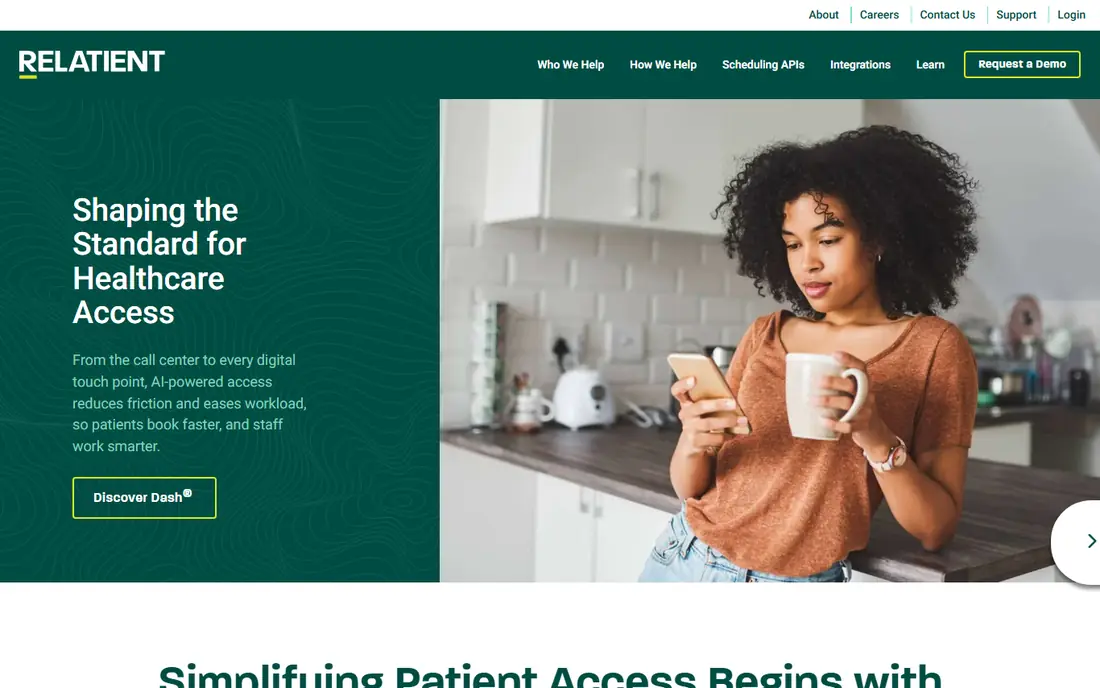
Relatient is aimed squarely at AI-powered scheduling and access. Customers report the AI autonomously handling over half of calls. Adopting voice AI also changes front-office workflows, which needs change management.
Where it falls short: AI voice is feature-rich but represents a workflow change.
The numbers are striking: 97 percent fewer cancellations with self-scheduled appointments, 10 percent higher physician utilization, and 60 percent of calls deflected through automation. On top of that, the headline feature is Dash Voice AI, an agentic AI that automates routine calls, books appointments with precision, and works like the practice's best scheduler. Worth adding: Relatient is patient access software: scheduling, messaging, and call automation, not a longitudinal health record portal. For access-strapped organizations, it is the most innovative choice here. Pricing for Relatient is not stated here, so ask the vendor for current figures. Relatient has no permanent free option.
- Deep PM/EHR integrations
- 97 percent fewer cancellations claimed with self-scheduling
- Access-focused instead of a full portal
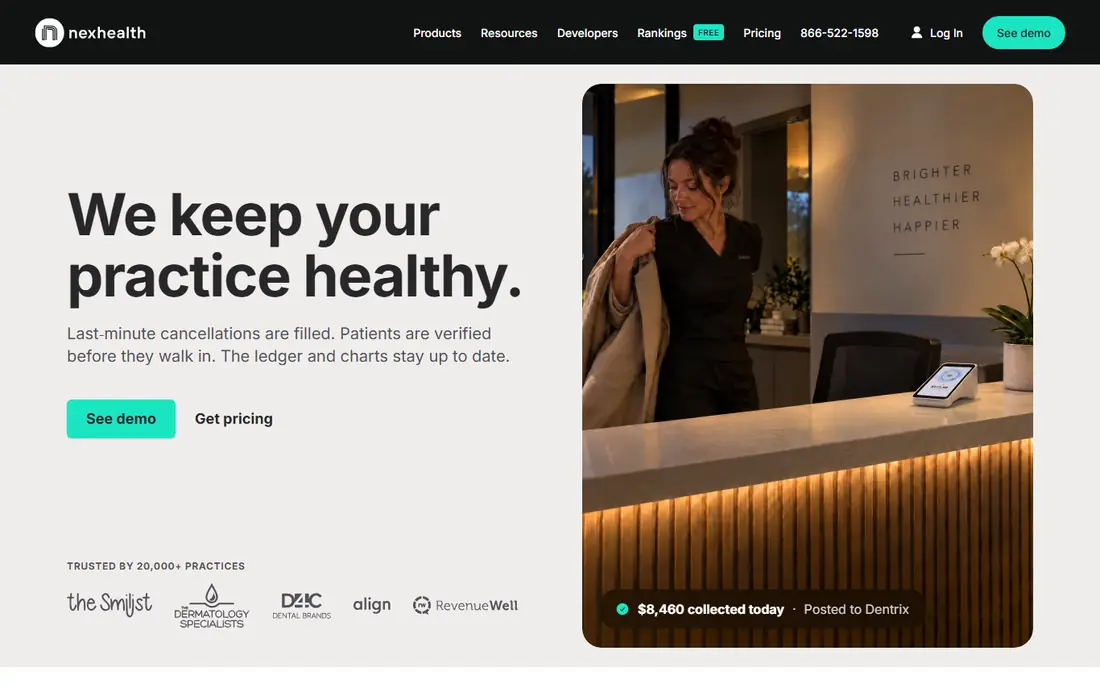
In short, NexHealth is for dental and medical practices automating the front office. Online booking from Google Maps, the website, and social media feeds the schedule. Recalls and smart waitlists refill cancellations in about 16 minutes; digital forms, eligibility verification, and payments happen before and during the visit.
From a buyer's view, the technical edge is the Synchronizer: live read and write sync with Dentrix, Eaglesoft, Open Dental, Epic, athenahealth, eClinicalWorks, and dozens more, so forms, appointments, and balances write back to the practice management system automatically. The trade-off is heritage. NexHealth's deepest roots are in dental; medical practices are an expanding but newer segment. Pricing for NexHealth is not stated here, so ask the vendor for current figures. NexHealth has no free tier.
Drawbacks to consider: Most solid in dental with medical as the newer motion.
- Trusted by 20,000-plus practices
- Live sync with dozens of practice management systems
- Quote-based pricing
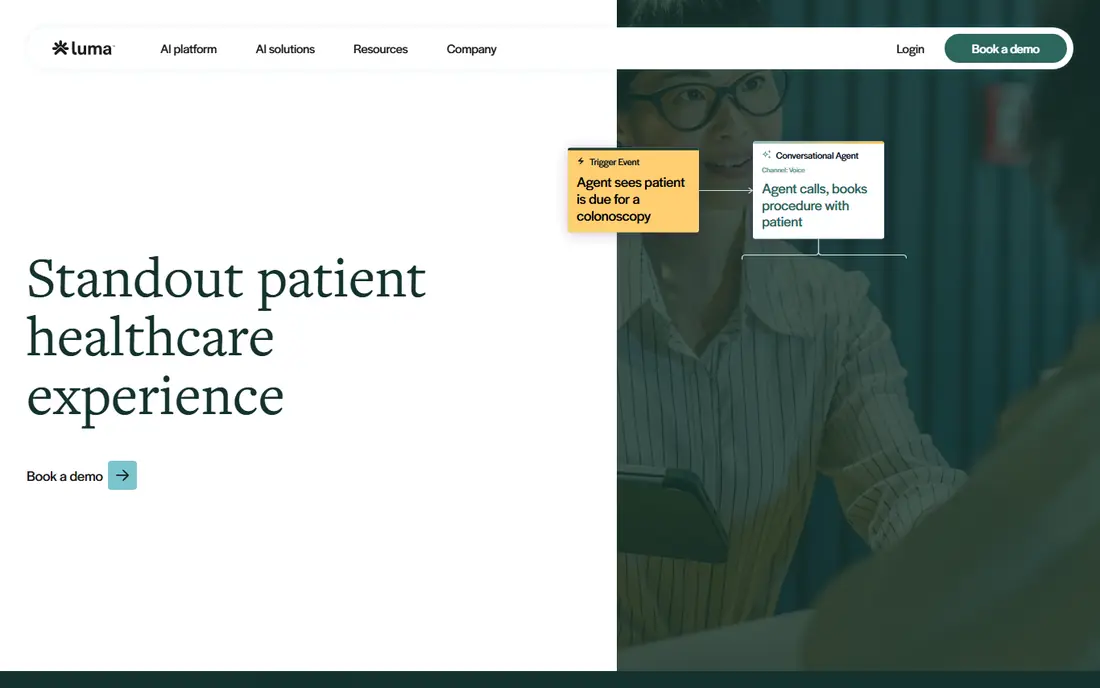
For operational AI across the patient journey, Luma Health is a natural candidate. The honest catch is that operational AI is a new category with real implementation questions: how much autonomy, what guardrails, what happens when the AI is wrong.
Security credentials bundle ISO 27001 and SOC certification. In practice, Luma Health repositioned in 2026 around Operational AI for healthcare, with Spark, a healthcare-native AI core, coordinating capabilities across the patient journey: attracting patients, scheduling, referrals, conversational agents, intake forms, eligibility, payments, and retention. No starting price is listed for Luma Health here; confirm pricing on the vendor site. Luma Health does not include a free plan.
Downsides: Newer AI positioning means vetting the autonomy carefully.
- Spark AI core coordinates agents across scheduling, intake, follow-up
- Solid security certifications
- Product breadth needs thoughtful implementation
athenahealth makes the most sense for teams comparing options in this category. The 2026 differentiator is embedded AI: ambient documentation cuts physician charting work, and the product's automation targets the administrative burden that burns out staff.
Also, practices switching to athenaOne report 2 to 6 percent raises in collections, which funds the portal plenty of times over. Patients get online scheduling, messaging, bill pay, and access to their records, whereas practices benefit from the network effects of athenahealth's rules engine and claims expertise. This comparison lists no price for athenahealth; ask the vendor. Athenahealth does not include a free plan.
Where it is weaker: The portal is tied to the athenaOne product.
- Embedded AI cuts documentation work
- Portal bundled with the top-rated athenaOne suite
- Pricing is quote-based and scales with collections
Where MyChart fits: health systems on Epic. The 2026 site emphasizes scam awareness and account security, reflecting how central MyChart has become to patients' healthcare lives. More specifically, for health systems on Epic, the portal is part of the package: results, scheduling, and messaging flow straight from the clinical record with no integration project.
Points against: Only available to organizations running Epic.
As for the details, the honest catch is availability. It is also a portal, not a marketing or engagement engine. Check the vendor site for MyChart pricing; none is listed in this comparison. MyChart has no free plan.
- One login across participating organizations
- Deep integration with the Epic record
- Smaller practices cannot buy it standalone
How the list was put together
The comparison looks at four things: starting price, free access, how well the feature set matches patient portal software, and the main limit of each tool. Seat minimums, billing terms and add-ons can move the real cost, so the starting prices here are a guide and not a quote. We ordered the tools by general fit, then by how clearly pricing is shown, then by free access. A buyer with unusual needs may reorder them.
Things to verify first
- Request quotes from Relatient, MyChart and the others; the list shows no fixed prices.
- Read the limits listed for Relatient first: access-focused instead of a full portal.
- Let daily users try NexHealth on real work; their feedback beats any feature checklist.
- Work out what Luma Health costs with your real seat count, add-ons and usage, not just the entry price.
- Test how quickly MyChart answers a pre-sales question; it hints at how support will feel later.
Frequently asked questions
How are the tools for patient portal software ordered?
The order follows typical fit for patient portal software, with Relatient first and MyChart last, then price clarity and free access. It is editorial judgement, not a score, so another team could rank the tools differently.
Is Relatient the right pick for everyone comparing patient portal software?
No single tool suits every team. Relatient comes first because it fits AI-powered scheduling and access, while NexHealth suits dental and medical practices automating the front office and Luma Health suits operational AI across the patient journey. Match the tool to your own size, budget and workflow before deciding.
How much does patient portal software cost?
Pricing is quote-based across the category and scales with provider count, locations, and message volume. EHR-native portals are normally bundled with the system contract; standalone engagement products price per provider or per location.
Is patient portal software HIPAA compliant?
Luma Health layers on ISO 27001 and SOC certification. Always confirm the vendor signs a business associate agreement.
Does any tool for patient portal software here have a free plan?
No tool in this list, Relatient and MyChart included, has a permanent free plan. Trials and quotes are the usual route, so plan a short evaluation period.
Do these tools publish their prices?
No. None of the tools, from Relatient to MyChart, shows a fixed starting price here, so budget time for quotes.
Sources
See where you really rank - block by block
ProMapRanker scans Google Maps across a grid of your service area. Simple monthly plans from $19, white-label on every plan.
Start freeKeep reading
 zscaler alternatives
Best Zscaler Alternatives in 2026
Looking for zscaler alternatives? We compare 9 SASE and zero trust platforms on architecture, data protection, pricing, and fit for your network and team.
Read → zapier alternatives free
Best Zapier Alternatives Free in 2026
Nine automation tools for zapier alternatives free in 2026, all with genuinely free tiers, plus free plan limits, starting prices and upgrade paths explained.
Read → which platform is best for online reputation
Which Platform Is Best for Online Reputation in 2026
Wondering which platform is best for online reputation? We compare 8 review, listing, and response tools for small and multi-location businesses and agencies.
Read →