 ProMapRanker
Best Passive Income Apps in 2026

Key takeaways
- Acorns is the simplest start for beginners, because round-ups invest spare change without daily decisions.
- Rakuten and Ibotta pay cashback on shopping you already do, which is the lowest-risk route in this list.
- Fundrise and Arrived open real estate investing to smaller amounts, but money can be locked up for a long time.
- Bandwidth and data sharing apps pay very little, so read the privacy terms before installing one.
- Investing apps carry risk, so never put in money you may need soon, and check fees before you commit.
Quick comparison
| Pick | Great for | Pricing starts at | Free tier | |
|---|---|---|---|---|
 Acorns | Beginners investing spare change | $3 per month | Yes | Visit |
 Fundrise | Long-term real estate investors | See website | No | Visit |
 Arrived | Rental home investors on a budget | See website | No | Visit |
 Rakuten | Online shoppers wanting cashback | Free | Yes | Visit |
 Ibotta | Grocery and retail shoppers | Free | Yes | Visit |
 Swagbucks | Reward earners who shop and search | Free | Yes | Visit |
 Honeygain | People willing to share unused bandwidth | Free | Yes | Visit |
 Groundfloor | Short-term real estate lenders | See website | No | Visit |
 M1 Finance | Automated portfolio investors | Free | Yes | Visit |
 Pawns.app | Low-effort bandwidth and survey earners | Free | Yes | Visit |
The best passive income apps
Passive income sounds like money for nothing, but every app in this list asks for something up front: cash to invest, shopping you already do, or data and bandwidth you share. The honest test is how little work it needs after setup, and how clearly it pays. An app that needs daily tapping is a side job, not passive income.
We compared investing apps, real estate platforms, cashback apps and sharing apps that are live for US users in October 2026. We focused on setup effort, fees, minimums, payout method and risk, and we left out apps that pay only in points that never turn into cash. This is not financial advice, and investing carries risk, including loss of capital.
Our pick for most beginners is Acorns, because round-ups turn spare change into a diversified portfolio with little effort. Rakuten is the easiest cashback start, while Fundrise and Arrived suit people who can leave money in real estate for years. Keep expectations modest, because most of these apps pay small amounts at first.
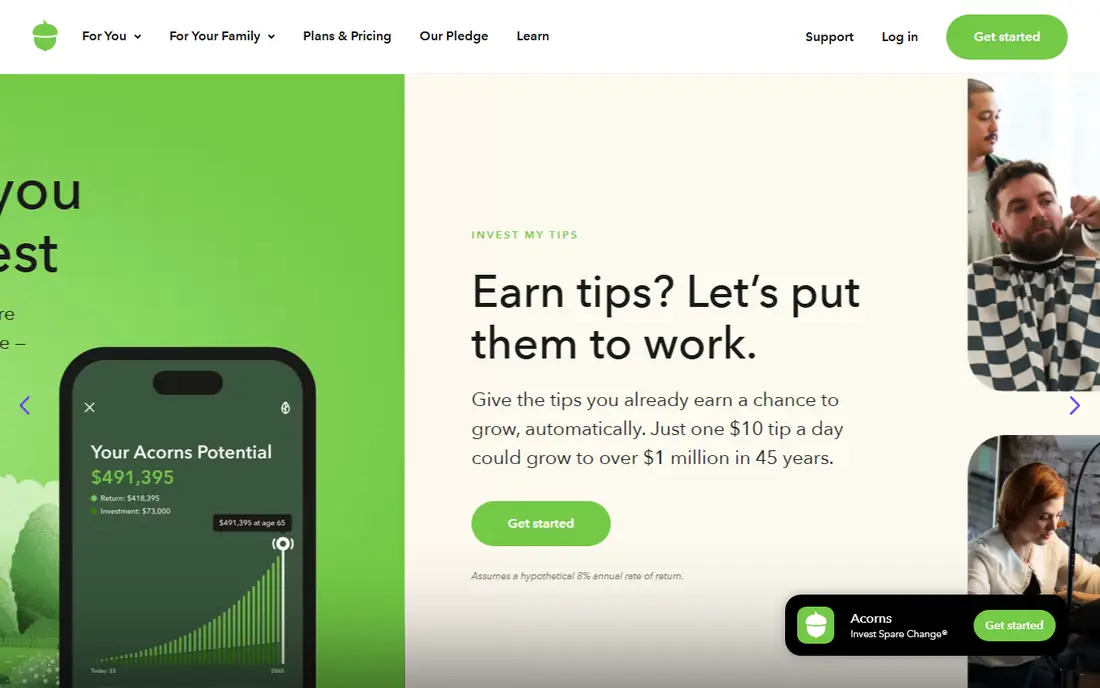
Acorns rounds up everyday card purchases to the nearest dollar and invests the spare change in a diversified portfolio. Users can also set a recurring deposit, and the app handles rebalancing without asking for stock picks. That hands-off design is why it suits beginners who want to start investing without learning to trade.
The catch is the monthly fee, which starts at a few dollars a month and can take a large share of a very small balance. Acorns also offers limited control over individual holdings, so active investors will feel constrained. It works best as a habit builder, not as a full brokerage account.
- Automatic round-ups
- Diversified portfolios
- Simple app
- Monthly fee eats small balances
- Limited control over holdings
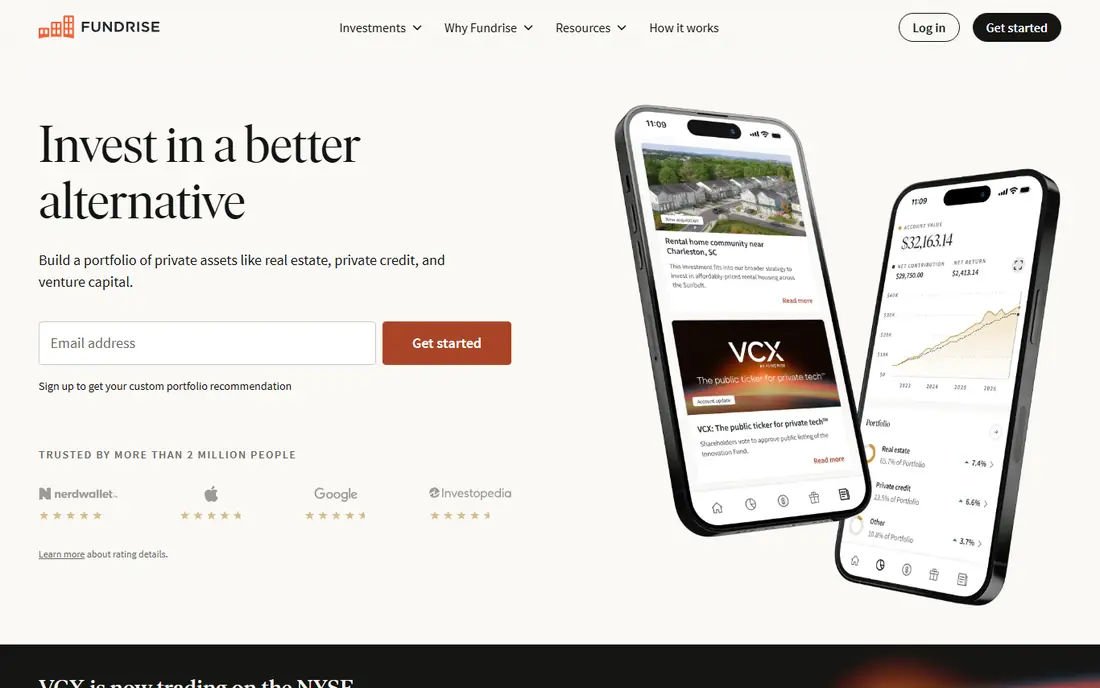
Fundrise lets ordinary investors put money into portfolios of private real estate, including rental and development projects, with a low starting minimum compared with buying property outright. Investors can set a recurring deposit and let the platform allocate across projects, with dividends reinvested if they choose that option.
Real estate through Fundrise is not a savings account. Withdrawals can be limited, especially in the early years, and returns depend on property markets. Fees and the long time horizon mean this suits money that can stay invested for years, not cash needed for rent or bills next month.
- Low minimum for real estate
- Diversified property portfolios
- Automatic reinvestment
- Money can be illiquid
- Returns are not guaranteed
- Fees apply
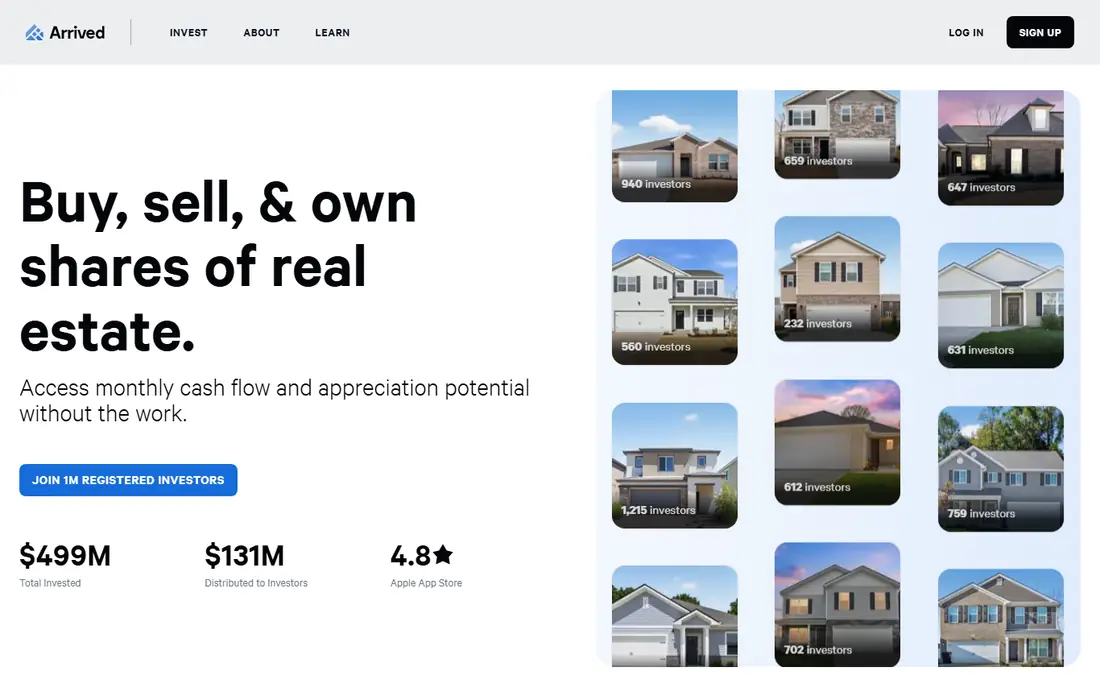
Arrived sells shares in individual rental homes, so an investor can own a small slice of a house without a mortgage or landlord duties. Each property page shows rent, costs and location details, and investors aim to receive a share of rental income each month, plus any change in property value over time.
Rental income is not fixed. Vacancies, repairs and local market shifts can reduce payouts, and shares are not as easy to sell as stocks. Arrived suits investors who understand property risk and can hold for years. It is not a quick cash app, and it should sit alongside safer savings, not replace them.
- Shares in single rental homes
- Monthly rental income aim
- Clear property pages
- Property risk and illiquidity
- Income varies with occupancy and costs
Rakuten pays cashback when users start a shopping trip through its site or browser extension and buy at a partner store. It covers many large retailers, and the extension reminds users when cashback is available, which keeps the effort close to zero after setup. Payouts arrive by PayPal or check on a quarterly schedule.
Rates change by store and by week, so a high rate today may fall tomorrow, and some purchases are excluded by store rules. Payouts are not instant, which frustrates people who expect money right away. For shoppers who already buy online, though, Rakuten turns routine spending into a small return with no extra cost.
- Cashback at many stores
- Browser extension
- PayPal or check payouts
- Cashback rates vary
- Payouts are quarterly, not instant
Ibotta pays cashback on grocery, retail and online purchases when users activate offers before shopping or scan a receipt after. It also supports linked cards at some stores, which removes the receipt step. The app suits households that already shop at covered stores and want a small rebate on routine spending.
Ibotta is less passive than Rakuten, because offers must be checked and receipts sometimes scanned. Earnings are modest, often a few dollars a month for light shoppers, and cashback can expire if offers are not used in time. It works best as a habit tied to a weekly shop, not as a main income source.
- Cashback on groceries and retail
- Receipt and linked-card options
- Needs offer activation or receipt scans
- Earnings are modest
Swagbucks pays points for shopping cashback, searches, videos, surveys and games, which can be redeemed for PayPal cash or gift cards. The shopping cashback part is the closest to passive income here, because it runs on purchases a user already makes. The app is free and widely available in the US.
The honest limit is effort. Surveys, videos and games pay for time, so Swagbucks is only partly passive, and hourly earnings are low. People who treat it as a background cashback tool will be happier than people who chase points all day. Set a payout threshold you can reach, and do not let point chasing replace paid work.
- Many earning routes
- PayPal and gift card payouts
- Cashback shopping option
- Surveys and tasks take time
- Not truly passive for most users
Honeygain pays users for sharing unused internet bandwidth with its business customers, and it runs in the background after setup. That makes it one of the few apps in this list that earns without shopping or investing, and it suits people with a stable connection and spare bandwidth.
Earnings are very low, often only a few dollars a month, and a payout threshold must be reached before cashing out. Sharing bandwidth also raises privacy and security questions, so users should read the terms, check what traffic is shared, and avoid it on work or shared networks. It is a small supplement, not a reliable income stream.
- Runs in the background
- Pays for shared bandwidth
- Simple setup
- Very low earnings
- Privacy questions to weigh
- Payout threshold applies
Groundfloor lets investors fund short-term real estate loans, often for fix-and-flip projects, with a low minimum per loan. Loan terms are shorter than many real estate funds, and investors aim to earn interest when a loan is repaid. The platform shows loan details, grades and repayment history for each offering.
The risk is real. Borrowers can default or delay repayment, and money is tied up until a loan ends, so this is not emergency cash. Groundfloor suits investors who can spread money across many loans and accept losses on some of them. New investors should start small and read the loan documents before funding anything.
- Low minimum for real estate loans
- Short loan terms
- Regular interest aim
- Loans can default
- Money is tied up
- Returns are not guaranteed
M1 Finance lets users build a portfolio of stocks and funds, called a pie, then invest automatically and rebalance toward target weights. Fractional shares mean small deposits can still spread across holdings, and dividend reinvestment keeps the portfolio growing without manual trades. The core investing account has no commission for standard trades.
M1 is built for long-term, hands-off investing, not for day trading or fast reactions to news. Some features, such as advanced automation and higher interest rates, sit behind a paid premium plan. Investors should still check fees, tax treatment and whether the portfolio matches their risk tolerance before automating deposits.
- Automatic investing and rebalancing
- Fractional shares
- No trading commissions on core plans
- Premium features cost extra
- Less suited to active traders
Pawns.app pays for sharing unused bandwidth and, as an extra option, for completing surveys. The bandwidth part runs in the background after setup, while surveys pay more per task but take active time. Payouts are available through PayPal and gift cards once a threshold is reached.
Earnings from bandwidth alone are small, and survey availability varies by location and profile. Users should weigh the privacy terms of bandwidth sharing and avoid the app on networks they do not control. Pawns.app works best as a tiny background earner, not as a replacement for savings or investing.
- Background bandwidth sharing
- Surveys as an extra route
- PayPal payouts
- Very low earnings
- Survey pay varies
- Payout threshold applies
How we picked these
We kept only apps that are live for US users in October 2026 and that pay in cash, investment returns or cashback, not only in points with no cash value. We checked official pricing, fee and payout pages, and we noted where money is locked up, where fees apply and where earnings depend on shopping or market returns.
We ranked ease of setup, ongoing effort, payout clarity and risk, rather than headline earning claims. We did not claim hands-on testing, and we did not repeat income promises from marketing pages. Investing apps are judged on fees and liquidity, while cashback and sharing apps are judged on how much work they need for a small return.
Choosing the right option for you
Start with the money you can afford to leave alone. Cashback apps such as Rakuten and Ibotta suit everyone, because they pay on spending that already happens, but they will not build wealth on their own. Investing apps such as Acorns and M1 suit regular deposits over years, while Fundrise, Arrived and Groundfloor suit money that can stay locked up and can fall in value.
Check four things before installing any app: the fee, the minimum payout or withdrawal rule, how long money is tied up, and what data the app collects. Bandwidth apps deserve extra care, because they share network resources and need clear privacy terms. Keep a simple record of deposits, fees and payouts, and review each app once a quarter to see if it still earns enough to justify the effort or the risk.
This is not financial advice. Investing carries risk, real estate loans can default, and past returns do not guarantee future results. If an app promises guaranteed high returns with no risk, treat that as a warning sign and walk away. A mix of cashback for small wins and steady, diversified investing for the long term is a safer plan than chasing one high-paying app.
Frequently asked questions
What is the best passive income app for beginners?
Acorns is a good start for beginners because round-ups invest spare change automatically in a diversified portfolio. Rakuten is even simpler if you only want cashback, because it needs no investment. Start with one app, learn its fees, and add others only when the first one feels routine.
What is the best app for passive income from real estate?
Fundrise suits diversified real estate portfolios with a low minimum, while Arrived suits people who want shares in single rental homes. Groundfloor is different, because it funds short-term loans rather than owning property. All three tie money up and carry risk, so use money you can leave invested for years.
Do passive income apps really pay?
Yes, but amounts are usually small at first. Cashback apps pay a percentage of shopping, bandwidth apps pay a few dollars a month, and investing apps grow slowly through returns and deposits. Apps that promise large daily earnings with no effort should be treated with care.
Is Acorns or Fundrise better for passive income?
Acorns suits small, regular deposits into stocks and funds with easy withdrawals, while Fundrise suits long-term real estate exposure with less liquidity. Many people use both for different goals, but neither replaces an emergency fund. Compare fees and withdrawal rules before choosing.
How much can I earn with the best passive income app?
Most users earn only a few dollars a month from cashback or bandwidth apps, while investing returns depend on deposits, markets and time. A small monthly deposit can grow over years, but it will not replace a salary in the short term. Treat early payouts as a bonus, not as income you depend on.
Sources
See where you really rank - block by block
ProMapRanker scans Google Maps across a grid of your service area. Simple monthly plans from $19, white-label on every plan.
Start freeKeep reading
 zoho inventory alternatives
6 Alternatives to Zoho Inventory, Compared on Price and Fit
Zoho Inventory alternatives: 6 tools compared on price, free plans and fit. Katana leads the list for manufacturers. Fit and flaws are laid out for each entry.
Read → zoho crm alternatives
Best Zoho CRM Alternatives (2026)
Need Zoho CRM alternatives? We compare 7 tools on cost, free access and who each suits. Every pick gets a straight assessment. Built for quick decisions.
Read → zelle alternatives
Best Zelle Alternatives in 2026
Compare the best Zelle alternatives for sending money to friends, paying sellers and moving funds abroad, with honest notes on fees, speed and safety in 2026.
Read →