 ProMapRanker
Best ORM Company in 2026

Key takeaways
- Birdeye and Podium lead for multi-location review and messaging, while Reputation.com suits larger enterprises.
- NiceJob, Grade.us, and Broadly suit smaller local businesses that want simpler, published pricing.
- Yext is a listings-first tool, not a full review tool, yet accurate listings underpin every review strategy.
- Per-location pricing dominates, so a ten-location business should negotiate the per-location rate, not just the plan name.
- This guide is based on public reputation and services, not a verified ranking, and no scores or pay figures are claimed.
Quick comparison
| Pick | Great for | Pricing starts at | Free tier | |
|---|---|---|---|---|
 Birdeye | Multi-location reputation suite | See website | No | Visit |
 Podium | Reviews by text message | See website | No | Visit |
 Reputation.com | Enterprise reputation programs | $80 per month | No | Visit |
 Yext | Listings accuracy across the web | $199 per year | No | Visit |
 ReviewTrackers | Review monitoring and analytics | $89 per month | Free trial | Visit |
 Grade.us | Review funnels for agencies | $99 per month | Free trial | Visit |
 Broadly | Home services reviews and payments | $79 per month | No | Visit |
 NiceJob | Simple review flow for small firms | $75 per month | Free trial | Visit |
 NetReputation | Content removal and suppression | See website | No | Visit |
The best ORM companies
We compared public service descriptions and pricing pages for reputation management companies and platforms that are live in October 2026. The list covers full reputation suites, review tools, a listings platform, and a content removal firm, because online reputation management means different work for a single shop and for a hundred-location brand. This guide is based on public reputation and services, not a verified ranking.
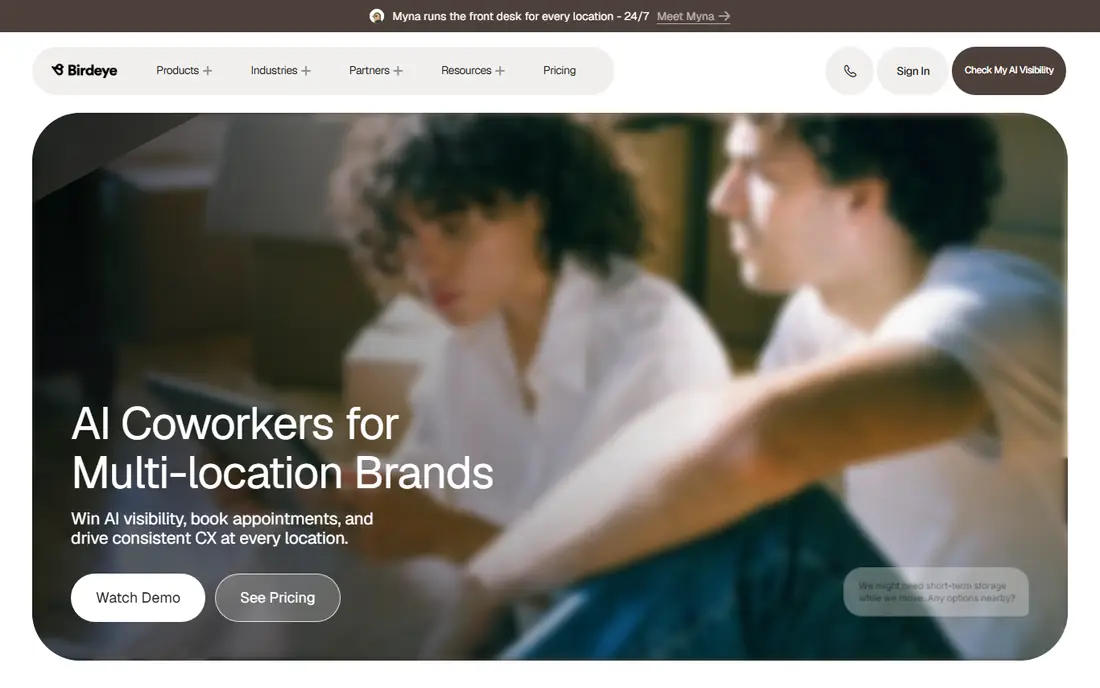
Birdeye is a full reputation suite for brands with many locations. It pulls reviews from many sites into one dashboard, sends review requests by text and email, manages listings, and adds messaging and surveys, so a head office can see every location's reputation in one place. Integrations with common business tools help larger teams fit it into existing workflows.
Pricing is quote-based and usually per location, so small firms should ask for a clear per-location figure and contract length before signing. Single-location businesses may find NiceJob or Grade.us simpler and cheaper. For multi-location brands that want one system for reviews, listings, and messaging, Birdeye is a leading choice.
- Reviews, listings, messaging, and surveys in one platform
- Multi-location dashboard
- Many integrations
- Pricing is quote-based
- Depth can feel complex for a single-location firm
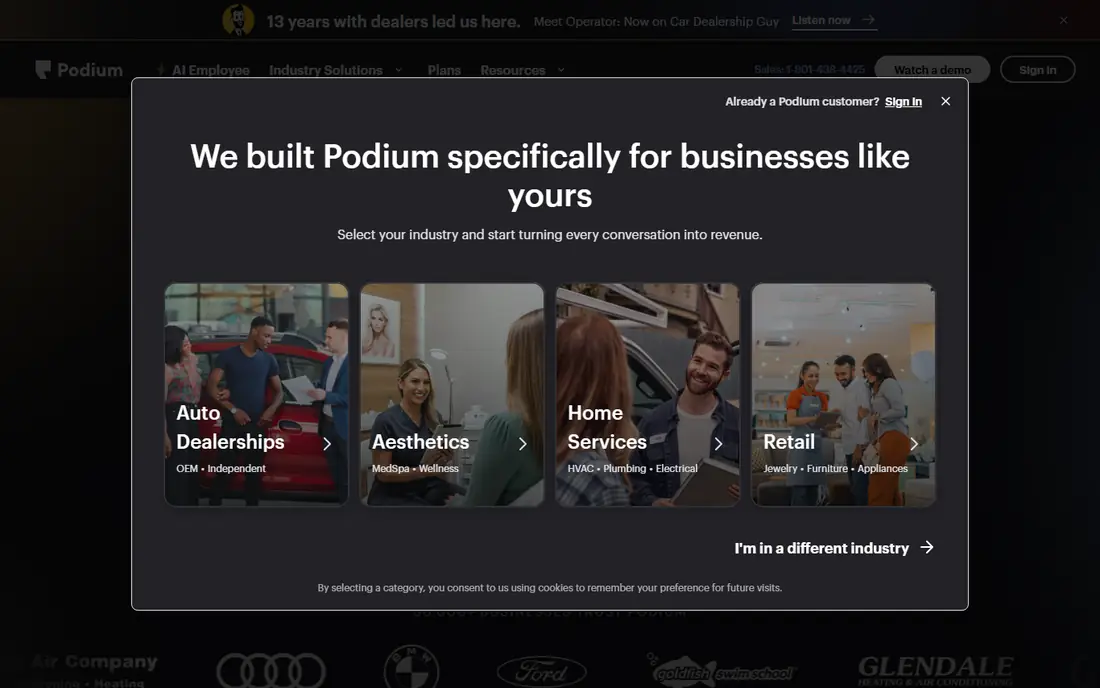
Podium built its name on text message review requests, which suit local businesses whose customers read texts faster than email. Reviews, messages, webchat, and payments sit in one inbox, so a small team can reply to customers and collect reviews without switching tools. That inbox model is practical for home services, auto shops, and clinics.
Pricing is quote-based, and third-party reports put entry pricing in the hundreds per month per location, though Podium does not publish a simple list price. Ask what is included at your tier, especially for text volume and phone features. For service businesses that live by text, Podium is a strong, focused pick.
- Text-led review requests
- Messaging, webchat, and payments in one inbox
- Strong local business focus
- Pricing is quote-based
- Some features need higher tiers or add-ons

Reputation.com, often called Reputation, suits enterprises that need surveys, listings, and reviews in one program, with scoring that compares locations against peers. Its per-location pricing starts at a published rate for its core tier, which is clearer than quote-only rivals, though larger programs are customised. Reporting helps head offices spot weak locations and act before a reputation problem spreads.
Small firms may find the platform heavy and the contract more than they need. Implementation and training also take time at enterprise scale. For brands with dozens of locations that need a governed reputation program, Reputation.com is a credible enterprise choice.
- Enterprise surveys, listings, and reviews in one platform
- Reputation scoring
- Multi-location reporting
- Enterprise focus may be heavy for small firms
- Higher tiers add cost quickly
Yext is a listings platform first, and that matters for reputation. If your name, address, phone, and hours are wrong on directories, customers go elsewhere and reviews land on the wrong listing. Yext lets you update many publishers from one place and track listings accuracy, which is the foundation that review tools sit on.
It is not a replacement for a review generation tool on its own, though higher tiers add review features. Pair Yext with a review tool if you need both listings and review requests, or use it alone if listings accuracy is your main gap. For chains and franchises, Yext is a practical, published-price starting point.
- One edit reaching many publishers
- Listings accuracy
- Review monitoring on higher tiers
- Not a full review generation tool on its own
- Annual contracts on many plans
ReviewTrackers suits businesses that want to monitor and understand reviews, not just collect them. It tracks reviews across many sites, analyses sentiment, benchmarks against competitors, and helps teams respond from one place. That analytics focus helps multi-location firms find patterns, such as a recurring complaint at one site, and fix the cause rather than just replying.
Pricing is per location, so costs rise with location count, and review request features are less central than in Podium or Birdeye. If your main need is to collect more reviews, a text-led tool may fit better. If your main need is to monitor, analyse, and respond at scale, ReviewTrackers is a strong pick.
- Monitoring across many review sites
- Sentiment analysis and benchmarking
- Response tools
- Pricing is per location
- Review generation is less central than monitoring
Grade.us suits agencies and small businesses that want review funnels without an enterprise contract. You create a review page, send customers to it, and guide happy customers to public review sites while catching unhappy feedback privately. Agency plans add white-label options and client management, which helps firms that manage reputation for many clients.
It does not offer the same messaging, payments, or survey breadth as larger suites, so firms that need those should look at Birdeye or Podium. For a simple, published-price review funnel, especially for agencies, Grade.us is a clear, practical choice.
- Review funnels and landing pages
- Agency and white-label options
- Simple setup for small firms
- Less of a full messaging suite than Birdeye or Podium
- Agency pricing rises with clients
Broadly suits home services and local businesses that want reviews plus payments and webchat in one tool. Its Reputation AI product starts with Google and Facebook review management, and higher tiers add AI-drafted replies and fuller automation. That combination helps small teams that need reviews, customer messages, and payments without three vendors.
The starting price is published, but AI features and fuller automation cost more, so check what your tier includes. Large multi-location enterprises may need a bigger suite. For plumbers, HVAC firms, dentists, and other local services, Broadly is a focused, fairly priced option.
- Review management plus payments and webchat
- Home services focus
- Published starting price
- Pricing rises with AI response features
- Less suited to large enterprise programs
NiceJob is the simplest pick for a small business that wants more reviews without learning a large platform. You send review requests, customers leave reviews on Google and other sites, and social proof and a microsite help turn those reviews into new enquiries. Starter pricing is flat and monthly with no long contract, which suits firms that want to test reputation software.
Analytics and automation are lighter than on Birdeye or Reputation.com, and larger firms will outgrow it. For a single shop, a trades firm, or a small clinic that wants a clear price and a simple flow, NiceJob is an excellent first reputation tool.
- Simple review funnels
- Flat pricing with no contract on Starter
- Field-service integrations
- Fewer enterprise analytics than larger suites
- Social proof features are basic on Starter
NetReputation is different from the review tools above, since it focuses on negative content removal and suppression for businesses and individuals. Instead of collecting new reviews, it works on harmful search results, articles, and profiles, with a strategist-led approach. That work suits firms or people facing a specific reputation problem that review collection alone cannot fix.
Pricing is quote-based and can be substantial, and no firm can guarantee removal of every result, since publishers and search engines control their own content. Ask what is realistic for your case, what is included, and how progress is reported. For a serious negative content problem, NetReputation is a specialist to consult, alongside legal advice where needed.
- Hands-on negative content work
- Suppression and removal focus
- Dedicated strategist model
- Pricing is quote-based and can be high
- Results depend on the content and the publisher
How we picked these
We compared public service descriptions, pricing pages, and reputation focus for companies that offer online reputation management in October 2026. We included suites, review tools, a listings platform, and a content removal firm, because the best reputation management services providers for a local shop are not the same as for an enterprise or for a content removal case. We did not claim scores, and we left prices as See website where a vendor gates pricing behind a quote.
How to choose an ORM company
Start with the job, not the tool. If you need more reviews, pick a text-led review tool such as Podium, NiceJob, or Broadly. If you need to monitor many locations, pick Birdeye, Reputation.com, or ReviewTrackers. If listings are wrong, fix Yext first. If a specific harmful result is the problem, talk to a specialist such as NetReputation and, where needed, a lawyer, since review tools cannot remove third-party content.
Then check pricing by location and by contract. Many tools charge per location, so multiply the sticker price by your location count and check contract length, renewal terms, and what happens to your review data if you leave. Test the review request flow as a customer, check response tools, and make sure you never filter or gate reviews in a way that misleads buyers, since review platforms and regulators treat that seriously.
Finally, remember that software alone does not fix reputation. Reply to reviews promptly and politely, fix the service problems that reviews reveal, and ask happy customers for reviews at the right moment, such as after a completed job. A reputation tool makes that work easier and more consistent, but the service behind the reviews is what customers actually judge.
Frequently asked questions
What is the best orm company?
The best ORM company depends on your size and need. Birdeye and Podium lead for multi-location and text-led reviews, Reputation.com suits enterprises, and NiceJob, Grade.us, and Broadly suit smaller local firms. Define whether you need reviews, monitoring, listings, or content removal, then shortlist from that job.
What are the best reputation management services providers for small business?
NiceJob, Grade.us, and Broadly are strong small-business picks, with published starting prices and simpler setups than enterprise suites. Podium also suits local service firms that rely on text messages. Compare per-location pricing and contract terms, since a low sticker price can rise with locations and add-ons.
Can an ORM company remove negative reviews?
A review tool cannot remove genuine reviews from Google or other platforms, and firms should not promise to do so. A specialist such as NetReputation may help with certain harmful content, removal requests, or suppression, but results depend on the publisher and the content. The reliable path is to reply well, fix the underlying issue, and earn more genuine positive reviews.
How much does reputation management cost?
Costs vary by vendor, location count, and features, from about $75 per month for a simple small-business tool to quote-based enterprise pricing per location. Per-location pricing means a ten-location brand pays far more than a single shop, so get a total quote for all locations and check what is included at that tier.
Do I need ORM software if I only have one location?
A single-location business can often manage reviews manually at first, by asking customers and replying promptly. Software helps once review volume, multiple sites, or team workload grows, or when you want automated requests and reporting. Start manual, then add a simple tool such as NiceJob when the workload justifies it.
Is it okay to filter reviews so only happy customers post publicly?
No, filtering or gating reviews so only positive feedback reaches public sites misleads buyers and can breach platform rules. Good tools let unhappy customers give private feedback so you can fix the problem, while still giving every customer the same chance to leave a public review. Use private feedback to improve, not to hide.
Sources
See where you really rank - block by block
ProMapRanker scans Google Maps across a grid of your service area. Simple monthly plans from $19, white-label on every plan.
Start freeKeep reading
 zscaler alternatives
Best Zscaler Alternatives in 2026
Looking for zscaler alternatives? We compare 9 SASE and zero trust platforms on architecture, data protection, pricing, and fit for your network and team.
Read → zapier alternatives free
Best Zapier Alternatives Free in 2026
Nine automation tools for zapier alternatives free in 2026, all with genuinely free tiers, plus free plan limits, starting prices and upgrade paths explained.
Read → which platform is best for online reputation
Which Platform Is Best for Online Reputation in 2026
Wondering which platform is best for online reputation? We compare 8 review, listing, and response tools for small and multi-location businesses and agencies.
Read →