 ProMapRanker
Best Options Trading Platform in 2026

Key takeaways
- Options trading uses borrowed funds and can lose the full premium paid, so paper trading, risk tools and clear fee schedules matter more than a low headline rate.
- Tastytrade suits active multi-leg traders, with $1 per contract to open, $0 to close and a $10 cap per leg on many equity options.
- Thinkorswim through Schwab suits learners and analysts, thanks to paperMoney, modeled risk and deep education.
- Webull and Robinhood offer $0 stock and ETF options commissions, but index options and exchange fees can still add cost.
- This is not financial advice. Options approval depends on experience and risk tolerance, and complex strategies carry added risk.
Quick comparison
| Pick | Great for | Pricing starts at | Free tier | |
|---|---|---|---|---|
 tastytrade | Active multi-leg traders | Free | Yes | Visit |
 Charles Schwab thinkorswim | Analysis and paper trading | Free | Yes | Visit |
 Interactive Brokers | Global and professional traders | Free | Yes | Visit |
 Fidelity | Options in retirement accounts | Free | Yes | Visit |
 E*TRADE | Casual traders, Power E*TRADE | Free | Yes | Visit |
 Webull | Low-cost mobile options | Free | Yes | Visit |
 Robinhood | Simple options trading | Free | Yes | Visit |
 TradeStation | Strategy automation | Free | Yes | Visit |
The best options trading platform
We compared official per-contract fees, strategy tools, paper trading, education and account features. The list favors regulated US brokers with published fee schedules and real options analysis tools, not only a buy button.
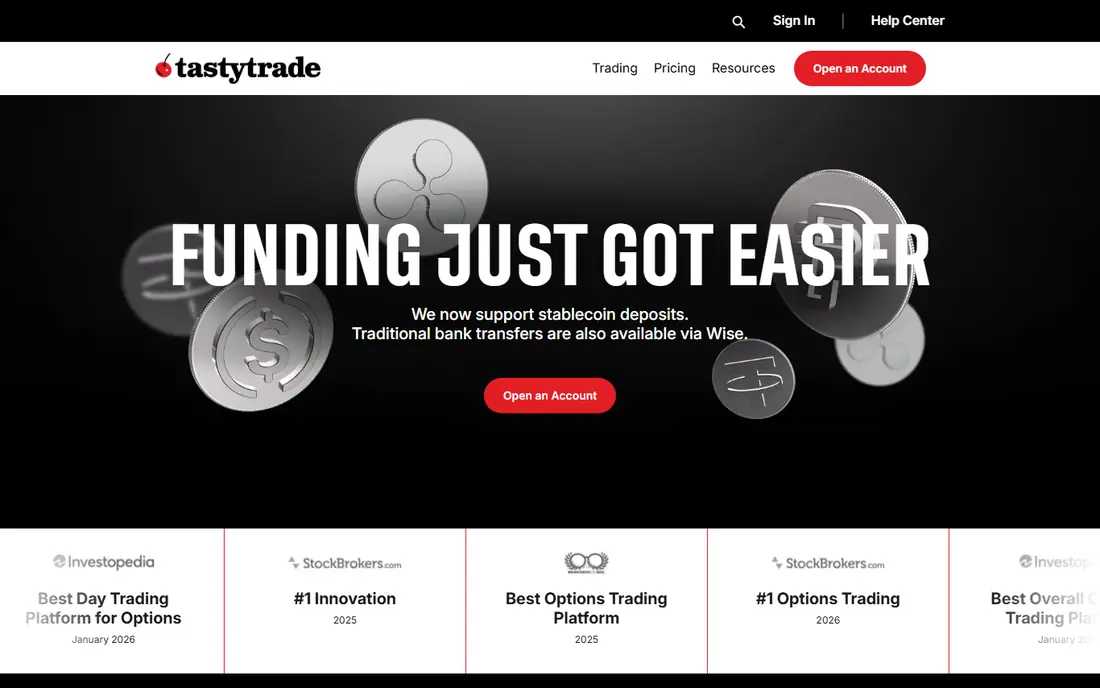
Tastytrade is built by options traders for options traders, and its workflow shows it. The chain views, probability of profit, IV rank and curve tools help premium sellers judge a trade quickly, and capped opening commissions help traders who place large multi-leg orders. Closing trades at $0 commission is a clear saving for active traders.
The trade-off is analysis depth outside options. Charting and technical tools are simpler than thinkorswim, and the lack of paper trading for some products means new traders should practice position sizing carefully. If you trade spreads and strangles often, tastytrade is a strong first choice.
- $1 per contract to open, $0 to close, capped at $10 per leg on many equity options
- Probability tools
- Fast multi-leg order entry
- Charting is lighter than thinkorswim
- No paper trading for some products
- Index options are not covered by the same cap
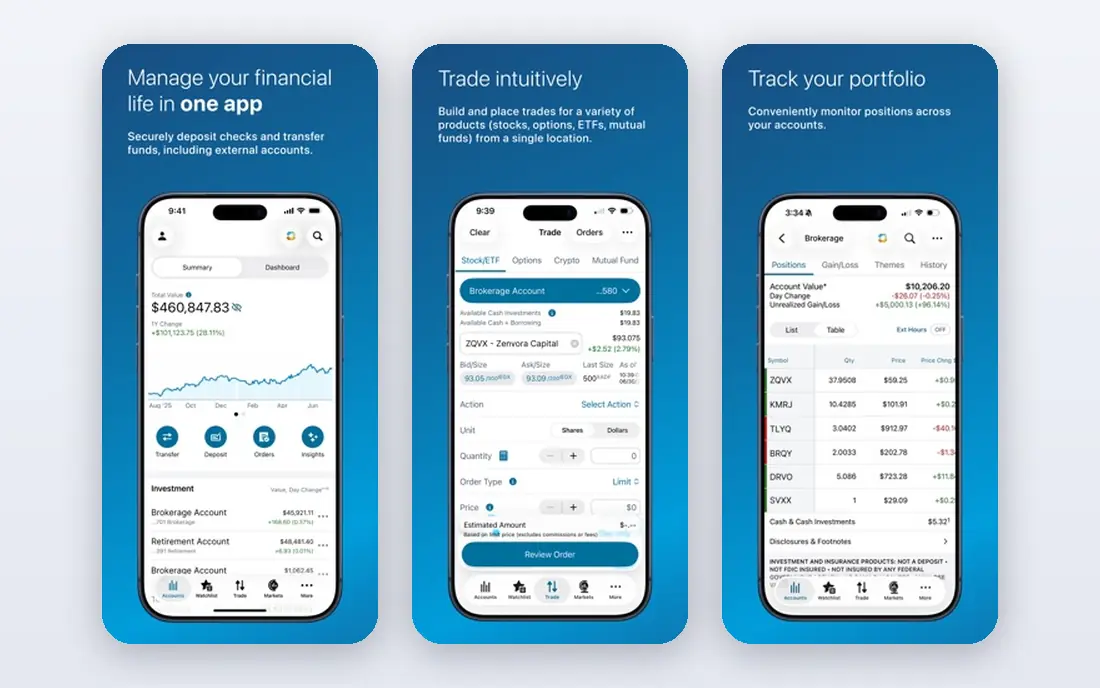
Thinkorswim is the best classroom for options traders. PaperMoney lets you practice with virtual funds, model risk across a position and test strategies before risking capital. Its option chain, Greeks, backtesting and education material help beginners understand how time decay, volatility and price moves affect a trade.
The platform is large, and new users may need time to learn its layouts and order types. The $0.65 per-contract fee is standard for full-service brokers, so frequent traders will pay more than on tastytrade or Webull. If learning and analysis matter more than the lowest fee, thinkorswim is hard to beat.
- $0.65 per contract
- PaperMoney paper trading
- Option Hacker, Spread Hacker and profit and loss modeling
- Platform can feel heavy
- Futures and index fees add to the headline rate
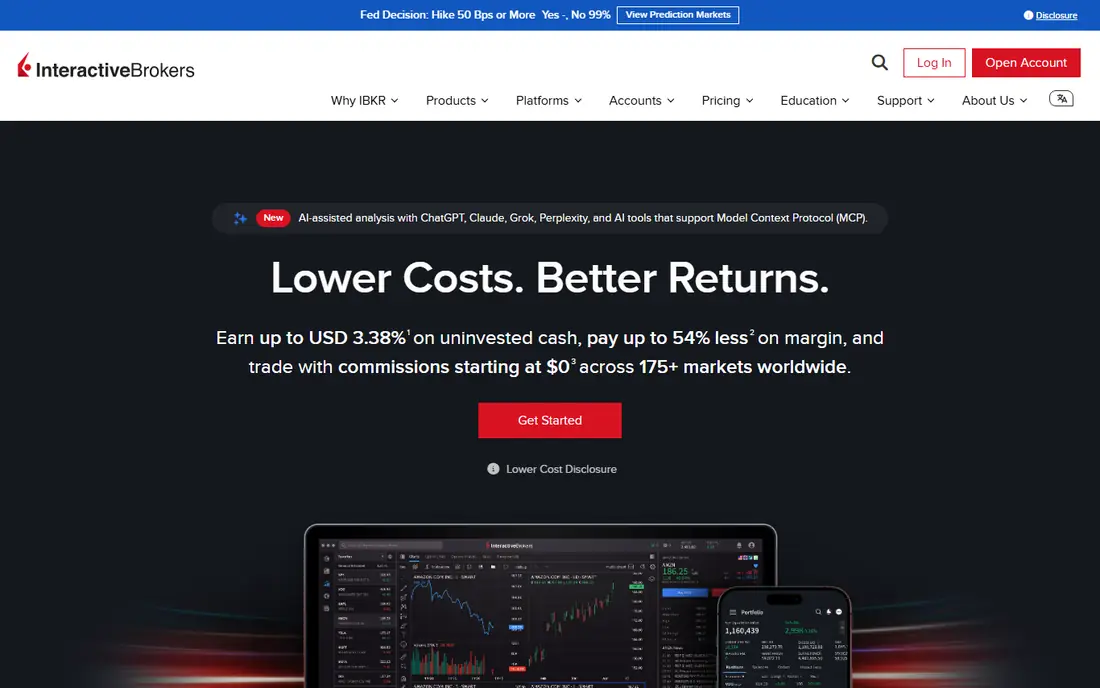
Interactive Brokers suits professional and multi-asset traders who need detailed risk analysis. Its Options Strategy Builder, Probability Lab and Volatility Lab help model complex positions, and its global access covers options markets beyond the US. Tiered Pro pricing can lower per-contract costs for high-volume traders.
Complexity is the price. Trader Workstation takes learning, and the lowest advertised rate does not apply to every order, since premium, volume and plan affect the total. Beginners should start with IBKR Lite or a simpler broker, and move to Pro only when they need its modeling and global reach.
- Tiered options pricing that can fall with volume
- Portfolio Greeks and risk modeling
- Global options markets
- Complex platform
- $1 minimum per order
- Data and exchange fees vary
Fidelity works well for investors who want options inside a broader investing or retirement account. Its strategy builder, probability calculator and research help income-focused traders plan covered calls and other defined-risk strategies. Keeping options, stocks and IRAs in one account also simplifies tax and account management.
The main gap is practice. Fidelity does not offer the same paper trading experience as thinkorswim, so new options traders should paper trade elsewhere or start with small, defined-risk positions. For long-term investors who add options occasionally, Fidelity is a steady choice.
- $0.65 per contract
- Options Strategy Builder and Trade Analyzer
- Strong retirement account support
- No paper trading for options
- Platform tools are split across apps
ETRADE balances a friendly core app with Power ETRADE for active traders. Power E*TRADE adds spectral analysis, StrategySEEK and backtesting for options income strategies, plus paper trading for practice. Casual traders can use the main app for simple single-leg trades without learning the full platform.
The active discount requires at least 30 stock, ETF or options trades per quarter, so most casual traders will pay the standard $0.65 rate. Splitting tools across two apps can also confuse new users. For traders who want visual analysis without a steep learning curve, E*TRADE is a solid middle option.
- $0.65 per contract, or $0.50 for qualifying active traders
- Power E*TRADE strategy tools
- Paper trading
- Active discount needs 30 or more trades per quarter
- Tools are split across apps
Webull appeals to mobile traders who want low headline costs and strong charting. Its $0 stock and ETF options commission, free quotes and paper trading make it easy to test strategies on a phone. The app also covers stocks, ETFs and futures-related products in one place.
Read the exceptions carefully. Index options, certain oversized orders and regulatory or exchange fees can add cost, so the total for an index trade differs from a standard equity options trade. Webull suits cost-conscious traders who check those exceptions and trade mainly standard equity options.
- $0 commission and contract fee on many stock and ETF options
- Free real-time quotes
- Paper trading
- Index options and oversized orders carry extra fees
- Support is mainly digital
Robinhood makes single-leg options trades easy to understand on a phone, with clear profit and loss visuals and a simple chain view. That simplicity helps beginners learn basic calls and puts without a dense desktop platform. Its $0 commission structure for many options trades also keeps small trades affordable.
Advanced traders will miss deeper Greeks, strategy modeling and paper trading tools. Some index options carry extra fees, and the app's simplicity can hide risks such as time decay and assignment. Use Robinhood for learning basic options with small sizes, and move to thinkorswim or tastytrade for complex strategies.
- Simple mobile options workflow
- $0 options commissions in many cases
- Fractional shares and crypto in the same app
- Limited advanced analysis
- Some index and exchange fees apply
- Research is lighter than specialist platforms
TradeStation suits traders who want to test and automate options ideas. Its backtesting, scripting and charting tools help systematic traders check a strategy against historical data before trading it live. The $0.60 per-contract rate undercuts the standard $0.65 rate at several full-service brokers, which helps frequent traders.
The learning curve is real, and EasyLanguage takes time to master. Traders who only place occasional single-leg trades may not need its depth. For strategy-focused traders who value testing and automation, TradeStation is a credible alternative to thinkorswim.
- $0.60 per contract
- Backtesting and EasyLanguage automation
- Desktop, web and mobile access
- Platform depth takes learning
- Futures and options fees vary by product
How we picked these
We compared official fee schedules updated in 2026, strategy tools, paper trading options, education material and account features. We favored brokers that publish per-contract fees clearly, offer risk modeling or paper trading, and are regulated in the US. We did not claim hands-on testing; our comparison rests on vendor pages, fee schedules and public reviews.
How to choose an options platform
Start with the trades you actually place. Single-leg buyers need a simple chain and clear fees, while spread traders need multi-leg entry, risk modeling and capped commissions. Check per-contract fees, exercise and assignment fees, index option fees and regulatory charges together, since a low headline rate can hide other costs.
Next, practice before you trade live. Use paper trading to learn how time decay and volatility affect a position, and start with defined-risk strategies and small sizes. Confirm options approval requirements, since brokers set experience and income criteria, and never trade with money you need for essential expenses. Options trading carries risk, and this article is not financial advice.
Frequently asked questions
What is the best options trading platform for beginners?
Thinkorswim through Schwab is a strong beginner choice because paperMoney, education and risk modeling help new traders learn before risking capital. Fidelity and E*TRADE also suit beginners who want options inside a broader account. Start with small, defined-risk trades and paper trading.
What is the best platform for options trading with low fees?
Webull and Robinhood offer $0 commissions on many stock and ETF options, while tastytrade caps opening commissions at $10 per leg for many equity options. The lowest total cost depends on contract type, volume and index fees, so compare the full fee schedule for your trades.
What is the best option trading app on mobile?
Webull offers the deepest mobile charting and paper trading among low-cost apps, while Robinhood offers the simplest mobile workflow. Tastytrade and thinkorswim also have mobile apps, but their desktop versions offer fuller analysis. Choose based on whether you value simplicity or depth on a phone.
Do options platforms offer paper trading?
Many do, including thinkorswim, E*TRADE, Webull, TradeStation and Interactive Brokers. Tastytrade and Fidelity offer more limited practice options, so check paper trading availability before you open an account if practice matters to you.
Can I trade options in an IRA?
Yes, with broker approval and limits. Many brokers allow covered calls, cash-secured puts and other defined-risk strategies in IRAs, while naked strategies are usually restricted. Check your broker's IRA options rules and tax guidance before trading.
Are options riskier than stocks?
Yes, options use borrowed funds, expire and can lose their full premium. Time decay works against buyers, and sellers face assignment and margin risks. Defined-risk strategies limit loss to a known amount, but they still carry risk. This article is educational only and is not financial advice.
Sources
See where you really rank - block by block
ProMapRanker scans Google Maps across a grid of your service area. Simple monthly plans from $19, white-label on every plan.
Start freeKeep reading
 youtube alternatives
Best YouTube Alternatives in 2026
Looking for youtube alternatives in 2026? We compare Vimeo, Dailymotion, Twitch, Rumble, and more on price, audience, monetization, control and privacy.
Read → what's the best ai tool for photo editing
What Is the Best AI Tool for Photo Editing in 2026
What is the best AI tool for photo editing? We compare ten tools for 2026, from Photoshop and Lightroom to Luminar, Topaz, Canva and mobile editors today.
Read → twitter alternatives
Best Twitter Alternatives in 2026
Compare the best twitter alternatives for 2026, from Bluesky, Threads, and Mastodon to Reddit, Tumblr, and Micro.blog, with free plans and audience notes.
Read →