 ProMapRanker
Best Operational Risk Management Software in 2026


Large regulated risk programmes · Pricing starts at: See website
Key takeaways
- Top rated operational risk management software differs by firm size, with large regulated firms needing deeper suites than mid-size teams.
- A living risk register, incident links, control testing, and clear ownership matter more than a long feature list.
- Most enterprise platforms use quote-based pricing, so budget for implementation and admin time as well as the license.
- LogicGate and Resolver suit teams that want faster setup, while MetricStream, Archer, and OpenPages suit complex regulated programmes.
Quick comparison
| Pick | Great for | Pricing starts at | Free tier | |
|---|---|---|---|---|
| MetricStream | Large regulated risk programmes | See website | No | Visit |
 RSA Archer | Complex regulated risk models | See website | No | Visit |
 Resolver | Incident-linked risk management | See website | No | Visit |
 LogicGate Risk Cloud | No-code risk workflows | See website | Free trial | Visit |
 ServiceNow IRM | Firms already on ServiceNow | See website | No | Visit |
 SAI360 | Risk, EHS, and compliance in one place | See website | No | Visit |
 AuditBoard | Audit-connected risk work | See website | No | Visit |
 Riskonnect | Integrated risk and claims work | See website | No | Visit |
 IBM OpenPages | Quantitative risk and compliance | See website | No | Visit |
The best operational risk management software
We compared tools on risk registers, incident and loss event handling, controls, reporting, and implementation effort. The top operational risk management software for a bank is rarely the best pick for a mid-size firm with a small risk team.

MetricStream suits large firms that need one platform for risk, compliance, audit, and related work. It centralises risk data, supports scoring and assessments, and produces board-level reporting from the same records. Regulated firms in banking, energy, and healthcare often use it for that breadth.
The cost and effort are real. Pricing is quote-based and implementation can be a major project, with deeper changes often needing specialist skills. Teams with a small risk function may find a lighter platform delivers value faster.
- Broad GRC coverage
- Strong reporting and analytics
- Used across regulated industries
- Quote-based and costly
- Implementation needs skilled staff
- Ad-hoc reporting can feel heavy
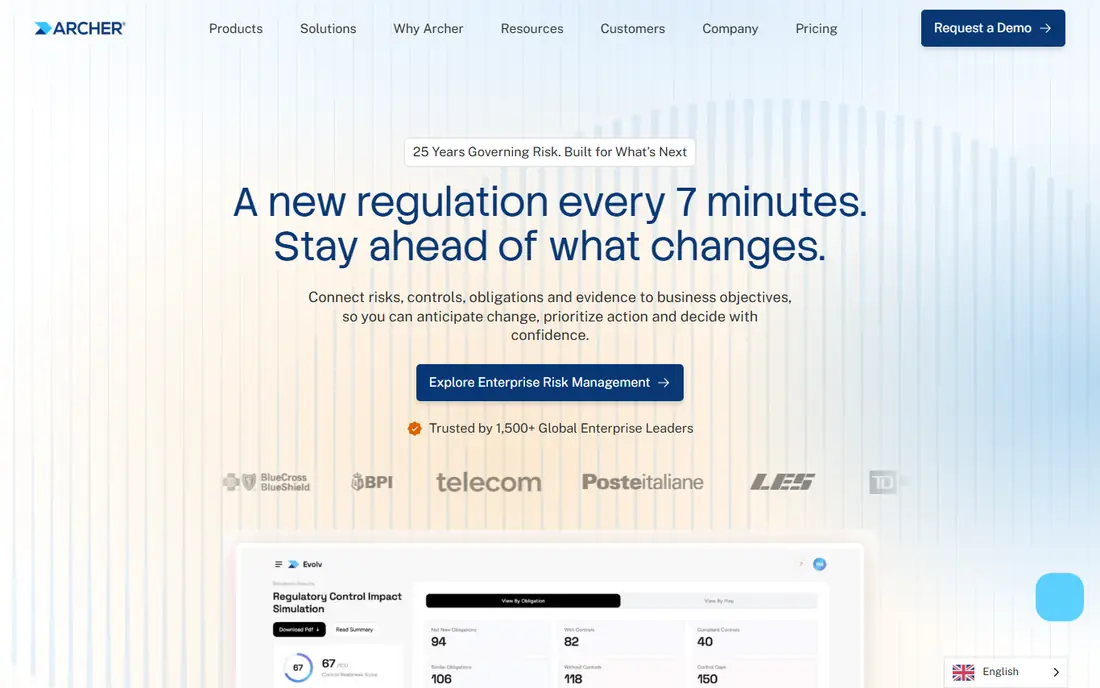
Archer is a long-standing choice for firms with complex risk frameworks and many entities. It handles risk registers, assessments, controls, issues, and reporting at scale, and it supports quantitative methods that simpler tools do not. Large firms with mature risk teams often value that depth.
That depth comes with complexity. Configuration, upgrades, and reporting need skilled admins, and total cost includes implementation and ongoing care. Smaller teams should test whether they can staff it before committing.
- Deep risk methodology support
- Strong for large regulated estates
- Flexible data model
- Complex to configure
- Costly
- Needs dedicated admin effort
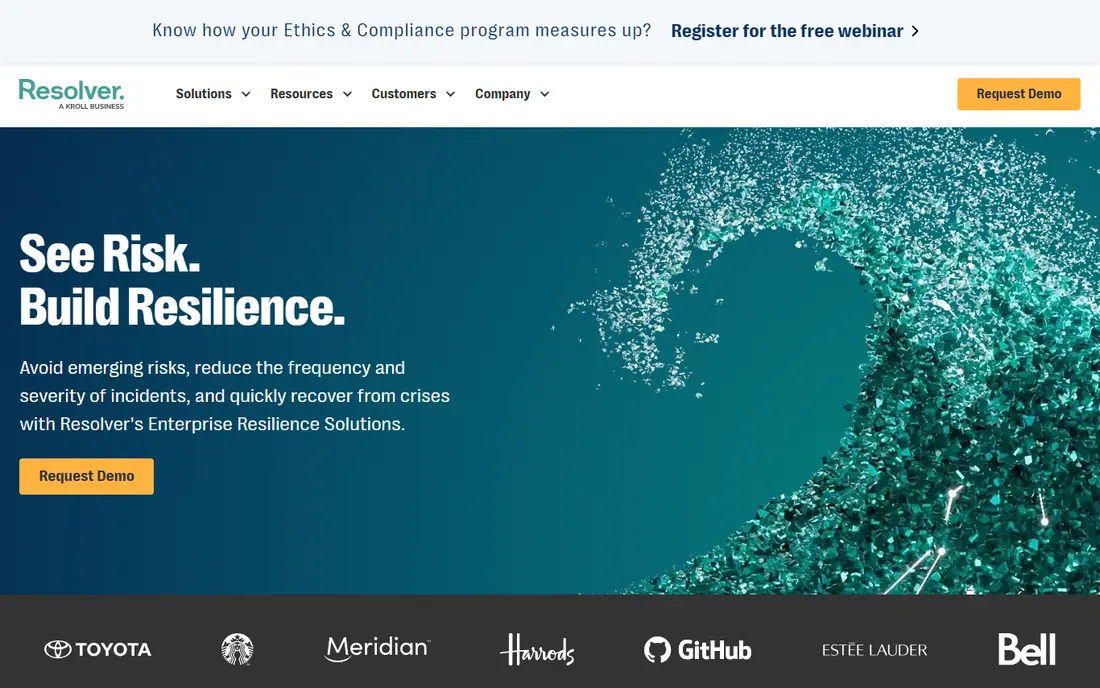
Resolver connects risk records to incidents, so a team can see which events drive which risks and what actions followed. That incident link helps firms learn from losses rather than just listing risks once a year. Workflows, tasks, and reporting support follow-up and ownership.
Pricing is quote-based, and some deeper analytics sit on higher tiers. Still, for teams that want risk work grounded in real incidents, Resolver is a practical middle ground between a spreadsheet and a full enterprise suite.
- Links risks to incidents clearly
- Good workflow tools
- Usable for mid-size teams
- Quote-based pricing
- Some advanced analytics need higher tiers
LogicGate Risk Cloud lets business users build risk workflows, forms, and reports without heavy IT work. Drag-and-drop tools help a small risk team shape assessments, controls, and issue tracking to fit its own process. That speed is a clear advantage over suites that need consultants for every change.
Reporting is the main watch point. Standard views work well, but ad-hoc reporting outside those views can feel limited. Teams with very complex quantitative needs should compare Archer or MetricStream before choosing LogicGate.
- No-code builder business users can run
- Fast setup
- Flexible forms and workflows
- Standalone reporting has limits
- Very complex programmes may need more depth
ServiceNow Integrated Risk Management suits firms already running ServiceNow for IT or service work. Risk records can link to services, assets, and indicators from the same platform, which helps teams see operational impact in context. Workflows for issues and remediation feel natural to ServiceNow users.
Firms without ServiceNow should weigh the full platform cost, since IRM value rises with the wider estate. Pricing is quote-based, and implementation still needs planning, even for current ServiceNow customers.
- Strong workflow and service links
- Good indicator and CMDB connections
- Familiar to ServiceNow teams
- Best value needs an existing ServiceNow estate
- Quote-based pricing
SAI360 covers governance, risk, and compliance alongside environment, health, and safety work. Firms with both operational risk and workplace safety duties can manage incidents, audits, and controls in one system. That combined view helps when an operational event has both risk and safety angles.
Breadth can also mean complexity, and teams should check which modules they actually need. Pricing is quote-based, so firms should price the modules they will use rather than the full suite by default.
- Covers risk, compliance, and EHS
- Good for firms with safety duties
- Subscription model
- Broad scope can feel complex
- Pricing needs a quote
AuditBoard suits firms where risk work sits close to internal audit and controls testing. Risk assessments, controls, and audit findings share data, which cuts duplicate work and helps audit teams trace issues to risks. Reporting is clear for boards and audit committees.
Teams that only need a risk register may find the audit depth more than needed. Pricing is quote-based, so risk-only buyers should compare a leaner risk tool before paying for audit features they will not use.
- Strong audit and controls link
- Clear reporting
- Good for SOX and audit teams
- Risk-only teams may pay for audit depth
- Quote-based pricing
Riskonnect brings risk, claims, and compliance data together, which helps firms where insurance and loss events shape operational risk. Dashboards show risk, incident, and claim trends in one view, and workflows support follow-up across teams. Firms in insurance-heavy sectors often find that mix useful.
As with other suites, scope needs control. Adding claims, compliance, and vendor modules can expand implementation time and cost. Price the core risk modules first, then add extras only where they solve a real reporting need.
- Covers risk, claims, and compliance
- Good for insurance-linked firms
- Strong dashboards
- Implementation scope can grow
- Pricing is quote-based
IBM OpenPages suits regulated firms that need quantitative risk methods, scenario work, and multi-entity reporting. It supports risk registers, assessments, loss events, and compliance workflows at enterprise scale, with AI-assisted features in newer releases. Firms with complex models often value that method depth.
Cost and complexity are the trade-offs. OpenPages is an enterprise platform, and implementation needs skilled staff and clear governance. Smaller teams should test a lighter tool first unless quantitative modelling is a core requirement.
- Strong quantitative methods
- Good for regulated firms
- Multi-entity rollups
- Enterprise cost and complexity
- Needs skilled implementation
How we picked these
We compared official product pages, pricing disclosures, and independent comparison work for risk tools in active use in October 2026. We favoured tools with a clear operational risk register, incident and control handling, and reporting, rather than generic project tools. We left out spreadsheets and single-purpose incident apps without risk and control features. Prices shown as See website mean the vendor uses quote-based pricing, so get a written quote for your entity and user count.
What to check before you choose
Start with the risk process you must run, not the platform you like. List your registers, assessment cadence, control tests, incident types, and board reports. Then test whether each tool handles those items without heavy custom work. A platform that needs consultants for every form change will slow a small team, even if its feature list looks longer.
Ownership, indicators, and reporting
Check how risks get owners, review dates, and escalation paths. Look for key risk indicators that update from real data, not just manual scores, and test board reporting with your own sample data. Also check audit trails, access controls, and how easily you can export data if you later switch vendors.
Total cost and staffing
Price license, implementation, training, and admin time for three years. Enterprise suites often need a dedicated admin, while no-code tools such as LogicGate need less specialist care. Ask vendors for a realistic implementation timeline and for reference customers at a similar size to your firm.
Frequently asked questions
What is the best operational risk management software for a mid-size firm?
Resolver and LogicGate Risk Cloud are strong picks for mid-size teams, since they offer real risk, incident, and control tools without the heaviest enterprise setup. Larger regulated firms may need MetricStream, Archer, or OpenPages. Match the tool to your team size and reporting duties.
What is top rated operational risk management software for banks?
MetricStream, Archer, and OpenPages are common picks for banks and other regulated firms, due to their method depth, multi-entity reporting, and audit trails. ServiceNow IRM also suits banks already on ServiceNow. Pricing and implementation are enterprise-scale in all cases.
How much does operational risk software cost?
Most enterprise platforms are quote-based, with mid-market deployments often starting in the tens of thousands of dollars per year and large global rollouts costing far more. Implementation is often billed separately. Get a written quote that includes modules, users, and implementation.
Can I run operational risk in a spreadsheet?
A spreadsheet can hold a simple register, but it lacks workflow, ownership reminders, audit trails, and reliable reporting at scale. It also breaks down when many owners update it at once. A dedicated tool is worth it once incident, control, and board reporting work grows beyond a few dozen risks.
What is the difference between GRC and operational risk software?
GRC is the broad discipline covering governance, risk, and compliance, while operational risk software focuses on risks from people, processes, systems, and external events. Many platforms cover both, but operational risk tools prioritise registers, loss events, controls, and indicators over compliance certification alone.
Sources
See where you really rank - block by block
ProMapRanker scans Google Maps across a grid of your service area. Simple monthly plans from $19, white-label on every plan.
Start freeKeep reading
 zscaler alternatives
Best Zscaler Alternatives in 2026
Looking for zscaler alternatives? We compare 9 SASE and zero trust platforms on architecture, data protection, pricing, and fit for your network and team.
Read → zapier alternatives free
Best Zapier Alternatives Free in 2026
Nine automation tools for zapier alternatives free in 2026, all with genuinely free tiers, plus free plan limits, starting prices and upgrade paths explained.
Read → which platform is best for online reputation
Which Platform Is Best for Online Reputation in 2026
Wondering which platform is best for online reputation? We compare 8 review, listing, and response tools for small and multi-location businesses and agencies.
Read →