 ProMapRanker
Best Open Source Ecommerce Platforms in 2026

Key takeaways
- WooCommerce is the easiest starting point for WordPress users, while Magento Open Source suits larger catalogs with developer help.
- Free software does not mean a free store, since hosting, a domain, payment fees, and upkeep still apply.
- Headless options such as Medusa and Saleor give developers more control, but they need a separate storefront.
- Small stores should pick the platform with the largest extension or theme library for their niche, not the longest feature list.
Quick comparison
| Pick | Great for | Pricing starts at | Free tier | |
|---|---|---|---|---|
 WooCommerce | WordPress stores of all sizes | Free | Yes | Visit |
 Magento Open Source | Large catalogs with developer support | Free | Yes | Visit |
 PrestaShop | Multilingual and European stores | Free | Yes | Visit |
 OpenCart | Simple stores on a tight budget | Free | Yes | Visit |
 Medusa | Developer-led headless commerce | Free | Yes | Visit |
 Saleor | Multi-market brands using GraphQL | Free | Yes | Visit |
 Sylius | Custom B2B and B2C builds in PHP | Free | Yes | Visit |
 Bagisto | Laravel developers building stores | Free | Yes | Visit |
 nopCommerce | .NET teams and Windows hosting shops | Free | Yes | Visit |
The best open source ecommerce platforms
We compared official feature pages, pricing pages, and documentation for platforms that are still maintained in October 2026. Each option below is free to download, but running costs differ.
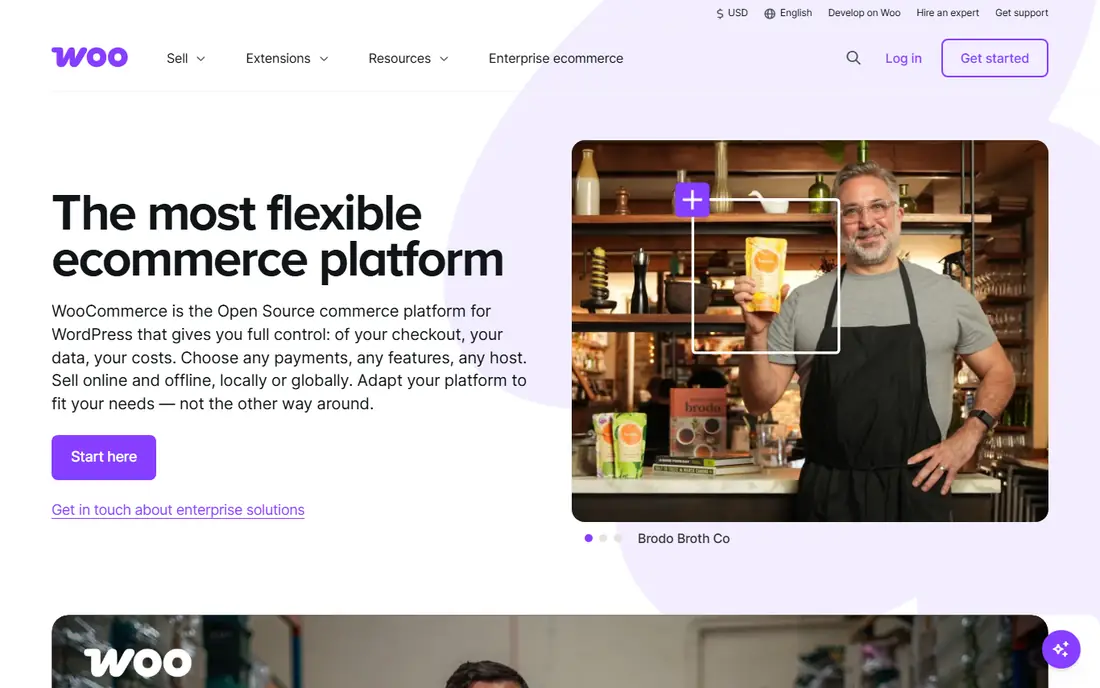
WooCommerce turns a WordPress site into a store, which is why it fits so many small businesses. If you already publish blog posts or pages in WordPress, you keep one system for content and selling. The core plugin covers products, orders, coupons, shipping, and tax settings, and the marketplace adds bookings, subscriptions, memberships, and many payment options.
The catch is upkeep. You choose hosting, handle updates, and test plugin combinations when WordPress or WooCommerce changes. A lean store can run well on modest hosting, while a busy store with many extensions needs stronger hosting and regular care. For a team without a developer, that maintenance is the real cost to weigh against the free download.
- Huge extension and theme library
- Works with WordPress content tools
- No platform license fee
- Performance depends on hosting and plugins
- Paid extensions add up over time
Magento Open Source is the free edition behind Adobe Commerce, and it is built for stores that outgrow simpler tools. It handles large product lists, multiple store views, customer groups, and complex pricing rules without forcing a move to a paid license. Agencies and in-house developers value the control over checkout, search, and integrations.
That power comes with demands. Hosting must be sized for the catalog and traffic, and setup is not a weekend project for a beginner. Security patches and version upgrades need testing, especially when custom code or third-party extensions are involved. Choose it when catalog size or business rules justify developer time.
- Strong catalog and multi-store tools
- Large extension marketplace
- Full code control
- Needs capable hosting and skilled setup
- Upgrades take planning

PrestaShop has long served independent stores in Europe and beyond, and its multilingual setup remains a clear strength. The back office covers products, orders, carriers, payment modules, and promotions in a layout that new store owners can learn without code. Its Addons marketplace covers accounting, shipping, loyalty, and marketplace tools.
Costs sit in hosting and modules rather than a license. A basic store can start with free modules, but shipping rules, advanced search, or local payment methods often need paid add-ons. PrestaShop fits a store that wants a dedicated ecommerce back office without WordPress, and that can manage its own hosting.
- Strong language and currency support
- Large module marketplace
- Clear back office
- Some useful modules are paid
- Support is mainly community based for the free edition
OpenCart appeals to owners who want a straightforward store and little else. Installation is quick, the admin area is easy to follow, and the core covers categories, options, discounts, and order status updates. Multi-store support is included, which helps a seller running two small brands from one install.
The trade-off is polish. Out of the box, themes are plain, and modern checkout or marketing features often come from extensions. OpenCart is a sensible pick for a catalog that is stable, a budget that is tight, and an owner who values simplicity over a large app ecosystem.
- Lightweight and quick to install
- Easy product and order management
- Many extensions
- Smaller ecosystem than WooCommerce
- Design options feel dated without a paid theme
Medusa is a headless commerce engine built in Node.js and TypeScript, and it suits teams that want to shape checkout, pricing, and fulfillment around their own rules. Its modules cover products, carts, orders, customers, promotions, and regions, and developers can replace or extend each piece. That structure fits subscriptions, marketplaces, and unusual pricing models better than a fixed storefront system.
For a non-technical owner, Medusa is not a quick start. You still need a storefront, hosting, and someone to build and maintain the pieces. Managed Medusa Cloud is available from $29 per month for teams that want hosting handled, while self-hosting keeps the code free and puts infrastructure in your hands.
- Modular commerce code
- Multi-region and multi-currency support
- No platform transaction fee on self-hosted use
- Needs a separate storefront build
- No ready-made theme for non-developers
Saleor is an open source, GraphQL-first commerce backend written in Python. Channels control pricing, currency, stock, and availability per market, so one backend can serve several countries without separate installs. Promotions, vouchers, gift cards, multi-warehouse stock, and payment orchestration are part of the core model.
The dashboard and storefront are separate projects, so a team should plan front-end work from the start. That split is the point for brands with a custom design or several sales channels, but it is extra work for a single small store. Saleor Cloud is available for teams that prefer managed hosting, while self-hosting keeps costs to infrastructure and development time.
- GraphQL-first API
- Strong channel and warehouse model
- Same code self-hosted or on Saleor Cloud
- Storefront must be built or adapted
- Setup needs Python and API skills
Sylius is built on Symfony, and it reads like a toolkit for developers rather than a ready shop template. Its resource-based design makes it easier to model unusual products, pricing, or order flows, which is why agencies pick it for B2B portals and tailored stores. The admin area is functional, and the code is organized for long-term maintenance.
A small team without Symfony experience should look elsewhere, because Sylius expects developer input for design and many integrations. The payoff is a store shaped to the business instead of a store bent around a template. If your catalog rules are unusual, that control is worth the build time.
- Clean Symfony-based code
- Flexible product and order models
- Good for custom business rules
- Smaller plugin library than WooCommerce or Magento
- Needs experienced PHP developers
Bagisto gives Laravel teams a familiar starting point, with products, categories, orders, customers, and promotions in a Laravel codebase they already know. Multi-channel selling and a multi-vendor marketplace edition extend it beyond a single store, which helps teams planning a marketplace or several storefronts.
The community is smaller than WooCommerce or Magento, so finding a ready answer or extension can take longer. Design work is also needed to move past the default look. Bagisto fits best when the team already works in Laravel and wants ecommerce inside that stack.
- Built on Laravel
- Multi-vendor and multi-channel options
- Marketplace extensions available
- Smaller community than older platforms
- Fewer ready themes
nopCommerce is an open source store built on .NET, and it includes many features other platforms sell as add-ons, such as multi-store support, discounts, gift cards, and vendor management. That generous core makes it attractive for teams already running Microsoft technology. The admin area is detailed, and the codebase is well structured for customization.
Its ecosystem is smaller than the PHP leaders, and theme choice is limited by comparison. Hosting also needs a .NET-friendly setup. For a .NET team, those limits matter less than working in a familiar stack with a capable free core.
- Full-featured core without paid modules for basics
- Multi-store and multi-vendor support
- Strong for .NET shops
- Fewer themes and plugins than PHP platforms
- Needs .NET hosting knowledge
How we picked these
We compared official pricing pages, feature documentation, and current release activity for open source ecommerce software in October 2026. We kept only platforms whose core code is free to download and still maintained, and we favored a mix of ready store systems and headless engines. We did not count a hosted-only plan as open source, and we noted where hosting or paid extensions change the total cost.
What to check before you choose
Start with your team, not the feature list. A ready store system such as WooCommerce, PrestaShop, or OpenCart suits an owner who wants to launch fast and manage products daily. A headless engine such as Medusa or Saleor suits a team with developers who need custom checkout, pricing, or channel rules. The wrong match costs more in time than any license saving.
Budget for the whole store
Add hosting, a domain, an SSL certificate, payment fees, a theme, and the extensions you need for shipping, tax, and marketing. Ask each vendor or host what renewal prices look like after year one. A free core with three paid extensions can cost more than a modest hosted plan, so price the full setup before you commit.
Plan for updates and security
Self-hosted stores need updates, backups, and a plan for patching. Check how often the platform releases security fixes, and whether your host offers staging and automatic backups. If no one on the team will own updates, a managed hosting plan or a simpler platform is the safer choice.
Frequently asked questions
What is the best open source ecommerce platform for a small store?
WooCommerce is the most practical choice for many small stores, especially when the site already runs on WordPress. PrestaShop and OpenCart are good alternatives for owners who want a dedicated store back office. The best pick depends on your hosting skills and the extensions your products need.
Are open source ecommerce platforms really free?
The software license is free, but running a store is not. You still pay for hosting, a domain, payment processing, and often a theme or extensions. Developer time for setup and updates is another real cost, so budget for the full store rather than the download alone.
What is the best open source ecommerce software for developers?
Medusa, Saleor, and Sylius give developers the most control over commerce logic, APIs, and storefronts. Medusa suits JavaScript teams, Saleor suits Python teams, and Sylius suits PHP teams using Symfony. Each needs front-end work, so they fit projects with development time available.
Which open source ecommerce platform is best for multiple countries?
PrestaShop, Medusa, and Saleor all handle multiple languages, currencies, and regions well. Saleor and Medusa use a channel model that suits multi-market selling, while PrestaShop offers strong built-in language support. Check tax, shipping, and payment options for each country you plan to serve.
Is Magento Open Source still a good choice in 2026?
Yes, for larger stores with developer support and a catalog that needs complex rules or multiple store views. It needs capable hosting and planned upgrades, so it is not the best fit for a first store run by one person. Smaller stores often move faster on WooCommerce or PrestaShop.
Sources
See where you really rank - block by block
ProMapRanker scans Google Maps across a grid of your service area. Simple monthly plans from $19, white-label on every plan.
Start freeKeep reading
 zscaler alternatives
Best Zscaler Alternatives in 2026
Looking for zscaler alternatives? We compare 9 SASE and zero trust platforms on architecture, data protection, pricing, and fit for your network and team.
Read → zapier alternatives free
Best Zapier Alternatives Free in 2026
Nine automation tools for zapier alternatives free in 2026, all with genuinely free tiers, plus free plan limits, starting prices and upgrade paths explained.
Read → which platform is best for online reputation
Which Platform Is Best for Online Reputation in 2026
Wondering which platform is best for online reputation? We compare 8 review, listing, and response tools for small and multi-location businesses and agencies.
Read →