 ProMapRanker
Best Online Therapy Services in 2026

Key takeaways
- BetterHelp and Talkspace suit people who want weekly live sessions plus messaging between sessions, while Grow Therapy and Alma suit people who want to use insurance and pick a named therapist.
- Weekly self-pay prices vary widely, so check whether a plan bills weekly or monthly, how long live sessions last, and whether messaging is included before you sign up.
- Therapy plus psychiatry in one service, as offered by Cerebral and Brightside Health, can suit people who may need medication review alongside talk therapy.
- Privacy terms, therapist credentials, and state licensing matter as much as price, so read the privacy policy and confirm a therapist is licensed in your state.
- Online therapy is not a substitute for emergency care. If you are in crisis, contact local emergency services or a crisis line in your country right away.
Quick comparison
| Pick | Great for | Pricing starts at | Free tier | |
|---|---|---|---|---|
 BetterHelp | Fast matching and messaging | $280 per month | No | Visit |
 Talkspace | Insurance and messaging plans | $276 per month | No | Visit |
 Grow Therapy | In-network therapist search | See website | No | Visit |
 Cerebral | Therapy plus medication care | See website | No | Visit |
 Alma | Choosing your own therapist | See website | No | Visit |
 Brightside Health | Structured care for anxiety and depression | $349 per month | No | Visit |
 Calmerry | Structured cognitive behavioral therapy | See website | No | Visit |
 7 Cups | Free peer support first | Free | Yes | Visit |
The best online therapy services
We compared services on session format, insurance handling, therapist choice, messaging, psychiatry options, and privacy information. The eight services below cover self-pay subscriptions, insurance-based care, and a free peer support option.
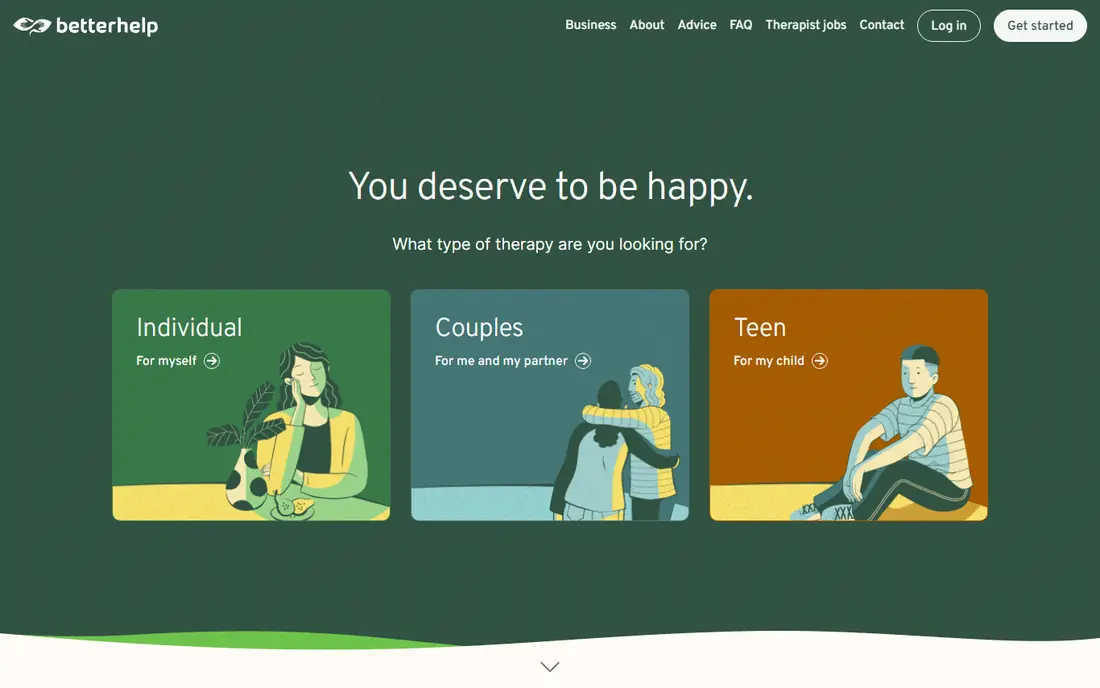
BetterHelp starts with a questionnaire about goals, preferences, and concerns, then matches you with a licensed therapist. That matching step is the main reason many people choose it first, because it removes the need to search through long directories and send separate enquiries. Once matched, you can message your therapist at any time and book a weekly live session by video, phone, or live chat. The added tools matter if you like work between sessions. BetterHelp includes journaling, worksheets, and group sessions and classes on its main plans, which can help you practise skills discussed in therapy. Pricing is shown as $70 to $100 per week on the company cost page, with monthly billing starting at $280 per month, and financial aid may be available for people who qualify. Check the therapist profile for credentials and licensing in your state, and confirm whether insurance is accepted for your chosen provider before you commit.
- Large therapist network
- Messaging between sessions
- Video, phone, and live chat sessions
- Easy therapist switching
- No free plan
- Self-pay price varies by location and preferences
- Insurance acceptance is limited by state and provider
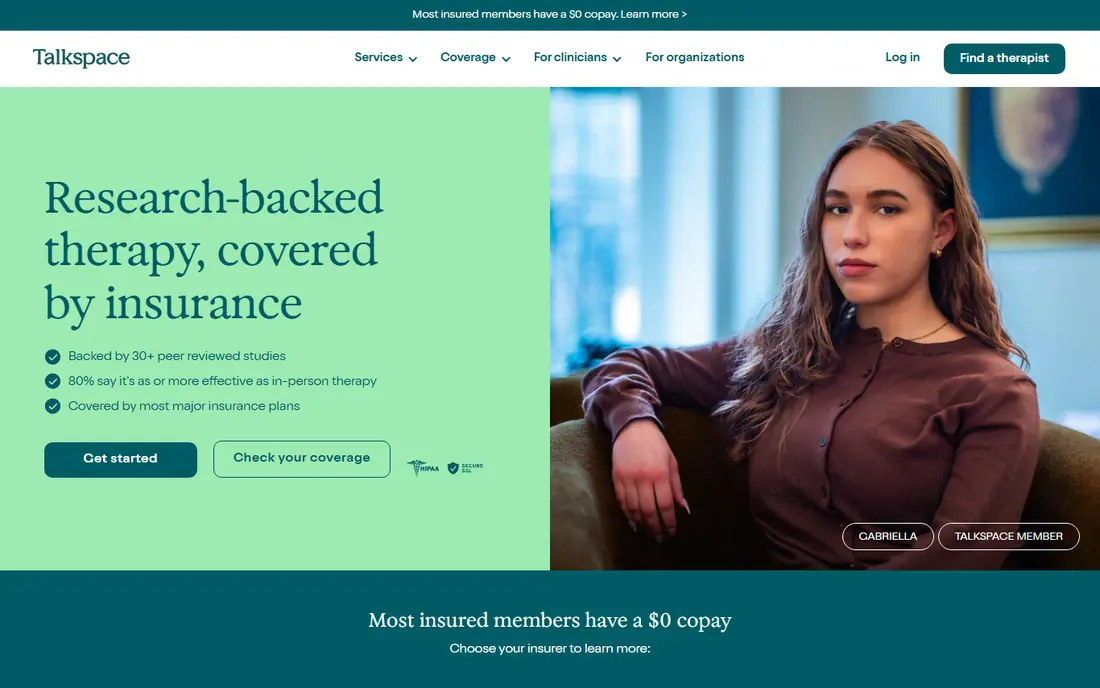
Talkspace is a strong choice if insurance coverage is your first filter. It works with many major insurers and employers, and insured members may pay a copay rather than the full self-pay rate, so it is worth checking your plan before you compare headline prices. Self-pay messaging plans start at $69 per week in published comparisons, with video and messaging plans priced higher. The format choice is clear once you read the plan details. Messaging-only plans suit people who prefer writing and want replies during the week, while video plans add live sessions for people who want face-to-face time. Talkspace also offers psychiatry, which can help if medication review is part of your care. Read the session length, message response times, and workshop access for each tier, because those details change the value of each plan.
- Accepts many major insurance plans
- Messaging plans available
- Psychiatry services available
- Workshops on higher plans
- Live video sessions can be shorter than some rivals
- Self-pay plans can be hard to compare at a glance
- No sliding scale for self-pay
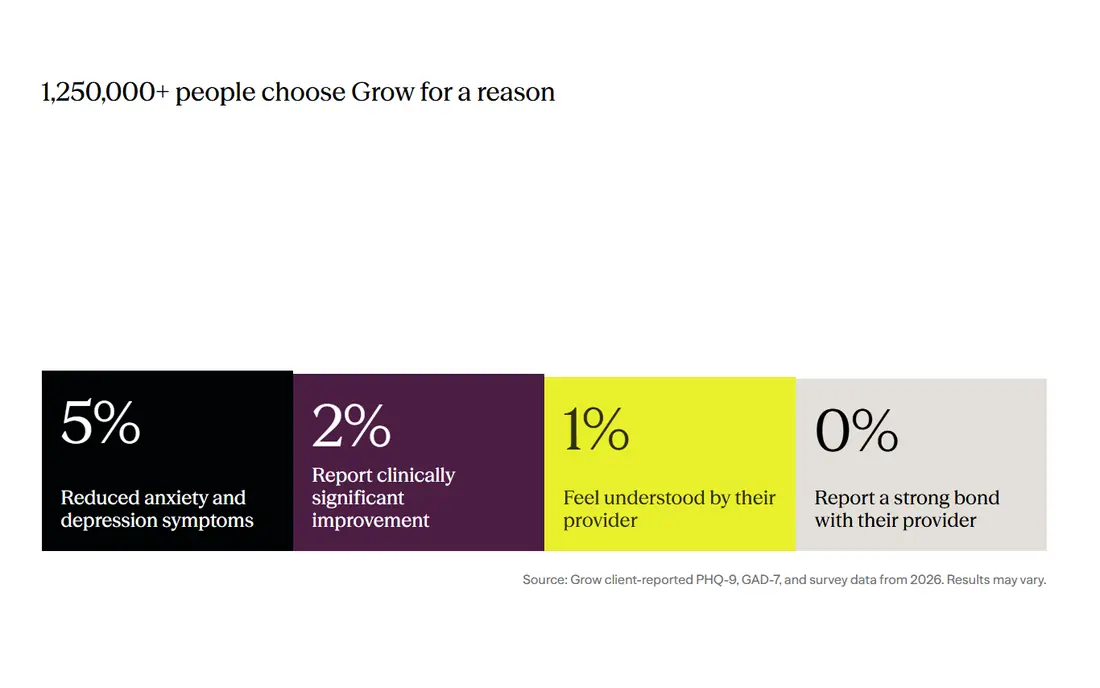
Grow Therapy works differently from subscription platforms, because it helps you find an individual therapist who takes your insurance. That model suits people who want a named therapist, a regular video session, and a copay closer to a standard health visit, rather than a monthly subscription. You can filter by insurance, specialty, and availability, which makes the first shortlist easier to build. The trade-off is that your options depend on where you live and which plans therapists in your area accept. Grow Therapy does not replace the need to confirm coverage with your insurer, and session frequency is agreed with your therapist rather than set by a plan tier. If you prefer messaging between sessions, ask about that before booking, because the core offer is scheduled video therapy with a chosen provider.
- Search by insurance and specialty
- Choose a specific therapist
- Video sessions
- In-network copay model for many users
- Availability depends on your location and plan
- Not a subscription messaging service
- Pricing depends on insurance
Cerebral is built for people who want therapy and medication care in the same place. You can book therapy, and where clinically appropriate, psychiatry and medication management are handled through the same service, which avoids separate referrals and separate accounts. That joined-up approach can be useful for anxiety, depression, insomnia, and other conditions where both forms of care are relevant. Pricing and insurance acceptance vary by plan and location, so use the current pricing page and your insurance details rather than a single headline figure. Cerebral publishes plans that combine therapy and medication care at different price points, and some plans accept insurance. Confirm what is included in your plan, how prescribing works in your state, and what happens if you need in-person care.
- Therapy and psychiatry in one account
- Medication management options
- Video sessions
- Accepts some insurance plans
- Pricing varies by plan and state
- Medication suitability depends on clinical review
- Not the best fit for messaging-only care
Alma gives you a directory rather than a match made for you, which suits people who want to read profiles and choose for themselves. You can search by specialty, insurance, session format, and other preferences, then contact a therapist directly. That control can matter if you have a clear idea of the approach you want, or if you want a therapist with a particular background or focus. The service is best understood as a way to find in-network care without doing all the directory work yourself. Therapists listed through Alma are vetted, and many accept insurance, with copays that depend on your plan. Availability still depends on your state and the therapists practising there, so shortlist two or three options and check response times and session availability before you settle on one name.
- Directory of vetted therapists
- In-network options
- Choose by specialty and identity preferences
- Video therapy
- Coverage depends on your insurer and area
- No subscription messaging model
- Prices depend on the therapist and plan
Brightside Health takes a measurement-based approach to anxiety and depression care. It tracks symptom scores over time, combines therapy with psychiatry and medication management where clinically suitable, and adjusts the plan based on progress. That structure suits people who want clear tracking and a single team handling both therapy and medication decisions. The published combined therapy and psychiatry program is priced at $349 per month in recent comparisons, which is higher than a messaging-only subscription but reflects the added psychiatry input. Check whether your state is covered, whether insurance is accepted for your plan, and how often you will meet each clinician. If your main need is general life stress or relationship work rather than anxiety or depression treatment, a broader therapy platform may fit better.
- Therapy plus psychiatry in one plan
- Regular symptom tracking
- Medication management where appropriate
- Video sessions
- Higher monthly price than messaging-only services
- Focus is mainly anxiety and depression
- Availability varies by state
Calmerry focuses on structured cognitive behavioral therapy, with chat, live video sessions, worksheets, and homework tools that support work between sessions. That focus suits people who want a practical, skills-based approach and who are happy to complete exercises as part of treatment. Matching is quick, and you can switch therapists if the first match does not feel right. Self-pay prices in published comparisons sit in the range of $57 to $90 per week, depending on plan and billing period, so check the current pricing page for your location. Calmerry does not generally accept insurance, which makes it a self-pay choice for most users. If you want medication management or a service that bills your insurer directly, look at Talkspace, Cerebral, or Brightside Health instead.
- Cognitive behavioral therapy focus
- Chat and live sessions
- Worksheets and homework tools
- Fast matching
- No insurance acceptance in most cases
- No free plan
- Live session format depends on the plan you choose
7 Cups is different from the other services on this list, because its free tier is built around trained peer listeners rather than licensed therapists. That makes it a useful first step if you want someone to talk to, want to test whether online support helps, or cannot afford a subscription right now. You can chat with listeners, join community spaces, and use self-help resources without paying. Paid licensed therapy is also available for people who want professional care, with pricing that varies by plan and therapist. Be clear about the boundary here: peer support can help with everyday stress and loneliness, but it is not a replacement for licensed therapy, diagnosis, or crisis care. If you need clinical treatment, use 7 Cups as a stepping stone and move to a licensed service on this list.
- Free peer listeners available
- Low-cost entry point
- Community support
- Paid licensed therapy available
- Peer listeners are not licensed therapists
- Paid therapy pricing varies
- Support quality varies by listener
How we picked these
We compared official feature pages, pricing pages, app store listings, privacy policies, and public reviews for services that were operating in October 2026. We kept services that offer licensed therapy, clear session formats, and published pricing or insurance information, and we kept 7 Cups because its free peer support fills a distinct need for people who cannot pay yet. We did not include services that had stopped operating, that offered only self-help content with no therapist access, or that made pricing and licensing hard to verify.
We also weighed practical details that affect daily use: whether you can message between sessions, how long live sessions last, whether psychiatry is available, and whether you can choose or switch therapists. Price alone did not decide the order, because a lower headline price can mean shorter sessions, fewer live sessions, or no insurance handling. The order below puts broad, easy-to-start services first, then insurance-led and combined-care services, then a structured therapy option and a free peer support option.
What to check before you choose
Session format and frequency
Decide whether you want weekly video sessions, messaging, or a mix of both. Messaging suits people who process thoughts in writing and want contact between sessions, while video suits people who want tone, facial cues, and a fixed appointment. Check session length too, because a 30-minute session and a 45-minute session feel different over a month.
Insurance, price, and billing
Check whether the service bills your insurer directly, gives you a receipt for out-of-network claims, or is self-pay only. Compare the total monthly cost, not just the weekly figure, and note whether unused sessions roll over. Ask about financial aid, employer programs, and cancellation terms before you enter payment details.
Credentials, licensing, and privacy
Confirm that your therapist is licensed in your state and has experience with your main concern. Read the privacy policy for how messages, session notes, and data are stored, whether data is shared with third parties, and how you can delete your account. A service that is clear about safety practices, crisis resources, and limits of online care is a safer choice than one that hides those details.
Safety and limits of online therapy
Online therapy is not a substitute for emergency care, and it is not suitable for every situation. If you are in crisis, at risk of harming yourself or others, or need urgent medical care, contact local emergency services or a crisis line right away and seek in-person help. Check therapist credentials and state licensing, and ask what happens if your therapist is unavailable or if you need a higher level of care.
Frequently asked questions
What are the best online therapy services for insurance users?
Talkspace, Grow Therapy, and Alma are strong starting points for insurance users, because they are built around in-network care or direct insurance billing. BetterHelp has added insurance acceptance in some states, but coverage depends on your plan, provider, and location. Always confirm coverage with your insurer and the service before your first session, because directories can be out of date.
How much do the best online therapy services cost?
Self-pay subscriptions commonly range from about $260 to $400 per month for weekly live sessions plus messaging, with exact prices varying by plan, location, and billing period. Insurance users may pay a copay instead, which can be much lower, while per-session services charge per appointment. Compare session length, messaging access, and psychiatry options alongside price, because those change what you get for the money.
Is online therapy as good as in-person therapy?
For many common concerns, such as anxiety, depression, and stress, research and clinical guidance support online therapy as a useful form of care when delivered by a licensed therapist. It works best when you have a private space, a stable connection, and a therapist whose approach fits your needs. In-person care may be better if you need physical assessment, intensive treatment, or support that cannot be delivered by video or messaging.
Can online therapists prescribe medication?
Some services, including Talkspace, Cerebral, and Brightside Health, offer psychiatry and medication management, but prescribing depends on clinical review and state rules. A therapist alone cannot prescribe medication in most cases, so you need a psychiatrist or another qualified prescriber for that part of care. Ask how prescribing, follow-up, and coordination with your regular doctor are handled before you sign up.
How do I check a therapist license and privacy policy?
Ask for the therapist full name, license type, license number, and state, then check that license with the relevant state licensing board. Read the service privacy policy for data storage, sharing, retention, and deletion, and check whether sessions are encrypted and whether messages are kept after you leave. If a service will not give clear answers on licensing or privacy, choose a different provider.
What is the best online therapy service for messaging?
BetterHelp and Talkspace are the clearest messaging options, because both include messaging between live sessions on their main plans. BetterHelp offers unlimited messaging with a weekly live session, while Talkspace offers messaging plans with different levels of live session access. If you mainly want to write rather than meet by video, compare message response times and whether live sessions are included or cost extra.
Sources
See where you really rank - block by block
ProMapRanker scans Google Maps across a grid of your service area. Simple monthly plans from $19, white-label on every plan.
Start freeKeep reading
 zendesk alternatives
Best Zendesk Alternatives in 2026
Compare the best Zendesk alternatives in 2026, from budget help desks to AI-first support tools, with current pricing, free plans, and honest trade-offs.
Read → wordpress alternatives
Best WordPress Alternatives in 2026
Looking for the best WordPress alternatives? We compare 8 free and paid options for blogs, business sites, stores, and developer-led projects in 2026.
Read → which real estate company has the best training
Best Real Estate Company Training in 2026
Compare which real estate company has the best training, from Keller Williams and eXp to Compass and Coldwell Banker, by program, mentor, and fit in 2026.
Read →