 ProMapRanker
Best Online Platform for Convertibles in 2026


Bond research with branch and phone support · Pricing starts at: Free
Key takeaways
- The best platform for convertibles is a brokerage with a bond desk and screening tools, not a single product that sells convertible bonds on its own.
- Charles Schwab and Fidelity give most investors the widest mix of bond research, screening, and human help alongside stock trading.
- Interactive Brokers suits advanced traders who want broad market access and detailed bond data.
- Newer apps such as Public, Robinhood, and Webull work for stock and ETF trading, but their fixed income tools are thinner.
- Convertible bonds carry equity and credit risk, so position size and the issuer matter more than the platform logo.
Quick comparison
| Pick | Great for | Pricing starts at | Free tier | |
|---|---|---|---|---|
| Charles Schwab | Bond research with branch and phone support | Free | No | Visit |
 Fidelity | Deep fixed income research for most investors | Free | No | Visit |
 Interactive Brokers | Advanced and international traders | Free | No | Visit |
 E*TRADE | Clean trading tools with education built in | Free | No | Visit |
 Merrill Edge | Bank of America customers who want investing in one place | Free | No | Visit |
 Public | Simple mobile investing with fractional shares | Free | No | Visit |
 Robinhood | Low cost mobile trading for beginners | Free | No | Visit |
 Webull | Active traders who want charting on mobile | Free | No | Visit |
The best online platform for convertibles
We use the word platform here in a plain sense. These are brokerages and research tools that let you research, buy, and hold convertible bonds and convertible securities, usually alongside stocks and ETFs. No product in this list is itself a convertible bond, and nothing here is a promise of a return.
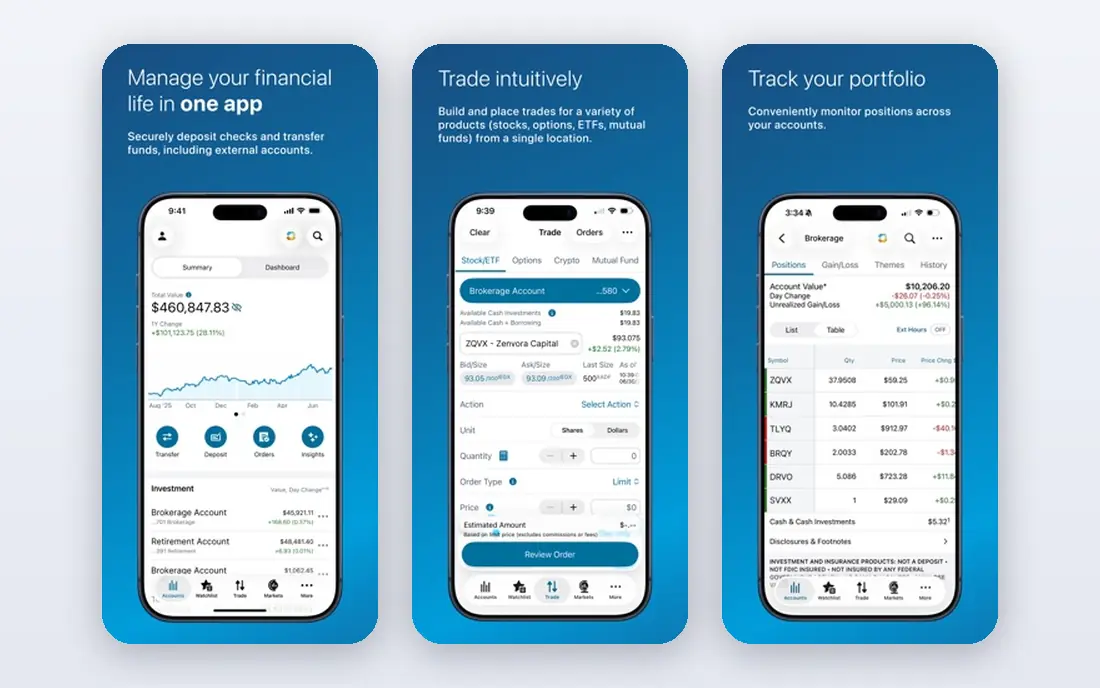
Schwab is a strong starting point for an investor who wants to study a convertible bond before buying it. Its bond screener, research reports, and fixed income pages give you a way to check maturity, coupon, conversion terms, and issuer details in one account. The thinkorswim platform, now part of Schwab, adds charting and options tools for investors who also trade around a position.
The honest catch is that bond markets are less transparent than stock markets. Two bonds from similar issuers can trade at different prices, and the spread matters. Schwab helps by showing inventory and yields, but you still need to read the prospectus and check the conversion price against the current share price before you commit money.
- $0 online stock and ETF trades
- Broad bond screening and research
- Branch and phone support
- Bond pricing can be hard to compare at a glance
- Some fixed income trades still carry fees
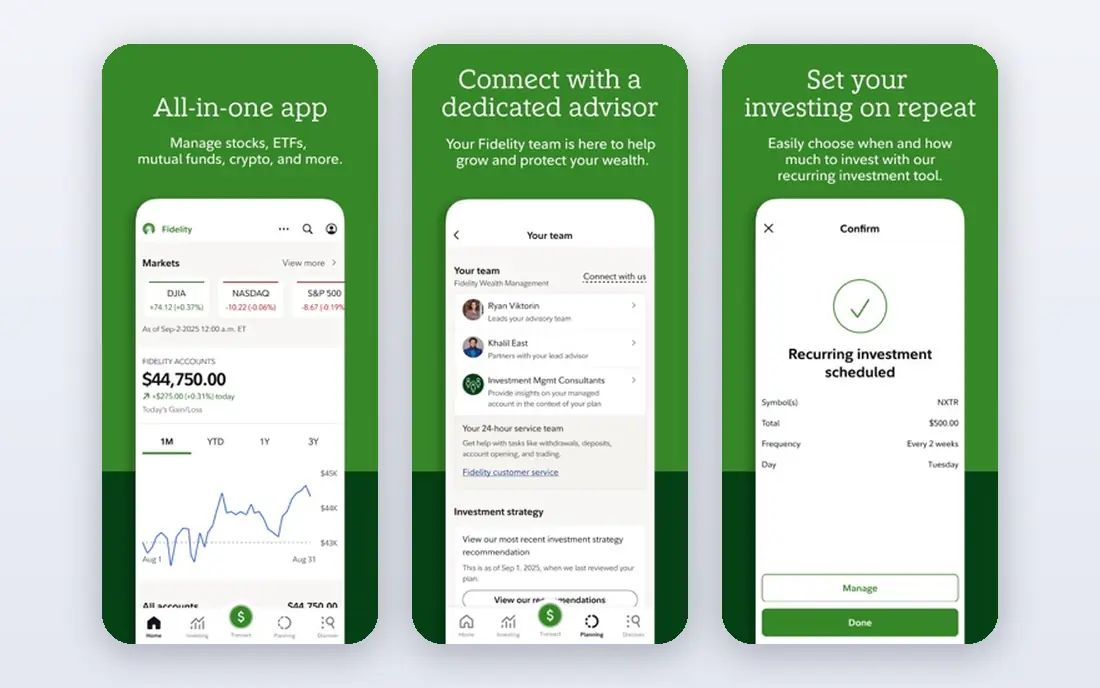
Fidelity stands out for fixed income research. Its bond pages, screeners, and alerts make it easier to follow new issues, compare yields, and set price alerts for securities you are watching. For a convertible bond, that research matters because the value depends on both the bond terms and the share price of the issuer.
The trade off is breadth. Fidelity offers so many tools, accounts, and fund choices that a new investor can feel lost on the first visit. Start with the fixed income screener and a short watchlist, and use the learning center to work through how conversion ratios and call provisions change the outcome.
- $0 online stock and ETF trades
- Detailed bond research and alerts
- Fractional shares
- The range of tools can feel crowded at first
- Some bond trades carry commissions
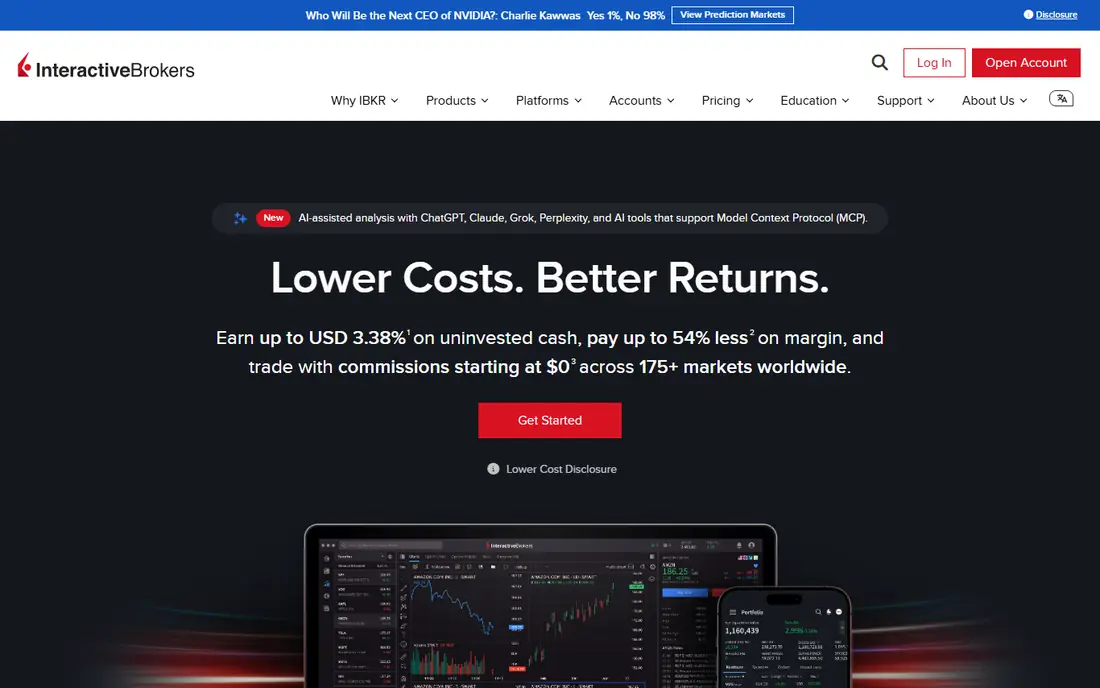
Interactive Brokers is built for traders who want depth. Its bond scanner covers a wide set of markets, and its workstation gives detailed data on price, yield, and issuer terms. If you already follow global issuers or you trade across asset classes, that breadth is hard to match at this price.
The weakness is ease of use. New investors may find the account setup, pricing tiers, and platform choices confusing. IBKR Lite offers $0 stock and ETF trades, while IBKR Pro uses per share pricing, so check which tier fits your trading pattern before you open an account.
- Broad market access across many countries
- Detailed bond data
- Low cost trading on IBKR Lite
- The platform can feel complex for beginners
- Support is thinner than at full service brokers
E*TRADE, part of Morgan Stanley, pairs a clean trading interface with a large education library. That combination helps an investor who is still learning how convertibles work, since the same account gives you screeners, webinars, and practice trading. Its mobile app is also easy to use for checking a position on the move.
The limit is fixed income depth. ETRADE offers bonds, but its bond research and inventory do not match the depth of Schwab or Fidelity. If convertibles are a core part of your plan, use ETRADE for execution and learning, and check a second source for issuer research before a large trade.
- $0 online stock and ETF trades
- Strong education library
- Paper trading for practice
- Bond inventory is narrower than at Schwab or Fidelity
- Options cost $0.65 per contract
Merrill Edge
Great for: Bank of America customers who want investing in one place
Merrill Edge fits investors who already bank with Bank of America and want cash, cards, and investing under one login. That link makes transfers simple, and the research tools cover stocks, funds, and bonds well enough for most buy and hold investors. Preferred Rewards tiers can also add benefits for larger linked balances.
The catch is that Merrill Edge is a generalist. Its bond screener and fixed income research are useful, but they are not the main reason to choose it. If you want the deepest convertible bond data, pair it with issuer filings and a specialist research source.
- $0 online stock and ETF trades
- Linked banking with Bank of America
- Solid research
- Bond tools are less detailed than at specialist fixed income brokers
- Best value needs a banking link
Public is a good fit for a newer investor who wants a simple app and fractional shares. Its design keeps the focus on the investment itself, and its fee pages are easy to read. For stocks and ETFs, that simplicity is a real strength, and it lowers the barrier to building a first portfolio.
For convertibles, Public is a weaker pick. Its fixed income range is limited, and it does not offer the bond screening depth of the larger brokers in this list. Use Public for the equity side of a portfolio, and use a full service broker for convertible bond research and trading.
- Clean mobile design
- Fractional shares
- Clear fee disclosure
- Fixed income offering is limited
- Fewer research tools than larger brokers
Robinhood wins on simplicity and cost. Its app is fast, its stock and ETF trades are $0, and fractional shares let you start small. For an investor who mainly trades stocks and wants to keep costs low, it is easy to see the appeal.
The problem for this topic is scope. Robinhood does not offer the same bond inventory or fixed income research as Schwab or Fidelity, so it is not a strong home for convertible bond investing. It can sit alongside a full service broker, but it should not be your only tool if convertibles matter to you.
- $0 stock and ETF trades
- Simple mobile app
- Fractional shares
- Bond access is limited
- Research tools are thinner than at larger brokers
Webull appeals to active traders who live in charts. Its mobile and desktop tools offer technical indicators, screeners, and paper trading without a platform fee, and its stock and ETF trades are $0. If you track the equity side of a convertible issuer closely, those tools are genuinely useful.
The honest limit is fixed income. Webull is built around stocks, ETFs, and options, not around bond desks and convertible inventory. Treat it as a companion for equity research and trading, and do your convertible bond work on a broker with a real fixed income offering.
- $0 stock and ETF trades
- Strong charting and technical tools
- Paper trading
- No broad bond desk for convertibles
- Research leans toward active stock trading
How we picked these
We compared official feature pages, pricing pages, bond sections, and public reviews for each platform. We kept only brokerages that exist and operate in October 2026, and we checked that each one offers stock and ETF trading with published commission terms. We gave extra weight to bond screening, issuer research, and clear fee disclosure, since those matter most for convertible securities.
What to check before you buy a convertible bond
Convertible bonds blend two risks. You take credit risk on the issuer, and you take equity risk through the conversion feature. Read the prospectus for the conversion price, conversion ratio, maturity, coupon, and call terms before you buy.
Start with the issuer, not the yield
A high coupon can hide a weak issuer. Check the company's debt, cash flow, and share price trend, and ask what happens to the bond if the shares fall and conversion never makes sense. A convertible from a solid issuer with a lower coupon can be a better fit than a high yield bond from a shaky one.
Compare the conversion terms
Work out the conversion price and how far the share price sits from it. A bond that converts well above the current share price behaves more like a regular bond, while one close to conversion behaves more like equity. Also check call provisions, since an issuer can call a bond early and cut your upside short.
Watch costs, liquidity, and size
Bond trades can carry commissions, spreads, and minimum sizes that stock traders never see. Check the all in cost on your broker's order preview, and avoid putting a large share of a portfolio into a single illiquid issue. This is general information only, not financial advice, and convertible values can fall as well as rise.
Frequently asked questions
Can I buy convertible bonds through a regular brokerage account?
Yes, at brokers with a bond desk you can buy corporate convertible bonds in a regular taxable account or an IRA, subject to availability and minimums. Availability varies by issue, so a specific bond may not be listed on every platform. Check the bond inventory and order preview before you assume a trade will go through.
Are convertible bonds safer than stocks?
Not always. A convertible bond ranks ahead of shares if an issuer fails, but it still carries credit risk and its price can fall. If the issuer struggles, the bond can lose value even though it sits higher in the capital structure. Treat convertibles as a hybrid, not as a safe version of a stock.
What is a conversion price?
The conversion price is the share price at which the bond converts into shares, based on the conversion ratio in the prospectus. If the share price rises above it, conversion becomes attractive. If the share price stays below it, the bond usually behaves more like a regular bond until maturity.
Do I need a specialist platform for convertibles?
No, but you need a broker with bond inventory and research. A general stock app may not list the bond you want or show its terms clearly. Schwab, Fidelity, and Interactive Brokers are stronger here because fixed income is a core part of their offering.
Can convertible bond prices fall?
Yes. Prices move with interest rates, credit quality, and the issuer share price. A rise in rates or a fall in the share price can push a convertible lower. Diversification and position size matter, and no platform can remove that market risk.
Sources
See where you really rank - block by block
ProMapRanker scans Google Maps across a grid of your service area. Simple monthly plans from $19, white-label on every plan.
Start freeKeep reading
 worlds best local seo company
8 Worlds Best Local SEO Companies for Map Pack Growth in 2026
Compare the worlds best local seo company options for Google Business Profile work, citations, reviews, and multi-location rankings and reporting in 2026.
Read → world's best web hosting company
World's Best Web Hosting Company in 2026
Searching for the world's best web hosting company? We compared 10 hosts on price, renewal rates, speed, and support to help you choose well today in 2026.
Read → who's got the best nanny tax services
Who's Got the Best Nanny Tax Services in 2026
We answer who's got the best nanny tax services, comparing full filing, back taxes, software, and pricing so families can handle nanny taxes correctly.
Read →