 ProMapRanker
Best Online Payment Service in 2026


Online-first businesses and developers · Pricing starts at: 2.9% + $0.30 per transaction
Key takeaways
- Stripe is the strongest choice for online-first businesses that want developer control, subscriptions and a wide range of payment methods in one place.
- PayPal can lift checkout completion because many buyers already have an account, but its wallet checkout rate is higher than a standard card rate.
- Square fits sellers who take payments in person and online, since one account covers both channels and one set of sales records.
- Flat-rate pricing is simple to budget, while interchange-plus pricing can cost less at higher volume, so compare your monthly sales before you commit.
- Fees and terms vary by provider, card type and country, so check the provider's current terms before you sign up or change provider.
Quick comparison
| Pick | Great for | Pricing starts at | Free tier | |
|---|---|---|---|---|
| Stripe | Online-first businesses and developers | 2.9% + $0.30 per transaction | No | Visit |
 PayPal | Checkout trust and wallet payments | 2.99% + $0.49 per transaction | No | Visit |
 Square | Selling in person and online | 2.9% + $0.30 per online transaction | Yes | Visit |
 Authorize.net | Established businesses with a merchant account | $25 per month | No | Visit |
 Adyen | Large and global commerce | See website | No | Visit |
 Braintree | Cards plus PayPal and Venmo in one checkout | See website | No | Visit |
 Checkout.com | Payment performance at scale | See website | No | Visit |
 Helcim | Transparent interchange-plus pricing | See website | No | Visit |
The best online payment services
We compared official feature pages, pricing pages, security documentation and public reviews for providers that accept online card payments in October 2026. The list below covers developer-led platforms, wallet-led checkout and gateway options for larger or established sellers.
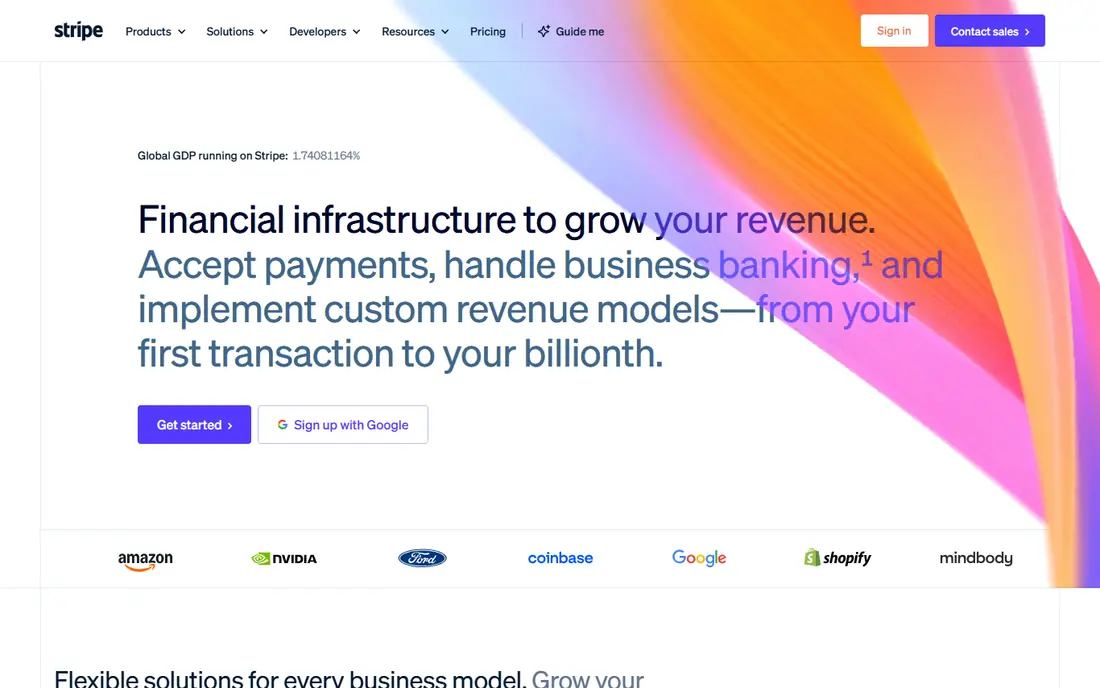
Stripe works well when your checkout is part of a website or app and you want control over how payment, subscriptions and invoicing work. Its hosted checkout, payment links and billing tools cover many cases without custom code, while the API covers cases that need a custom flow. The dashboard gives a clear view of payments, refunds, disputes and payouts, which helps a small team stay on top of cash flow without a separate reporting tool. The standard published rate for domestic cards is 2.9 percent plus 30 cents per successful transaction, with no setup or monthly fee on that plan. That clarity helps when you are starting out, because you can forecast cost per order with simple maths. At higher volume, ask about custom pricing or compare an interchange-plus provider, since a flat rate is not always the lowest cost once monthly sales grow.
- Strong developer tools and documentation
- Wide range of payment methods and currencies
- No monthly fee on standard pricing
- Flat-rate pricing can cost more at high volume
- Account reviews can delay payouts in some cases
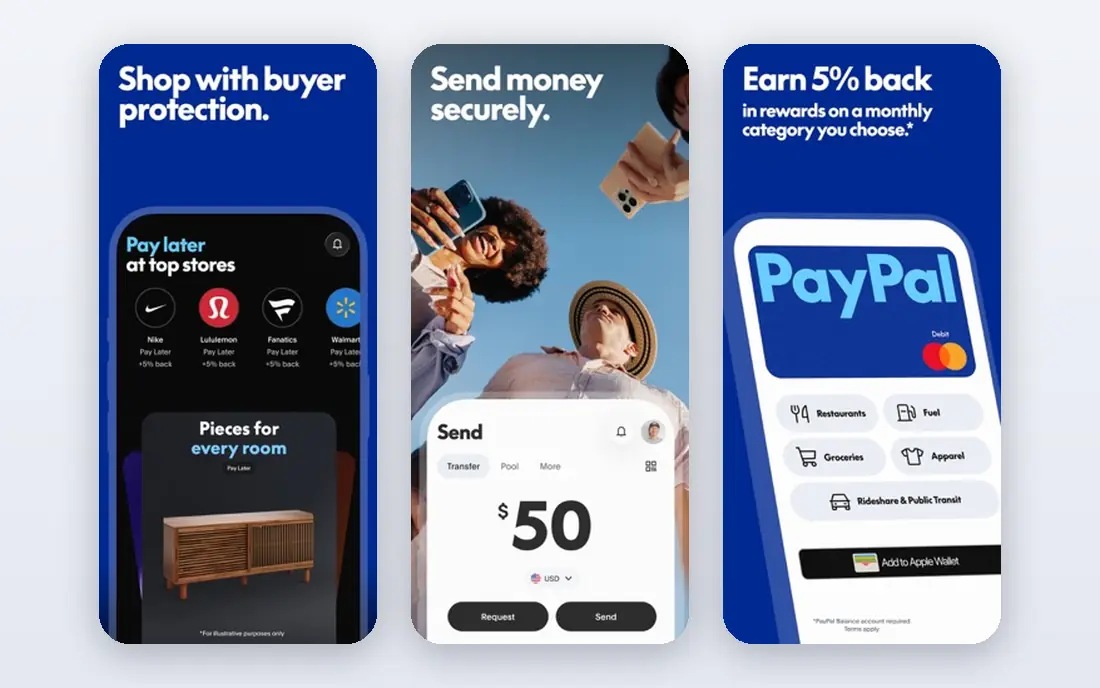
PayPal is a practical pick when conversion matters more than the lowest possible fee on each order. A buyer who can pay from a saved PayPal balance or linked account may complete checkout faster than a buyer who must type card details, and that familiarity can help smaller stores that lack a known brand. PayPal also provides seller tools for invoicing, payment links and subscriptions, so you do not need a separate billing product for simple cases. Pricing needs care, because PayPal has different rates for wallet payments and for standard card payments. The published card rate in recent comparisons is 2.99 percent plus 49 cents, while PayPal-branded checkout is higher at 3.49 percent plus 49 cents. There is no monthly fee on the standard plan, but disputes can carry a fee and international payments add cost. If you use PayPal, check the current fee schedule for your country and payment type, and keep clear refund and delivery records to help with disputes.
- Buyers often already have an account
- Fast setup with no monthly fee on standard plans
- Supports PayPal, Venmo and card payments in checkout
- Wallet checkout rate is higher than some card-only rates
- Dispute fees and account holds are common complaints

Square suits a business that sells at a market, in a shop and through a website, because one account can handle all three. The online store, payment links and point-of-sale tools share inventory and customer records, which cuts down on manual reconciliation. For a new seller, the free plan is a low-risk way to test online checkout before paying for a paid plan with a lower online rate. The published online rate is 2.9 percent plus 30 cents on paid plans, while the free plan online rate is higher at 3.3 percent plus 30 cents in recent comparisons. In-person rates are lower, which is one reason Square is popular with retailers. Square also offers hardware, staff tools and reporting, but those extras can add cost. Check which plan gives the online rate you need, and confirm hardware and software costs before you rely on a single headline rate.
- One system for in-person and online sales
- Free plan to start
- Inventory and sales reporting included
- Online rate on the free plan is higher than some rivals
- Account holds can occur after risk reviews
Authorize.net is a classic payment gateway rather than a full modern checkout brand, and that distinction matters. It connects your website to a payment processor and handles authorisation, capture, refunds and recurring payments. Businesses that already have a merchant account often choose it because it works with many shopping carts and processors, and because staff may already know how it works. The all-in-one published pricing in recent comparisons is 25 dollars per month plus 2.9 percent plus 30 cents per transaction, with a per-transaction fee on the gateway-only plan. That monthly fee makes it less attractive for very low sales, but it can make sense once volume is steady and you want a stable gateway. Setup takes more steps than Stripe or Square, and the interface is more functional than polished. If you already have a processor relationship, ask whether the gateway-only plan or the all-in-one plan fits your contract.
- Long-running gateway with wide platform support
- Works with an existing merchant account
- Fraud tools and recurring billing included
- Monthly fee applies on the all-in-one plan
- Setup can feel dated next to newer checkouts
Adyen is built for businesses that sell across countries and channels and need one platform to handle local payment methods, currencies and risk checks. It supports a wide range of cards, wallets and local methods, which can matter if a large share of orders comes from outside your home market. The platform also covers in-store payments and marketplace payouts, so a growing company can avoid adding a new provider for each channel. Pricing is not presented as one flat rate, because Adyen uses interchange-plus style pricing that depends on card type, scheme and region. Recent comparisons put the markup at around 0.60 percent plus about 13 cents plus interchange and scheme fees, but you should treat that as a guide only and request a quote for your mix. Adyen is not the simplest first provider for a small store, since onboarding and integration take more work. It fits best when global coverage and payment performance justify that effort.
- Strong global payment method coverage
- Interchange-plus style pricing for larger volumes
- Unified platform for online, in-store and marketplace payments
- Pricing is not a simple published flat rate
- Better suited to larger businesses than to new sellers
Braintree, owned by PayPal, gives developers a way to accept cards, PayPal and Venmo through one integration. That mix is useful for stores whose buyers split between card checkout and wallet checkout, because you do not need separate contracts for each method. The platform includes vault storage for repeat payments, subscription billing and fraud tools, which cover the core needs of many online sellers. Published comparisons list a card rate of around 2.59 percent plus 49 cents in some 2026 roundups, while other sources list 2.89 percent plus 29 cents, so do not budget from a roundup alone. Check the current Braintree pricing page for your region before you commit, since rates and terms can change. Braintree is a solid pick for a team with developer help that wants PayPal in the mix without managing two checkouts, but a non-technical seller may find Stripe or Square easier to set up.
- PayPal, Venmo and cards in one integration
- Developer tools and subscription billing
- No monthly fee on standard published plans in comparisons
- Support and onboarding can be slower than newer rivals
- Fewer modern no-code tools than Stripe or Square
Checkout.com targets online businesses that care about payment success rates, especially at scale or across borders. Its pitch centres on routing, fraud screening and data that help teams improve authorisation rates, rather than on a simple checkout button for a new store. If failed payments are a real cost for your business, that focus can matter more than a small difference in headline rate. Pricing is quote-based and depends on volume, regions and payment methods, so the site does not give one rate you can compare directly with Stripe. For a mid-size or large online business with developer resources, Checkout.com is worth a conversation alongside Adyen. For a new store, a flat-rate provider will be faster to launch and easier to budget.
- Focus on authorisation rates and payment performance
- Broad global coverage
- Tools for fraud, payouts and reporting
- Pricing is quote-based
- Not aimed at very small sellers
Helcim appeals to sellers who want to see what they pay for interchange and what they pay as markup, rather than a single blended rate. That transparency helps when you process enough volume for a lower markup to beat a flat rate, and it helps when you want to check whether a rate change came from card networks or from your provider. Helcim covers online payments, in-person payments and invoicing, so it can serve a business that sells through more than one channel. Recent comparisons describe Helcim pricing as interchange plus 0.50 percent plus 25 cents for online payments, with no monthly fee, but the exact markup can vary by plan and volume. Helcim is a good fit for a growing business that wants clearer pricing and is willing to learn how interchange works. It is less suited to a seller who wants one simple rate and no statement review.
- Interchange-plus pricing with no monthly fee on standard plans
- Clear breakdown of interchange and markup
- Tools for online, in-person and invoicing
- Interchange-plus bills are harder to read at first
- Less name recognition with buyers than PayPal
How we picked these
We started with providers that accept online payments in October 2026, have an official pricing or fee page, and are widely used by online sellers. We compared official feature pages, pricing pages, security documentation and public reviews, and we kept providers that cover different needs: developer-led checkout, wallet checkout, omnichannel selling, gateway use and global scale. Where sources disagreed on a rate, we used the most recent published comparison as a guide and marked quote-based pricing as See website, so you can verify the current rate before you commit. We did not claim hands-on testing that did not happen. We focused on facts you can check: published rates, monthly fees, payment methods, channel coverage and whether pricing is flat-rate, interchange-plus or quote-based. We left out providers that could not be verified as active for online payments in October 2026, and we left out ProMapRanker itself, since this list is about payment providers you can use.
What to check before you choose a payment provider
Match the fee model to your sales pattern
A flat rate is easy to forecast when sales are low or card mix is mixed. Interchange-plus can win when volume is higher and you can review statements. Work out cost on 100 orders at your average order value, using your real card mix if you have it, before you pick based on a headline rate alone.
Check checkout fit, not just price
A provider that supports the payment methods your buyers use, including wallets and local methods in your main markets, can be worth a slightly higher rate. Test the checkout on mobile, check how refunds and partial refunds work, and confirm how payouts are timed. A checkout that fails on mobile will cost more in lost sales than a small fee saving.
Read security and payout terms
Prefer providers with clear security practices, including encryption, tokenisation, fraud screening and PCI compliance support. Read how the provider handles disputes, chargebacks, reserves and account reviews, and keep delivery and refund records. Fees and terms vary, so check the provider's current terms, fee schedule and payout schedule before you sign up, and re-check them when you change plan or volume tier.
Frequently asked questions
What is the best online payment service for a small business?
The best online payment service for a small business depends on how you sell. Stripe fits online-first sellers who want control, Square fits sellers who also sell in person, and PayPal fits sellers who want buyer trust at checkout. Compare the rate for your payment mix, not just the headline rate, and pick the provider whose setup you can run without extra help.
What is the best payment processing software for subscriptions?
Stripe and Braintree both handle subscriptions well, with billing, retries and customer portals. Stripe has broader billing and tax tools for online businesses, while Braintree is useful when you also want PayPal and Venmo in the same checkout. Check retry rules, proration and invoice handling before you move an existing subscriber base.
Are the best online payment platforms free to start?
Many providers have no setup or monthly fee on standard plans, but none is free to use, since you pay per transaction. Square offers a free plan, while Stripe, PayPal and Braintree charge per transaction with no monthly fee on standard plans. Quote-based providers such as Adyen and Checkout.com may have platform or minimum fees, so ask for full costs.
How do online payment apps differ from payment gateways?
An online payment app or platform often bundles the gateway, processor and checkout tools in one account. A gateway such as Authorize.net mainly connects your store to a processor you already have. If you want one account and fast setup, a bundled platform is simpler. If you already have a merchant account, a gateway can be the right fit.
What fees should I watch besides the transaction rate?
Watch monthly fees, dispute and chargeback fees, international card fees, currency conversion fees and fees for extra products such as fraud tools or tax calculation. Also check refund rules, since some providers keep the original transaction fee when you refund an order. Read the current fee schedule and ask for a worked example at your volume.
Is PayPal or Stripe better for online payments?
Stripe is usually cheaper for standard card payments and stronger for subscriptions and developer control. PayPal can convert better when buyers already have an account and want wallet checkout. Many sellers use both, with Stripe as the main card route and PayPal as an extra checkout option, so buyers can choose.
Sources
See where you really rank - block by block
ProMapRanker scans Google Maps across a grid of your service area. Simple monthly plans from $19, white-label on every plan.
Start freeKeep reading
 zendesk alternatives
Best Zendesk Alternatives in 2026
Compare the best Zendesk alternatives in 2026, from budget help desks to AI-first support tools, with current pricing, free plans, and honest trade-offs.
Read → wordpress alternatives
Best WordPress Alternatives in 2026
Looking for the best WordPress alternatives? We compare 8 free and paid options for blogs, business sites, stores, and developer-led projects in 2026.
Read → which real estate company has the best training
Best Real Estate Company Training in 2026
Compare which real estate company has the best training, from Keller Williams and eXp to Compass and Coldwell Banker, by program, mentor, and fit in 2026.
Read →