 ProMapRanker
Best Omnichannel Marketing Platform in 2026

CRM plus marketing in one system · Pricing starts at: See website
Key takeaways
- HubSpot suits mid-size teams that want CRM plus marketing in one system, while Salesforce Marketing Cloud suits large enterprises with complex data needs.
- Klaviyo leads for e-commerce email and SMS, while Braze and Iterable lead for app-led, cross-channel lifecycle journeys.
- Bloomreach and Insider suit retail and e-commerce brands that need web personalization beside email and messaging.
- Most platforms in this list price by quote, so ask for pricing tied to contacts, messages, and channels before signing.
Quick comparison
| Pick | Great for | Pricing starts at | Free tier | |
|---|---|---|---|---|
| HubSpot Marketing Hub | CRM plus marketing in one system | See website | Yes | Visit |
 Salesforce Marketing Cloud | Large enterprise marketing | See website | No | Visit |
 Klaviyo | E-commerce email and SMS | $20 per month | Yes | Visit |
 Braze | App-led cross-channel journeys | See website | Free trial | Visit |
 Iterable | Complex lifecycle orchestration | See website | No | Visit |
 Bloomreach | Retail personalization and campaigns | See website | No | Visit |
 Insider | Retail and e-commerce across web and app | See website | No | Visit |
 Emarsys | Enterprise retail lifecycle marketing | See website | No | Visit |
 Adobe Marketo Engage | B2B and enterprise automation | See website | No | Visit |
The best omnichannel marketing platform
An omnichannel platform should keep a customer story consistent across email, SMS, push, web, and ads, even when the customer switches devices. The nine platforms below cover that job for different company sizes, from growing e-commerce stores to global enterprises with complex data stacks.
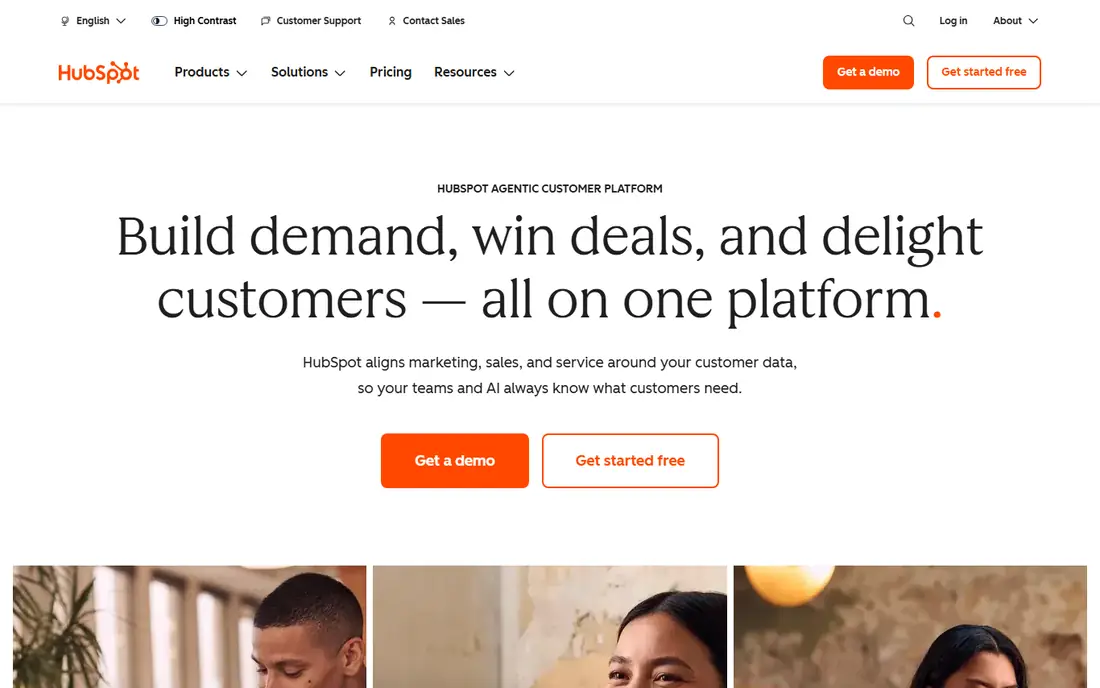
HubSpot appeals to teams that want marketing and sales data in one place. Contacts, deals, emails, landing pages, social posts, and automation live beside the CRM, so a campaign can react to a sales stage or a support ticket without a data project. Free tools cover basic CRM, forms, and email, which makes a pilot easy for small teams.
Growth changes the price. Contact tiers, marketing seats, and add-ons add up, and the deepest journey and reporting features require higher plans. Teams should model pricing at their real contact count, not the starter count. For mid-size companies that want one system for marketing and sales, HubSpot remains a practical, well-supported choice.
- CRM, email, landing pages, and automation in one system
- Free tools to start
- Strong reporting for mid-size teams
- Costs rise as contacts and features grow
- Advanced omnichannel features sit on higher tiers
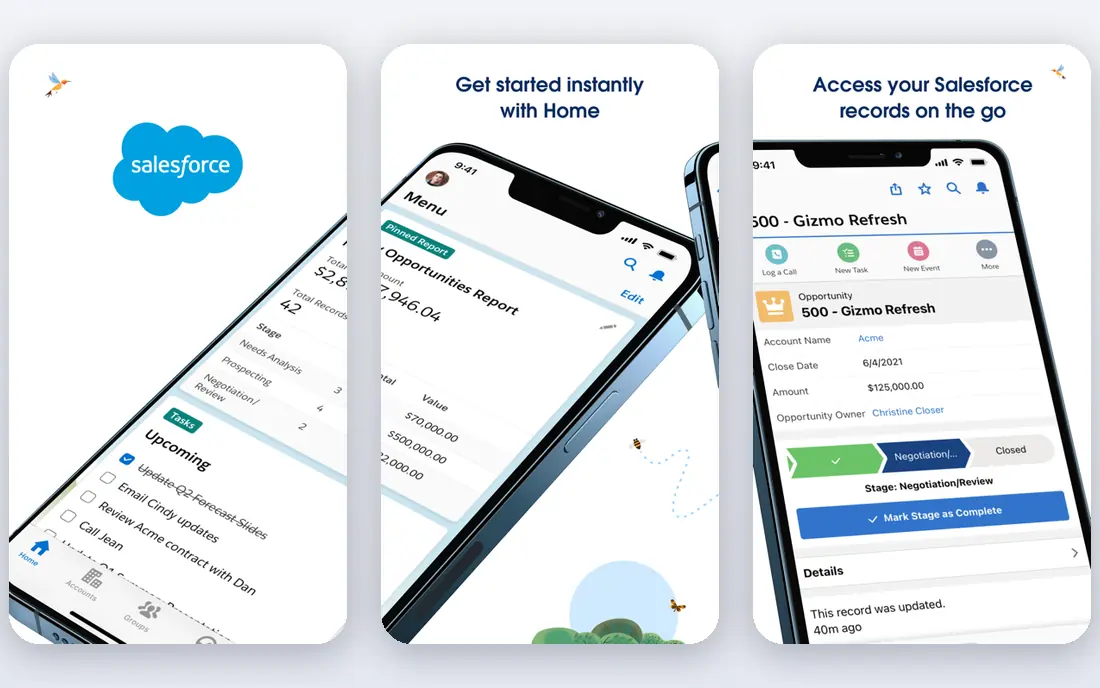
Salesforce Marketing Cloud suits large companies with complex customer data and many channels. Email, mobile push, SMS, web personalization, and advertising can draw on the same customer profile, and AI features help teams build segments and journeys at scale. Integration with Salesforce CRM keeps marketing, sales, and service views aligned.
The platform demands investment. Pricing comes by quote, implementation often needs specialists, and daily management suits a dedicated marketing operations team rather than a single marketer. Smaller companies will find HubSpot or Klaviyo faster and cheaper. Enterprises with scale and complexity will find the depth worth the effort.
- Deep personalization across email, mobile, web, and ads
- Strong data and AI features for large teams
- Integrates with Salesforce CRM
- Quoted pricing and complex implementation
- Needs dedicated staff to run well
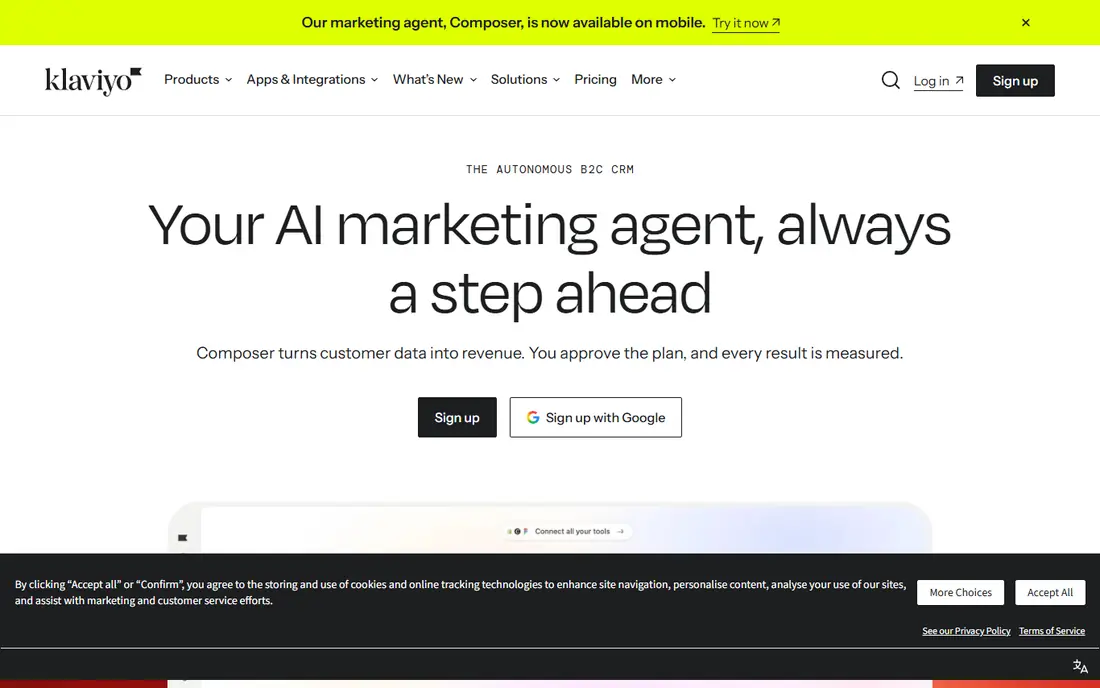
Klaviyo is the leading pick for many e-commerce brands that live on email and SMS. Prebuilt flows cover welcome series, abandoned carts, browse abandonment, post-purchase follow-up, and win-back, while store data powers product recommendations and segments. Integrations with major store platforms keep order, product, and customer data fresh.
Pricing needs care. Contact count and SMS volume drive cost, and a growing list can raise the bill faster than expected. Klaviyo also focuses on email and SMS more than app push or web personalization at the depth of Braze or Bloomreach. For stores where email and SMS drive repeat revenue, Klaviyo is hard to beat.
- Strong email and SMS for online stores
- Flows for welcome, cart, post-purchase, and win-back
- Deep store platform integrations
- Costs rise with contacts and SMS volume
- Email and SMS focus, not full app push depth
Braze returns here because omnichannel work for app-led brands starts with mobile. Its journey builder links push, in-app messages, email, and SMS into flows that react to app behavior, purchases, and lifecycle stage. Timing features help teams reach each user at a sensible moment rather than sending every message at once.
Small teams may find Braze heavy and pricey, since pricing comes by quote and setup takes planning. Large consumer brands with apps, websites, and stores will use more of it, and the trial or demo is the best way to test journey building with real data. For app-first omnichannel programs, Braze is a leading candidate.
- Strong journey building across push, in-app, email, and SMS
- Timing and personalization for large audiences
- Broad integrations
- Quoted pricing
- Heavier than small teams need
Iterable suits teams that run complex lifecycle programs across email, push, in-app, SMS, and other channels. Journeys can branch on behavior, purchase history, and catalog data, so messages reflect the exact product or plan a customer uses. That control helps growth teams test many paths without rebuilding campaigns each time.
The cost is complexity and price. Iterable quotes by contract, and teams should expect data mapping and campaign management work. A small team with a few campaigns will not use its depth. A larger team with many segments, constant testing, and a data owner will find the orchestration worth the investment.
- Deep journey logic across many channels
- Catalog and data features for personalization
- Strong for growth and enterprise teams
- Quoted pricing
- Implementation needs staff time and data work
Bloomreach targets retail and e-commerce brands that need personalization on the website as well as in messages. Customer data and campaign tools sit beside web personalization, so a product recommendation in an email can match what a shopper sees on site. Search and merchandising features add value for stores with large catalogs.
B2B service companies may find parts of Bloomreach less relevant, since its strengths lean retail. Pricing comes by quote, so teams should ask for a price tied to contacts, traffic, and channels. For retailers that want site and message personalization from one vendor, Bloomreach is a strong shortlist pick.
- Combines customer data, campaign orchestration, and web personalization
- Strong for retail and e-commerce
- Search and merchandising options for stores
- Quoted pricing
- Best value for retail, less so for B2B services
Insider serves retail and e-commerce brands that want one vendor across web, app, and messaging. Web personalization, push, in-app, email, and SMS campaigns can share segments and journey logic, which helps keep offers consistent when a shopper moves from phone to desktop. Templates for cart recovery, product recommendations, and win-back speed up launch.
As with other enterprise platforms, pricing comes by quote and integration work matters. Teams should check how Insider connects to their store, app, and customer data before committing, since data quality decides how personal campaigns can be. For mid-size and large retailers, Insider offers a broad, focused alternative to general suites.
- Personalization across web, app, email, SMS, and push
- Journey builder for retail use cases
- Templates for common e-commerce flows
- Quoted pricing
- Setup and data integration take planning
Emarsys, part of the SAP family, focuses on enterprise retail lifecycle marketing. Email, SMS, mobile push, and advertising campaigns can run from shared customer data, with AI-assisted segments and product recommendations for common retail journeys. Brands already using SAP systems gain a natural integration path.
Smaller retailers may find Emarsys heavy, since pricing is quoted and setup suits larger teams. The platform rewards companies with large catalogs, many segments, and steady campaign volume. For enterprise retailers that want lifecycle depth inside a SAP-aligned stack, Emarsys deserves a place on the shortlist.
- Lifecycle marketing for retail with email, SMS, push, and ads
- AI-assisted segmentation and product recommendations
- SAP ecosystem links
- Quoted pricing
- Enterprise focus and implementation effort
Adobe Marketo Engage leads for B2B and enterprise automation. Lead scoring, nurturing, account-based programs, and multi-touch attribution help long sales cycles stay organized across email, web, mobile, and ads. Integration with CRM systems keeps marketing and sales aligned on which accounts matter most.
The learning curve is steep, and Marketo rewards teams with marketing operations expertise. Pricing comes by quote, and smaller teams may find HubSpot easier to run. For B2B companies with complex buying groups and long cycles, Marketo offers depth that simpler tools cannot match.
- Strong B2B automation, lead scoring, and account-based marketing
- Email, web, mobile, and ads in one platform
- Deep analytics and attribution
- Quoted pricing
- Steep learning curve and admin needs
How we picked these
We compared official feature pages, pricing pages, and platform documentation for omnichannel marketing tools live in October 2026, and we favored tools with real multi-channel orchestration, not email-only platforms. We marked pricing as See website where vendors price by quote, and we used published Klaviyo entry pricing where the vendor lists it. We did not claim hands-on testing, and we judged each tool by its public docs and pricing.
How to choose an omnichannel marketing platform
Start with your main revenue channel. E-commerce stores should shortlist Klaviyo, Bloomreach, and Insider. App-led brands should shortlist Braze and Iterable. Mid-size B2B and B2C companies should shortlist HubSpot. Large enterprises should shortlist Salesforce Marketing Cloud, Marketo Engage, and Emarsys. That channel-first filter cuts a long list to three realistic options fast.
Check data, consent, and channel costs
Ask how the platform unifies customer data, handles consent and opt-outs across channels, and prices contacts, messages, and SMS separately. A platform that cannot merge web, app, and store data will produce duplicate or conflicting messages, which is the opposite of omnichannel. Also confirm who owns implementation, since enterprise tools need staff time that small teams may not have.
Pilot one journey end to end
Build one real journey, such as welcome to first purchase, across at least three channels during a trial or demo. Test segmentation, personalization, timing, reporting, and opt-out handling on real devices. A journey that works end to end in a pilot tells you more than a feature checklist, and it exposes data gaps before you sign a contract.
Frequently asked questions
What is the best omnichannel marketing platform?
HubSpot suits mid-size teams, Klaviyo suits e-commerce, Braze and Iterable suit app-led brands, and Salesforce Marketing Cloud suits large enterprises. The best platform depends on company size, main channel, and data setup, so pilot one journey before buying.
What are the best omnichannel marketing tools for e-commerce?
Klaviyo, Bloomreach, Insider, and Emarsys lead for e-commerce, with Klaviyo strongest for email and SMS, Bloomreach and Insider strongest for web personalization plus messaging, and Emarsys strongest for enterprise retail lifecycles.
What are the best omnichannel marketing platforms for small businesses?
HubSpot free tools and Klaviyo free and low-cost plans suit small businesses best, since enterprise platforms price by quote and need more staff time. Start with email plus one more channel, then add channels as list size and revenue grow.
What is the best omnichannel marketing platform software for B2B?
Adobe Marketo Engage and HubSpot Marketing Hub lead for B2B, with Marketo strongest for complex lead scoring and account-based programs, and HubSpot strongest for teams that want CRM plus marketing in one easier system.
What are the best tools for omnichannel marketing measurement?
Salesforce Marketing Cloud, Marketo Engage, HubSpot, and Bloomreach all offer cross-channel reporting and attribution, but measurement quality depends on clean data and consistent tracking. Check how each platform attributes revenue across email, SMS, push, web, and ads before choosing.
Do omnichannel platforms offer free plans?
Some do, including HubSpot free tools and Klaviyo free plan, while most enterprise platforms offer demos or trials rather than free plans. Confirm contact limits, channel limits, and message costs on the vendor site, since free tiers rarely cover full omnichannel use.
Sources
See where you really rank - block by block
ProMapRanker scans Google Maps across a grid of your service area. Simple monthly plans from $19, white-label on every plan.
Start freeKeep reading
 outreach alternatives
Outreach Alternatives in 2026
Compare outreach alternatives for 2026, from Salesloft and Apollo to HubSpot and Lemlist, with pricing, channels, features, limits, and honest trade-offs.
Read → best web conference tools
Best Web Conference Tools in 2026
Compare the best web conference tools for meetings, webinars and team calls, with current pricing, free plans and honest limits for each option here today.
Read → best voice cloning tools
Best Voice Cloning Tools in 2026
Compare the best voice cloning tools in 2026, from ElevenLabs and Descript to Resemble and Cartesia, with consent rules, pricing, licenses, and limits.
Read →