 ProMapRanker
Best OKR Software in 2026: 9 Options Compared


people teams that run reviews plus goals · Pricing starts at: $8 per month
Key takeaways
- Perdoo and Weekdone are the best free starting points, with free plans for up to 5 and up to 3 users in published guides.
- Tability suits remote teams that want fast weekly updates, while Mooncamp suits growing teams that want flexible OKR setup.
- Lattice, Betterworks, and 15Five suit teams that want OKRs inside a wider performance platform, but each has a minimum or bundle cost to check.
- Workboard and Profit.co suit enterprise strategy programs, while small teams should start with a dedicated tool.
- The best OKR tool is the one managers actually open for weekly check-ins, so test the check-in flow before you test reporting.
Quick comparison
| Pick | Great for | Pricing starts at | Free tier | |
|---|---|---|---|---|
| Lattice | people teams that run reviews plus goals | $8 per month | No | Visit |
 Workboard | enterprises that need strategy execution at scale | See website | No | Visit |
 Betterworks | teams that want goals plus performance management | $8 per month | Free trial | Visit |
 Weekdone | small teams that run weekly reports | See website | Yes | Visit |
 Perdoo | teams new to OKRs that want a dedicated tool | See website | Yes | Visit |
 Mooncamp | teams that want flexible OKR setup | See website | Free trial | Visit |
 Profit.co | enterprises that want structured OKR programs | See website | No | Visit |
 Tability | remote teams that want fast weekly updates | $6 per month | Free trial | Visit |
 15Five | teams that want goals tied to reviews and engagement | $11 per month | Free trial | Visit |
The best OKR software
We compared OKR tools on goal hierarchy, weekly check-ins, progress views, integrations, and price, using vendor pages, pricing pages, and public reviews.
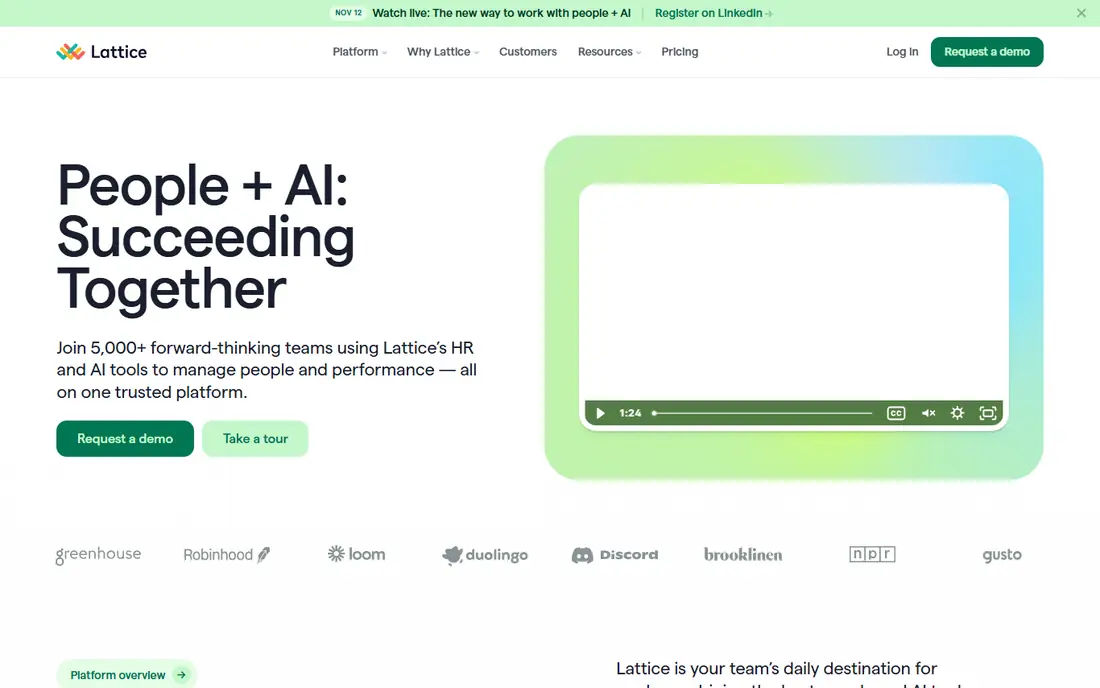
For HR and people teams, Lattice is a practical starting point because it keeps the core workflow in one place. It is built around OKRs tied to performance reviews and feedback. The design favours routine use over occasional use, which matters when a tool only helps if people return to it every week. What stands out in Lattice is a single people platform for goals, reviews, and growth. It also helps a team keep one version of the truth, instead of keeping the same detail in email, chat, and a spreadsheet at the same time. The catch is check the annual minimum before a trial for a small team. A short trial with real data gives a clearer answer than a feature list alone.
- Goals and OKRs module at 8 dollars per seat a month in published guides, with a 4,000 dollar annual minimum
- Reviews, feedback, and engagement in the same platform
- Annual minimum rules it out for very small teams
- Goals module is part of a wider people platform, not a standalone tool
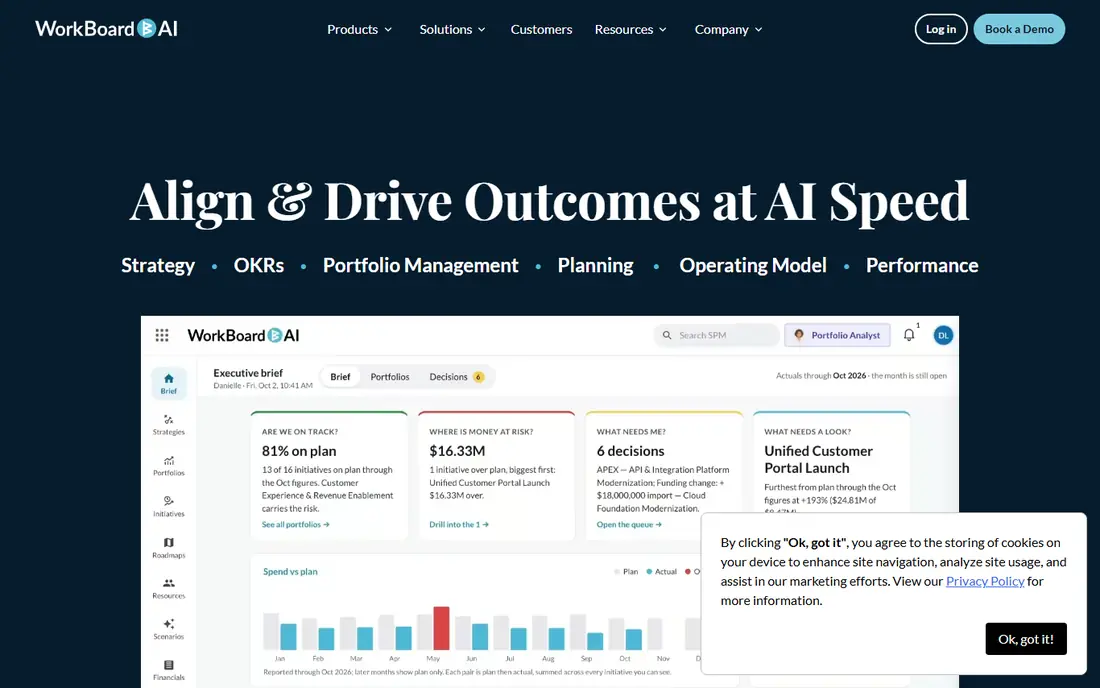
If enterprise strategy teams need a tool that is easy to explain to a new team member, Workboard deserves a close look. It is built around enterprise OKR and strategy execution. The design favours routine use over occasional use, which matters when a tool only helps if people return to it every week. What stands out in Workboard is scorecards that link team work to company outcomes. It also helps a team keep one version of the truth, instead of keeping the same detail in email, chat, and a spreadsheet at the same time. The catch is small teams will find it larger and costlier than dedicated tools. A short trial with real data gives a clearer answer than a feature list alone.
- Enterprise strategy execution with OKRs, scorecards, and team alignment
- Strong reporting for leadership
- Integrations for large estates
- Quote-only pricing in published guides
- Setup and onboarding suit larger organisations
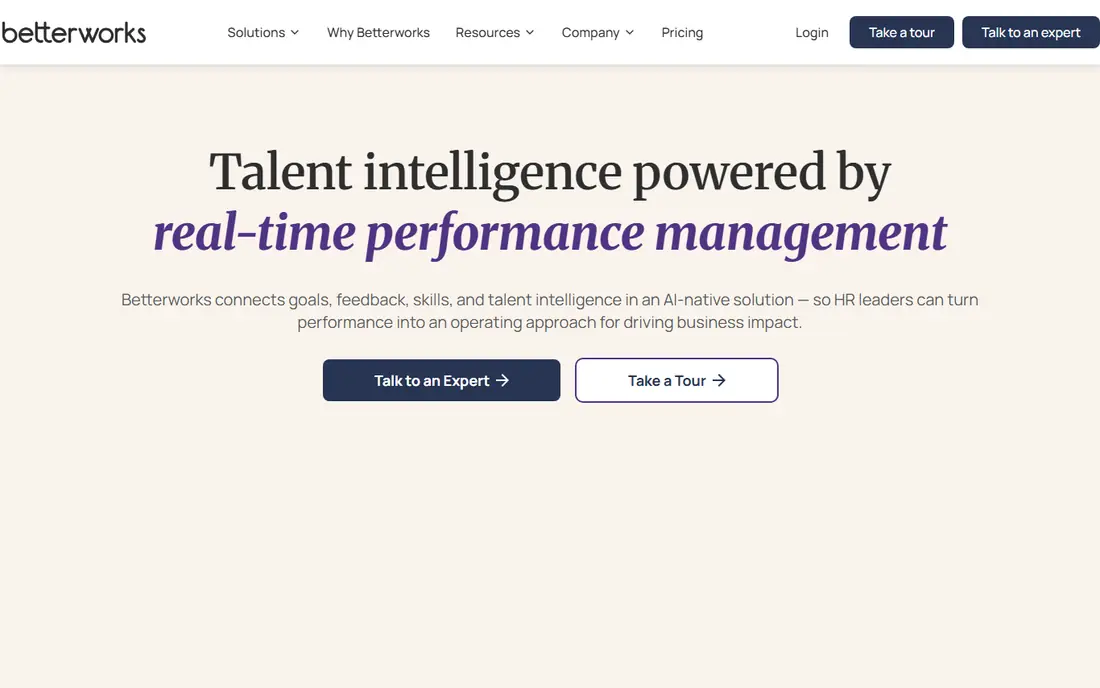
A good fit when mid-size people teams want depth without a long setup, Betterworks focuses on the work that matters most. It is built around OKRs inside a performance platform. The design favours routine use over occasional use, which matters when a tool only helps if people return to it every week. What stands out in Betterworks is check-ins that link goals to regular manager conversations. It also helps a team keep one version of the truth, instead of keeping the same detail in email, chat, and a spreadsheet at the same time. The catch is teams that only need OKRs may pay for extra performance features. A short trial with real data gives a clearer answer than a feature list alone.
- Goals plus performance, feedback, and check-ins from 8 dollars a user a month in published guides
- Clear progress views for managers
- Some performance depth sits in higher tiers
- Pricing and packaging should be confirmed for your headcount
Teams that value clarity over a long feature list often settle on Weekdone after a short trial. It is built around weekly OKR check-ins and reports for small teams. The design favours routine use over occasional use, which matters when a tool only helps if people return to it every week. What stands out in Weekdone is a weekly rhythm that keeps goals visible without long meetings. It also helps a team keep one version of the truth, instead of keeping the same detail in email, chat, and a spreadsheet at the same time. The catch is larger teams may need deeper hierarchy and reporting. A short trial with real data gives a clearer answer than a feature list alone.
- Free plan for up to 3 users in published guides
- Weekly reports and check-ins that suit a simple OKR rhythm
- Coaching included in some plans
- Per-user price falls with headcount and is shown by a calculator, so budgeting needs a check
- Feature depth is lighter than enterprise tools
When teams new to OKRs need to move from scattered files to one shared record, Perdoo makes that shift plain. It is built around dedicated OKR tracking with clear goal hierarchy. The design favours routine use over occasional use, which matters when a tool only helps if people return to it every week. What stands out in Perdoo is a clean separation between OKRs and daily KPIs. It also helps a team keep one version of the truth, instead of keeping the same detail in email, chat, and a spreadsheet at the same time. The catch is teams that want goals inside a performance suite may prefer Lattice or Betterworks. A short trial with real data gives a clearer answer than a feature list alone.
- Free plan for up to 5 users in published guides
- Dedicated OKR tool that keeps OKRs separate from operational KPIs
- Clear hierarchy views
- Paid plans are priced in euros in published guides, so dollar budgets need conversion
- View-only seats are priced separately in some plans
For growing teams who want a clear daily routine, Mooncamp puts the next step in front of the user. It is built around flexible OKR management with check-ins. The design favours routine use over occasional use, which matters when a tool only helps if people return to it every week. What stands out in Mooncamp is a setup that adapts to different team structures. It also helps a team keep one version of the truth, instead of keeping the same detail in email, chat, and a spreadsheet at the same time. The catch is solo users and two-person teams should look at Perdoo or Weekdone first. A short trial with real data gives a clearer answer than a feature list alone.
- Flexible OKR setup with check-ins and progress views
- Essential and Professional tiers in published guides
- Five-seat minimum in published guides
- Five-seat minimum rules out very small teams
- Pricing in euros in published guides
A steady choice for enterprise program teams, Profit.co balances useful controls with a layout that stays readable. It is built around structured OKR programs for larger organisations. The design favours routine use over occasional use, which matters when a tool only helps if people return to it every week. What stands out in Profit.co is a formal program structure for quarterly execution. It also helps a team keep one version of the truth, instead of keeping the same detail in email, chat, and a spreadsheet at the same time. The catch is small teams cannot budget from a public price. A short trial with real data gives a clearer answer than a feature list alone.
- Structured OKR and strategy execution programs
- Task and KPI links
- Enterprise reporting and controls
- Quote-only and enterprise-only in published guides, with no free plan
- Setup suits a formal program, not a casual trial
If remote teams care most about follow-through, Tability is built to turn a plan into visible progress. It is built around fast OKR check-ins for remote teams. The design favours routine use over occasional use, which matters when a tool only helps if people return to it every week. What stands out in Tability is weekly updates that take minutes, not a long meeting. It also helps a team keep one version of the truth, instead of keeping the same detail in email, chat, and a spreadsheet at the same time. The catch is teams that need deep task management should pair it with a project tool. A short trial with real data gives a clearer answer than a feature list alone.
- Basic plan at 6 dollars per user a month in published guides
- Fast weekly updates and check-ins for remote teams
- Read-only seats in some plans
- No free plan, only a 14 day trial in published guides
- Task depth is lighter than project tools
For people-led teams who want fewer tools and fewer tabs, 15Five covers the main jobs in one account. It is built around OKRs tied to performance and engagement. The design favours routine use over occasional use, which matters when a tool only helps if people return to it every week. What stands out in 15Five is a weekly check-in rhythm linked to manager reviews. It also helps a team keep one version of the truth, instead of keeping the same detail in email, chat, and a spreadsheet at the same time. The catch is teams that only need OKRs may find the bundle larger than needed. A short trial with real data gives a clearer answer than a feature list alone.
- OKRs in the Perform plan at 11 dollars per user a month in published guides
- Check-ins, reviews, and engagement in one platform
- Manager tools for regular conversations
- OKRs are not in the cheaper Engage plan in published guides
- Cost rises for larger teams
How we picked these
We compared official feature pages, pricing pages, app store listings, privacy policies, and public reviews for each product in this guide. We checked whether each product exists and works in October 2026, whether it fits the topic, and whether its price, free tier, and plan limits could be confirmed from a vendor source or a recent published guide. We did not claim hands-on testing, and we did not invent awards, user counts, ratings, or features. Where a price could not be confirmed from a vendor page at the time of writing, we wrote See website, so a reader can check the live price before buying. Prices and plan limits change, so the vendor page remains the final source.
How to pick OKR software that teams actually update
OKR software fails when updates take too long, when goals are hidden in a separate tool, or when no one owns the weekly check-in. Pick for update speed first, then for hierarchy and reporting.
Test the weekly check-in, not just the dashboard
Ask a manager and two team members to update a goal, add a comment, and mark progress. If that takes more than a few minutes, updates will slip. Tability, Weekdone, and Perdoo score well here for small teams, because their check-in flow is short.
Match the tool type to your team size
Dedicated tools such as Perdoo, Weekdone, Mooncamp, and Tability suit teams that only need OKRs. Performance platforms such as Lattice, Betterworks, and 15Five suit teams that already run reviews. Enterprise tools such as Workboard and Profit.co suit formal strategy programs.
Check minimums, seats, and integrations
Confirm annual minimums, view-only seat pricing, and integrations with Slack, Teams, and your project tools. A low per-seat price can still cost more than expected when a minimum applies, as with Lattice in published guides.
Frequently asked questions
What is the best OKR software overall?
Perdoo is a strong dedicated pick for teams new to OKRs, Tability suits remote teams that want fast updates, and Lattice suits people teams that already run reviews. The best pick follows team size, check-in habit, and whether you need a wider performance platform.
What are the best OKR tools for small teams?
Perdoo, with a free plan for up to 5 users in published guides, and Weekdone, with a free plan for up to 3 users, are the best free starts. Tability at 6 dollars per user a month is a low-cost paid step when a team outgrows a free tier.
What is the best OKR app for remote teams?
Tability suits remote teams in this list, because weekly updates are fast and check-ins are built for async work. Mooncamp and Perdoo also suit remote teams, with clear hierarchy views and check-in flows.
What is the best OKR management platform for enterprises?
Workboard and Profit.co suit enterprise strategy execution, with scorecards, hierarchy, and formal program controls. Lattice and Betterworks also suit larger people teams that want goals inside performance management.
What is the best OKR SaaS tool for tracking progress?
Tability, Weekdone, and Perdoo all offer clear progress views and weekly check-ins for tracking. For progress tied to reviews, Lattice, Betterworks, and 15Five add performance context to the same goal data.
Do I need OKR software, or will a spreadsheet work?
A spreadsheet works for a very small team for one quarter, but updates, ownership, and history become hard as teams grow. OKR software helps when weekly check-ins, visibility, and progress history matter across more than one team.
Sources
See where you really rank - block by block
ProMapRanker scans Google Maps across a grid of your service area. Simple monthly plans from $19, white-label on every plan.
Start freeKeep reading
 zendesk alternatives
Best Zendesk Alternatives in 2026
Compare the best Zendesk alternatives in 2026, from budget help desks to AI-first support tools, with current pricing, free plans, and honest trade-offs.
Read → wordpress alternatives
Best WordPress Alternatives in 2026
Looking for the best WordPress alternatives? We compare 8 free and paid options for blogs, business sites, stores, and developer-led projects in 2026.
Read → which real estate company has the best training
Best Real Estate Company Training in 2026
Compare which real estate company has the best training, from Keller Williams and eXp to Compass and Coldwell Banker, by program, mentor, and fit in 2026.
Read →