 ProMapRanker
Best Oil and Gas Accounting Software in 2026


Independent operators wanting proven upstream accounting · Pricing starts at: See website
Key takeaways
- PakEnergy, Quorum, W Energy and IFS (P2) cover the core upstream accounting jobs: joint interest billing, revenue distribution and production accounting.
- WolfePak now sits inside PakEnergy, and P2 Energy Solutions now operates under IFS, so buyers should confirm the current product name and support route.
- Generic accounting tools handle invoices and ledgers but not division orders, suspense or joint interest billing: that gap is why niche tools exist.
- This is general information only, not accounting or tax advice: confirm revenue, royalty and tax treatment with a qualified adviser.
Quick comparison
| Pick | Great for | Pricing starts at | Free tier | |
|---|---|---|---|---|
| PakEnergy Accounting | Independent operators wanting proven upstream accounting | See website | No | Visit |
 Quorum | Enterprises wanting operations, land and accounting together | See website | No | Visit |
 W Energy | Operators wanting integrated accounting and land | See website | No | Visit |
 IFS P2 Energy Solutions | Upstream companies on the former P2 platform | See website | No | Visit |
 Enertia | Operators wanting an integrated ERP for oil and gas | See website | No | Visit |
 SherWare | Small operators wanting simpler oil and gas accounting | See website | No | Visit |
 PetroLedger | Small to mid-size operators wanting focused accounting | See website | No | Visit |
 Greasebook | Field teams wanting production data that feeds accounting | See website | No | Visit |
The best oil and gas accounting software
We compared accounting systems built for upstream oil and gas: general ledger, accounts payable and receivable, joint interest billing, revenue distribution, production accounting and land records, rather than generic bookkeeping tools.
PakEnergy Accounting
Great for: Independent operators wanting proven upstream accounting
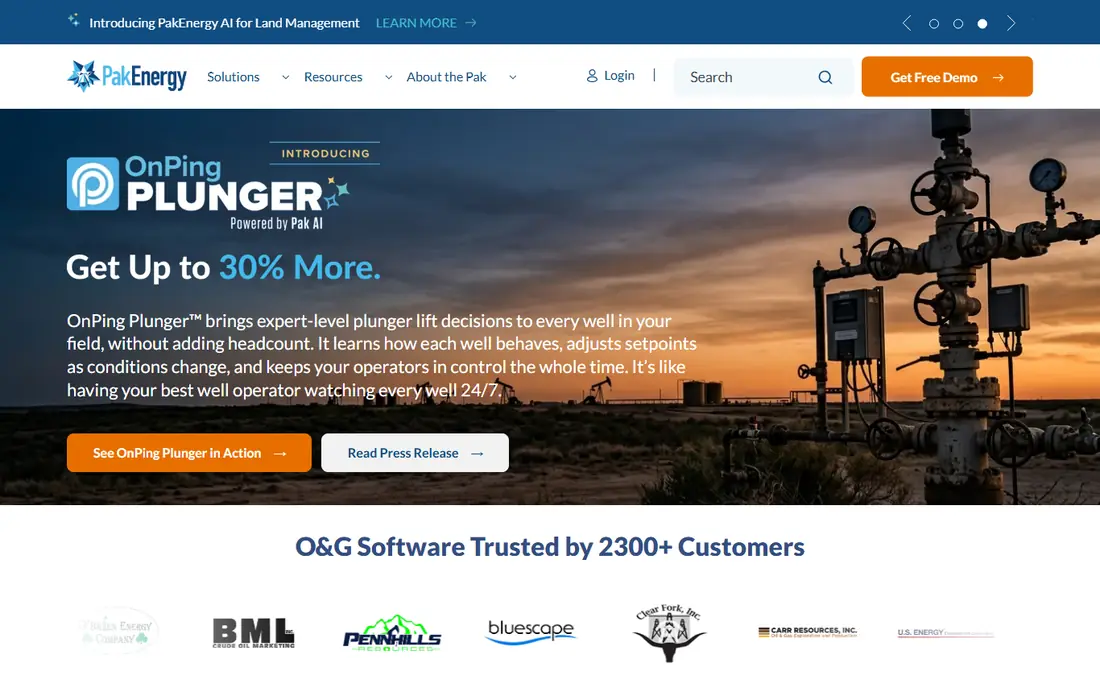
PakEnergy Accounting, formerly WolfePak, is the most widely used name among independent US operators, and its strength is the core accounting engine. It automates joint interest billing, revenue distribution, suspense handling, accounts payable and receivable, bank reconciliation and reporting, with modules for land, production, ticketing and crude purchasing that can be added as an operator grows. The wolfepak.com site now serves PakEnergy content, so buyers should use the PakEnergy name and site.
The interface reflects its long history, and new staff without oilfield accounting experience face a learning curve. Pricing is quote based by users, wells and modules, so a small operator should get a scoped quote rather than assuming a flat rate. For an independent operator that needs accounting it can trust for JIB and revenue work, PakEnergy remains the default shortlist entry.
- Long track record with independents
- Combined revenue distribution and joint interest billing
- Modules scale from small to large operators
- Pricing is quote only
- Interface feels dated next to cloud-native tools
- Complexity grows with module count
Quorum
Great for: Enterprises wanting operations, land and accounting together

Quorum serves larger operators and energy companies with software spanning upstream operations, land, accounting and midstream workflows. For an enterprise, keeping land records, production data and accounting in one vendor relationship reduces reconciliation between systems and gives management a single view of wells, interests and revenue.
That breadth is also the barrier for a small operator. Quorum is enterprise priced and enterprise implemented, and a company with a few dozen wells will rarely need its full scope. Quorum fits when portfolio complexity, land depth or enterprise reporting justifies a platform investment, not when the need is straightforward JIB and revenue for a small well count.
- Enterprise breadth across operations, land and accounting
- Suits large operators and midstream companies
- Strong for complex portfolios
- Pricing is quote only and enterprise sized
- Implementation is a major project
- Smaller operators may find it more system than they need
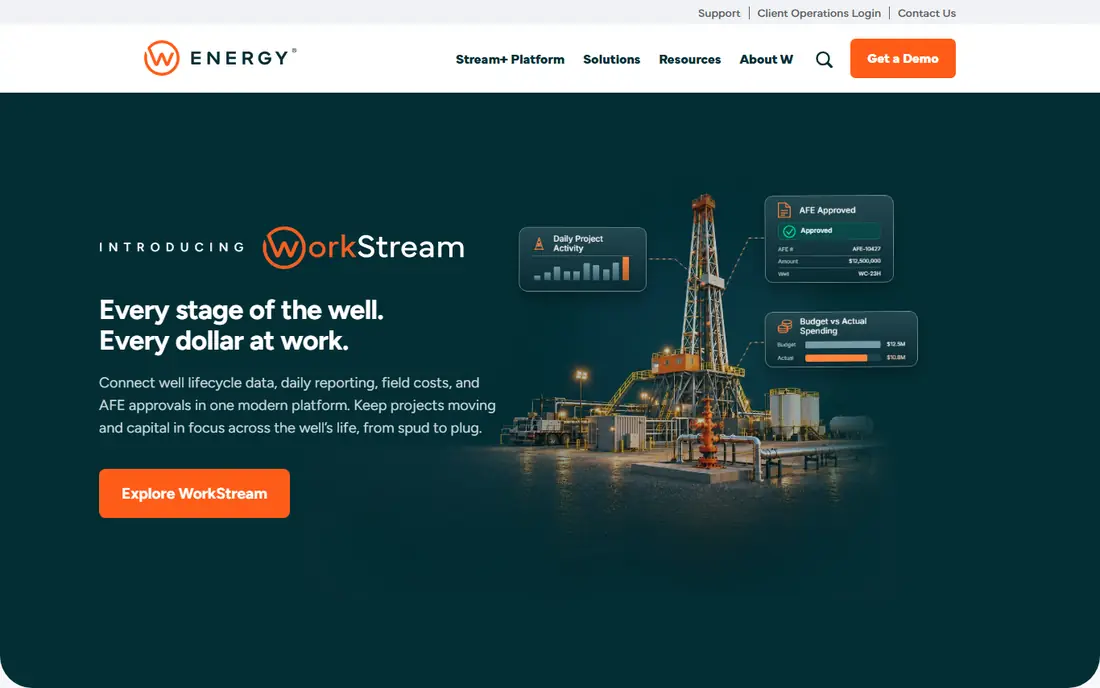
W Energy offers an integrated platform for upstream and midstream companies, covering accounting, land, production and related workflows in one system. Operators that want revenue, JIB, land records and production data to reconcile without stitching separate tools together find that integration its main appeal, and cloud delivery avoids running the system on local servers.
Pricing is quote based, and the platform's breadth means a buyer should confirm exactly which modules a quote includes. W Energy suits an operator that wants an integrated system rather than a single accounting module, and that is ready to implement land and production alongside accounting.
- Integrated accounting, land and production in one platform
- Built for upstream and midstream operators
- Cloud delivery
- Pricing is quote only
- Implementation needs planning
- Smaller teams should confirm module scope in the quote
IFS P2 Energy Solutions
Great for: Upstream companies on the former P2 platform
P2 Energy Solutions, known for upstream accounting, land and production tools, now operates under IFS following its acquisition, and its site reflects the combined IFS upstream identity. Existing P2 customers and new enterprise buyers should confirm product naming, support routes and roadmap directly with IFS, since the P2 name now sits inside a larger vendor.
The platform's depth suits operators with significant well counts, land complexity or enterprise reporting needs. Smaller independents may find PakEnergy or SherWare a closer fit on price and simplicity. IFS P2 fits best when the buyer values the P2 platform's history and wants it inside an IFS enterprise relationship.
- Established upstream accounting and land platform
- Now under IFS ownership
- Suits operators with P2 history or enterprise needs
- Pricing is quote only
- Branding and roadmap need confirming under IFS
- Smaller operators may find it enterprise sized
Enertia provides an integrated ERP for upstream oil and gas, covering accounting, revenue distribution, joint interest billing, land, production and document management in one system. Operators that want one vendor for the back office, rather than separate accounting, land and production tools, value that single-system approach for reconciliation and reporting.
An ERP is a bigger commitment than a standalone accounting module, with implementation, training and data migration to plan. Enertia suits a growing operator that already feels the cost of reconciling separate systems, rather than a startup with a handful of wells and simple accounting needs.
- Integrated ERP covering accounting, land, production and revenue
- Built specifically for upstream oil and gas
- Single system for many workflows
- Pricing is quote only
- ERP implementation takes time
- Smaller operators may pay for breadth they do not use
SherWare targets small operators, investors and mineral owners who need real oil and gas accounting without enterprise complexity. It covers revenue distribution, joint interest billing, production and reporting in a workflow aimed at teams without a large accounting department, which makes it a practical step up from generic bookkeeping for a small well portfolio.
The trade is depth. A large operator with complex land, midstream or multi-entity needs will likely outgrow SherWare and need PakEnergy, W Energy or Quorum. SherWare suits a small operator that wants correct JIB and revenue handling in a system its existing staff can actually run.
- Built for small operators and mineral owners
- Simpler JIB and revenue workflows
- Lower complexity than enterprise platforms
- Pricing is quote only
- Depth is thinner than PakEnergy or Quorum
- Larger portfolios may outgrow it
PetroLedger offers oil and gas accounting aimed at small to mid-size operators and investors, with joint interest billing, revenue distribution, accounts payable and reporting in a focused package. Its appeal is scope: enough upstream-specific accounting to replace generic tools, without the full ERP breadth of Enertia or Quorum.
Buyers should check vendor profile, support and integrations directly, since PetroLedger is smaller than the market leaders. It suits an operator that wants focused upstream accounting at a scale below enterprise platforms, and that values a narrower system over a broad suite.
- Focused oil and gas accounting for operators and investors
- JIB and revenue distribution coverage
- Simpler scope than an ERP
- Pricing is quote only
- Smaller vendor profile than PakEnergy
- Integration and support depth should be checked directly
Greasebook is included here for a different reason from the others: it is a field production reporting tool, not a full accounting system. Pumpers record production, downtime, tickets and field notes on mobile devices, and that data feeds the operator's accounting and reporting workflows instead of arriving on paper weeks later. For many independents, clean production data is the bottleneck that makes accounting accurate.
The honest limit is that Greasebook does not replace JIB, revenue distribution or general ledger work. It pairs with PakEnergy, W Energy or a similar accounting platform, so buyers should budget for both. Greasebook suits an operator whose field data is messy and whose accounting team spends time chasing production figures.
- Field production reporting built for pumpers and operators
- Production data feeds accounting and reporting
- Mobile friendly for field use
- Not a full accounting system on its own
- Needs pairing with an accounting platform
- Pricing is quote only
How we picked these
We compared vendor feature pages, oil and gas software guides and product documentation for accounting systems built for upstream operators in October 2026. We favored products that handle joint interest billing, revenue distribution and production accounting, and we marked pricing as See website where vendors quote rather than publish a price. We noted the WolfePak to PakEnergy and P2 to IFS changes so buyers use current names. We did not claim hands-on testing and we did not invent well counts or revenue figures.
What to check before you buy oil and gas accounting software
Start with your accounting jobs, not the feature list. List the work you actually do each month: JIB statements, revenue checks, suspense clearing, division order changes, royalty payments, production allocation and regulatory reporting, and ask each vendor to walk those exact jobs on your data. A system that handles the general ledger well but struggles with suspense or division orders will fail where it matters.
Next, check land and production links. Ask how division orders, leases and production volumes flow into revenue and JIB, who owns allocation rules, and how corrections are audited. Finally, get the quote scoped by wells, users, entities and modules, and ask about implementation, training and support for your state reporting needs, since Texas, Oklahoma and New Mexico requirements differ.
This is general information only and is not accounting or tax advice. Revenue distribution, royalty treatment, depletion, severance tax and joint interest rules depend on leases, state law and each operator's facts, so confirm them with a qualified accountant or tax adviser before relying on any software output.
Frequently asked questions
What is oil and gas accounting software?
It is accounting software built for upstream operators, covering general ledger, payables and receivables plus oil-specific work: joint interest billing, revenue distribution, suspense, division orders, production accounting and land records. Generic accounting tools cover the ledger part but not the oil-specific parts.
What happened to WolfePak?
WolfePak merged into PakEnergy, and the WolfePak site now serves PakEnergy content. Existing WolfePak customers should confirm support and roadmap continuity with PakEnergy, and new buyers should use the PakEnergy name.
What happened to P2 Energy Solutions?
P2 Energy Solutions now operates under IFS following its acquisition. Buyers should confirm current product naming, support and roadmap with IFS before assuming the old P2 branding and contracts still apply unchanged.
How much does oil and gas accounting software cost?
Most vendors here price by quote, based on users, well counts, entities and modules. Expect a scoped proposal after a vendor reviews your portfolio, and ask whether implementation, training and support are included or charged separately.
Can I use QuickBooks for oil and gas accounting?
QuickBooks can handle general bookkeeping, invoices and bills, but it does not natively handle joint interest billing, revenue distribution, suspense or division orders. Small operators sometimes start there, then move to a niche tool when JIB and revenue work grows too complex for spreadsheets and manual entries.
Do I need separate production software as well?
Many independents use both: a field tool such as Greasebook for production data collection and a platform such as PakEnergy or W Energy for accounting and land. Some integrated platforms cover both, but field usability should be tested with your own pumpers before committing.
Sources
See where you really rank - block by block
ProMapRanker scans Google Maps across a grid of your service area. Simple monthly plans from $19, white-label on every plan.
Start freeKeep reading
 worlds best local seo company
8 Worlds Best Local SEO Companies for Map Pack Growth in 2026
Compare the worlds best local seo company options for Google Business Profile work, citations, reviews, and multi-location rankings and reporting in 2026.
Read → world's best web hosting company
World's Best Web Hosting Company in 2026
Searching for the world's best web hosting company? We compared 10 hosts on price, renewal rates, speed, and support to help you choose well today in 2026.
Read → who's got the best nanny tax services
Who's Got the Best Nanny Tax Services in 2026
We answer who's got the best nanny tax services, comparing full filing, back taxes, software, and pricing so families can handle nanny taxes correctly.
Read →