 ProMapRanker
Best Notification Services in 2026

Key takeaways
- OneSignal and Firebase Cloud Messaging are the low-cost starting points for push, with free tiers that suit early apps.
- Courier, Novu, and Knock focus on orchestration, templates, and user preferences across channels, which matters as message volume grows.
- Pricing units differ, so compare cost per subscriber, per message, and per workflow run before choosing, because the same volume can price very differently.
- Quote-based prices are shown as See website where the vendor does not publish a clear starting price, and free tiers should be tested with real message volume.
Quick comparison
| Pick | Great for | Pricing starts at | Free tier | |
|---|---|---|---|---|
 OneSignal | Mobile and web push at scale | Free | Yes | Visit |
 Firebase Cloud Messaging | Free raw push delivery | Free | Yes | Visit |
 Courier | One API for many channels | Free | Yes | Visit |
 Novu | Open source notification control | Free | Yes | Visit |
 Knock | Cross-channel preferences | Free | Yes | Visit |
 Pusher Beams | Push on Pusher realtime stack | $29 per month | Yes | Visit |
 MagicBell | Prebuilt notification inbox | Free | Yes | Visit |
 Airship | Enterprise mobile messaging | See website | No | Visit |
 Ably | Realtime plus notifications | Free | Yes | Visit |
The best notification service
Developer notification platforms send push, email, SMS, and in-app messages from one system, so product teams do not have to build each channel from scratch.
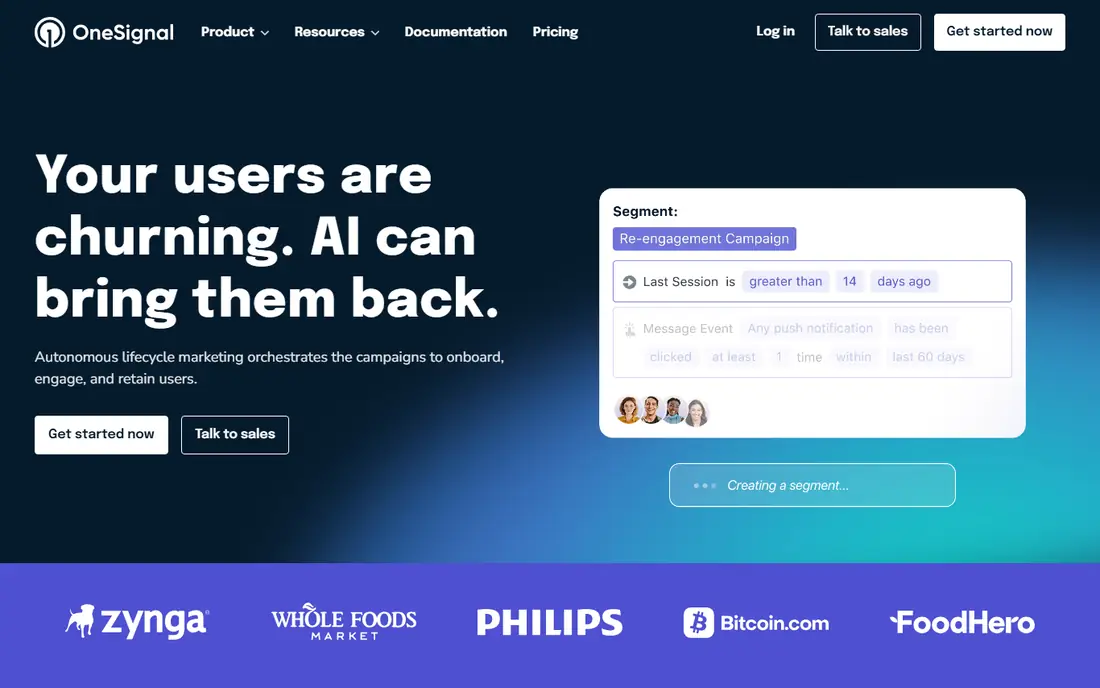
OneSignal is the most accessible starting point for apps that need push at scale. Customer messaging platform for push, in-app, email, and SMS with journeys and segmentation. Our team looked at what the service covers, how pricing works, and where the limits sit, so readers can judge fit before signing up or ordering.
The strength here is clear from its published features. Generous free push tier; web, mobile, email, and in-app channels; segmentation and journeys on paid plans. That strength can outweigh a higher price or a narrower range when the core need matches the service focus.
The honest catch is also worth weighing. Free tier limits change over time; paid pricing scales with subscribers; SMS costs extra. Before choosing, check current terms on the official site and compare total cost, including fees and add-ons.
- Generous free push tier
- Web, mobile, email, and in-app channels
- Segmentation and journeys on paid plans
- Free tier limits change over time
- Paid pricing scales with subscribers
- SMS costs extra
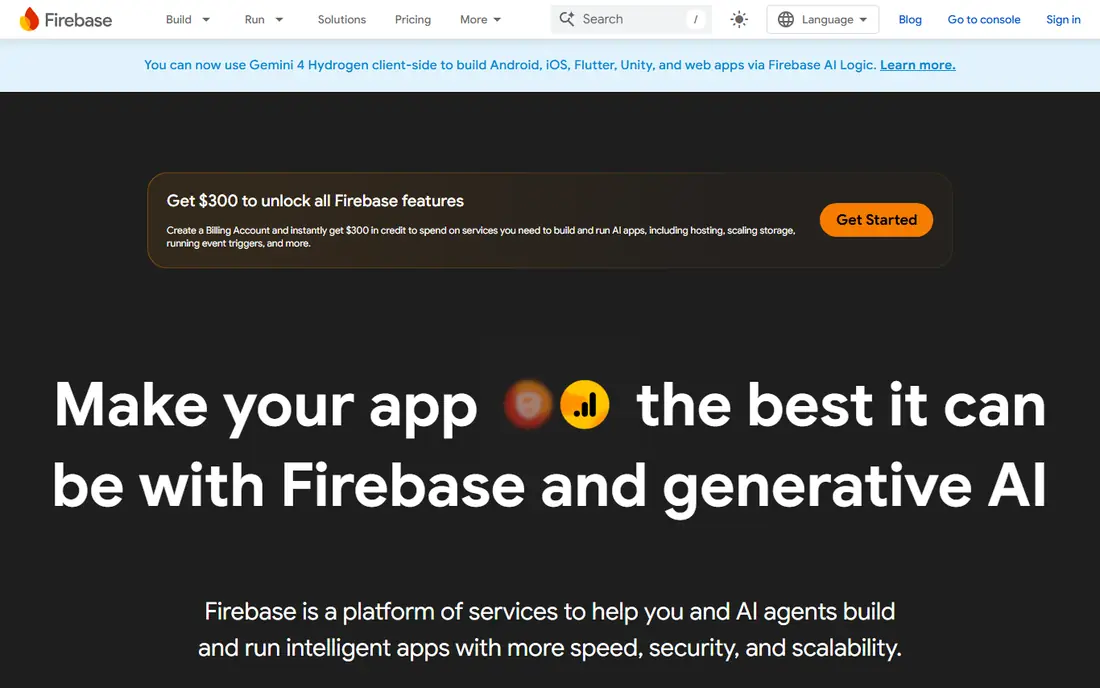
Firebase Cloud Messaging suits teams that want free, direct push delivery and will build the rest. Google push messaging service for Android, iOS, and web apps. Our team looked at what the service covers, how pricing works, and where the limits sit, so readers can judge fit before signing up or ordering.
The strength here is clear from its published features. Free push delivery for Android and iOS; no per-message cost; deep Google platform integration. That strength can outweigh a higher price or a narrower range when the core need matches the service focus.
The honest catch is also worth weighing. No built-in inbox or preference centre; teams build queues, retries, and analytics themselves; setup needs developer time. Before choosing, check current terms on the official site and compare total cost, including fees and add-ons.
- Free push delivery for Android and iOS
- No per-message cost
- Deep Google platform integration
- No built-in inbox or preference centre
- Teams build queues, retries, and analytics themselves
- Setup needs developer time
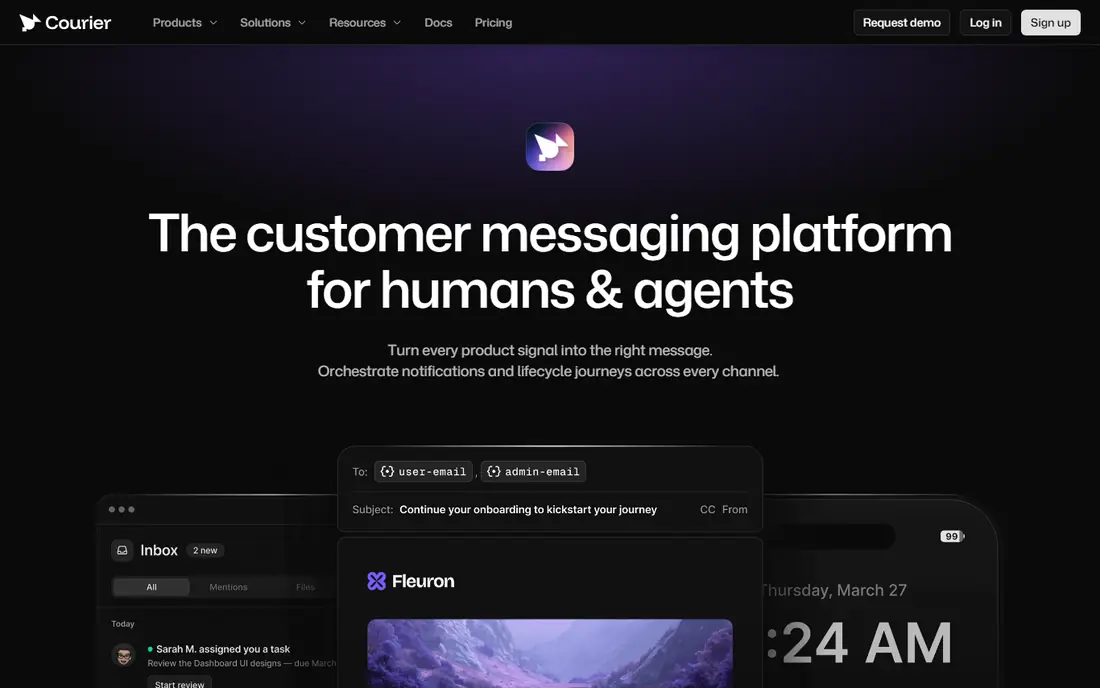
Courier helps engineering-led teams stop rewriting notification code for each new provider. Notification orchestration platform with templates, journeys, and multi-provider routing. Our team looked at what the service covers, how pricing works, and where the limits sit, so readers can judge fit before signing up or ordering.
The strength here is clear from its published features. One API across providers; visual template builder; journeys and failover options. That strength can outweigh a higher price or a narrower range when the core need matches the service focus.
The honest catch is also worth weighing. Paid usage is per send, so multi-channel fan-out adds up; some advanced features need higher plans; provider setup still needed. Before choosing, check current terms on the official site and compare total cost, including fees and add-ons.
- One API across providers
- Visual template builder
- Journeys and failover options
- Paid usage is per send, so multi-channel fan-out adds up
- Some advanced features need higher plans
- Provider setup still needed
Novu is the pick for teams that want to self-host or modify the notification system itself. Open source notification infrastructure with cloud and self-hosted options. Our team looked at what the service covers, how pricing works, and where the limits sit, so readers can judge fit before signing up or ordering.
The strength here is clear from its published features. Open source core; self-hosting option; embeddable inbox component; many provider integrations. That strength can outweigh a higher price or a narrower range when the core need matches the service focus.
The honest catch is also worth weighing. Self-hosting adds operations work; managed cloud features vary; visual tooling is less polished than some rivals. Before choosing, check current terms on the official site and compare total cost, including fees and add-ons.
- Open source core
- Self-hosting option
- Embeddable inbox component
- Many provider integrations
- Self-hosting adds operations work
- Managed cloud features vary
- Visual tooling is less polished than some rivals
Knock suits product teams that need careful preference and batching logic across channels. Developer notification platform with workflows, preferences, and in-app components. Our team looked at what the service covers, how pricing works, and where the limits sit, so readers can judge fit before signing up or ordering.
The strength here is clear from its published features. Strong workflow engine; batching and digests; user preferences and in-app feed components. That strength can outweigh a higher price or a narrower range when the core need matches the service focus.
The honest catch is also worth weighing. First paid plan is $250 per month, a large jump from free; teams bring their own delivery providers; marketing features are newer. Before choosing, check current terms on the official site and compare total cost, including fees and add-ons.
- Strong workflow engine
- Batching and digests
- User preferences and in-app feed components
- First paid plan is $250 per month, a large jump from free
- Teams bring their own delivery providers
- Marketing features are newer
Pusher Beams works best for teams already running Pusher realtime features. Managed push notification service from Pusher for web and mobile apps. Our team looked at what the service covers, how pricing works, and where the limits sit, so readers can judge fit before signing up or ordering.
The strength here is clear from its published features. Developer-friendly push with encryption; fits teams already using Pusher; clear SDKs. That strength can outweigh a higher price or a narrower range when the core need matches the service focus.
The honest catch is also worth weighing. Free tier covers only a small subscriber count; paid tiers scale with subscribers; not a full multi-channel inbox. Before choosing, check current terms on the official site and compare total cost, including fees and add-ons.
- Developer-friendly push with encryption
- Fits teams already using Pusher
- Clear SDKs
- Free tier covers only a small subscriber count
- Paid tiers scale with subscribers
- Not a full multi-channel inbox
MagicBell is a strong choice when the product needs a ready-made notification inbox quickly. Notification inbox platform with preferences, batching, and delivery tools. Our team looked at what the service covers, how pricing works, and where the limits sit, so readers can judge fit before signing up or ordering.
The strength here is clear from its published features. Prebuilt inbox UI for apps; preferences and delivery tracking; multi-channel support. That strength can outweigh a higher price or a narrower range when the core need matches the service focus.
The honest catch is also worth weighing. Paid Startup plan is $249 per month, which is steep for small apps; delivery counting per channel needs a check. Before choosing, check current terms on the official site and compare total cost, including fees and add-ons.
- Prebuilt inbox UI for apps
- Preferences and delivery tracking
- Multi-channel support
- Paid Startup plan is $249 per month, which is steep for small apps
- Delivery counting per channel needs a check
Airship suits larger brands that need enterprise mobile messaging at scale. Enterprise customer engagement platform for mobile push, in-app, and SMS. Our team looked at what the service covers, how pricing works, and where the limits sit, so readers can judge fit before signing up or ordering.
The strength here is clear from its published features. Enterprise mobile messaging and journey tools; strong app messaging features; support for large brands. That strength can outweigh a higher price or a narrower range when the core need matches the service focus.
The honest catch is also worth weighing. Pricing is quote-based, so small teams cannot judge cost from the site; setup and contracts suit larger buyers. Before choosing, check current terms on the official site and compare total cost, including fees and add-ons.
- Enterprise mobile messaging and journey tools
- Strong app messaging features
- Support for large brands
- Pricing is quote-based, so small teams cannot judge cost from the site
- Setup and contracts suit larger buyers
Ably fits teams that already need realtime data and want notifications on the same platform. Realtime messaging platform with push notification support for apps. Our team looked at what the service covers, how pricing works, and where the limits sit, so readers can judge fit before signing up or ordering.
The strength here is clear from its published features. Realtime infrastructure with notification support; free tier for testing; strong developer docs. That strength can outweigh a higher price or a narrower range when the core need matches the service focus.
The honest catch is also worth weighing. Notifications ride on top of realtime infrastructure, so inbox features are thinner; pricing scales with usage. Before choosing, check current terms on the official site and compare total cost, including fees and add-ons.
- Realtime infrastructure with notification support
- Free tier for testing
- Strong developer docs
- Notifications ride on top of realtime infrastructure, so inbox features are thinner
- Pricing scales with usage
How we picked these
We started with products that exist and work in October 2026 and that truly fit the topic, then we compared official feature pages, pricing pages, app store listings, privacy policies, and public reviews. Products that did not fit, that lacked a working official site, or that could not be verified were left out, rather than padded into the list.
We also weighed fit for different buyers, not just the largest brands. A low price, a free tier, a specialist focus, or a wider range can each make an option the right pick for one reader and a poor pick for another, so each write-up notes who it suits and where it falls short.
How to pick a notification platform
Start with the channels the product actually needs. A mobile app may only need push at first, while a marketplace or SaaS product may need email, SMS, in-app inbox, and Slack messages from day one. Choosing a platform that covers the needed channels avoids a second migration when a new channel is added.
Model cost at three volumes, not just launch volume. Free tiers can look generous at 1,000 users and expensive at 50,000 users, especially when pricing counts each channel delivery separately. Run the expected monthly messages through each vendor pricing page, and include SMS carrier costs where they sit outside the platform fee.
Check deliverability, preferences, and control. Users should be able to choose channels and topics, and urgent messages such as password resets should still reach them when marketing messages are muted. Also check template editing, workflow versioning, analytics, and how easily the team can switch delivery providers later.
Frequently asked questions
What is a notification service?
It is a platform that sends messages to users across push, email, SMS, and in-app channels from one API or workflow system. Developers trigger a notification once, and the platform handles templates, routing, delivery providers, and user preferences.
Is there a free notification service?
Yes, several platforms offer free tiers, including OneSignal, Firebase Cloud Messaging, Courier, Novu, and Knock. Free tiers usually cap subscribers, messages, or features, so check the limits against expected volume before launch.
How is notification pricing calculated?
Vendors price by subscribers, messages, workflow runs, or a mix of those units. A message sent on three channels can count as three messages on some platforms and one workflow run on others, so compare the same scenario across vendors.
Do I need a notification platform or can I build it myself?
Building push and email from scratch is possible, but teams then own token handling, retries, preferences, templates, and provider changes. A platform saves that work, while self-hosted open source options such as Novu give more control at the cost of running the system.
What is the difference between push and in-app notifications?
Push messages reach a device lock screen or browser even when the app is closed, while in-app messages appear inside the app, often in a notification inbox. Many products use both, with push for urgent alerts and in-app inbox for history and preferences.
Sources
See where you really rank - block by block
ProMapRanker scans Google Maps across a grid of your service area. Simple monthly plans from $19, white-label on every plan.
Start freeKeep reading
 worlds best local seo company
8 Worlds Best Local SEO Companies for Map Pack Growth in 2026
Compare the worlds best local seo company options for Google Business Profile work, citations, reviews, and multi-location rankings and reporting in 2026.
Read → world's best web hosting company
World's Best Web Hosting Company in 2026
Searching for the world's best web hosting company? We compared 10 hosts on price, renewal rates, speed, and support to help you choose well today in 2026.
Read → who's got the best nanny tax services
Who's Got the Best Nanny Tax Services in 2026
We answer who's got the best nanny tax services, comparing full filing, back taxes, software, and pricing so families can handle nanny taxes correctly.
Read →