 ProMapRanker
Best Network Companies in 2026

Key takeaways
- No single vendor is best for every network, because campus wireless, data centre switching, security and service-provider routing are different markets.
- Cisco and HPE Aruba Networking offer the broadest enterprise portfolios, while Arista leads for many data centre and AI fabric designs.
- Fortinet and Palo Alto Networks suit buyers who want networking and security bought and managed together.
- Ubiquiti and Extreme Networks suit smaller budgets and simpler deployments, but check support, warranty and management options before choosing on price alone.
Quick comparison
| Pick | Great for | Pricing starts at | Free tier | |
|---|---|---|---|---|
 Cisco | Broadest enterprise portfolio | See website | No | Visit |
 Arista Networks | Data centre and AI fabrics | See website | No | Visit |
 HPE Aruba Networking | Campus wireless and AIOps | See website | No | Visit |
 Fortinet | Networking plus security in one stack | See website | No | Visit |
 Palo Alto Networks | Security-led networking | See website | No | Visit |
 Juniper Networks | AI-driven campus and data centre | See website | No | Visit |
 Extreme Networks | Simpler enterprise campus networks | See website | No | Visit |
 NVIDIA Networking | AI and high-performance fabrics | See website | No | Visit |
 Ubiquiti | Budget-friendly small business networks | See website | No | Visit |
The best network companies
This question has no single dominant answer, so we angle this article plainly as a comparison of leading providers for different needs. A vendor that leads in data centre switching may not lead in campus wireless, and a security-first vendor may not suit a buyer who mainly needs low-cost access points. We compared official product portfolios, management platforms and public market analysis to show where each vendor fits.
Cisco remains the broadest enterprise networking vendor, covering campus switching and wireless, data centre switching, routing, SD-WAN, security and management under one brand. Its large installed base means most IT teams can find engineers, partners and support for Cisco gear. That breadth lowers risk for global organisations that need consistent products across many sites.
The honest catch is complexity and cost. Cisco licensing has several models, and overlapping product families can confuse a buyer who does not get clear guidance. Pricing is typically quoted through partners, so comparisons need like-for-like configurations. For buyers who want the lowest-risk, broadest portfolio, Cisco is still the default shortlist entry.
- Widest enterprise range
- Large partner and support network
- Deep security and collaboration integration
- Licensing can be complex
- Premium pricing
- Product lines overlap and need careful selection
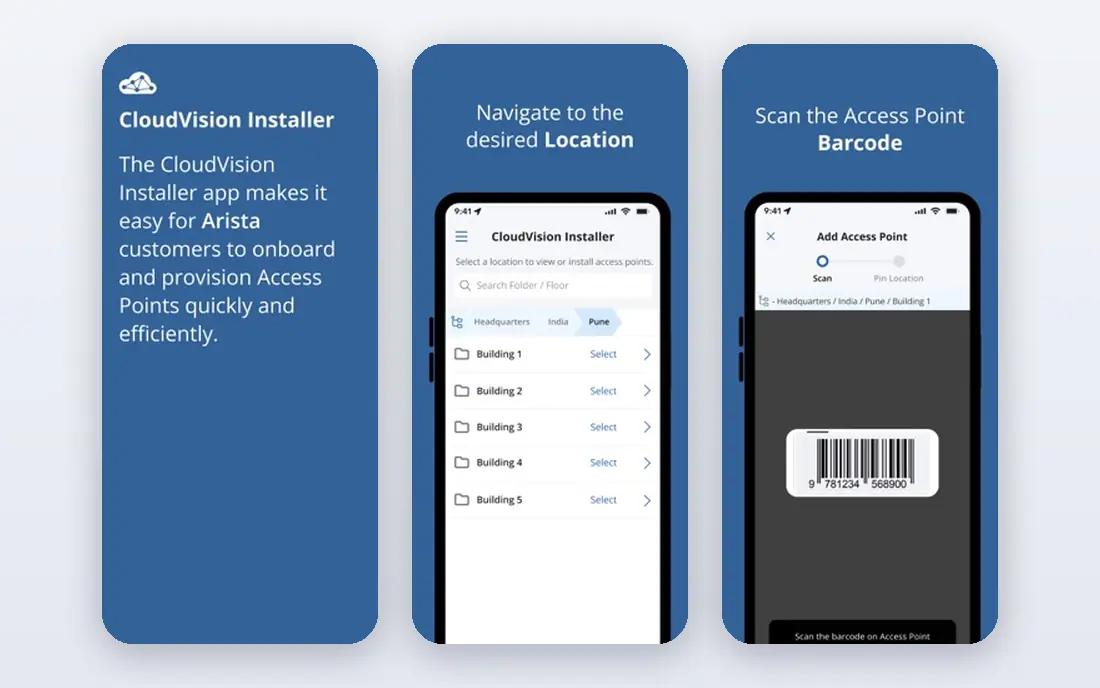
Arista built its reputation in cloud and data centre networking, and that strength now extends to AI fabrics that need high throughput and low latency. Its EOS operating system runs across its platforms, which simplifies automation and operations for teams that manage large switch fleets. CloudVision adds telemetry and management for those environments.
The limit is breadth outside the data centre. Arista has campus products, but buyers who want a full campus, wireless and branch stack in one purchase may find Cisco or HPE more complete. Arista fits best for data centre, cloud and AI-focused networks where performance and operational consistency matter most.
- Single operating system across platforms
- Strong data centre and AI fabric performance
- CloudVision management
- Campus portfolio is narrower than Cisco or HPE
- Enterprise pricing for large fabrics
- Less suited to very small networks

HPE Aruba Networking is known for campus switching and wireless, with Aruba Central providing cloud management for distributed sites. Its wireless heritage makes it a strong choice for schools, hospitals, offices and retail sites where reliable Wi-Fi matters more than data centre scale. HPE GreenLake also offers consumption-based options for buyers who prefer operating expenditure over large capital purchases.
Following HPE's acquisition of Juniper, the combined portfolio is broader, but buyers should confirm current product roadmaps and management plans for their chosen lines. That integration is a watch point, not a reason to avoid the vendor. For campus-first buyers, HPE Aruba Networking is one of the strongest alternatives to Cisco.
- Strong campus wireless
- Aruba Central management
- GreenLake consumption options
- Portfolio integration after the Juniper acquisition is still evolving
- Pricing varies by model
- Enterprise support tiers add cost
Fortinet suits buyers who want networking and security from one vendor, rather than stitching together separate stacks. Its FortiGate firewalls, SD-WAN, switching and wireless products share management and security services, which simplifies branch deployments. Price to performance is often cited as a strength, especially for multi-site organisations.
The catch is that getting the full benefit depends on choosing the right licences and bundles, so a bare hardware quote can mislead. Partner quality also matters for deployment and support. For security-conscious branch and campus networks, Fortinet offers a practical, integrated alternative to a multi-vendor design.
- Integrated firewall, SD-WAN and switching
- Competitive price to performance
- Single management approach
- Product breadth can be complex
- Advanced features need correct licensing
- Support quality varies by partner
Palo Alto Networks leads from security, with next-generation firewalls, Prisma SASE and cloud security forming a connected platform. Buyers who treat security as the main network decision, rather than an add-on, often shortlist it first. Its threat intelligence and policy controls suit organisations with strict compliance needs.
The limit is that Palo Alto Networks is not a like-for-like replacement for a full campus switching and wireless portfolio. Many buyers pair it with another vendor for access switching and Wi-Fi. For security-led designs, especially SASE and branch security, it is a strong choice, provided the budget fits its premium positioning.
- Strong firewall and SASE portfolio
- Prisma access for remote users
- Deep threat intelligence
- Premium pricing
- Networking hardware range is narrower than Cisco
- Platform consolidation needs planning
Juniper Networks is known for Mist AI, which aims to simplify campus wireless operations with AI-driven assurance, and for routing and data centre switching with Apstra automation. Its technology suits teams that want automation and operational insight, not just hardware. Service-provider routing is another traditional strength.
Since HPE acquired Juniper, buyers should confirm how Juniper lines fit into the wider HPE portfolio and what management consolidation is planned. That does not remove Juniper from consideration, but it makes roadmap questions part of the buying process. For AI-driven campus and data centre designs, Juniper remains a credible, technically strong vendor.
- Mist AI for campus operations
- Strong routing and data centre switching
- Apstra automation
- Now part of HPE, so roadmap questions need checking
- Enterprise pricing
- Smaller partner base than Cisco in some regions
Extreme Networks focuses on campus and edge networking, with switching, wireless and cloud management aimed at enterprises that want a simpler stack. Its portfolio suits schools, healthcare, hospitality and midsize enterprises that do not need the full breadth of a Cisco or HPE catalogue. Pricing is often more competitive than the largest vendors.
The trade is scale and breadth. Extreme Networks is smaller, and its data centre and service-provider ranges are narrower. Regional partner coverage can also vary, so support terms deserve checking. For campus-first buyers who want simplicity, Extreme Networks is a sensible alternative.
- Straightforward campus portfolio
- Cloud management options
- Competitive enterprise pricing
- Smaller scale than Cisco or HPE
- Data centre range is narrower
- Partner coverage varies by region
NVIDIA Networking has become a major force in AI data centre fabrics, with Spectrum-X Ethernet and InfiniBand products designed for GPU clusters. Its growth in data centre Ethernet reflects demand for fabrics that handle AI training and inference traffic with low latency. Integration with NVIDIA GPU systems is a further advantage for AI builders.
The limit is scope. NVIDIA Networking is not a general-purpose campus, branch or small-business vendor, and its products need specialist design. General enterprise buyers should not shortlist it for office Wi-Fi or branch routing. For AI and high-performance computing fabrics, it is now a leading comparison point beside Arista.
- Spectrum-X Ethernet for AI clusters
- InfiniBand heritage
- Tight integration with GPU systems
- AI-focused range, not a general campus vendor
- Pricing is project-based
- Needs specialist design skills
Ubiquiti, through its UniFi line, suits small businesses, homes with large properties, and small multi-site deployments that need good Wi-Fi at a low price. Its management software is approachable, and hardware costs are often far below enterprise vendors. That combination makes it popular for cafes, small offices and rental properties.
The honest weakness is enterprise support and depth. Large organisations with strict service levels, advanced security requirements or complex routing needs will usually need a different vendor. Ubiquiti fits best where budget and simplicity matter more than enterprise support contracts. Check warranty, support and firmware update policies before committing.
- Low hardware prices
- UniFi management for small sites
- Wide access point and switch range
- Enterprise support is thinner than larger vendors
- Advanced enterprise features are limited
- Warranty and support terms need checking
How we picked these
We compared official product portfolios, management platforms and public enterprise network analysis, rather than copying one vendor ranking. We included vendors with verified current products across campus, data centre, security or small-business networking, and we excluded vendors whose enterprise availability in the United States is limited. Because enterprise networking is quoted per configuration, we used "See website" rather than inventing prices.
How to choose the right network vendor
Start with the network you actually run. List your sites, user counts, wireless coverage needs, data centre scale and security requirements, then shortlist vendors that lead in those areas. A data centre fabric decision should not be made on campus Wi-Fi strength, and a branch SD-WAN decision should not rest on switch port density alone.
Next, test management and support, not just hardware. Ask for a trial of the management platform, confirm licensing for the features you need, and check support response times and partner coverage in your region. Finally, price a complete configuration, including licences, support, optics and cabling, because hardware-only quotes hide the real total. A pilot at one site often reveals operational issues that a datasheet cannot.
Frequently asked questions
What is the best network company overall?
There is no single best vendor. Cisco offers the broadest enterprise portfolio, Arista leads many data centre designs, HPE Aruba Networking leads many campus wireless designs, and Fortinet and Palo Alto Networks lead security-led designs. Match the vendor to your network type.
Is Cisco still the best choice for enterprise networks?
Cisco remains a strong default for broad enterprise needs, thanks to portfolio breadth and support depth. It is not always the cheapest or the best in every niche, so compare Arista for data centre, HPE for campus and Fortinet for integrated security before deciding.
What network company is best for small businesses?
Ubiquiti UniFi suits many small businesses on price and simplicity, while Fortinet and Extreme Networks suit small businesses that need stronger security or enterprise support. Check support terms, because low hardware prices do not always mean low total cost.
Do I need one vendor for my whole network?
No, many organisations mix vendors, for example Arista in the data centre and HPE or Cisco on campus, with Palo Alto Networks or Fortinet for security. A single vendor simplifies management, while a mixed design can give better performance in each area.
What is SD-WAN and SASE?
SD-WAN manages connections across branch sites over broadband and other links, choosing paths by performance and policy. SASE combines network access with cloud-delivered security, so remote users and branches get consistent protection without routing all traffic through a central site.
How often should network hardware be replaced?
Replacement cycles vary by use, but many enterprises plan campus refreshes every five to seven years and data centre refreshes sooner for AI and high-speed needs. Replace earlier if support ends, security updates stop, or throughput no longer meets demand.
Sources
- https://www.cisco.com
- https://www.arista.com
- https://www.hpe.com/us/en/networking.html
- https://www.fortinet.com
- https://www.paloalto.com
- https://www.juniper.net
- https://www.extremenetworks.com
- https://www.nvidia.com/en-us/networking/
- https://www.ui.com
- https://www.verifiedmarketresearch.com/blog/best-data-center-switch-manufacturers/
See where you really rank - block by block
ProMapRanker scans Google Maps across a grid of your service area. Simple monthly plans from $19, white-label on every plan.
Start freeKeep reading
 worlds best local seo company
8 Worlds Best Local SEO Companies for Map Pack Growth in 2026
Compare the worlds best local seo company options for Google Business Profile work, citations, reviews, and multi-location rankings and reporting in 2026.
Read → world's best web hosting company
World's Best Web Hosting Company in 2026
Searching for the world's best web hosting company? We compared 10 hosts on price, renewal rates, speed, and support to help you choose well today in 2026.
Read → who's got the best nanny tax services
Who's Got the Best Nanny Tax Services in 2026
We answer who's got the best nanny tax services, comparing full filing, back taxes, software, and pricing so families can handle nanny taxes correctly.
Read →