 ProMapRanker
Best Mutual Fund Companies in 2026

Key takeaways
- Vanguard, Fidelity and Schwab lead for low-cost index funds, with broad fund lineups and no-fee trading of their own funds.
- Fidelity and Schwab suit small investors best, thanks to low or no minimums on many index funds and fractional share trading.
- T. Rowe Price and American Funds suit investors who prefer active management and are willing to pay more for it.
- Expense ratios, fund minimums and tax treatment matter more over decades than any single year of performance.
- Past performance does not predict future results, so diversify and match funds to your time horizon and risk tolerance.
Quick comparison
| Pick | Great for | Pricing starts at | Free tier | |
|---|---|---|---|---|
 Vanguard | Low-cost index investing | See website | No | Visit |
 Fidelity | No-minimum index funds | Free | No | Visit |
 Charles Schwab | Broad low-cost lineup | See website | No | Visit |
 T. Rowe Price | Active management | See website | No | Visit |
 American Funds | Long-term active funds | See website | No | Visit |
 BlackRock | Index and ETF breadth | See website | No | Visit |
 Franklin Templeton | Income and global funds | See website | No | Visit |
 J.P. Morgan Asset Management | Active and income funds | See website | No | Visit |
 Invesco | Factor and sector funds | See website | No | Visit |
The best mutual fund companies
These companies are compared as fund providers, not as single funds, since most investors buy several funds from one firm inside a brokerage or retirement account. This is not financial advice, and investing involves risk, including possible loss of principal. Fund fees, minimums and availability vary by share class and account type, so check the fund's prospectus and the provider's current pages before investing.
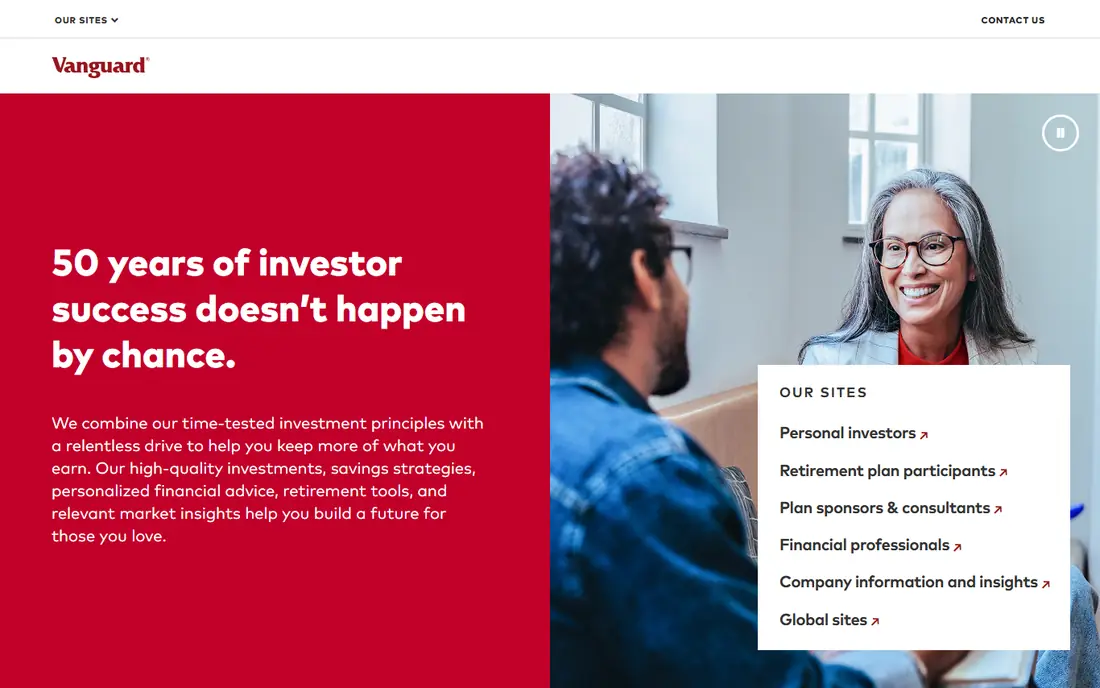
Vanguard built its reputation on low-cost index investing, and that remains its strongest case in 2026. Its index funds and target-date retirement funds carry low expense ratios by industry standards, and its lineup covers US and international stocks, bonds and balanced portfolios. For a long-term investor who wants a simple, low-cost core portfolio, Vanguard is hard to beat on fees alone.
The drawbacks are practical. Some Vanguard funds require a minimum investment, so check the fund page for the share class you plan to buy, and the digital experience feels more functional than polished compared with Fidelity and Schwab. If you value the lowest fees and a straightforward lineup over app design, Vanguard remains our first suggestion for many retirement savers.
- Very low expense ratios on many index funds
- Broad index and target-date lineup
- Investor-owned structure
- Some funds carry minimums that small investors must check
- Website and app feel plain next to Fidelity and Schwab
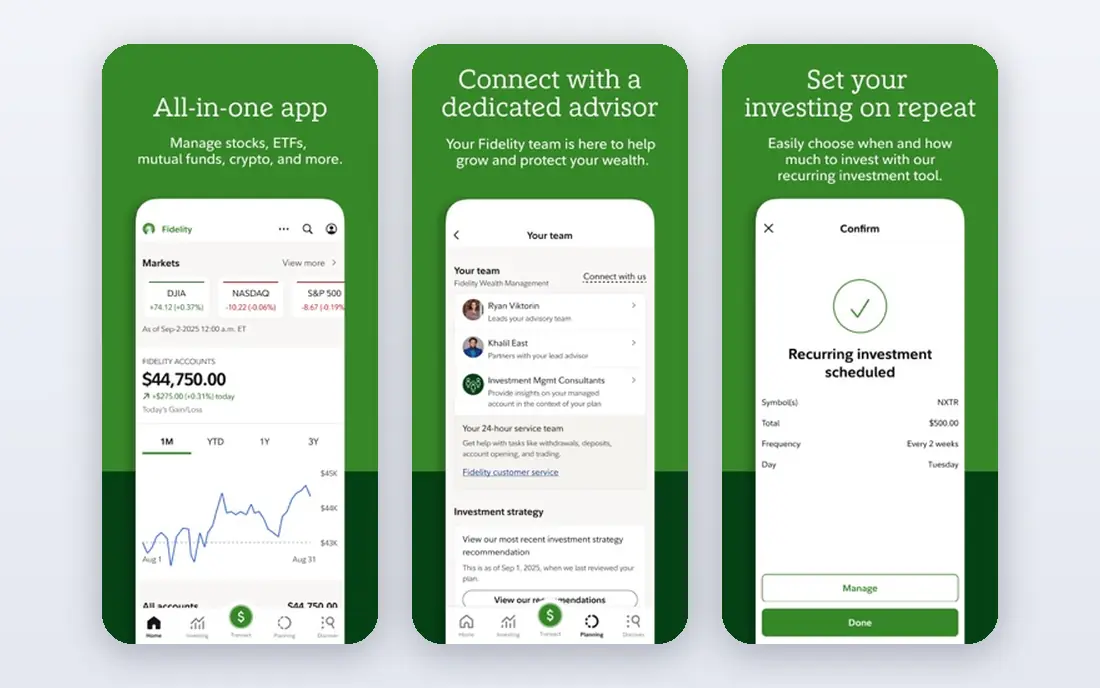
Fidelity is the most beginner-friendly large fund company for many US investors. Many of its index funds have no minimum investment, and its zero expense ratio index funds remove even the small annual fee that most index funds charge. Add fractional share trading, strong research tools and widely praised customer service, and it is easy to see why Fidelity suits both first-time investors and experienced savers.
The size of the lineup is both a strength and a weakness. With thousands of funds to sort through, beginners should start with a short list: a total market index fund, an international index fund and a bond index fund, or a single target-date fund. Check expense ratios and minimums on the fund page, since active funds at Fidelity vary widely in cost.
- Many index funds with no minimum
- Zero expense ratio index funds available
- Strong research and customer service
- Fund lineup is so large it can overwhelm beginners
- Some active funds carry higher fees
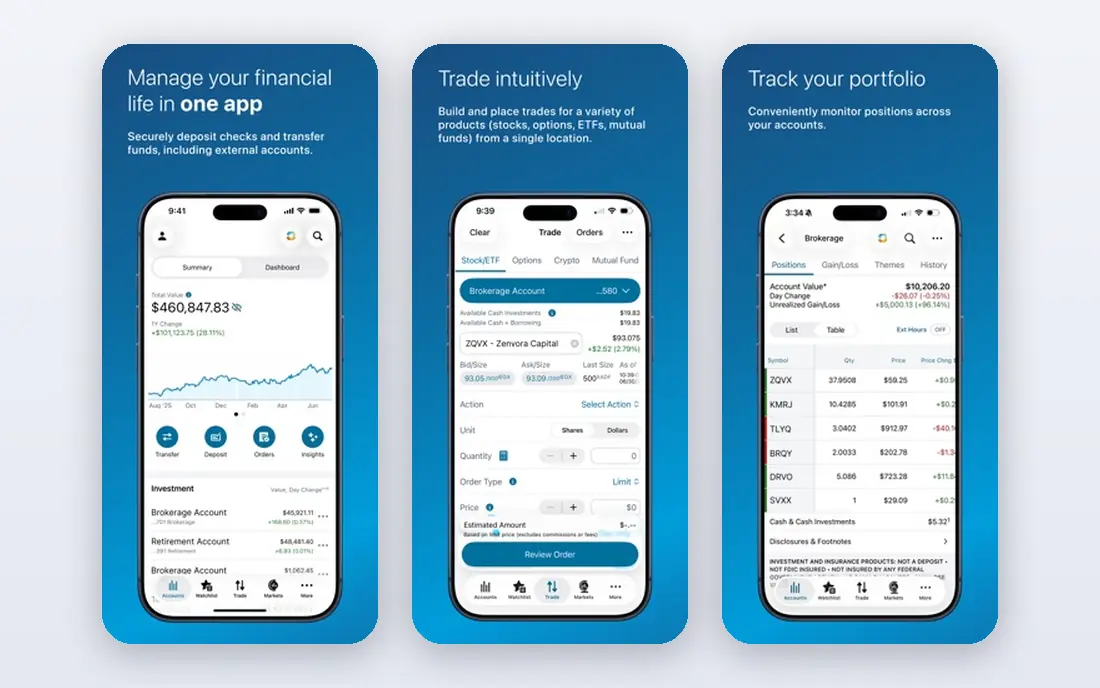
Schwab pairs a low-cost index fund lineup with one of the better fund screeners among large brokers, which helps when you are comparing expense ratios, minimums and asset classes. Its S and P 500 and total market index funds are priced competitively, and Schwab accounts work well for both taxable brokerage investing and retirement accounts such as IRAs. The thinkorswim platform, covered elsewhere on this site, is a bonus for investors who also trade.
Schwab is less distinctive for active management than T. Rowe Price or American Funds, so investors who want a star active manager may look elsewhere for that sleeve of a portfolio. For a low-cost core portfolio with good tools, though, Schwab belongs in the same conversation as Vanguard and Fidelity.
- Low-cost Schwab index funds
- Strong fund screener
- Good fit for retirement and brokerage accounts alike
- Some funds have minimums to check
- Active fund lineup is less distinctive than T. Rowe Price
T. Rowe Price is the active manager most worth considering if you believe skilled managers can add value over an index after fees. Its growth, value and bond funds have long track records, and its target-date retirement funds are widely used in workplace plans. The firm's research-driven approach and manager tenure are real strengths for investors who want active exposure.
Fees are the honest catch. Active funds cost more than index funds, and that fee gap compounds over decades, so active funds need to earn their keep. Check the expense ratio, manager tenure and minimum for each fund, and consider holding active funds as a smaller part of a portfolio anchored by low-cost index funds.
- Long record in active stock and bond funds
- Strong retirement and target-date lineup
- Solid research culture
- Active fund fees are higher than index funds
- Some funds carry minimums that suit larger accounts
American Funds, from Capital Group, is known for a multi-manager approach, where several managers run portions of the same fund, which can smooth single-manager risk. Its equity and balanced funds have long histories, and the funds appear widely in 401(k) and other retirement plans. For investors who prefer active management with a conservative, long-term bent, American Funds is a serious option.
Share classes matter here more than at most firms. Some classes carry front-end sales charges when bought outside a retirement plan, which can take a meaningful slice of your first investment, while retirement plan classes often avoid those charges. Read the prospectus for the exact class available to you, and compare its total cost with a comparable index fund before deciding.
- Long-term active fund record
- Multi-manager approach spreads decisions across managers
- Strong in retirement plans
- Many share classes carry sales charges outside retirement plans
- Fees exceed index funds
BlackRock is best known for iShares ETFs, but it also runs a large mutual fund business covering index, active, bond and factor strategies. Its index fees are competitive, and its bond fund depth is a genuine strength for income-focused investors. If your workplace plan or brokerage offers BlackRock funds, you will find credible options across most asset classes.
The breadth can confuse. BlackRock sells many similar-sounding funds, so compare tickers, expense ratios and benchmarks carefully rather than picking by name alone. Investors who mainly want mutual funds, rather than ETFs, may find Vanguard, Fidelity or Schwab lineups simpler to navigate.
- Huge index fund and iShares ETF range
- Competitive index fees
- Strong bond and factor fund lineup
- Mutual fund lineup is less central than its ETF business
- Brand spans many products, so fund selection needs care
Franklin Templeton suits investors looking beyond US stocks, with a long history in global, international and income funds. Its bond and dividend-oriented funds appeal to retirees and income seekers, and its global reach gives it depth in markets that US-focused firms cover less thoroughly. For a satellite allocation to global income or international bonds, it is worth a look.
As with any active house, fund-by-fund selection matters more than the brand name. Expense ratios and past results vary, and some funds have lagged their benchmarks for stretches. Check the fund's benchmark, fee and manager record, and keep any active allocation sized so that a disappointing fund does not dominate your portfolio.
- Strong global and income fund history
- Broad bond and dividend fund range
- Long presence in international markets
- Active fees exceed index funds
- Performance varies widely by fund, so selection matters
J.P. Morgan Asset Management offers a wide range of active equity, bond and multi-asset funds, with particular strength in income and balanced strategies. Its scale gives it deep research coverage, and its funds appear in many retirement plans and advisory programs. Investors who want an actively managed income or balanced fund from a large, established manager will find credible choices here.
Cost and minimums require attention. Active fees run above index fund levels, and minimums differ by share class, so the same fund can look quite different inside a retirement plan versus a taxable account. Compare the exact share class available to you with a low-cost index alternative before committing a large sum.
- Large active and income fund range
- Strong research resources
- Widely available in retirement plans
- Fees are higher than index rivals
- Fund minimums vary by share class and channel
Invesco is the pick for investors who want to tilt a portfolio toward factors, sectors or equal-weighted indexes rather than holding only a broad market fund. Its factor and sector lineup is broader than most rivals, and its index funds compete on price for core exposures. That range suits experienced investors building a more tailored portfolio.
Specialist funds are also the risk. A sector or factor fund can fall sharply even when the broad market rises, so these funds work best as small satellite holdings around a diversified core. Beginners should start with broad index funds and add specialist funds only after understanding the extra volatility they bring.
- Broad factor, sector and equal-weight fund range
- Competitive index options
- Strong ETF and fund crossover
- Specialist funds carry higher risk and need careful sizing
- Active fees exceed plain index funds
How we picked these
We compared fund companies on expense ratios for core index funds, fund breadth across stocks, bonds and retirement options, minimum investments, availability in brokerage and retirement accounts, and manager and firm track records, using provider fund pages, prospectuses and public fund research. We favoured firms with large, durable fund lineups and transparent fees, and we treated single-year performance as a weak signal compared with fees, diversification and fit for a stated goal. This article compares companies, not individual funds, so always check the specific fund's prospectus before investing.
How to choose a mutual fund company
Start with cost for your core holdings. For a total market, S and P 500 or total bond fund, a difference of a few tenths of a percent in expense ratio compounds into a large sum over 20 or 30 years, so low fees deserve the most weight for core funds. Vanguard, Fidelity and Schwab all compete hard here, and any of them can anchor a sound portfolio.
Next, check access and minimums. Confirm that the funds you want are available in your account type, whether that is a taxable brokerage account, an IRA or a workplace plan, and check the minimum for the share class you can buy. A great fund you cannot buy at your account size is not a great choice for you.
Finally, decide how much active management you want. A low-cost index core suits most long-term investors, with active funds, if used at all, kept to a smaller share of the portfolio. Review your holdings once a year, rebalance toward your target mix, and resist switching funds after a single good or bad year, since chasing past performance is one of the costliest habits in investing.
Frequently asked questions
What is the best mutual fund company for beginners?
Fidelity is a strong beginner choice because many of its index funds have no minimum and its zero expense ratio index funds keep costs very low. Schwab and Vanguard are also excellent for beginners, with low-cost index lineups and target-date funds that handle diversification in a single fund. Start with a broad index fund or a target-date fund matched to your retirement year.
What is the best company for mutual funds for retirement?
Vanguard, Fidelity and Schwab all offer strong retirement lineups, including low-cost target-date funds that adjust their stock and bond mix as you age. T. Rowe Price and American Funds are also widely used in retirement plans for investors who prefer active management. The best choice depends on your plan's fund menu, fees and your risk tolerance.
Are low-cost index funds better than active funds?
For most long-term investors, low-cost index funds have a strong record because they keep fees low and avoid manager risk, and many active funds lag their benchmarks after fees over long periods. Some active funds do beat their benchmarks, but picking them in advance is difficult. A common approach is a low-cost index core with, at most, a small active allocation.
What fees should I check before buying a mutual fund?
Check the expense ratio, any sales load or purchase fee for your share class, and account fees charged by your broker or plan. Also check the fund's turnover and tax efficiency in a taxable account, since capital gain distributions can create a tax bill even in a year you did not sell. The fund prospectus lists these costs.
Can I lose money in a mutual fund?
Yes. Mutual funds invest in stocks, bonds or other assets whose values rise and fall, so your investment can lose value, including in a broad index fund during a market fall. Diversification across asset classes and a time horizon matched to your goal reduce, but do not remove, that risk. This article is general information only and is not financial advice.
Sources
See where you really rank - block by block
ProMapRanker scans Google Maps across a grid of your service area. Simple monthly plans from $19, white-label on every plan.
Start freeKeep reading
 zscaler alternatives
Best Zscaler Alternatives in 2026
Looking for zscaler alternatives? We compare 9 SASE and zero trust platforms on architecture, data protection, pricing, and fit for your network and team.
Read → zapier alternatives free
Best Zapier Alternatives Free in 2026
Nine automation tools for zapier alternatives free in 2026, all with genuinely free tiers, plus free plan limits, starting prices and upgrade paths explained.
Read → which platform is best for online reputation
Which Platform Is Best for Online Reputation in 2026
Wondering which platform is best for online reputation? We compare 8 review, listing, and response tools for small and multi-location businesses and agencies.
Read →