 ProMapRanker
Best Music Streaming Service Free in 2026


Most listeners and discovery · Pricing starts at: Free, paid plans available
Key takeaways
- Spotify Free is the easiest all-round free option, with strong playlists and discovery, but mobile playback is mostly shuffle-based.
- YouTube Music Free has the widest range of recordings, including live versions and remixes, but background play on mobile needs a paid plan.
- SoundCloud and Bandcamp are the best free routes to independent music, while Pandora and iHeartRadio suit listeners who prefer radio-style listening.
- Free tiers all trade ads and limits for access, so the best choice depends on whether you want on-demand songs, radio, or new artists.
Quick comparison
| Pick | Great for | Pricing starts at | Free tier | |
|---|---|---|---|---|
| Spotify | Most listeners and discovery | Free, paid plans available | Yes | Visit |
 YouTube Music | Rare tracks, live versions, and videos | Free, paid plans available | Yes | Visit |
 SoundCloud | Independent artists and DJ mixes | Free, paid plans available | Yes | Visit |
 Pandora | Personalised radio stations | Free, paid plans available | Yes | Visit |
 iHeartRadio | Live radio and podcasts | Free, paid plans available | Yes | Visit |
 Audiomack | Free mobile listening and hip-hop | Free, paid plans available | Yes | Visit |
 Deezer | Personalised flow and global catalogues | Free where available, paid plans available | Yes where available | Visit |
 Bandcamp | Supporting artists directly | Free streaming, paid downloads | Yes | Visit |
The best free music streaming services
Free music streaming is not one product. Some services let you pick any song, some build stations around a song you like, and some focus on artists you will not find elsewhere. The eight services below are all live in October 2026 and offer a genuine free way to listen.
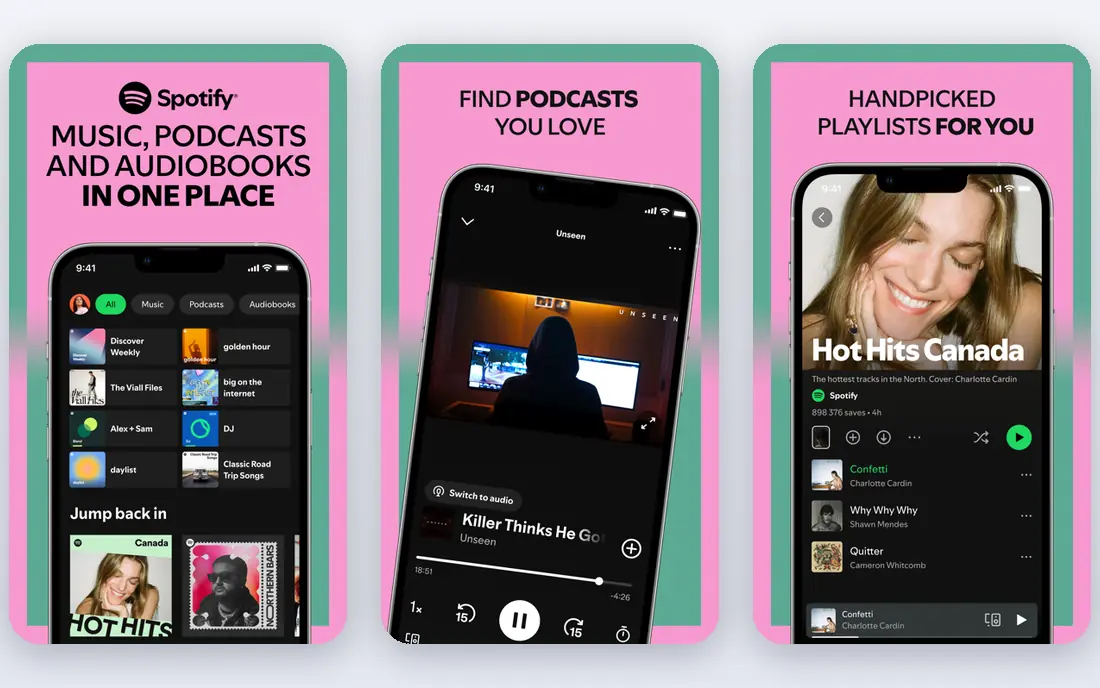
Spotify Free remains the default recommendation for a reason. The catalogue covers mainstream music well, and discovery features like Discover Weekly and Daily Mix work on the free tier. On desktop, free users can play tracks in order more often, while mobile free listening leans on shuffle for albums and many playlists.
Ads are the main cost of the free tier, along with limits on skips and offline downloads. A listener who mainly plays playlists at a desk will notice those limits less than a listener who wants a specific song on a phone walk. For most people, Spotify Free is the place to start, and the paid plan is an easy upgrade later.
- Huge catalogue, strong playlists and Daily Mix, podcasts in the same app
- Mobile free playback is shuffle-based on many playlists, ads interrupt listening
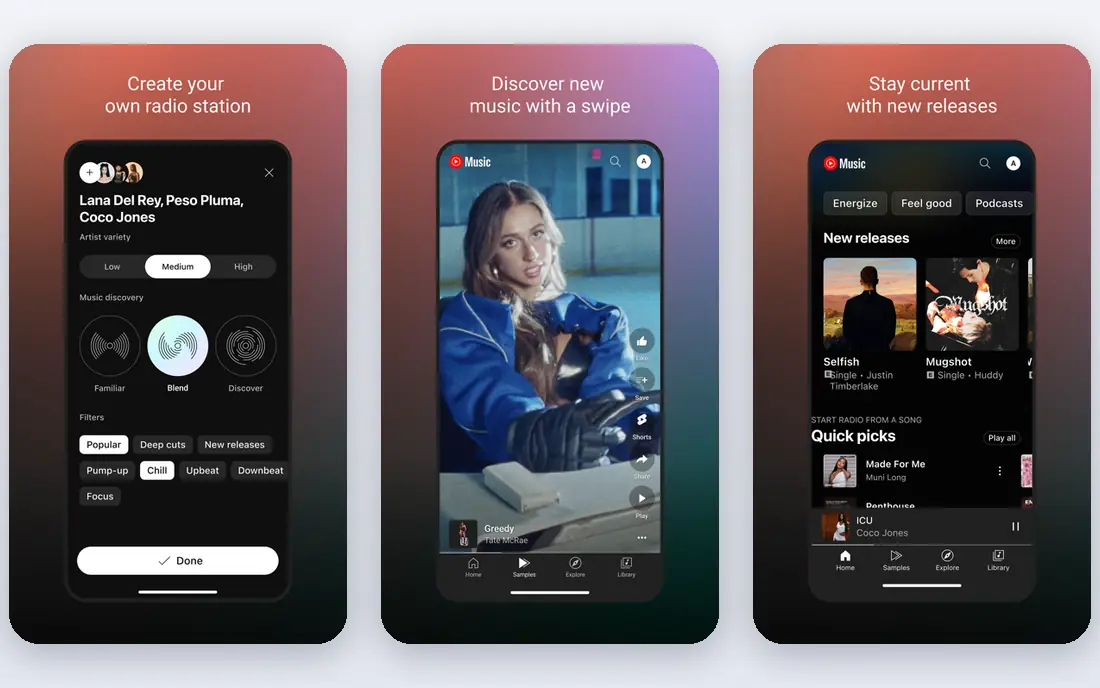
YouTube Music Free draws on the wider YouTube catalogue, which is why it finds recordings other services miss. A live session, a remix, or a cover that never reached a standard album often turns up here. That range makes it a strong second app for listeners who care about versions, not just official releases.
Mobile limits are the catch. Without a paid plan, music stops when the screen locks or another app takes focus on many phones. Desktop listening avoids that problem, so YouTube Music Free works best at a computer or with a spare device. Fans of videos and unusual recordings will still find it worth keeping.
- Live versions, covers, and remixes beyond standard catalogues, music videos included
- No background play on mobile without a paid plan, ads interrupt free listening
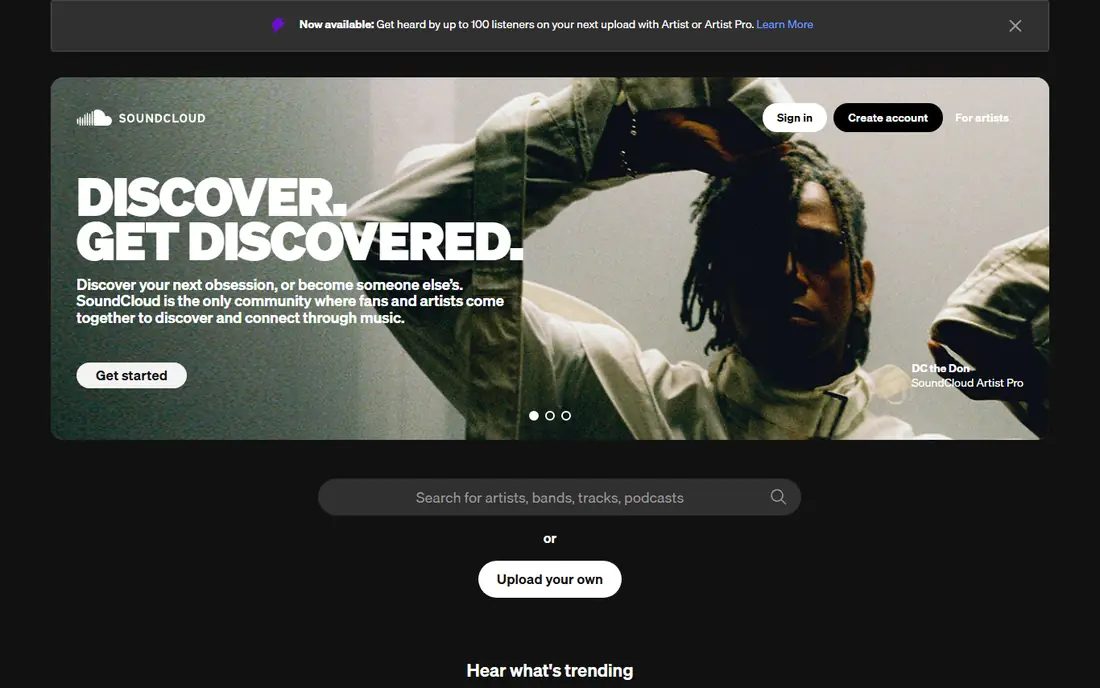
SoundCloud is where new producers, DJs, and independent artists post work first. The free tier opens a catalogue of demos, mixes, remixes, and tracks that never reach mainstream services. For a listener who wants to hear what is coming next, rather than what is already on the charts, that catalogue is hard to match.
Mainstream listeners should set expectations accordingly. Popular albums may be incomplete, and the search experience rewards browsing by artist and genre. The free tier also includes ads on some tracks. Used alongside Spotify or YouTube Music, SoundCloud fills the gap those services leave for underground music.
- Huge independent catalogue, DJ sets and demos, easy artist discovery
- Mainstream catalogue is thinner, some tracks carry ads
Pandora built its name on stations that learn from thumbs up and thumbs down. Start with a song or artist, and the station builds a stream of similar music without needing a playlist. That lean-back style suits work, driving, and background listening, where choosing each track would be a distraction.
Free Pandora is radio, not a jukebox. Skips are limited, ads appear, and picking a specific song on demand is restricted. Listeners outside the US should also check availability, because Pandora remains mainly a US service. For radio-style listening, those limits matter less than the quality of the stations.
- Strong personalised stations, simple lean-back listening, thumbs feedback improves picks
- US availability is the main focus, on-demand control is limited on free tier
iHeartRadio suits listeners who still like real radio, with presenters, news, and local stations alongside music. The free tier streams live stations and a wide podcast range, which makes it a good companion app for commuting or morning routines. Custom stations and playlists add some personal choice without leaving the radio format.
On-demand music is not the point here. A listener who wants to play a specific album in order will prefer Spotify or YouTube Music. A listener who wants a trusted station, a talk show, or a podcast in the same app will find iHeartRadio a strong free option, especially in the US.
- Thousands of live radio stations, podcasts and news in one app, simple free access
- Music is radio-based, not full on-demand, availability varies by country
Audiomack has grown by offering a free mobile experience that feels less restricted than some rivals. Its catalogue leans toward hip-hop, R and B, Afrobeats, and emerging artists, with mixtapes and albums that appeal to fans of those genres. Offline listening features also help listeners who want music without a constant connection.
The catalogue gap matters for other tastes. Older pop, rock, classical, and niche genres are thinner here than on Spotify. Audiomack works best as a primary app for its core genres, or as a second app for listeners who want free mobile access to new mixtapes and rising artists.
- Free tier is generous on mobile, strong hip-hop and emerging artist focus, offline features on some plans
- Catalogue is smaller for rock, classical, and older pop, ads on free tier
Deezer Free, where it is offered, gives listeners a personalised Flow stream that blends liked songs with new recommendations. That feature suits listeners who want discovery without building playlists by hand. Lyrics, playlist sharing, and a broad catalogue round out a service that is especially popular outside the US.
Availability is the main thing to check. Deezer free access varies by market, and some countries only offer a trial rather than a permanent free tier. Listeners in markets where free Deezer is live get a solid alternative to Spotify, with a different take on discovery.
- Flow feature mixes favourites with new picks, lyrics and playlist tools, wide international reach
- Free tier availability varies by country, mobile free listening has limits
Bandcamp works differently from the other services here. Fans can stream many albums for free, then buy downloads, vinyl, or merch directly from the artist. Artists keep a larger share of each sale than on most streaming services, and Bandcamp Fridays, when fees are waived, have become a known way to support independent music.
It is not a replacement for a mainstream catalogue. Major-label albums are limited, and there is no endless radio stream built from a single song. For listeners who want to support independent artists, discover small labels, and own music they love, Bandcamp is the most direct free starting point.
- Free streaming of many albums, artists keep a larger share of sales, direct fan support
- No mainstream major-label catalogue, no playlist radio in the Spotify sense
How we picked these
We compared official feature pages, pricing and plan pages, app store listings, privacy policies, and public reviews for services live in October 2026. We kept only services with a genuine free tier or free streaming option, and we included a mix of on-demand services, radio services, and artist-first platforms. We did not claim hands-on listening tests that did not happen, and we based limits and prices on published pages rather than on memory.
What to check before you choose
Decide how you actually listen
On-demand listeners need a service that plays a chosen song, while radio listeners need good stations. A service that is excellent for one style can frustrate the other. Try your main listening habit, such as a phone walk or desk work, on the free tier before judging it.
Check the mobile limits that matter to you
Shuffle-only playback, no background play, and no offline downloads are the three limits that change daily use most. Desktop free tiers are often more flexible than mobile ones. If most listening happens on a phone, test that version first.
Look at ads, skips, and data use
Free tiers use ads to pay for music, and skip limits vary. Some apps also use more mobile data for video or high-quality audio. Lowering audio quality in settings, where offered, can help on a limited data plan.
Keep a second app for gaps
No free service covers every catalogue. A mainstream app plus SoundCloud or Bandcamp covers both chart music and independent releases. That pairing costs nothing extra and avoids the frustration of searching for a track that one service simply does not carry.
Frequently asked questions
What is the best free music streaming service overall?
Spotify Free is the best all-round free option for most listeners, thanks to its catalogue, playlists, and discovery features. YouTube Music Free is a close alternative for listeners who want live versions and remixes. The best choice still depends on whether you listen mainly on mobile, on desktop, or through radio-style stations.
What is the best free music service for offline listening?
Most free tiers do not offer full offline downloads, which are usually a paid feature. Audiomack offers some offline features depending on plan and region, and Bandcamp downloads are available after purchase. For reliable offline listening without paying, downloaded files you own, or a library app, remain more dependable than a free streaming tier.
Is there a best free streaming music service with no ads?
Bandcamp streaming carries no ads in the usual streaming sense, because its model is based on sales rather than ad-supported playback. Most other free tiers, including Spotify, YouTube Music, Pandora, and SoundCloud, use ads to support free listening. A listener who wants no ads will usually need a paid plan or a purchase-based service.
Which free music app is best for independent artists?
SoundCloud is best for discovering new producers, DJs, and independent artists, while Bandcamp is best for buying directly from artists you want to support. Audiomack also suits emerging artists, especially in hip-hop and related genres. Using SoundCloud for discovery and Bandcamp for purchases gives independent artists both reach and income.
Does Spotify Free let you play any song?
Spotify Free lets you search and play music, but mobile playback is often shuffle-based for albums and many playlists, with limited skips. Desktop free listening offers more direct track choice. A listener who wants full on-demand control on mobile will need a paid plan, while a playlist listener may find the free tier fine.
Sources
- https://www.spotify.com
- https://music.youtube.com
- https://soundcloud.com
- https://www.pandora.com
- https://www.iheart.com
- https://audiomack.com
- https://www.deezer.com
- https://bandcamp.com
- https://brokemodelife.com/best-free-music-streaming-apps.html
- https://reviewiin.com/apps/best-free-music-streaming-apps-2026-no-spotify-premium/
See where you really rank - block by block
ProMapRanker scans Google Maps across a grid of your service area. Simple monthly plans from $19, white-label on every plan.
Start freeKeep reading
 youtube alternatives
Best YouTube Alternatives in 2026
Looking for youtube alternatives in 2026? We compare Vimeo, Dailymotion, Twitch, Rumble, and more on price, audience, monetization, control and privacy.
Read → what's the best ai tool for photo editing
What Is the Best AI Tool for Photo Editing in 2026
What is the best AI tool for photo editing? We compare ten tools for 2026, from Photoshop and Lightroom to Luminar, Topaz, Canva and mobile editors today.
Read → twitter alternatives
Best Twitter Alternatives in 2026
Compare the best twitter alternatives for 2026, from Bluesky, Threads, and Mastodon to Reddit, Tumblr, and Micro.blog, with free plans and audience notes.
Read →