 ProMapRanker
Best Music Apps in 2026: 9 Apps Compared

Key takeaways
- The best music app depends on your devices, audio quality needs, and whether you want podcasts, videos, or independent music in the same app.
- Spotify suits discovery and social playlists, Apple Music suits Apple users who want lossless audio, and YouTube Music suits video and rare tracks.
- TIDAL and Qobuz suit listeners who care most about high-resolution audio, while Deezer suits personalized radio and lossless listening.
- Free plans from Spotify, YouTube Music, Pandora, and SoundCloud are useful for casual listening, but offline play and full on-demand control need a paid plan.
- Prices vary by region and by family, student, and Prime discounts, so check the current price for your country before you subscribe.
Quick comparison
| Pick | Great for | Pricing starts at | Free tier | |
|---|---|---|---|---|
 Spotify | Discovery and playlists | $12.99 per month | Yes | Visit |
 Apple Music | Apple ecosystem and lossless audio | See website | No | Visit |
 YouTube Music | Videos and rare tracks | $11.99 per month | Yes | Visit |
 Amazon Music Unlimited | Prime members and Alexa | $12.99 per month | No | Visit |
 TIDAL | High-resolution audio | $11.99 per month | Free trial | Visit |
 Deezer | Personalized radio and lossless | $11.99 per month | Yes | Visit |
 Pandora | Personalized radio stations | $11.99 per month | Yes | Visit |
 SoundCloud | Independent and underground music | $11.99 per month | Yes | Visit |
 Qobuz | Audiophile listening and purchases | $12.99 per month | Free trial | Visit |
The best music apps
We compared official feature pages, pricing, app store listings, privacy policies, and public reviews, focusing on catalog, audio quality, discovery, offline play, device support, and free plans.
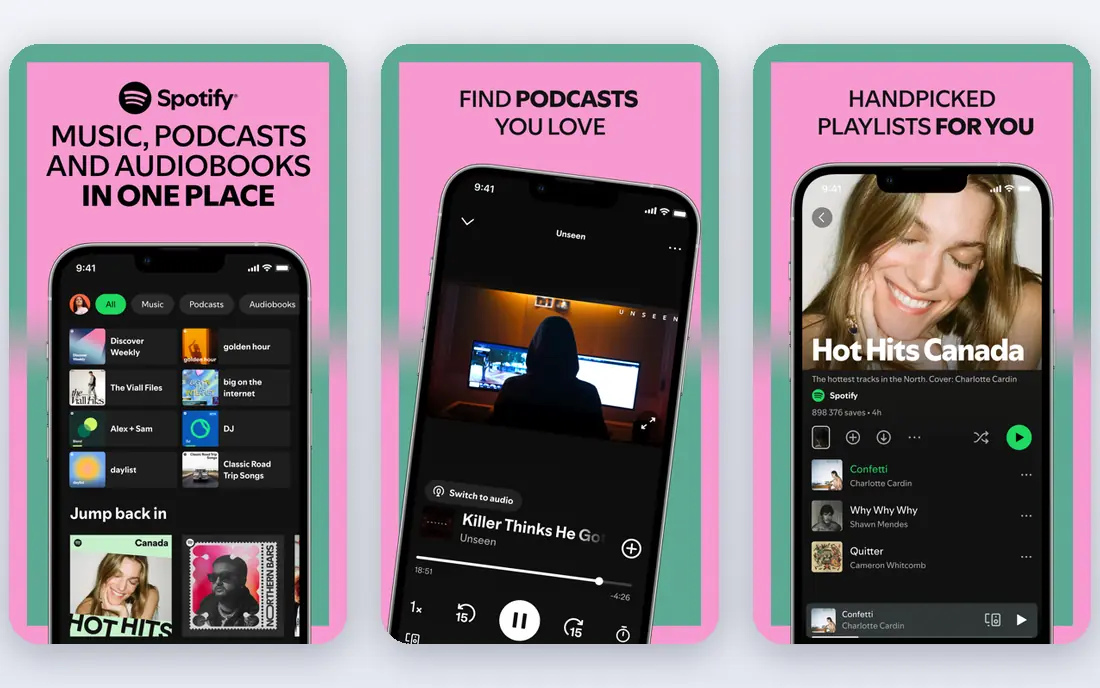
Spotify remains our pick for most listeners, because discovery is where it leads. Daily mixes, personalized playlists, and social features make it easy to find new music without searching, and shared playlists make it simple to listen with friends. Podcasts in the same app also reduce the need for a second app for spoken content. The free tier is useful for casual listening, but it has ads and shuffle limits on mobile, and offline downloads need Premium. Premium, at $12.99 per month for an individual plan in the United States in recent 2026 pricing, adds on-demand play, offline listening, and lossless audio in supported markets. If you listen daily, use many devices, and value discovery over the highest possible audio quality, Spotify is the safest first choice.
- Strong personalized playlists and discovery features
- Podcasts and audiobooks in the same app
- Broad device and social playlist support
- Free tier has ads and limited mobile control
- Lossless audio rollout varies by market and device
- Price is higher than some rivals
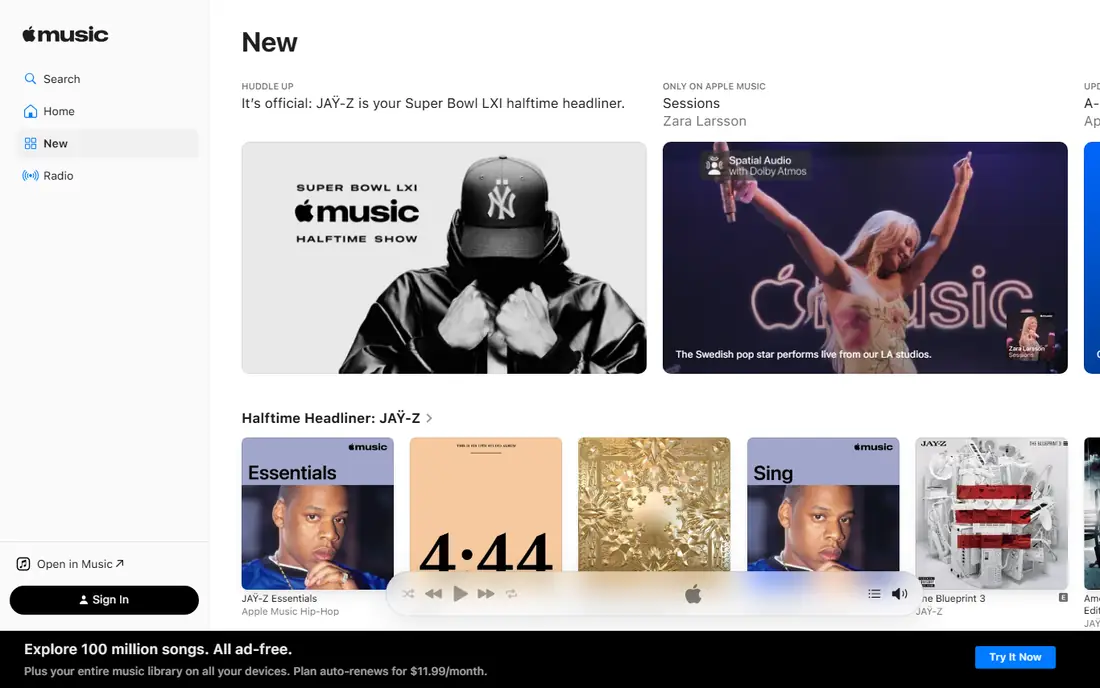
Apple Music is the best music app for listeners who live inside Apple devices. Lossless audio and spatial audio come included, without a separate hi-fi tier, and integration with Siri, Apple Watch, and HomePod is tighter than any rival. The catalog is large, and curated playlists and radio shows add depth for listeners who like editorial picks. The main drawback is the lack of a free on-demand tier, although a trial is usually available. Discovery is good, but many listeners still prefer Spotify for algorithmic playlists and social sharing. Pricing varies by region, and recent 2026 comparisons list Apple Music around $10.99 to $11.99 per month for an individual plan, so check your local price. If sound quality and Apple devices matter most, Apple Music is a strong, simple choice.
- Lossless audio and Dolby Atmos included at no extra cost
- Strong integration with iPhone, Apple Watch, and HomePod
- Large catalog
- No full on-demand free tier
- Discovery feels weaker than Spotify for some listeners
- Android and Windows apps feel less native
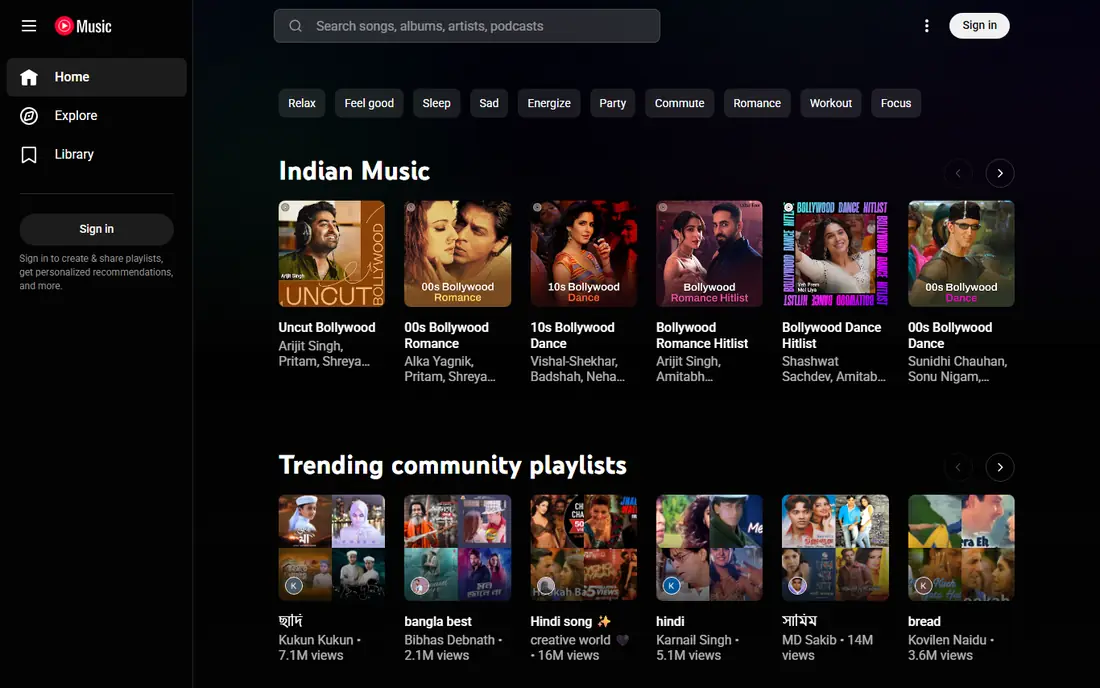
YouTube Music suits listeners who want music that does not exist on other services. Official tracks sit alongside live performances, covers, remixes, and user uploads, so a rare version you heard on YouTube is often playable here. Switching between audio and video for the same track is also a neat feature for music video fans. The free tier works with ads and without background play on mobile, which limits it for commutes and workouts. YouTube Music Premium, at $11.99 per month in recent 2026 pricing, adds background play, downloads, and ad-free listening, and YouTube Premium bundles it with ad-free video. If you already watch a lot of YouTube, that bundle is strong value, even though lossless listeners should look at Apple Music, TIDAL, or Qobuz instead.
- Huge catalog including covers, live versions, and remixes from YouTube
- Easy switch between audio and video
- Bundled with YouTube Premium
- Audio quality tops out lower than lossless rivals
- Free mobile tier has no background play
- Interface can feel busy next to Spotify
Amazon Music Unlimited is the best music app for Prime members and Alexa households. Ask Alexa to play a song, an album, or a playlist on an Echo, and the integration feels natural in a way other services cannot match on Amazon hardware. HD and Ultra HD audio are included, which gives it an edge for listeners who want better sound without paying for a specialist hi-fi service. Discovery, social playlists, and app polish trail Spotify, and the catalog experience can feel less curated. Pricing in recent 2026 comparisons lists Unlimited at $12.99 per month, or $11.99 per month for Prime members, although prices vary by region. If you already pay for Prime and use Alexa, the discount and integration make it an easy choice. If you do not, Spotify or Apple Music may feel more complete.
- HD and Ultra HD audio included
- Strong Alexa and Echo integration
- Lower price for Prime members in many markets
- Discovery and social features trail Spotify
- Interface feels less polished than rivals
- Non-Prime price is higher than the Prime price
TIDAL suits listeners who put audio quality first. HiRes FLAC, Dolby Atmos, and immersive audio options give it a clear edge over lossy-only services, especially on good headphones, speakers, or a home system. DJ integrations and curated editorial content add value for listeners who like to explore albums and artist stories in depth. The trade-off is breadth. Some listeners find the catalog, playlists, and social features less rich than Spotify, and the free tier is limited or unavailable in some markets. Pricing in 2026 listings moved to $11.99 per month for the main plan, so check the current price and trial in your country. If you can hear the difference on your equipment and you value high-resolution audio, TIDAL earns its price. If you mainly listen on phone speakers or basic earbuds, that difference may not matter.
- HiRes FLAC up to 24-bit and 192 kHz on supported plans
- Dolby Atmos and Sony 360 Reality Audio options
- DJ integrations for some users
- Catalog feels smaller than Spotify for some genres
- Free tier availability varies
- Artist and editorial features are less broad than rivals
Deezer is a strong all-round service that many listeners outside the United States already know well. Flow, its personalized radio, mixes favorites with new suggestions and lets you tune genres, which suits listeners who like radio-style discovery without building playlists. Lossless audio on paid plans also makes it a credible choice for quality-focused listeners who do not want a specialist app. The main limits are regional presence and social features. Deezer is less dominant in the United States, and its social and podcast features feel thinner than Spotify. Pricing in recent 2026 comparisons lists Deezer at $11.99 per month for an individual plan, with a free tier in many markets. If you like personalized radio, lossless audio, and a clean app, Deezer deserves a trial, especially if Spotify discovery feels too playlist-heavy for you.
- Flow personalized radio adapts to your taste
- Lossless FLAC audio on paid plans
- Playlist transfer tools help when switching services
- Smaller presence in the United States than Spotify or Apple Music
- Discovery can feel less social
- Free tier availability varies by region
Pandora suits listeners who want radio, not a library to manage. Start a station from a song or artist, give thumbs up or down, and Pandora builds a stream around your taste. That low-effort model works well for work, driving, and background listening, when choosing every track feels like work. Pandora Premium, at $11.99 per month in recent 2026 listings, adds on-demand play, offline listening, and playlist creation, but its on-demand experience still trails Spotify and Apple Music. Availability is also mainly in the United States, which limits it for international listeners. Choose Pandora if radio is your main listening style, and choose Spotify or Apple Music if you want full on-demand control and a larger global catalog.
- Personalized stations built from songs, artists, and genres
- Simple, low-effort listening
- Free tier for casual radio use
- Available mainly in the United States
- On-demand catalog and playlists trail Spotify
- Audio quality is standard, not hi-res
SoundCloud is the best music platform for discovering music you will not find elsewhere. Independent artists, DJs, remixers, and labels upload tracks directly, so new sounds appear here before they reach mainstream services, if they ever do. The free tier is generous for discovery, and following artists gives you a feed that feels more like a music community than a catalog. The mainstream catalog has gaps, and audio quality varies because uploads come from many sources. SoundCloud Go+ , at $11.99 per month in recent 2026 listings, adds offline listening, ad-free play, and a fuller catalog, but it still does not match Spotify for mainstream on-demand depth. Use SoundCloud alongside a mainstream service if you love underground music, or use it alone if independent and DJ culture is your main taste.
- Deep library of independent, underground, remix, and DJ content
- Direct support for emerging artists
- Free tier for discovery
- Mainstream catalog has gaps next to Spotify
- Audio quality varies by upload
- Paid Go and Go+ tiers are needed for offline and full catalog access
Qobuz is the pick for serious listeners who want high-resolution audio and the option to own music, not only stream it. Its catalog is presented with editorial care, album notes, and booklets, which suits classical, jazz, and album-focused listeners who read about music as well as hear it. The download store also lets you buy albums in high resolution and keep them, which matters if you worry about catalog changes. The limits are price and breadth. Qobuz offers a trial rather than a free tier, and its monthly price, at $12.99 per month in recent 2026 listings, or lower when billed annually, is higher than some rivals. Playlists and social features are also thinner than Spotify. If you listen on good equipment, value album context, and want to buy high-resolution downloads, Qobuz is worth it. If you mainly want discovery and social playlists, start with Spotify.
- Hi-res FLAC up to 24-bit and 192 kHz
- Editorial articles and album booklets add context
- Option to buy and download albums to keep
- No ongoing free tier, only a trial
- Catalog and playlists feel smaller than mainstream rivals
- Price is higher on monthly billing than annual billing
How we picked these
We compared official feature pages, pricing, app store listings, privacy policies, and public reviews. We looked for services with a large or distinctive catalog, clear pricing, offline play on paid plans, broad device support, and a working free tier or trial. We did not claim hands-on testing, and we did not include services that are only a radio station, a store with no streaming plan, or a regional service with no broad availability.
How to choose the right music app
Start with how you listen, not with the longest catalog claim. A commuter needs offline downloads and background play, a home listener needs sound quality and speaker support, and a discovery lover needs strong playlists and radio. Then check device support, because an app that works poorly on your speaker, watch, or car system will frustrate you daily.
Check audio quality on your equipment
Lossless and hi-res audio only matter if your headphones, speakers, and connection can reproduce them. On basic earbuds or a phone speaker, Spotify, YouTube Music, and Pandora sound fine. On wired headphones, a good DAC, or a home system, Apple Music, TIDAL, Deezer, and Qobuz offer a clearer benefit, so trial them on your own equipment before paying.
Compare the total cost, not only the monthly price
Individual, duo, family, and student plans change the value a lot, and Prime, YouTube Premium, and annual billing can lower the effective price. Add up the plan you will actually use, including family members, and check whether a bundle you already pay for includes music. A slightly higher monthly price can be cheaper overall if it replaces a second subscription.
Test switching before you cancel
Use a playlist transfer tool or export your library before you cancel your old service, and check for missing tracks, duplicate versions, and regional restrictions. Keep both services during a trial month if you can, and compare discovery, sound, and app feel on your daily commute and workout, not only on a first listen at home.
Frequently asked questions
What is the best music app?
The best music app for most people is Spotify, because it combines discovery, playlists, podcasts, and broad device support. Apple Music is better for Apple users who want lossless audio, YouTube Music is better for video and rare tracks, and TIDAL or Qobuz are better for high-resolution listening.
What is the best music app for free listening?
Spotify, YouTube Music, Pandora, SoundCloud, and Deezer offer free tiers in many markets, so the best music app for free listening depends on your region and listening style. Spotify suits free playlist and radio listening, YouTube Music suits free video and rare tracks, and SoundCloud suits free independent music discovery.
What are the best apps for music on iPhone?
Apple Music, Spotify, and YouTube Music are the best apps for music on iPhone for most users. Apple Music integrates best with iPhone, Apple Watch, and HomePod, Spotify offers the strongest discovery and social playlists, and YouTube Music offers the widest range of live and cover versions.
What is the best music service for sound quality?
TIDAL and Qobuz are among the best music services for sound quality, with HiRes FLAC up to 24-bit and 192 kHz. Apple Music also offers Hi-Res Lossless and Dolby Atmos at no extra cost, and Deezer offers lossless FLAC on paid plans. Test each service on your headphones or speakers before choosing.
What are the best pop music apps?
Spotify, Apple Music, and YouTube Music are strong choices for pop music, because they all carry large mainstream catalogs, new release playlists, and charts. Spotify suits pop discovery through personalized playlists, Apple Music suits curated pop playlists and radio, and YouTube Music suits pop videos and live performances.
What is the best music platform for independent artists?
SoundCloud is the best music platform for independent artists and listeners who want underground, remix, and DJ content, because artists can upload directly and build a following. Bandcamp also suits direct artist support through purchases, although it is not a full streaming subscription in the same way as the apps on this list.
Sources
See where you really rank - block by block
ProMapRanker scans Google Maps across a grid of your service area. Simple monthly plans from $19, white-label on every plan.
Start freeKeep reading
 youtube alternatives
Best YouTube Alternatives in 2026
Looking for youtube alternatives in 2026? We compare Vimeo, Dailymotion, Twitch, Rumble, and more on price, audience, monetization, control and privacy.
Read → what's the best ai tool for photo editing
What Is the Best AI Tool for Photo Editing in 2026
What is the best AI tool for photo editing? We compare ten tools for 2026, from Photoshop and Lightroom to Luminar, Topaz, Canva and mobile editors today.
Read → twitter alternatives
Best Twitter Alternatives in 2026
Compare the best twitter alternatives for 2026, from Bluesky, Threads, and Mastodon to Reddit, Tumblr, and Micro.blog, with free plans and audience notes.
Read →