 ProMapRanker
Best Multi-Modal Travel Booking App for Deals in 2026

Key takeaways
- Kayak is our pick for most deal hunters because it compares flights, hotels and cars in one search, with price forecasts and flexible date tools.
- Google Travel is the best free research starting point, with fast flight and hotel search, price tracking and an explore map for flexible trips.
- Expedia leads for bundles, since flight plus hotel plus car packages can cost less than booking each part separately.
- Skyscanner is the best cross-check for budget airlines and flexible dates, since it covers carriers that some US tools miss.
- Prices and availability vary, and deals change fast, so confirm the total price, baggage rules and cancellation terms before you pay.
Quick comparison
| Pick | Great for | Pricing starts at | Free tier | |
|---|---|---|---|---|
 Kayak | All-round deal comparison | Free | Yes | Visit |
 Google Travel | Free flight and hotel research | Free | Yes | Visit |
 Expedia | Bundles and rewards | Free | Yes | Visit |
 Skyscanner | Budget airlines and flexible dates | Free | Yes | Visit |
 Hopper | Price predictions and alerts | Free | Yes | Visit |
 Booking.com | Hotels plus flights and cars | Free | Yes | Visit |
 Trip.com | International routes and Asia travel | Free | Yes | Visit |
 Kiwi.com | Complex multi-airline routes | Free | Yes | Visit |
 Momondo | Fee-transparent fare comparison | Free | Yes | Visit |
The best multi-modal travel booking apps for deals
A multi-modal travel app should cover more than flights. It should compare hotels, cars and, where possible, trains or packages, and it should help you spot a deal rather than just list a price. We compared official feature pages and app listings for tools that are live in October 2026 and available to US travelers. Prices and availability vary, and deals change, so treat every fare here as a search result to verify, not a fixed price.
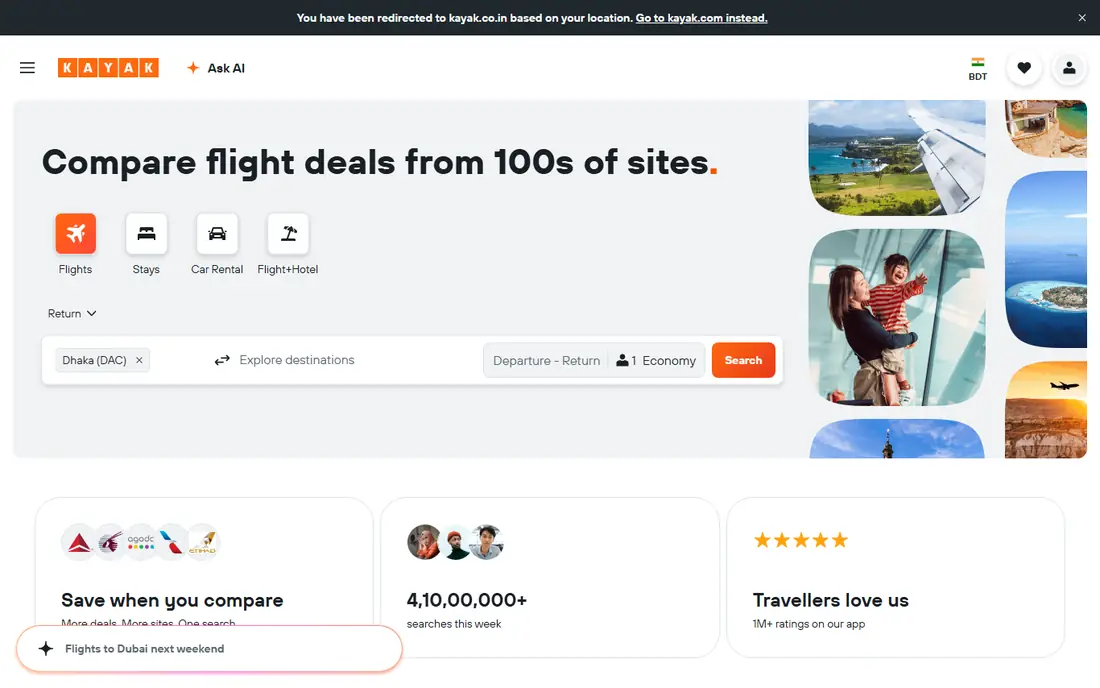
Kayak is the most complete deal dashboard for US travelers. One search can compare flights, hotels, rental cars and packages, while price forecasts, flexible date grids and fare alerts help you decide if a price is likely to rise or fall. Hacker Fares, which combine two one-way tickets, can save money on routes where a round trip is priced high.
The catch is booking structure. Kayak often hands you to an airline, hotel or partner site to complete the purchase, so the final total, baggage rules and cancellation terms live on that partner page. Hacker Fares also mean two separate bookings, so a delay on one leg may not protect the next. Use Kayak to find and compare, then read the final booking page before you pay.
- Flights, hotels, cars and packages in one search
- Price forecast and flexible date tools
- Hacker Fares for cheaper one-way combinations
- Booking often goes through a partner, not Kayak itself
- Hacker Fares mean separate bookings with no protection between legs
- Total price needs a final check
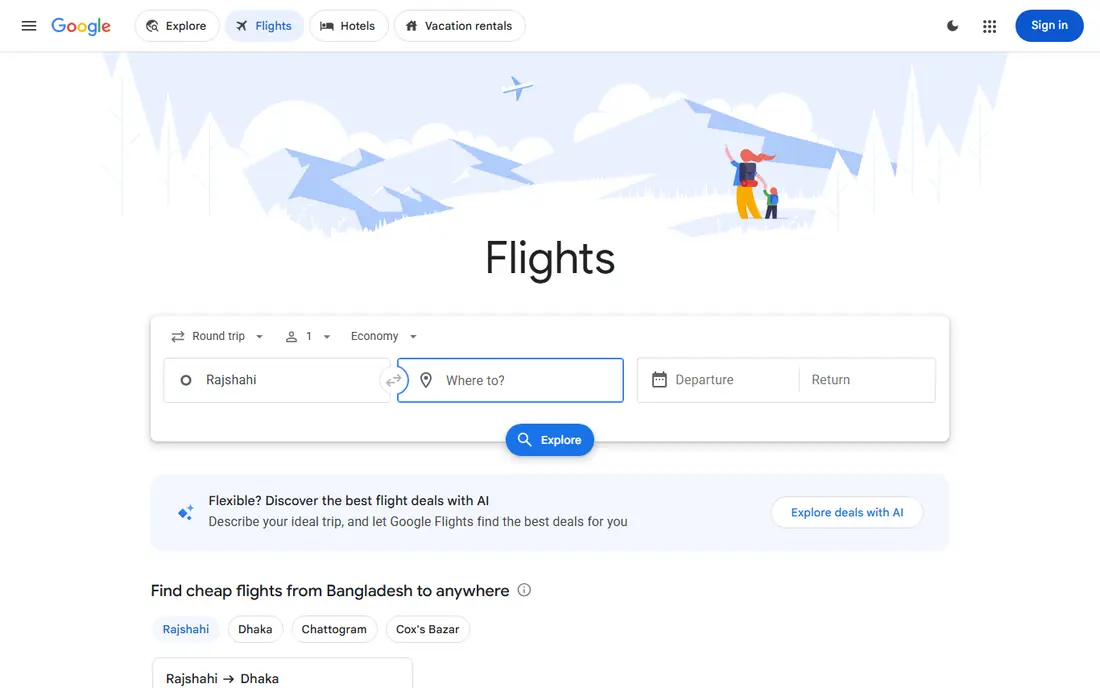
Google Travel, built around Google Flights and Google Hotels, is the fastest research desk in this list. Search is quick, price history shows if a fare is low or typical, and tracking alerts you by email when a tracked route changes. The explore map is especially useful when dates are fixed but the destination is open, since it surfaces cheap options from your home airport.
The limits are booking depth. Google Travel often links out to airlines and hotels to complete a booking, and car rental coverage is thinner than in Kayak or Expedia. Price guarantee features apply only in limited cases, so do not assume a tracked price is locked. Use Google Travel to research and track, then book directly when the price is close.
- Fast flight and hotel search with price history
- Price tracking by email
- Explore map for flexible destinations
- Not a full booking app for every mode
- Car rental coverage is thinner than Kayak or Expedia
- Price guarantee applies only in limited cases

Expedia earns its place when you book more than a flight. Bundling flight, hotel and car in one checkout can save money, and the rewards program adds value for frequent travelers who return to the same platform. One itinerary, one support contact and one set of booking details also simplify a multi-part trip.
Bundle savings are not automatic. On some routes, a flight found on Skyscanner plus a hotel on Booking.com costs less than the Expedia bundle, so compare the bundle total with separate bookings before you commit. Changes can also be slower through a third party than directly with an airline or hotel. Use Expedia for bundles, and cross-check the parts when the saving looks small.
- Flight, hotel and car bundles in one booking
- Rewards program for frequent travelers
- Clear package pricing in one checkout
- Bundle savings vary by route and date
- Booking through a third party can slow changes
- Individual parts may be cheaper elsewhere on some routes
Skyscanner is the best cross-check for travelers who want the whole market, including budget airlines that some US tools list less completely. Whole-month search shows the cheapest days at a glance, flexible destination search suits open-ended trips, and price alerts keep watch without daily manual checks. For international routes and low-cost carriers, Skyscanner often surfaces options other tools miss.
The trade-off is booking. Skyscanner links to airlines and online travel agencies to complete a purchase, so the final total, baggage allowance and change rules need a read on the partner page. Hotel and car search exists but is thinner than Kayak or Expedia. Use Skyscanner to widen the search, then verify the winner directly.
- Wide airline coverage including budget carriers
- Whole-month and flexible date search
- Price alerts by email and push
- Booking goes through partners
- Hotel and car depth is thinner than Kayak
- Some partner fares need a careful total-price check
Hopper is the best tool for the buy-now-or-wait question. Its predictions analyze fare history and tell you, in plain color coding, if a price is likely to rise or fall, and push alerts notify you when a watched trip hits a better price. Fare freeze, where offered, lets you hold a price while you decide, which is rare among deal apps.
Predictions are not guarantees. A fuel spike, a schedule change or a sudden demand shift can break a forecast, and booking through Hopper adds a middleman between you and the airline or hotel. Use Hopper for timing and alerts, then consider booking directly with the airline or hotel when the price is close, since direct bookings often resolve disruptions faster.
- Color-coded price predictions for flights and hotels
- Fare freeze on some bookings
- Push alerts for watched trips
- Predictions are probabilistic, not promises
- Booking through Hopper adds a middleman
- Paid add-ons such as flexibility plans cost extra
Booking.com is the hotel-first multi-modal option. Accommodation range is huge, from hotels to apartments and unique stays, and many listings offer free cancellation, which matters when plans shift. Flights and rental cars can be added in the same account, and Genius rewards give repeat users discounts and perks on eligible stays.
Flight search is not as deep as Kayak, Skyscanner or Google Flights, so Booking.com works best when the hotel is the main booking and the flight is secondary. Always check the total price, including taxes and fees, before comparing with another site. For a hotel-led trip with a flight and car attached, Booking.com is a strong, simple hub.
- Huge accommodation range with flexible cancellation on many listings
- Flights and rental cars in the same account
- Genius rewards for repeat users
- Flight coverage is thinner than flight specialists
- Cleaning and service fees on some stays need a total-price check
- Package savings vary
Trip.com suits travelers with international plans, especially routes touching Asia. Flight and hotel coverage is broad, target price alerts help you wait for a set price, and the app handles multi-city and international itineraries well. For a US traveler flying to Asia or connecting through Asian hubs, Trip.com often lists options and fares that domestic tools show less clearly.
For US domestic trips, Kayak, Expedia or Google Travel usually offer deeper coverage and simpler support. Booking terms and support also vary by route, so read the fare rules before you pay. Use Trip.com to widen an international search, then compare the winner with a second tool before booking.
- Strong international flight and hotel coverage
- Target price alerts
- Useful for Asia routes that US tools cover less well
- US domestic depth is thinner than Kayak or Expedia
- Booking support varies by route
- Total price and baggage rules need a final check
Kiwi.com finds routes other tools miss by combining separate tickets from different airlines into one itinerary. That virtual interlining can open cheap or unusual routings, especially for multi-city trips and destinations with limited direct service. Flexible search and price alerts help travelers who can shift dates or airports.
The risk is real and must be stated plainly. Self-transfer means separate tickets, so if one leg is delayed, the next airline has no duty to rebook you, and checked bags usually need to be collected and rechecked. Read the connection times, baggage rules and Kiwi guarantee terms before you book, and allow generous time between self-transfer legs. Use Kiwi for creative routes, not for tight connections.
- Finds self-transfer and multi-airline route combinations
- Flexible date and destination search
- Virtual interlining for routes no single ticket covers
- Self-transfer routes carry real risk if a leg is delayed
- Booking through Kiwi adds a middleman
- Change and refund rules need a careful read
Momondo, part of the same group as Kayak, is valued for fare displays that try to make fees clearer and for broad agency coverage. It often surfaces smaller agencies and international fares that a single-site search misses, and its explore tool helps flexible travelers find cheap destinations from a home airport. For a final cross-check before booking, Momondo is a useful second opinion.
Like other aggregators, Momondo hands booking to a partner, so the final total and fare rules live on that partner page. Hotel and car search is thinner than Kayak or Expedia, so Momondo works best as a flight cross-check rather than a sole booking hub. Compare Momondo, Skyscanner and Kayak on the same route, then book where the total price and terms are clearest.
- Aggregates many airlines and agencies
- Fare displays aim to show fees more clearly
- Explore tool for flexible destinations
- Booking goes through partners
- Hotel and car depth is thinner than Kayak
- Some partner fares still need a total-price check
How we picked these
We compared official feature pages and app listings for travel tools that cover at least two booking modes and are live in October 2026 for US travelers. We favored flight plus hotel or car coverage, price alerts, flexible search and clear total-price displays, and we left out single-mode tools and deal clubs that only cover departures from one region. We did not claim hands-on booking tests, and we treated all fares as variable, since prices and availability vary and deals change.
What to check before you book a deal
Start with the total price, not the headline fare. Add taxes, baggage fees, seat selection and, for stays, cleaning and service charges, then compare that total across two tools. Check cancellation and change rules next, since a cheap fare with no changes can cost more than a slightly higher flexible fare when plans shift. Note the booking party too: a direct airline or hotel booking usually resolves disruptions faster than a third-party booking.
Then check the route structure. A single ticket protects connections, while separate tickets in a Hacker Fare or a Kiwi self-transfer do not, so allow extra time and read baggage rules for each leg. Set a price alert before you buy when dates are flexible, and use the 24-hour US cancellation window for direct airline bookings when it applies. Finally, screenshot the fare, the total and the terms at checkout, since prices and availability vary and a deal can change between search and payment.
Frequently asked questions
Which travel app finds the cheapest deals most often?
No single app wins every route, since prices and availability vary and deals change. Kayak, Skyscanner and Momondo together cover most of the market, Google Travel gives the fastest research baseline, and Hopper helps with timing. Check two or three tools on the same route before you book.
Is it better to book through an app or directly with the airline or hotel?
When the price is close, book directly. Direct bookings usually offer faster support and easier changes when a flight is disrupted, plus the 24-hour US cancellation window on direct airline bookings. Use aggregators to find the fare, then book direct when the saving from a third party is small.
Are Hacker Fares and self-transfer routes safe?
They can save money, but they carry risk. Both involve separate tickets, so a delay on one leg does not automatically protect the next leg, and bags usually need rechecking. Allow generous connection time, read each fare rule, and avoid tight self-transfers when a missed connection would ruin the trip.
Do price predictions actually save money?
They can help with timing, but they are forecasts, not promises. Hopper and Kayak forecasts reflect past fare patterns, and sudden events can break them. Use predictions as a guide, set alerts, and book when the price meets your budget rather than waiting for a predicted floor that may never arrive.
Why does a deal price change between search and checkout?
Airline and hotel prices are dynamic, and availability changes as seats and rooms sell. Taxes, baggage and partner fees can also appear at checkout. Always recheck the final total before paying, and screenshot the fare and terms at the moment of booking.
Sources
See where you really rank - block by block
ProMapRanker scans Google Maps across a grid of your service area. Simple monthly plans from $19, white-label on every plan.
Start freeKeep reading
 worlds best local seo company
8 Worlds Best Local SEO Companies for Map Pack Growth in 2026
Compare the worlds best local seo company options for Google Business Profile work, citations, reviews, and multi-location rankings and reporting in 2026.
Read → world's best web hosting company
World's Best Web Hosting Company in 2026
Searching for the world's best web hosting company? We compared 10 hosts on price, renewal rates, speed, and support to help you choose well today in 2026.
Read → who's got the best nanny tax services
Who's Got the Best Nanny Tax Services in 2026
We answer who's got the best nanny tax services, comparing full filing, back taxes, software, and pricing so families can handle nanny taxes correctly.
Read →