 ProMapRanker
Best Motivational Apps Free in 2026

Key takeaways
- Habitica and Loop Habit Tracker give you the most usable tracking without paying, one through game rewards and the other through a plain, ad-free checklist.
- Finch and Fabulous suit people who need a kinder daily structure, with a virtual pet in Finch and guided routines in Fabulous.
- Motivation, I Am, and ThinkUp focus on short daily messages, so they work best as a small addition to a habit system rather than a replacement for one.
- Daylio and Way of Life help you see patterns, since Daylio links mood to activities and Way of Life shows simple charts for each habit.
- Every app below has a genuinely free tier, and this is general information only, not medical advice.
Quick comparison
| Pick | Great for | Pricing starts at | Free tier | |
|---|---|---|---|---|
 Habitica | Gamified habit tracking | Free | Yes | Visit |
 Finch | Gentle self-care routines | Free | Yes | Visit |
 Fabulous | Guided morning routines | Free | Yes | Visit |
 Motivation | Daily motivational quotes | Free | Yes | Visit |
 I Am | Personalised affirmations | Free | Yes | Visit |
 ThinkUp | Affirmations in your own voice | Free | Yes | Visit |
 Loop Habit Tracker | Simple free Android tracking | Free | Yes | Visit |
 Daylio | Mood and habit patterns | Free | Yes | Visit |
 Way of Life | Honest habit charts | Free | Yes | Visit |
The best motivational apps free
We compared official feature pages, app store listings, and pricing pages for apps that stay useful without a subscription. Our pick for most people is Habitica, because its free tier covers the core habit system, while Finch is our pick if pressure tends to put you off.
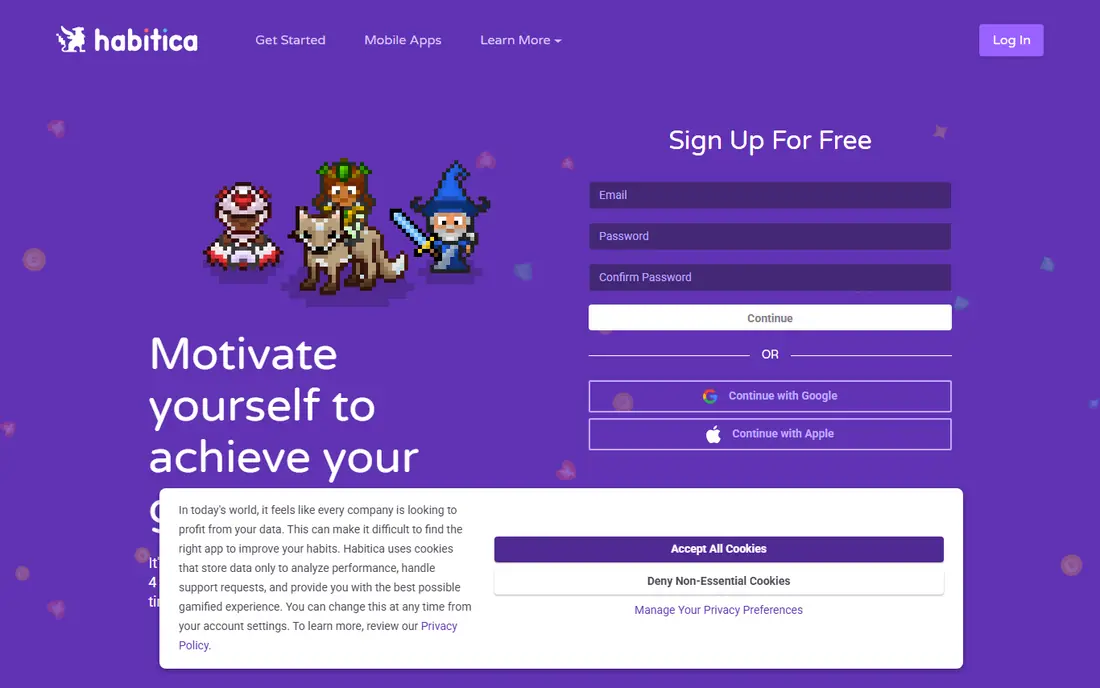
Habitica turns habits, daily tasks, and one-off to-dos into a role-playing game. Completing a task earns experience and gold for your avatar, while missed daily tasks cost health. That feedback is immediate, which helps on days when a plain checklist feels easy to ignore. You can also join a party, so other members see your progress on shared quests.
The free tier is the reason Habitica leads this list. You do not need a subscription to track an unlimited set of habits in the basic system, and the optional subscription mainly adds cosmetic items and extra gems. The catch is the learning curve. There are quests, guilds, pets, and gear systems, and a new user can spend a while sorting out what matters. If you enjoy game systems, that depth keeps things interesting. If you do not, a simpler tracker below will serve you better.
- Full core habit system is free
- Parties add accountability
- Habits, dailies, and to-dos stay separate
- Interface can feel busy at first
- Game theme does not suit everyone
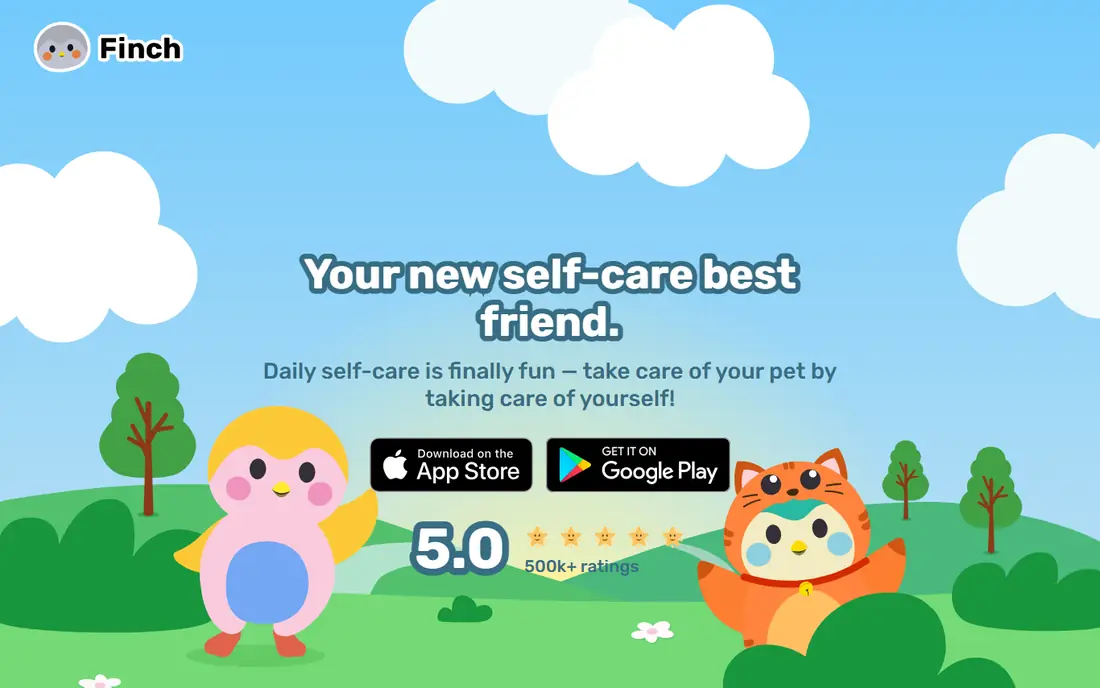
Finch gives you a virtual pet that grows as you complete small self-care goals. You set goals, check in with your mood, journal, and work through short exercises. The pet angle sounds light, yet many people keep using Finch precisely because it does not scold them for a missed day. It frames a small step as progress, which matters when motivation is already low.
The free version covers journaling, mood and goal tracking, and core exercises, while Finch Plus adds extra outfits, adventures, and soundscapes. That split is fair for a free app, since the daily tools stay available. The main drawback is density. Journeys, goals, tags, and rewards take time to connect, and some goal types feel all-or-nothing. Start with two or three goals and ignore the rest until the routine feels steady.
- Core journaling and goal tools are free
- Tone is kind rather than strict
- No ads in the free version described by reviewers
- Some exercises and customisation sit behind Plus
- Interface has many sections to learn
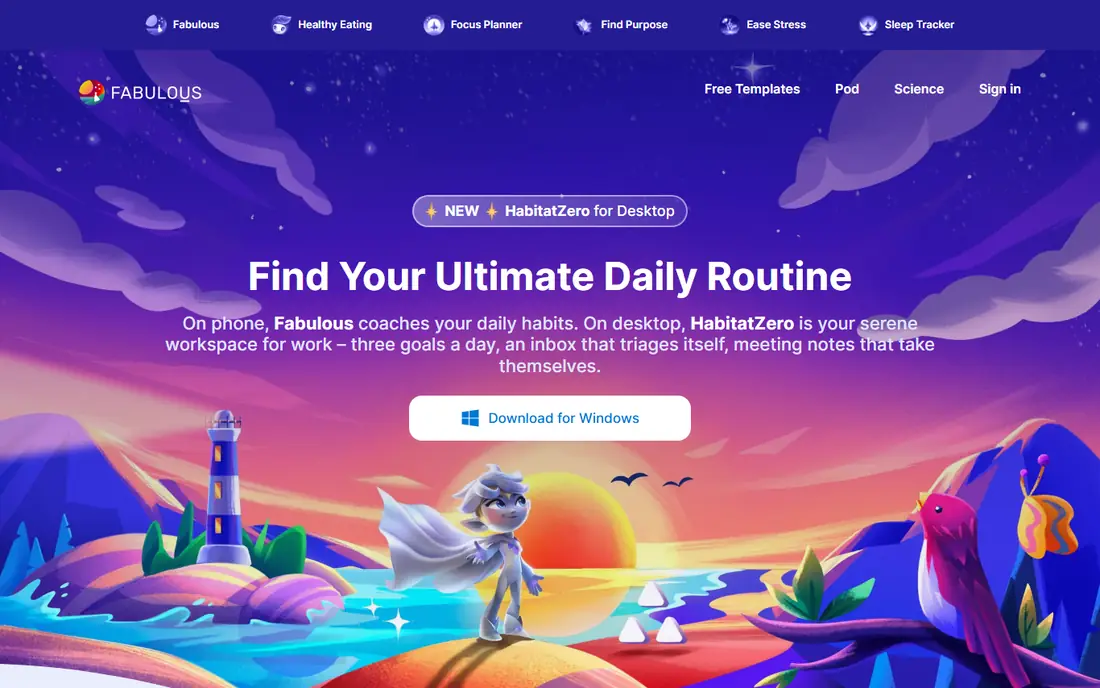
Fabulous builds your day around routines rather than a long list of separate habits. A morning routine might include drinking water, moving for a few minutes, and planning the day, with each step explained in short coaching notes. That structure helps if you know what you want to do but stall on starting. The app walks you through the sequence instead of leaving you to choose the first step.
The free version gives you basic routines, while Premium adds unlimited habits, premium journeys, and coaching series on topics such as productivity and self-care. App store listings put the annual Premium plan at about 49.99 dollars, so check the in-app price before you subscribe, since prices vary by country. Fabulous works best for people with fairly regular hours. If your schedule changes daily, a flexible tracker such as Habitica or Loop may fit better.
- Structured routines for mornings and evenings
- Coaching series explain the steps
- Habit reminders are built in
- Free version limits the number of habits
- Full coaching sits behind Premium
Motivation, often listed as Motivation Daily Quotes, sends short quotes you can filter by theme, such as confidence, fitness, or focus. It takes seconds to use, which is the point. You open it, read one line, and move on with your day. For people who want a small nudge without a full routine system, that brevity is a strength rather than a gap.
Be clear about what this app cannot do. It does not track habits, plan routines, or hold you accountable, so pair it with a tracker if you want behaviour change rather than a daily lift. The free version is functional with ads, and paid options remove ads and add extras. Use it as a morning prompt, then do the actual task in another app on this list.
- Large quote library with category filters
- Quick daily check-in
- Works with ads in the free version
- Quotes alone do not build habits
- Some features require payment
I Am starts with a short quiz about your goals and mood, then serves affirmations matched to those themes. You can set reminders through the day, save favourites, and browse categories such as calm, confidence, and gratitude. The format is deliberately short, so it fits between tasks without asking for a long session.
The free feed is usable for a daily practice, while a subscription adds more categories and customisation. That is worth knowing before you judge the app on its first day, since the free set is narrower. Affirmations also divide opinion. Some readers find a repeated positive line genuinely steadying, while others find it hollow. Try the free feed for a week and keep it only if the reminders prompt a useful action, such as a walk or a difficult message you have been putting off.
- Core affirmation feed is free
- Short quiz personalises the themes
- Works on phones and watches
- Depth is limited without a subscription
- Affirmations suit some people more than others
ThinkUp lets you record affirmations in your own voice and play them back with background music. That idea separates it from every other app here. Reading a line is one thing, and hearing yourself say it is another, especially for goals tied to confidence or public speaking. You can write your own lines or start from built-in examples, then group them into themed recordings.
The free tier includes a small number of recordings, with more available through a subscription, so check the current limit in the app before you build a large library. Recording also takes effort, and a half-hearted script will sound flat on playback. Write lines in plain language, keep them short, and record when you are calm. Used that way, ThinkUp works as a focused tool for one or two goals rather than a general motivation feed.
- Hearing your own voice can feel more convincing
- Free recordings cover a starter set
- Music can sit behind recordings
- Free tier limits the number of recordings
- Setup takes more effort than reading a quote
Loop Habit Tracker, also known as uHabits, is the plainest app on this list, and that is its appeal. You add a habit, choose how often it should happen, and check it off each day. A habit score rises with consistency and falls slowly after misses, so one bad day does not erase weeks of progress. Widgets and one reminder per habit keep the system light.
Because Loop is open source and free, there is no subscription to weigh up and no ad system to manage. The trade-off is scope. There is no coaching, no virtual pet, and no social layer, and the app is available on Android rather than iPhone. If you want a private, no-cost tracker and you use Android, Loop is hard to beat. iPhone users should look at Habitica or Way of Life instead.
- Completely free and open source
- No ads
- Habit scores show long-term trends
- Android only
- Design is plain
- No built-in coaching or community
Daylio asks how your day went and which activities filled it, using two taps rather than a long journal entry. Over weeks, its charts show which activities tend to appear on better days and which appear on harder ones. That pattern view is useful for motivation, because it turns vague feelings into concrete choices, such as more walks or fewer late nights.
The core free version covers mood logging, activities, and basic statistics, while Premium adds unlimited customisation and deeper reports. Daylio does not set routines or send coaching, so it pairs well with a habit app rather than replacing one. If you like data and you want to understand your own patterns before changing them, Daylio gives you that picture with very little daily effort.
- Two-tap mood and activity logging
- Charts link mood to activities
- Core features are free
- It tracks rather than coaches
- Premium adds more depth and customisation
Way of Life keeps habit tracking to a simple question for each habit: did you do it today, yes or no. You can add a short journal note to explain a miss, and the charts show chains, trends, and averages at a glance. That honesty is the point. There is no game layer to soften a broken chain, and the chart makes a slipping habit visible before it disappears entirely.
The free tier covers a limited number of habits, with more available through in-app purchases, so start with your three most important habits and expand only if the system sticks. Way of Life suits people who want numbers without noise. It will not cheer you on, and it will not build a routine for you, but it will show you, plainly, what you actually did.
- Simple yes or no daily check-ins
- Clear charts and chains
- Journal notes add context
- Free tier is limited
- Design is minimal
- No gamification
How we picked these
We compared official feature pages, pricing pages, and app store listings, and we kept only apps with a genuinely free tier that still does useful work without payment. We favoured a mix of approaches, since motivation looks different for different people, and we dropped apps whose free version was only a short trial or a locked demo. We did not claim hands-on testing, and prices were checked against vendor pages and store listings where available, with in-app prices varying by country.
Choosing the right free motivation app
Start by naming the problem you want to solve. If you forget tasks, pick a tracker such as Habitica, Loop, or Way of Life. If you start the day flat, pick a prompt app such as Motivation or I Am, and pair it with one tracker. If strict systems tend to make you quit, pick Finch, where the tone stays gentle and a missed day is not treated as failure.
Keep the system small
Choose one tracker and, at most, one prompt app. Adding three trackers at once creates a second job, which is checking apps, and that job crowds out the habits themselves. Set one reminder time, keep your habit list to three items for the first two weeks, and add more only when the first three feel automatic.
Watch for paywalls that change the deal
Free tiers differ in useful ways. Some apps limit the number of habits, some limit recordings or categories, and some keep core tools free while charging for extras. Before you invest weeks in an app, check which limit you will hit first and whether that limit matters for your goal. A free app that caps you at three habits is still a good app if you only need three habits.
A note on health and wellbeing
These apps offer general information and habit support, not medical advice. If low mood, anxiety, or sleep problems persist, speak to a qualified health professional rather than relying on an app alone. Use these tools to support daily routines, not to diagnose or treat a condition.
Frequently asked questions
What are the best free motivational apps?
Habitica is our top pick for most people because its core system is free, while Finch suits a gentler approach and Loop Habit Tracker suits Android users who want a plain free tracker. The best choice depends on whether you need tracking, prompts, or both.
What are the best motivation apps for daily quotes?
Motivation and I Am are the strongest free options for short daily messages, since both offer a usable free feed with themes you can choose. ThinkUp adds a different angle by letting you hear affirmations in your own voice.
Do free motivational apps really work without paying?
Yes, when the free tier covers the core tool you need. Habitica, Loop, and Daylio all give you usable tracking without payment, while Finch and Fabulous keep useful free versions with paid extras. Check the free limit before you commit, since caps on habits or recordings differ.
Which free app is best for building a morning routine?
Fabulous is the most guided choice for mornings, because it orders steps into a routine with coaching notes. Finch is a softer alternative if you prefer a pet companion and flexible goals over a fixed sequence.
Can I use more than one motivational app at once?
You can, but keep the combination small. One tracker plus one prompt app is a sensible pairing, while three trackers tend to create extra checking work. Review the pair after two weeks and drop the app you open least.
Is there a completely free motivational app with no ads?
Loop Habit Tracker is free and open source with no ads, though it is Android only. Habitica and Finch also offer generous free tiers, but their paid plans add extras, so read the in-app details for the version you install.
Sources
See where you really rank - block by block
ProMapRanker scans Google Maps across a grid of your service area. Simple monthly plans from $19, white-label on every plan.
Start freeKeep reading
 zoro.to alternatives
Best Zoro.to Alternatives in 2026
We compare the best zoro.to alternatives in 2026, listing only legal licensed anime streaming services, from Crunchyroll to free options for fans today.
Read → zip alternatives
Best Zip Alternatives in 2026
We compare the best zip alternatives for buy now, pay later in 2026, covering pay-in-4 plans, fees, spending limits, and credit reporting options today.
Read → yesware alternatives
Best Yesware Alternatives in 2026
Compare the best yesware alternatives for sales email tracking, templates, and sequences, with current pricing and honest tradeoffs for small sales teams.
Read →