 ProMapRanker
Best Mood Tracker App in 2026

Key takeaways
- Daylio is the fastest daily log, while How We Feel is the best fully free option for naming emotions precisely.
- Bearable goes deepest on links between mood, sleep, symptoms, and medications.
- eMoods suits people who want a simple log they can share with a clinician as a PDF report.
- Mood trackers are general information tools only: they do not diagnose or treat any condition.
Quick comparison
| Pick | Great for | Pricing starts at | Free tier | |
|---|---|---|---|---|
 Daylio | Fast daily logging | $35.99 per year | Yes | Visit |
 How We Feel | Free emotion check-ins | Free | Yes | Visit |
 Bearable | Mood plus symptoms and sleep | $34.99 per year | Yes | Visit |
 eMoods | Clinician-friendly reports | See website | Yes | Visit |
 Moodnotes | Thought records and reflection | See website | Yes | Visit |
 Moodfit | Mental fitness toolkit | See website | Yes | Visit |
 Finch | Gentle daily check-in habit | See website | Yes | Visit |
 Reflectly | Guided journaling | See website | Yes | Visit |
The best mood tracker apps
These apps provide general information only, not medical advice, and they do not diagnose or treat any condition. We compared official app pages, store listings, and recent comparisons, and we kept only tools that still work in 2026 for personal mood logging. If you feel unsafe or your mood changes sharply, talk to a clinician or a crisis service in your area rather than relying on an app.
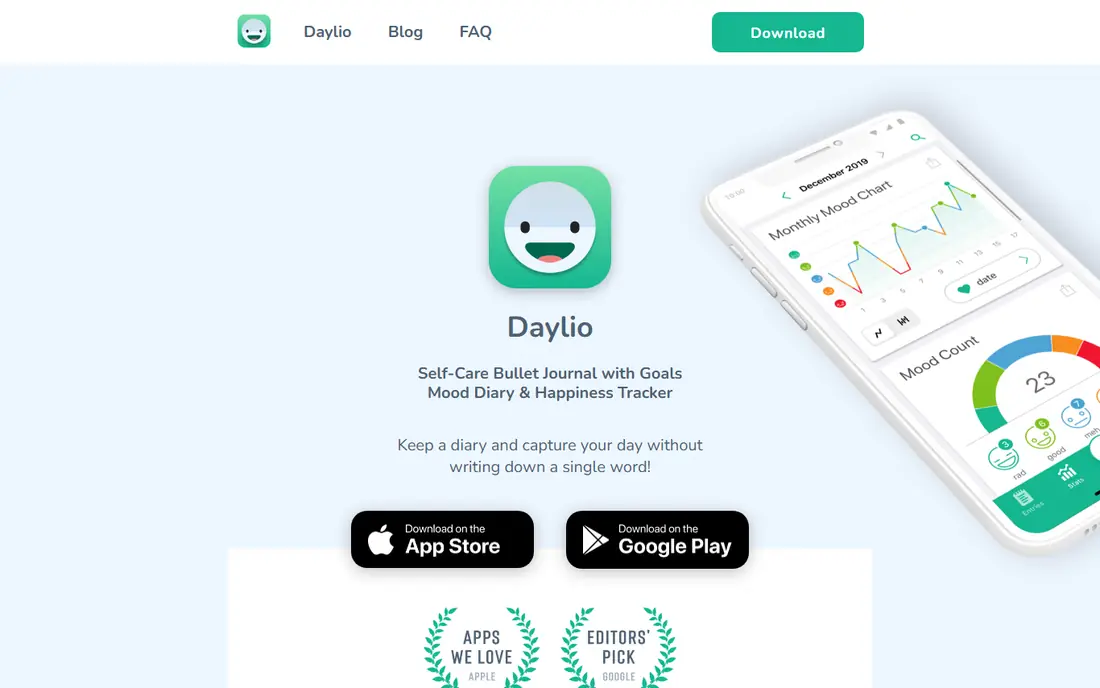
Daylio is our pick for most people because logging takes seconds. Pick a mood face, tap a few activity icons, add a note if you like, and save. That speed matters, since the best tracker is the one you still open in week six.
The month calendar gives a clear visual record, with colors that show good and hard days at a glance. Streaks add gentle motivation without turning the app into a game. Over time, activity tags help you spot which routines line up with better days.
The catch is Premium. Deeper charts, exports, and unlimited custom moods cost $4.99 per month or $35.99 per year, and the free plan shows ads. If you only need a daily record, the free plan is enough. If you want detailed analysis, budget for Premium or pick Bearable.
- Two-tap check-in with mood and activities
- Month calendar heatmap
- Streaks that support a habit
- Deeper charts and unlimited custom moods need Premium
- Free plan shows ads
How We Feel is the best free option, and it is fully free with no ads and no paid tier. The app was built with Yale Center for Emotional Intelligence, and it helps you name what you feel with more precision than a simple happy-or-sad scale. That vocabulary is useful when a day feels mixed or hard to describe.
Check-ins take a short time, with timed prompts through the day if you want them. An optional account lets you sync, while the core check-in works without a paywall. The non-profit model means no upsell screens interrupt a reflective moment.
The limit is scope. How We Feel tracks mood and emotion words only, not habits, symptoms, sleep, or medications. If you want links between mood and health factors, Bearable goes deeper. For free, precise emotion check-ins, this is hard to beat.
- Fully free with no ads or paywall
- Rich emotion vocabulary
- Built with Yale researchers
- No habit, symptom, or medication tracking
- Pattern views are lighter than Bearable
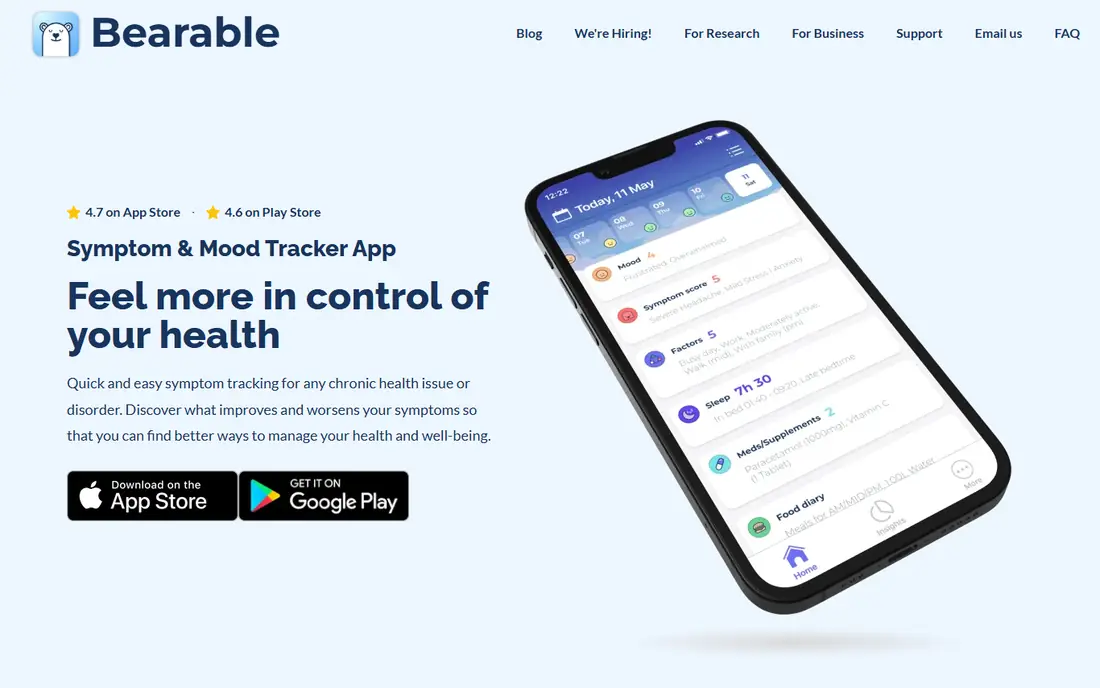
Bearable suits people who want to understand what lines up with mood changes. You can log mood, sleep, symptoms, medications, energy, and habits in one place, then look for patterns across weeks. That breadth helps people with chronic conditions, busy schedules, or complex routines.
The free plan is generous, with unlimited custom tracking, while Premium at $34.99 per year adds deeper charts and correlation reports. Multiple reminders per day help you log mood, meds, and symptoms at the right times. The design stays readable even with many factors tracked.
The trade-off is setup. A cloud account is needed, and the range of options can feel like a lot at first. Start with mood plus two factors, such as sleep and one symptom, and add more only if the patterns prove useful. For deep, health-linked tracking, Bearable leads.
- Tracks mood alongside sleep, symptoms, and medications
- Correlation reports
- Unlimited custom tracking on free plan
- Cloud account needed
- Deeper charts sit in Premium
eMoods is a good fit for people who want a simple log they can show to a clinician. Daily entries cover mood, sleep, and common symptoms, with charts that show trends over time. A PDF report makes it easy to share a summary at an appointment, without handing over a phone.
The Always Free edition covers charts and the PDF report, which is generous for a health-linked tool. Data stays local by design, with export options that respect privacy. That local focus suits people who prefer not to sync sensitive notes to a server.
The weakness is polish. The design is plain, and custom symptoms and longer notes sit in the paid plan. If you want a pretty journal or habit gamification, look at Finch or Daylio. For a clear, shareable mood record, eMoods is a practical choice, and it does not diagnose or treat any condition.
- Simple daily log with charts
- PDF report for sharing with a clinician
- Local-first design
- Design is plain
- Custom symptoms and notes need the paid plan
Moodnotes suits people who want to understand why a mood shifted, not just that it did. The app pairs mood logging with thought records, so you can note the thought behind a feeling and reframe it in writing. That reflective step helps people who like journaling with structure.
The design is calm and uncluttered, which makes a short evening check-in feel manageable. Prompts guide you when you are stuck for words, without forcing a long entry. That balance suits people who want reflection without a full diary app.
The limit is breadth. Moodnotes does not track symptoms, medications, or habits as deeply as Bearable, and its pattern tools are lighter. If your main question is what thoughts line up with mood, it is a strong pick. If your main question is what health factors line up with mood, choose Bearable.
- Helps you name thoughts behind a mood
- Journaling prompts
- Clean, calm design
- Smaller feature set than Bearable
- Pattern tools are lighter
Moodfit fits people who want more than a log: a toolkit for daily mental fitness. Core mood tracking sits alongside thought records, gratitude entries, mindfulness exercises, and goal setting. That mix helps people who want small, regular practices rather than just a record.
The app lets you set goals and track progress across tools, which can support a routine. Free core tracking covers the basics, while paid plans add deeper tools, with prices that vary by plan and region. Check the store price for your region before buying.
The trade-off is busyness. If you only want a two-tap log, Moodfit has more screens than Daylio or How We Feel. The toolkit is a strength only if you use at least one extra tool regularly. For a broader mental fitness routine, it is a useful all-in-one option, and it does not replace professional care.
- Core mood tracking plus CBT tools
- Gratitude and mindfulness exercises
- Goal setting
- Paid plans vary by region
- Toolkit can feel busy for simple logging
Finch suits people who struggle to keep a tracking habit going. A small virtual pet grows as you check in, complete breathing exercises, and journal, which makes the daily routine feel gentle rather than clinical. That low-pressure design helps people who have dropped trackers before.
Check-ins are short, with mood, energy, and a brief reflection, plus breathing and journal tools in the same app. The tone is warm without being pushy, and streaks feel encouraging rather than punishing. That approach suits people who want self-care to feel kind, not like homework.
The catch is style and price. The pet companion will not appeal to everyone, and deeper features sit in Finch Plus, with a subscription cost. If you prefer a plain log, Daylio or How We Feel will feel more direct. For a habit that sticks, Finch is a thoughtful choice.
- Friendly pet companion supports a daily habit
- Check-ins feel low-pressure
- Breathing and journal tools included
- Deeper features need Plus
- Pet style may not suit everyone
Reflectly fits people who want mood tracking wrapped in guided journaling. Daily prompts help you reflect on the day, name what went well, and note what felt hard, with mood logged alongside each entry. That structure helps people who stare at a blank journal page.
The design is modern and calm, with a focus on one entry at a time. Over weeks, entries build a readable record of mood and reflection, which can reveal themes you might miss day to day. The app suits evening reflection better than quick midday taps.
The limit is the free plan, which is limited, with deeper insights behind a subscription. If you want free, unlimited logging, Daylio or How We Feel are better. For guided journaling with mood woven in, Reflectly is a pleasant, thoughtful option.
- Guided prompts for reflection
- Mood journal in one place
- Clean, modern design
- Free plan is limited
- Deeper insights need a subscription
How we picked these
We compared official app pages, store listings, and recent comparisons, and we kept only tools that still work in 2026 for personal mood logging. We mixed fast logs, free check-ins, deep health tracking, and guided journaling, since readers want different kinds of help. We left out apps that shut down or merged into other products, and we noted where paid plans add the deeper analysis layer.
How to get useful patterns from a mood tracker
Start small. Log mood once a day at the same time, plus one or two factors you care about, such as sleep or a key activity. A short, steady record beats a detailed record that stops after a week. Set a reminder at a time you are usually free, not at a time you are rushed.
Next, review weekly, not daily. One bad day tells you little, while a week shows whether sleep, work, or social time lines up with mood. Look at the calendar view first, then read notes for days that stand out. That habit turns a log into something you can act on.
Then be honest about limits. A tracker shows patterns in what you logged, not causes, and it cannot diagnose or treat a condition. If low mood lasts weeks, affects work or relationships, or feels unsafe, talk to a clinician or a crisis service. A tracker can support that conversation, but it does not replace it.
Finally, protect your privacy. Mood notes can be sensitive, so check whether entries stay on your phone or sync to a server, and whether you can export or delete them. Pick an app whose privacy settings you understand, and avoid logging details you would not want shared.
Frequently asked questions
What is the best mood tracker app overall?
Daylio is our pick for most people, thanks to fast logging and a clear month view. How We Feel is best if you want a fully free app, while Bearable is best for mood linked to sleep, symptoms, and medications. The right choice depends on how much detail you want.
Are mood tracker apps free?
Many offer free plans, and How We Feel is fully free with no ads or paid tier. Daylio, Bearable, eMoods, Moodnotes, Moodfit, Finch, and Reflectly all offer free logging, with deeper charts, exports, or tools behind paid plans. Check the current plan before you rely on a feature.
Can a mood tracker diagnose depression or anxiety?
No. Mood trackers are general information and wellness tools, and they do not diagnose or treat any condition. They can show patterns to discuss with a clinician, but a diagnosis needs a professional assessment. If you feel unsafe, contact a clinician or a crisis service right away.
Which mood tracker is best for privacy?
How We Feel and eMoods are strong on privacy, with How We Feel free of ads and eMoods local-first with export options. Daylio keeps entries local by default with optional cloud backup. Read the privacy policy and sync settings for any app before logging sensitive notes.
How often should I log my mood?
Once a day at the same time works well for most people, with extra entries on days that feel notable. More entries can help for detailed patterns, but they also raise the effort and the chance you stop. Pick a rhythm you can keep for months.
Can I share my mood log with a therapist?
Yes, in most cases. eMoods offers a PDF report made for sharing, while Bearable and Daylio offer exports on paid plans. Ask your clinician what format helps them, and share only the range and details you are comfortable sharing.
Sources
See where you really rank - block by block
ProMapRanker scans Google Maps across a grid of your service area. Simple monthly plans from $19, white-label on every plan.
Start freeKeep reading
 zyte alternatives
Best Zyte Alternatives in 2026
These zyte alternatives cover managed scraping APIs, proxy networks and no code tools for lawful collection from your own or consented sources only in 2026.
Read → zerto alternatives
Best Zerto Alternatives in 2026
Compare the best zerto alternatives for disaster recovery and replication, with recovery targets, cloud options and honest trade-offs for teams in 2026.
Read → zerofox alternatives
Best ZeroFox Alternatives in 2026
We compared 9 zerofox alternatives for brand protection, phishing takedowns, dark web monitoring, and social impersonation, with clear coverage notes.
Read →