 ProMapRanker
Best Mobile Trading Platform in 2026

Key takeaways
- Most leading apps now charge $0 commission on US stocks and ETFs, so the real differences are options fees, research, account types and cash terms.
- Fidelity is our pick for most people, because it pairs $0 stock and ETF trades with strong research, retirement accounts and fractional shares from $1.
- Robinhood and Webull suit traders who want a fast mobile-first experience, while Schwab suits investors who want full-service support and thinkorswim.
- Crypto trading still carries spreads and price swings, and options can lose money fast, so check fees and risks before funding any account.
- This is not financial advice. Trading carries risk, and you can lose money, including more than you put in when you use margin.
Quick comparison
| Pick | Great for | Pricing starts at | Free tier | |
|---|---|---|---|---|
 Fidelity | All-round investors | Free | Yes | Visit |
 Robinhood | Simple mobile trading | Free | Yes | Visit |
 Webull | Active chart traders | Free | Yes | Visit |
 Charles Schwab | Full-service investors | Free | Yes | Visit |
 E*TRADE | Balanced research and tools | Free | Yes | Visit |
 SoFi Invest | Hands-off beginners | Free | Yes | Visit |
 Public | Multi-asset investing | Free | Yes | Visit |
 Interactive Brokers | Global and active traders | Free | Yes | Visit |
 moomoo | Data-rich mobile trading | Free | Yes | Visit |
 tastytrade | Options and futures traders | Free | Yes | Visit |
The best mobile trading platform options
We compared official pricing pages, app store listings and public product documentation for the apps below, and we focused on what each one does well on a phone.
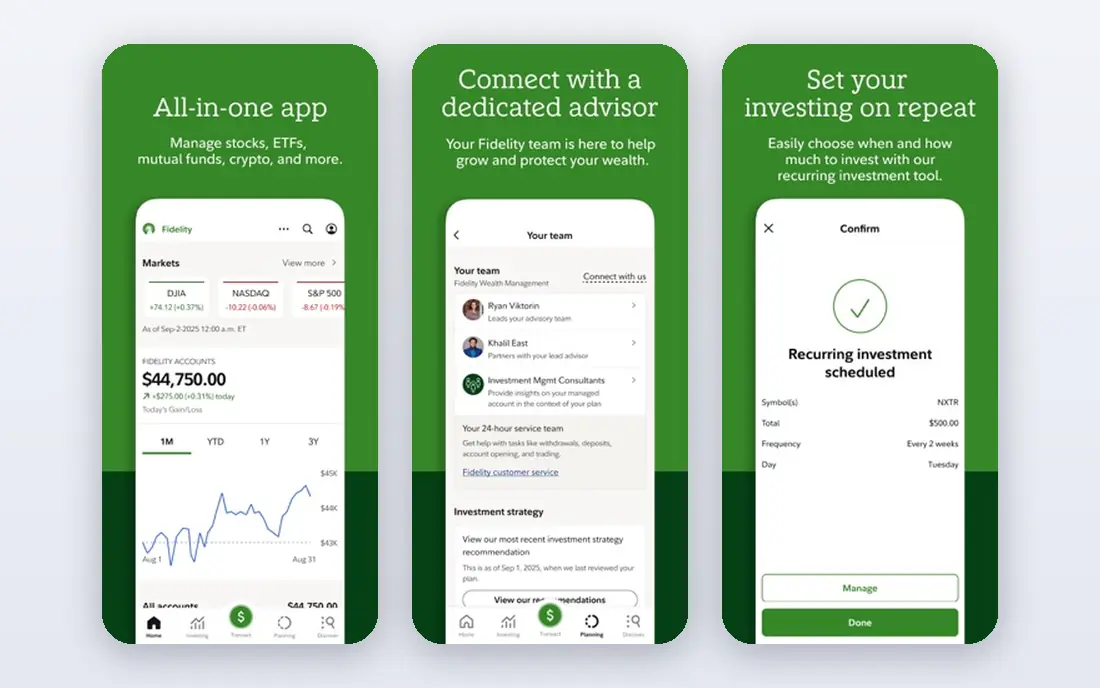
Fidelity gives you a full broker in your pocket, not just a trading screen. You can buy fractional shares of stocks and ETFs from $1, open IRAs and other retirement accounts, and read research from several providers before you place an order. That depth is why it works for both a first account and a long-term portfolio.
The trade-off is density. The app packs in a lot of menus, quotes and research, and new investors may need a few sessions to find their way around it. Options traders also pay $0.65 per contract, which is standard for full-service brokers but higher than the $0 options pricing at Robinhood and Webull.
- $0 commissions on US stocks and ETFs
- Fractional shares from $1
- Strong research and retirement accounts
- App can feel busy for first-time traders
- Options cost $0.65 per contract
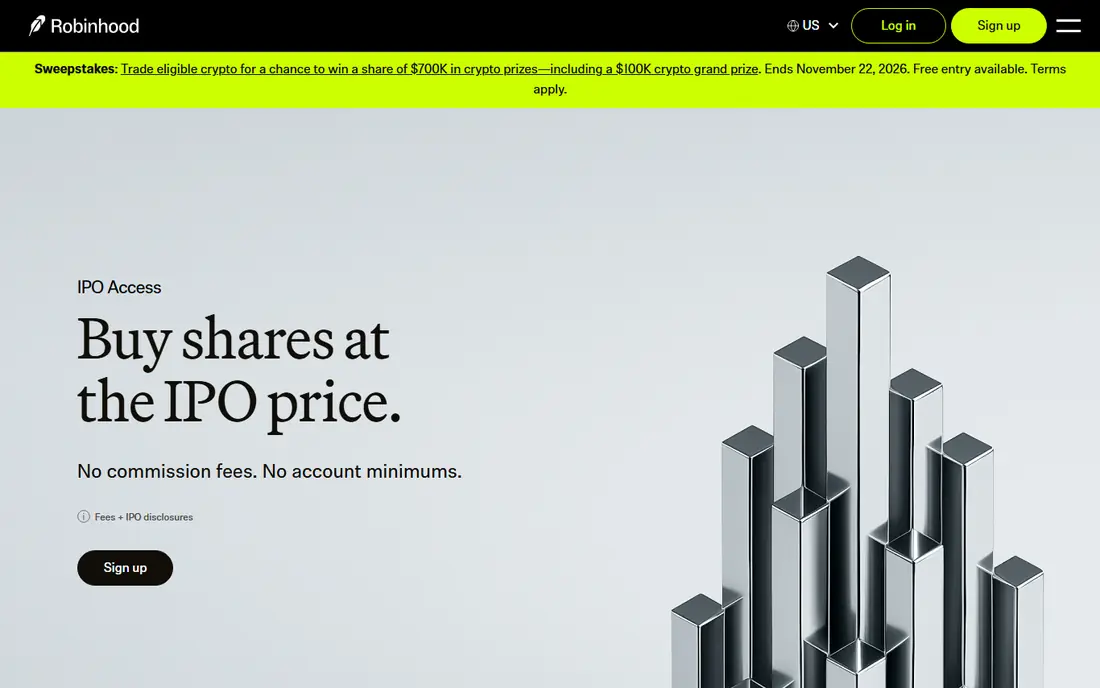
Robinhood remains the easiest app to learn. Opening an account, placing a first trade and checking a position all take very few taps, and the order ticket stays clear even for options. Crypto trading sits in the same app, which suits people who want stocks and crypto in one place.
The catch is depth. Research tools, screeners and account types are lighter than at Fidelity or Schwab, and there are no mutual funds. Robinhood Gold, a paid tier, adds features such as margin and deeper data, so check whether you need it before you pay for it.
- Clean mobile-first design
- $0 stock, ETF and options commissions
- Fractional shares from $1
- Research is thinner than full-service brokers
- No mutual funds
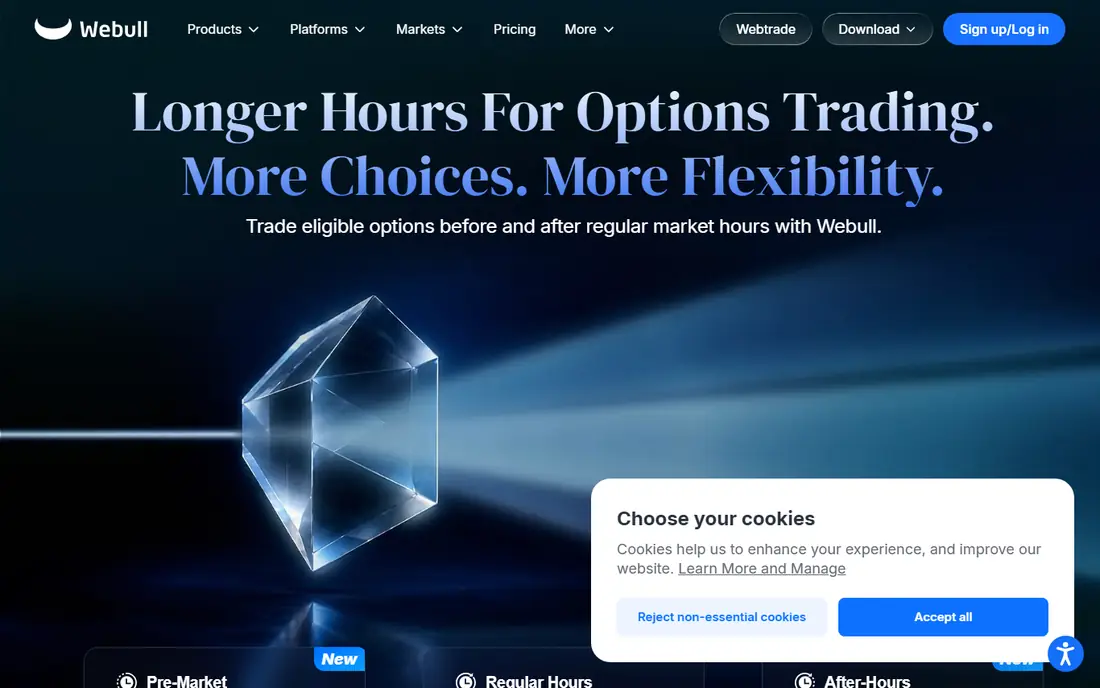
Webull is built for people who live in charts. You get a wide set of technical indicators, extended-hours trading windows and a paper trading mode that lets you practise with virtual money before risking real cash. That combination makes it a strong step up from a bare-bones beginner app.
The same depth can overwhelm a new trader. Menus and chart settings take time to learn, and the app assumes you already know basic order types. If you only want to buy a broad ETF each month, a simpler app will do the job with less fuss.
- $0 stock, ETF and options commissions
- Detailed charts and indicators
- Free paper trading
- Learning curve is steeper than Robinhood
- No mutual funds
Schwab pairs a large branch and support network with thinkorswim, a trading platform that serious chart and options traders respect. You can start with the main mobile app and move to thinkorswim as your skills grow, without changing brokers. Retirement planning tools and education are also strong.
The main app is less slick than Robinhood or Webull, and some screens feel crowded. Options cost $0.65 per contract, so frequent options traders should compare that cost against $0 options pricing elsewhere before committing.
- $0 commissions on online US stocks and ETFs
- Thinkorswim platform
- Wide retirement account choice
- Options cost $0.65 per contract
- App can feel dated next to newer rivals
ETRADE sits in the middle ground between a simple app and a pro platform. The main app covers everyday investing well, while Power ETRADE adds deeper charts and options tools for active traders. Research, screeners and education are good enough that most investors will not need a second source.
Crypto is the weak spot, since access is limited compared with Robinhood or Webull, and it comes mainly through futures rather than direct coin trading. Options pricing is also standard rather than free, at $0.65 per contract for most accounts.
- $0 commissions on US stocks and ETFs
- Power E*TRADE mobile tools
- Solid research
- Options cost $0.65 per contract for most traders
- Crypto access is limited
SoFi Invest suits people who want investing next to their banking, not a separate trading hobby. Active investing starts from $5 in many cases, and automated investing builds a diversified portfolio for you if you would rather not pick stocks. The app is calm, clear and easy to check once a week.
Active traders will find it thin. Charting and research are basic, and there is no options trading, so anyone who wants to trade options or dig into technical analysis should look at Webull or Schwab instead. Automated portfolios also carry an advisory fee, so read the terms before you enrol.
- $0 commissions on stock and ETF trades
- Automated investing option
- Banking and loans in one app
- Research and charting are basic
- Options trading is not available
Public is a good fit if you want several asset types without juggling apps. Alongside stocks and ETFs, you can buy crypto, bonds and treasuries, and the app explains each asset in plain language. Fractional investing from $5 keeps small, regular contributions simple.
The research side is not as deep as Fidelity or Schwab, and options traders pay a per-contract fee rather than trading options free. Public also charges for a premium tier with extra features, so the free account is the right starting point for most people.
- $0 commissions on US stocks and ETFs
- Stocks, ETFs, crypto, bonds and treasuries in one app
- Fractional shares from $5
- Options cost extra per contract
- Research is lighter than full-service brokers
Interactive Brokers is the pick for traders who need more than the US market. It offers access to many global markets, a wide range of order types and professional-grade tools, while IBKR Lite keeps US stock and ETF trades commission-free. Serious traders also value its pricing on margin and foreign exchange.
Beginners should expect a learning curve. The mobile app and desktop platform pack in settings that casual investors will never use, and the Pro plan charges per-share commissions that suit high-volume traders better than occasional buyers. Start with Lite unless you know you need Pro.
- IBKR Lite offers $0 US stock and ETF commissions
- Broad global market access
- Low margin rates for many traders
- Platform can feel complex for beginners
- Pro pricing uses per-share commissions
moomoo appeals to traders who want a lot of market data without paying for it. Free Level 2 quotes, detailed charts and a paper trading mode make it a strong rival to Webull, and the app feels built for people who check prices often. Community features and earnings calendars add context around stocks you follow.
Account choice is the limit. In the US, moomoo does not offer IRAs or joint accounts, and it lacks mutual funds and bonds, so retirement savers will need a second broker. If your goal is a taxable trading account with rich data, it is a strong pick.
- $0 commissions on US stocks and ETFs
- Free Level 2 data for many users
- Strong charts and paper trading
- No IRA or joint accounts in the US
- No mutual funds or bonds
tastytrade is designed around options and futures, not around passive investing. Options commissions are capped per leg, which helps frequent options traders control costs, and the platform includes a large library of education content about options strategies. The mobile app keeps options chains and positions easy to follow.
That focus is also its limit. If you mainly want to buy index funds each month, a simpler broker will serve you better. Options and futures can lose money quickly, and they are not suitable for every investor, so only use them if you understand the risks and can afford losses.
- $0 commissions on stocks and ETFs
- Capped options commissions
- Strong options education content
- Less suited to passive index investors
- Futures and options carry high risk
How we picked these
We compared official pricing pages, app store listings and public product documentation, and we kept only brokers with a live US mobile app in October 2026. We favoured apps with $0 stock and ETF commissions, a clear fee schedule and a genuine mobile trading experience, and we mixed full-service brokers with mobile-first apps and specialist options platforms. We did not open accounts or place trades for this guide, and we did not treat any broker as a recommendation for your personal finances.
What to check before you pick a trading app
Start with the account type you need. If you want an IRA, a joint account or custodial account, check that first, because several mobile-first apps do not offer every account type. Then look at the assets you actually plan to trade, since mutual funds, bonds and direct crypto are not available everywhere.
Next, read the full fee schedule, not just the headline $0 commission. Options per-contract fees, spreads on crypto, margin interest, account transfer fees and premium subscriptions all affect your real cost. Finally, test the app with a small amount or paper trading mode if one is offered, and confirm that support, tax documents and security features such as two-factor authentication meet your needs.
Frequently asked questions
What is the best mobile trading platform for beginners?
Fidelity is our pick for most beginners, thanks to $0 stock and ETF commissions, fractional shares from $1, retirement accounts and strong research. Robinhood is simpler if you only want a clean first app, and SoFi Invest suits people who would rather automate than pick stocks.
What is the best free stock app?
Several apps on this list charge $0 commission on US stocks and ETFs, including Fidelity, Robinhood, Webull, Schwab, E*TRADE, SoFi Invest and Public. Free trading does not mean free in every case, since options fees, spreads, margin interest and premium tiers can still apply.
Which mobile app is best for stocks and crypto?
Robinhood, Webull and Public let you trade stocks and crypto in one app, which keeps things simple. Fidelity and Schwab mainly offer crypto exposure through ETFs rather than direct coin trading, so pick based on whether you want to hold coins directly or gain exposure through a fund.
Are mobile trading apps safe?
US brokers in this guide are regulated firms, and SIPC protection covers cash and securities up to set limits if a member firm fails, but it does not protect you against market losses. Use strong passwords, two-factor authentication and a broker you have checked on official regulator and company pages.
Do I need a lot of money to start trading on a mobile app?
No. Many apps have no account minimum and let you buy fractional shares from $1 or $5, so you can start small. Starting small is wise, since trading carries risk and frequent trading can eat into returns through fees and taxes.
What is the best mobile app for trading options?
Webull and Robinhood offer $0 options contract fees, while tastytrade caps options commissions per leg, which helps frequent traders. Schwab, Fidelity and E*TRADE charge $0.65 per contract for most accounts but pair that with deeper research and support.
Sources
See where you really rank - block by block
ProMapRanker scans Google Maps across a grid of your service area. Simple monthly plans from $19, white-label on every plan.
Start freeKeep reading
 who has the best home internet service
Who Has the Best Home Internet Service in 2026
Who has the best home internet service in 2026? Compare fiber, cable, and 5G providers on speed, price, data caps, and availability at your address today.
Read → visio alternatives
Best Visio Alternatives in 2026
Compare 9 Visio alternatives for flowcharts, org charts, and network diagrams, with free plans, pricing, and the best pick for teams and solo users in 2026.
Read → top 10 logistics software
Top 10 Logistics Software in 2026
We compared the top 10 logistics software tools for transport, warehousing, visibility and shipping, for shippers, carriers and 3PL teams in 2026 today.
Read →