 ProMapRanker
Best Mobile Advertising Software for Startups (2026)

Mobile-first cross-channel customer experiences · Pricing starts at: See website
Direct answer
This list puts Airship first for mobile-first cross-channel customer experiences. Listed starting prices: Singular from $0.05 per conversion and Kochava from $500 a month. Look at CleverTap for retention and lifetime value campaigns, and at Branch for privacy-safe attribution and deep linking. All 6 tools are compared below on price, free plan and limits.
Short on time? The summary and table above give the quick view of 6 mobile advertising software for startups, and the profiles that follow give the detail behind each entry.
Key takeaways
- Top of the list is Airship, which targets mobile-first cross-channel customer experiences.
- Singular comes with a trade-off: needs clean data pipelines.
- The lowest published monthly entry price here is $500 per month, from Kochava.
- Google Ads fits reaching buyers on search and YouTube.
- Free plans exist at 2 of 6 tools (Singular, Kochava).
Quick comparison
| Pick | Great for | Pricing starts at | Free tier | |
|---|---|---|---|---|
| Airship | Mobile-first cross-channel customer experiences | See website | Not stated | Visit |
 CleverTap | Retention and lifetime value campaigns | See website | Free trial | Visit |
 Branch | Privacy-safe attribution and deep linking | See website | Free trial | Visit |
 Singular | Attribution and ROI analytics with AI insights | $0.05 per conversion | Yes | Visit |
 Kochava | Omnichannel outcomes measurement | $500 a month | Yes | Visit |
 Google Ads | Reaching buyers on search and YouTube | See website | Not stated | Visit |
Mobile Advertising Software for Startups, one by one
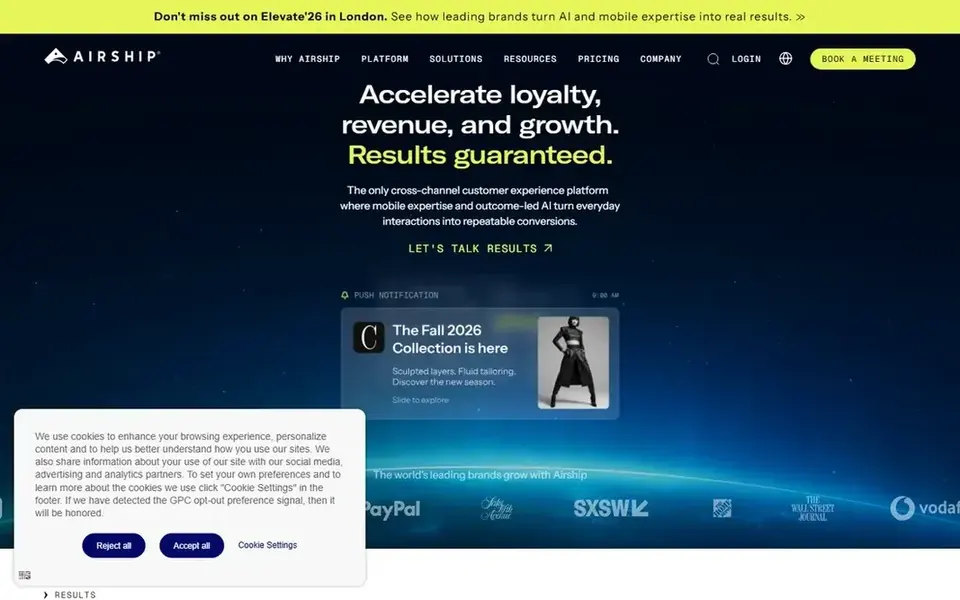
Airship targets mobile-first cross-channel customer experiences. Startups without an active user base may get more from advertising and attribution tools first, then add engagement once retention work begins. Airship describes a mobile-first customer experience system that gives measurable results through AI-powered, unified cross-channel experiences.
For startups, it is most relevant after acquisition, when the goal becomes onboarding, retention and repeat engagement inside the app. In practice, value relies on integrating app events and segmenting audiences thoughtfully. Also, Airship does not buy media, so it will not replace an advertising system. Beyond that, teams that treat messaging as part of the growth mix can pair it with a measurement tool. Check the vendor site for Airship pricing; none is listed in this comparison. Trial and free access: Not stated.
Points against: Needs app data integration.
- AI-powered engagement features
- Unified cross-channel messaging
- Engagement focus, not ad buying
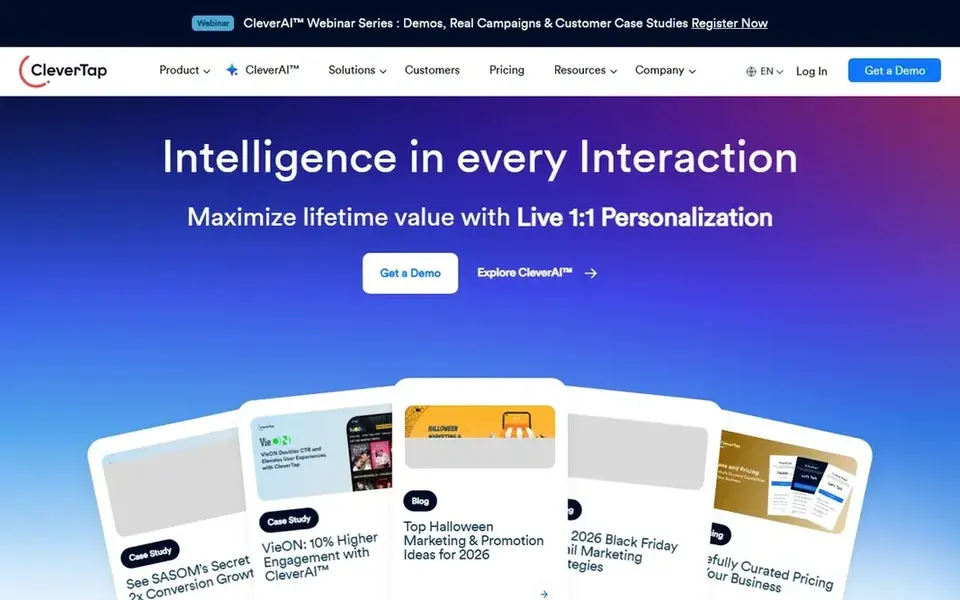
Think of CleverTap for retention and lifetime value campaigns. Results rely on well-defined events and segments. In daily use, if your priority is purely user acquisition, start with advertising and measurement tools and add engagement software when retention becomes the constraint.
Watch-outs: Needs clean event tracking.
As for the details, startups can use it to act on user behavior after install, such as onboarding sequences or re-engagement campaigns. It is an engagement system instead of an advertising network, so media buying and attribution sit elsewhere. Check the vendor site for CleverTap pricing; none is listed in this comparison. Free access: Free trial.
- Personalized messaging and automation
- Focus on customer lifetime value
- Not a media buying system
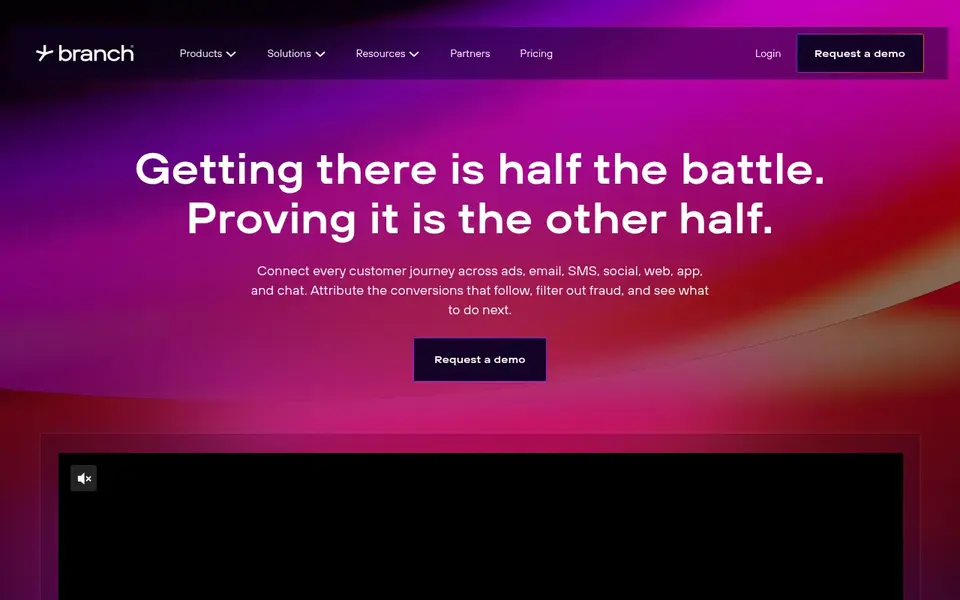
For privacy-safe attribution and deep linking, Branch is a natural candidate. More specifically, product and growth teams building referral, sharing or onboarding flows commonly benefit from that combination.
Points against: Narrower than full engagement suites.
Integration work with your app and analytics stack is required. From a buyer's view, the system concentrates on measurement and linking instead of campaign creation or messaging, so it complements instead of replaces ad tools. This comparison lists no price for Branch; ask the vendor. As for free access: Free trial.
- Privacy-safe attribution infrastructure
- Designed for mobile growth teams
- Technical integration effort required
Singular works best for attribution and ROI analytics with AI insights. Singular describes an AI-powered attribution and analytics product that brings together marketing data, measures true ROI and surfaces actionable insights. Consider it when channel mix and reporting demands outgrow spreadsheets.
Points against: Needs clean data pipelines.
In daily use, teams that value ROI reporting over raw install counts will find the positioning relevant. For everyday use, smaller startups with one or two channels may find the scope bigger than needed. The starting price for Singular: $0.05 per conversion. You can start on Singular without paying.
- Brings together marketing data in one view
- Focus on true ROI measurement
- Cost and complexity grow with channels
Kochava is aimed squarely at omnichannel outcomes measurement. Expect onboarding effort to define events and reporting.
More specifically, Kochava gives you omnichannel measurement for advertisers and publishers, with messaging around outcomes measurement, actionable insights and privacy-durable growth. In practice, startups running campaigns across multiple environments can use it to link spend with results. Price to start with Kochava: $500 per month. A free plan is available with Kochava.
Downsides: Wide scope can feel complicated.
- Serves advertisers and publishers
- Focus on privacy-durable growth
- Less suited to straightforward single-channel campaigns
Think of Google Ads for reaching buyers on search and YouTube. Pick something else if your growth depends primarily on in-app measurement or owned-channel engagement. In daily use, Google Ads is the advertising system for running campaigns across Google search and YouTube.
Drawbacks to consider: Restricted as a standalone mobile attribution tool.
It is where numerous startups begin since it links a business with people actively looking for products. The homepage emphasizes starting a first campaign, generating quality leads and reaching new customers. This comparison lists no price for Google Ads; ask the vendor. Trial and free access: Not stated.
- Handy for lead generation
- Wide reach across Google and YouTube
- Needs continuing budget management
What to check before you buy
- Confirm the entry price on the vendor page. For Airship, CleverTap, Branch and Google Ads that means a quote rather than a fixed price.
- Read the fine print on the free plans from Singular and Kochava; seat, project and feature caps differ.
- Run a trial of CleverTap and Branch with real work before paying for a year; your own workflow is the best test.
- Before choosing Airship, weigh its main limit: engagement focus, not ad buying.
- Ask Google Ads how an export works before you move any records in; an easy exit lowers the risk.
- Read the plan comparison for Singular carefully; key features often start on a higher tier.
Frequently asked questions
Can I try these tools before paying?
Often, yes. Singular and Kochava have a free plan and CleverTap and Branch offer a free trial. Use your own data and a real task during the test, and check what the free tier or trial limits before you rely on it.
Which options for mobile advertising software for startups have a free plan?
Singular and Kochava offer a free plan in this list. Free plans usually cap users, projects or features, so check the limits on the vendor page. Several others offer a trial instead. Each of the 6 options in this mobile advertising software for startups guide has its own card above with the price, free plan and limits.
How are the tools for mobile advertising software for startups ordered?
Airship sits first and Google Ads last because the order follows typical fit for mobile advertising software for startups, then price clarity and free access. It is a judgement call, so read each profile for fit and limits.
Do these tools publish their prices?
Not all of them. Airship, CleverTap, Branch and Google Ads publish no starting price, so expect a quote request for those. The rest, Singular included, show a starting price, though seats and billing terms still change the final cost.
Do startups need both an ad product and a measurement tool?
Commonly yes. Advertising products run campaigns, whereas measurement tools present which channels produce installs, signups or revenue. Startups can begin with one ad system and add measurement once spend grows.
Sources
See where you really rank - block by block
ProMapRanker scans Google Maps across a grid of your service area. Simple monthly plans from $19, white-label on every plan.
Start freeBrowse all guides
← Best Company Affiliate Programs in 2026Best Self-Serve Advertising Platforms (2026) →
 best attribution analytics software for ad agencies
Best Attribution Analytics Software for Ad Agencies in 2026
Compare 5 best attribution analytics software for ad agencies, with prices, free plans and who each fits. We note where every tool falls short. Facts only.
Read → best affiliate tracking software for publishers
Best Affiliate Tracking Software for Publishers in 2026
Best Affiliate tracking software for publishers in 2026: 5 contenders with entry costs and free tiers. Includes honest limits for each tool. Straight answers.
Read → best affiliate software for saas startups
Best Affiliate Software for SaaS Startups (2026)
Best Affiliate software for SaaS startups, compared. 6 tools with published prices, free plans and limits. Every entry states what it lacks. See the full list.
Read → best selling affiliate marketing tracking software
8 Best Selling Affiliate Marketing Tracking Software for 2026
Compare 8 picks for the best selling affiliate marketing tracking software, with prices, free plans and who each fits. Short verdicts, no fluff. No hype.
Read → best digital advertising platforms
Best Digital Advertising Platforms in 2026
Best digital advertising platforms compared on reach, intent, cost, and creative fit, so you can pick channels that match your budget and goals in 2026.
Read → best tools to spy ppc
Best Tools to Spy PPC in 2026
Compare the best tools to spy ppc campaigns, with current prices, ad history, paid keyword data, landing pages, and creative insights for search ads now.
Read →More in Advertising & Affiliate · All guides A to Z by date · Latest guides