 ProMapRanker
Best MLM Companies in 2026

Key takeaways
- Earnings vary widely in network marketing, and most participants earn little or nothing after expenses, so read each company's income disclosure before joining.
- Amway is the largest company on this list by scale and product range, while Herbalife, doTERRA and Young Living lead in nutrition, oils and wellness.
- Mary Kay, Avon and Nu Skin suit people who prefer beauty and personal care products sold person to person.
- Primerica is different from the rest here, since it focuses on financial services rather than consumable products.
- No company on this list can promise you an income from recruitment, and any pitch that does should be treated with caution.
Quick comparison
| Pick | Great for | Pricing starts at | Free tier | |
|---|---|---|---|---|
 Amway | Broad product range | See website | No | Visit |
 Herbalife | Nutrition and community selling | See website | No | Visit |
 Mary Kay | Beauty selling | See website | No | Visit |
 Avon | Beauty and personal care | See website | No | Visit |
 doTERRA | Essential oils | See website | No | Visit |
 Young Living | Essential oils and wellness | See website | No | Visit |
 Nu Skin | Beauty devices and skincare | See website | No | Visit |
 Primerica | Financial services | See website | No | Visit |
 USANA | Nutrition and skincare | See website | No | Visit |
The best MLM companies
Please read this first. This article lists established network marketing companies and describes their products and models, but it is not a promise of income. Published income disclosures from several companies on this list show median annual earnings of a few hundred dollars or less, with large shares of participants earning $0 in a given year, before product purchases and business expenses. Join only after reading the current income disclosure, starter costs, refund terms and monthly purchase rules for the company you are considering.
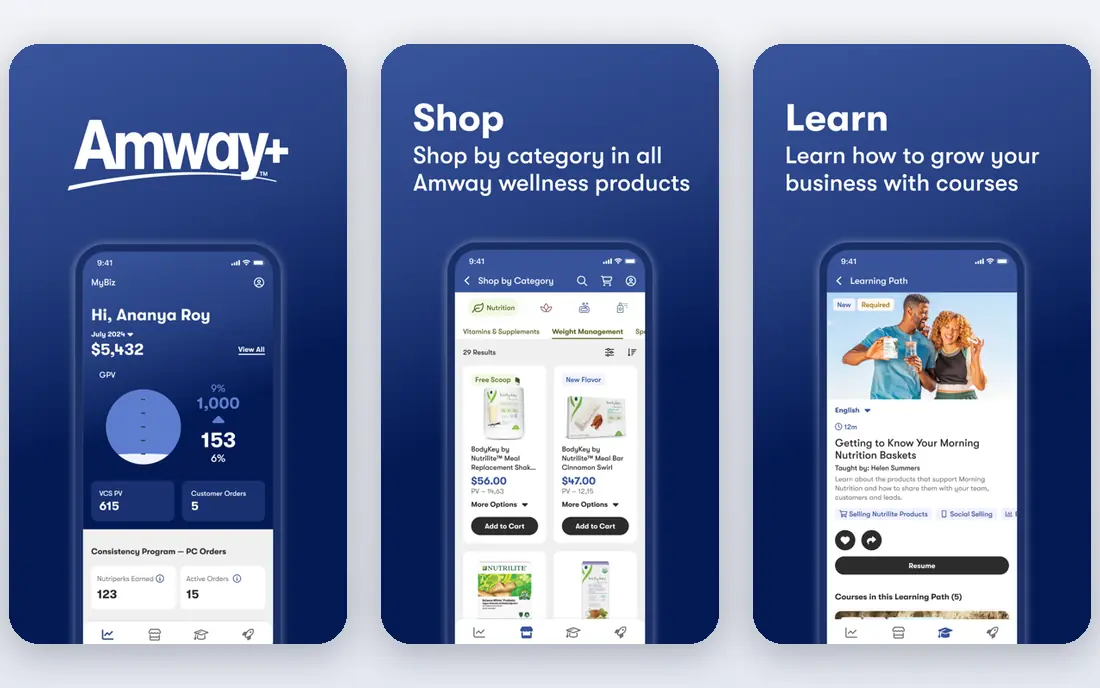
Amway is the largest direct selling company on this list, with brands such as Nutrilite for nutrition and Artistry for beauty, plus home care products. That range means a distributor can sell to different kinds of customers without joining several companies, and the company has operated for decades in many countries.
The honest catch is earnings. Amway's own published data, summarised in independent income disclosure compilations, shows median annual earnings in the low hundreds of dollars for participants in recent years, with a large share earning nothing. Treat Amway as a product business with real costs, not as a reliable income source.
- Very broad range across nutrition, beauty and home care
- Long-established global company
- Training and business tools for distributors
- Earnings are typically low for most participants
- Product prices are premium compared with retail alternatives

Herbalife sells nutrition shakes, weight management products, sports nutrition and personal care items through independent distributors. Its Nutrition Club format, where customers gather for shakes and coaching, gives distributors a repeat-visit model that pure online selling does not offer.
Earnings remain the central caution. Herbalife's disclosures show that most people who join buy at a discount and never sell, and among those who do sell, median monthly earnings are modest before expenses. The company also paid a $200 million settlement in 2016 after US regulators raised concerns about income claims, and it was required to restructure parts of its model.
- Well-known nutrition shakes and supplements
- Nutrition Club model gives a community selling format
- Global scale
- Most distributors earn little
- Past regulatory action required changes to its business practices

Mary Kay sells skincare and colour cosmetics through independent beauty consultants, often through parties, personal consultations and social selling. The brand is widely recognised in the US, which helps a new consultant start conversations, and training focuses on skincare advice and customer care.
Income data is sobering. Published compilations of Mary Kay disclosures show median annual earnings of $0 in the year covered, with average earnings in the low hundreds of dollars, before expenses. Anyone considering Mary Kay should check current starter kit costs, inventory expectations and return terms before buying stock.
- Long-established beauty brand with strong name recognition
- Party and personal consultation selling model
- Starter kits available
- Published data shows median earnings near $0 for many participants
- Inventory and party costs can add up
Avon is one of the oldest names in direct selling, with beauty, skincare, fragrance and personal care products sold by representatives through catalogues and online stores. That familiarity can help a seller reach customers who already know the brand, and the part-time, low-pressure format suits people who want a side activity rather than a full business.
Avon has gone through significant corporate changes in recent years, including restructuring, so check the current US selling arrangement before joining. The company also publishes less complete earnings data than some rivals on this list, which makes it harder to judge typical outcomes, and that gap itself is worth noting.
- Long history in beauty and personal care
- Catalogue and online selling suit part-time sellers
- Broad product range
- Company has been through major restructuring in recent years
- Earnings disclosures are less complete than some rivals
doTERRA sells essential oils and related wellness products through wellness advocates, often through classes, sampling and personal recommendations. Education is a real part of the model, since customers need guidance on safe use, dilution and storage, and that teaching role suits people who enjoy wellness topics.
Published income data shows median annual earnings around a few hundred dollars, with about half of participants earning nothing in the year covered, before expenses. Oils are also premium-priced, so a seller needs customers who value the brand and education enough to pay more than a supermarket or online alternative.
- Large essential oil range with education for users
- Wellness community and classes support selling
- Global presence
- Median earnings are low in published data
- Oils are premium-priced compared with many retail brands
Young Living is doTERRA's closest rival, selling essential oils, blends, supplements and personal care products through brand partners. Its farm visits, sourcing story and community events build loyalty among customers who care about where oils come from, and that loyalty can support repeat orders.
Earnings data is the clearest warning on this list. Published compilations show median annual earnings of $0 for Young Living participants in the year covered, with over 70 percent earning nothing, before expenses. That does not mean nobody earns, but it does mean a typical participant should expect little or no income.
- Wide oil and wellness product range
- Farm and sourcing story appeals to loyal customers
- Strong community events
- Very high share of participants earn $0 in published data
- Premium prices limit the customer base
Nu Skin sells skincare, nutrition and beauty devices through distributors, and its ageLOC device range gives sellers a product story beyond creams and serums. As a publicly traded company, it publishes financial reports that make its scale easier to check than private rivals.
Published income compilations show a high share of Nu Skin participants earning nothing in the year covered, with average earnings in the low thousands of dollars skewed by top earners. Device-based selling also means higher upfront costs, so check what you would need to buy, demonstrate and support before joining.
- Skincare plus beauty devices such as ageLOC tools
- Publicly traded company with published reports
- Global distribution
- High share of participants earn nothing in published data
- Devices add upfront cost for sellers and customers
Primerica differs from every other company here because it sells financial services, mainly term life insurance, plus investment and debt-related services through licensed representatives. That model suits people who want a finance career path and are willing to study for licences, rather than people who want to sell beauty or wellness products.
Earnings still vary widely. Published compilations show average annual earnings in the thousands of dollars, but averages hide a wide spread, and many representatives earn little, especially early on. Financial advice is also regulated, so representatives must work within licence rules and must not promise returns or present insurance as an investment.
- Focus on term life insurance and financial services rather than consumables
- Licensing gives a professional credential
- Large US presence
- Income depends heavily on licensing, recruiting and sales volume
- Financial products need careful, regulated advice
USANA sells science-based nutritional supplements and skincare through associates, with an emphasis on manufacturing standards and research. That positioning appeals to customers who read labels and care about formulation, and the company is publicly traded, which adds a layer of financial transparency.
Premium pricing is the limit, since supplements and skincare compete with many cheaper retail options, and public earnings compilations list USANA without a published median for the year covered. Ask for the current income disclosure and starter costs in writing before joining, and judge the opportunity on those figures, not on success stories.
- Science-focused nutrition and skincare range
- Publicly traded with published reports
- Strong product quality reputation
- Premium prices
- Earnings data is less complete in public compilations, so typical outcomes are harder to judge
How we picked these
We compared company websites, published income disclosures and independent compilations of those disclosures, and we kept only established companies that are live and selling in the US in October 2026. We covered nutrition, beauty, oils and financial services, so readers can compare models, not just brands. We did not claim hands-on selling experience, and we did not present recruitment income promises as fact, since published data shows most participants earn little or nothing.
What to check before joining any MLM company
Start with the income disclosure for the current year, and look at the median, not the average, since averages are pulled up by a small number of top earners. Then add up every cost: starter kit, monthly purchase requirements, event tickets, samples, marketing materials and shipping, and subtract that total from any earnings figure you are shown.
Next, check the refund and buy-back terms, the rules on inventory loading, and whether you must recruit to reach higher ranks or bonuses. Finally, talk to people who left, not just current top sellers, and give yourself time before signing. A legitimate company will still be there next week, and a pitch that pressures you to join today is a warning sign.
Frequently asked questions
What is the best MLM company to join?
There is no single best company, since the right fit depends on products you genuinely use and customers you can actually reach. Amway offers the broadest range, doTERRA and Young Living lead in oils, Mary Kay and Avon lead in beauty, and Primerica suits finance licensing. Judge each one on its income disclosure and costs, not on recruitment promises.
What are the best network marketing companies?
The largest and most established names in the US include Amway, Herbalife, Mary Kay, Avon, doTERRA, Young Living, Nu Skin, Primerica and USANA. Size does not mean typical earnings are high, since published disclosures across the industry show most participants earn little or nothing after expenses.
Do most people make money in MLM?
No, not in the sense of a reliable income. Published income disclosures show median annual earnings of a few hundred dollars or less at several major companies, with large shares earning $0, before product purchases and business expenses. A small number of long-tenured sellers earn far more, but they are not typical.
How much does it cost to join an MLM company?
Costs vary by company and are often described as starter kits, enrolment fees or first orders, plus ongoing monthly purchases in some plans. We list starting prices as See website because kits and requirements change, so get the current cost, refund terms and monthly rules in writing before you pay anything.
Is MLM the same as a pyramid scheme?
No, but the line matters. A legitimate direct selling company earns mainly from retail sales to outside customers, while an illegal pyramid scheme earns mainly from recruiting fees. US regulators have warned that many MLM participants make little to no money, so check where the money comes from and whether retail sales are real before joining.
What is the world best network marketing company?
Rankings by revenue usually put Amway first, followed by Herbalife and other large nutrition and beauty companies, but revenue ranking is not an earnings ranking. A company can be huge while most of its participants earn little, so use income disclosures, not revenue lists, to judge what joining might mean for you.
Sources
See where you really rank - block by block
ProMapRanker scans Google Maps across a grid of your service area. Simple monthly plans from $19, white-label on every plan.
Start freeKeep reading
 who has the best home internet service
Who Has the Best Home Internet Service in 2026
Who has the best home internet service in 2026? Compare fiber, cable, and 5G providers on speed, price, data caps, and availability at your address today.
Read → visio alternatives
Best Visio Alternatives in 2026
Compare 9 Visio alternatives for flowcharts, org charts, and network diagrams, with free plans, pricing, and the best pick for teams and solo users in 2026.
Read → top 10 logistics software
Top 10 Logistics Software in 2026
We compared the top 10 logistics software tools for transport, warehousing, visibility and shipping, for shippers, carriers and 3PL teams in 2026 today.
Read →