 ProMapRanker
Best Mindfulness Meditation Apps in 2026

Key takeaways
- Insight Timer and Medito give you the most free content, while Headspace and Calm give you the most structured courses and sleep material.
- If you are new to meditation, a short guided course matters more than a huge library, and Headspace and Balance handle that first month best.
- Sleep help is a separate need from daytime practice, and Calm is the clearest pick if bedtime content is your main reason to pay.
- Most paid plans sit near 70 dollars a year, so check the free tier and the trial length before you commit to a full year.
- This article is general information only and is not medical advice, so talk to a clinician if you are dealing with anxiety, depression, or sleep problems.
Quick comparison
| Pick | Great for | Pricing starts at | Free tier | |
|---|---|---|---|---|
 Headspace | Structured beginner courses | $12.99 per month | Free trial | Visit |
 Calm | Sleep stories and calm routines | $14.99 per month | Yes | Visit |
 Insight Timer | Large free library | $9.99 per month | Yes | Visit |
 Medito | Fully free practice | Free | Yes | Visit |
 Balance | Personalized daily plans | $11.99 per month | Free trial | Visit |
 Happier | Practical, teacher-led sessions | $14.99 per month | Free trial | Visit |
 Waking Up | Depth and theory | $19.99 per month | Free trial | Visit |
 Aura | Short, personalized sessions | $11.99 per month | Free trial | Visit |
The best mindfulness meditation apps
We compared official feature pages, pricing pages, and app store listings for these apps, and we focused on what you actually get for free, what a paid plan adds, and who each app suits best.
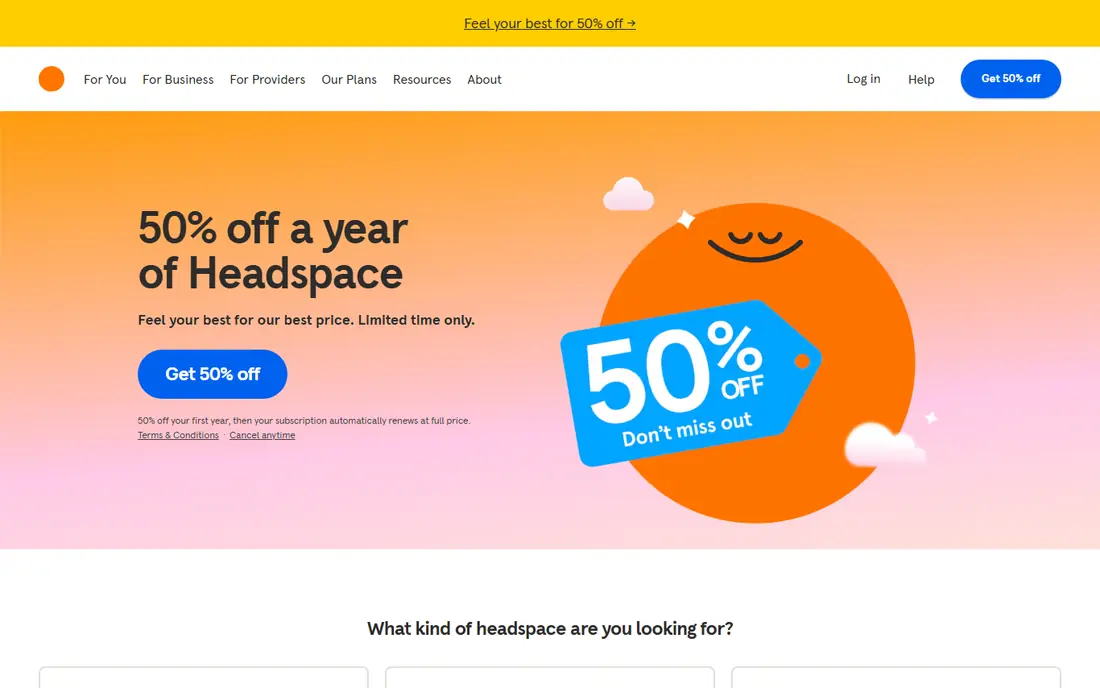
Headspace suits a complete beginner who wants to be told what to do next. Its Basics course builds one skill at a time, and later courses cover stress, focus, and sleep in short, plain lessons. The animations and calm narration keep the tone light, which helps when a practice still feels unfamiliar.
The trade off is the paywall. After the trial, most of the library needs a subscription, so Headspace works best if you plan to pay or if you use the trial to learn the basics and then move to a free app. We liked the structure more than the breadth, and that structure is the reason it stays first for new meditators.
- Clear step by step courses
- Short sessions for busy days
- Sleep and focus content in one place
- Little free content after the trial
- Sessions are capped in length for some users
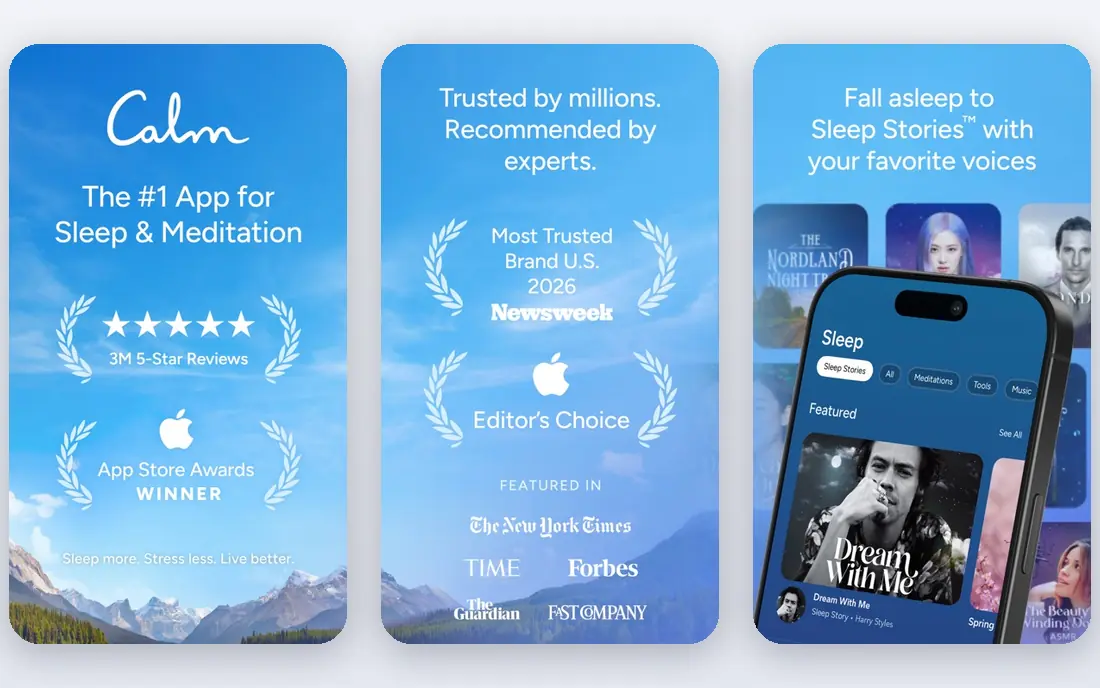
Calm is the app to pick if sleep is your main goal. Its Sleep Stories are read in slow, steady voices, and the soundscapes work well as background for winding down. The Daily Calm gives you a ten minute routine to return to, which suits people who want one dependable session each day.
For pure meditation learning, Calm is less guided than Headspace. You can browse by theme, such as anxiety or focus, but you will need to choose your own path more often. If you want both sleep help and daytime practice in one subscription, that breadth makes the price easier to justify.
- Large sleep story library
- Daily guided sessions
- Breathing tools and soundscapes
- Free content is limited
- Meditation can feel buried among sleep and music content
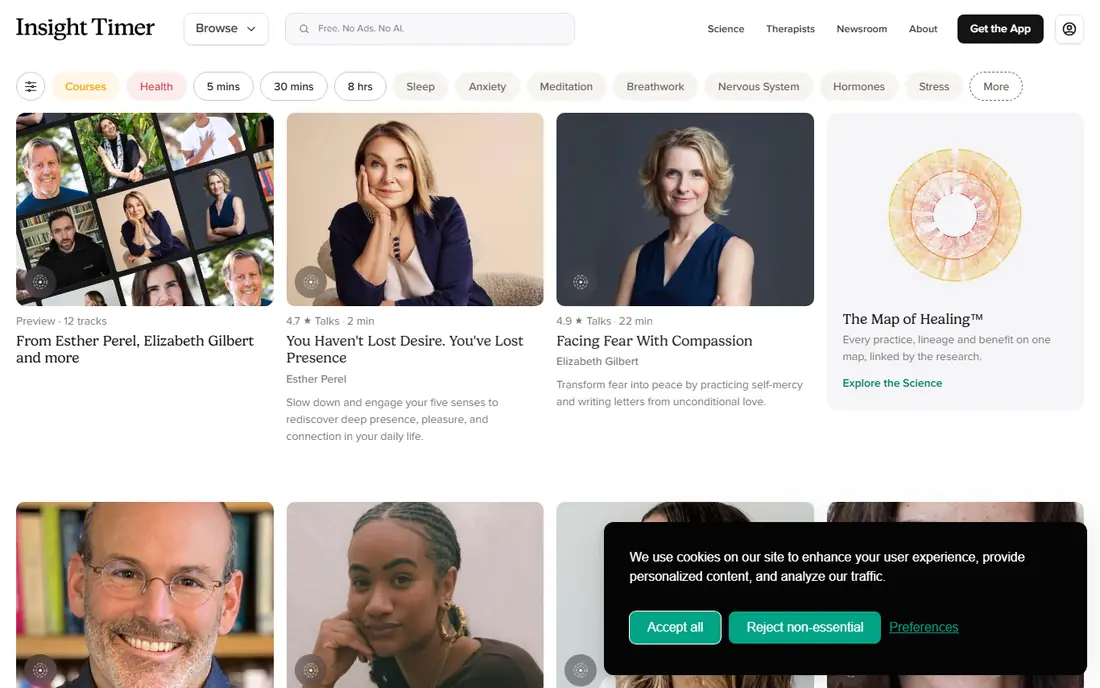
Insight Timer is our pick for value. Most guided meditations are free, and the timer lets you set bells and background sounds for silent practice without paying. You can follow teachers whose style you like, join live sessions, and build a streak if that kind of gentle accountability helps you.
The downside of openness is uneven quality. Some recordings are excellent, and others are thin or poorly recorded, so you will need to sample a few teachers before you settle. Paid Member Plus adds offline listening and full courses, but you can keep a solid daily practice without it.
- Very large free guided library
- Flexible timer for silent sits
- Live events and teacher pages
- Quality varies between teachers
- Large library can feel hard to search
Medito is run as a nonprofit project, and that shows in the price: everything core is free. The beginner course is short and clear, and the app avoids the upsell screens that fill many rivals. If cost is the barrier that has stopped you before, Medito removes it.
You do get less choice, especially for sleep stories and long courses, and the app is currently English only in its main content. Still, for a daily ten minute habit, Medito covers the basics well, and it pairs nicely with Insight Timer when you want more variety.
- No paywall on core content
- Simple beginner courses
- No account needed to start
- Smaller library than paid rivals
- Fewer sleep and advanced options
Balance asks about your goals, experience, and available time, then builds a daily plan around your answers. That matters if you open an app, see thousands of sessions, and close it again. The plan gives you one next session, and it adjusts as you answer short questions about how practice is going.
The first year is often offered free through promotions, so check the current offer in the app store before you pay. After that, the annual price is in line with Headspace and Calm. Balance is a strong choice if you want guidance without a rigid course order.
- Plan adapts to your goals and experience
- First year often offered free
- Clear progress tracking
- Personalization needs regular check ins
- Library is smaller than Calm or Insight Timer
Happier, formerly Ten Percent Happier, suits people who are skeptical of vague wellness talk. Teachers explain what a practice is for, how it works, and what to expect, often in short talks before the guided session. That practical tone helps if you have tried meditation before and found it too abstract.
The app is less useful as a sleep tool than Calm, and the free tier is limited, so treat the trial as a real test. If the teaching style clicks, the higher annual price can be worth it, because you are more likely to keep using it.
- Conversational teaching style
- Courses on stress and habits
- Short talks explain each practice
- Full library needs a subscription
- Annual price is higher than some rivals
Waking Up is for people who want to understand meditation, not just follow a voice. Its introductory course pairs guided sessions with lessons on attention, awareness, and the mind, and later content goes deeper into those ideas. The app also offers free access to people who cannot afford a subscription, which is a clear point in its favor.
That depth is also the catch. Sessions and lessons ask for more attention than a quick calm down, and the price is the highest in this list. If you want a short daily reset, pick a simpler app. If you want a long term practice with real teaching behind it, Waking Up stands apart.
- Strong introductory course
- Theory and philosophy alongside practice
- Free access if you cannot afford it
- Most expensive option here
- Theory heavy style will not suit everyone
Aura builds a short daily session around your mood and goals, which suits people who have five or ten minutes rather than half an hour. The interface is simple, and the filtering by theme, length, and teacher makes it easy to find something that fits the moment. Coaching is available if you want one to one support, though it costs extra.
The free tier is thin, so Aura is best judged on a trial. It does not match Insight Timer for free depth or Calm for sleep, but for a quick, personalized daily practice, it is a tidy, low friction choice.
- Personalized recommendations
- Short sessions for busy schedules
- Coaching option available
- Little free meditation content
- Coaching costs extra
How we picked these
We compared official pricing pages, feature pages, and app store listings, and we checked which apps are still actively maintained in October 2026. We favored apps with a clear free tier or trial, a real meditation library rather than only soundscapes, and current pricing that a reader can verify. We did not claim hands on testing, and we left out apps that had closed, merged, or stopped offering meditation content.
Choosing the right app for your routine
Start with your main goal, not with the longest feature list. A beginner needs a course that teaches one skill at a time, a poor sleeper needs bedtime content, and a busy worker needs short sessions that fit a lunch break. Write down how many minutes you will actually practice, then check whether the free tier covers that length every day.
Try before you pay
Use the trial or free tier for at least a week, at the same time each day. Notice whether you open the app without dreading it, whether the voices suit you, and whether the sessions end at a length you can repeat. A beautiful app you avoid is worse than a plain app you use daily.
Watch the renewal price
Many apps show a monthly price and a lower annual price, and some offer a first year deal that then renews higher. Check the renewal terms in the app store listing before you subscribe, and set a reminder a few days before renewal if you are unsure. Free apps such as Medito and Insight Timer are good fallbacks if a paid plan does not earn its keep.
Frequently asked questions
What is the best mindfulness meditation app for beginners?
Headspace and Balance are the strongest starting points, because both give you a clear next session instead of a huge library to sort through. Medito is the best free starting point if you do not want to pay yet.
Which app is best for sleep?
Calm leads for sleep, thanks to its Sleep Stories and soundscapes, with Headspace and Insight Timer as useful second options. If sleep problems persist, speak to a clinician rather than relying on an app alone.
Is there a good free mindfulness meditation app?
Yes. Insight Timer offers a very large free library, and Medito offers its core courses free with no paywall. Both work well for a daily practice without a subscription.
How long should a daily session be?
Five to ten minutes most days is a realistic start, and you can add time once the habit sticks. Short, regular sessions beat long sessions you only manage once a week.
Can meditation apps help with anxiety?
Guided practice can help some people feel calmer and more focused, but apps are not a treatment for anxiety or depression. If symptoms are persistent or severe, seek professional support.
Do I need to pay for a meditation app?
No. Free apps cover the basics well, and paid plans mainly add courses, offline listening, and sleep content. Pay only if the paid features solve a problem the free tier does not.
Sources
See where you really rank - block by block
ProMapRanker scans Google Maps across a grid of your service area. Simple monthly plans from $19, white-label on every plan.
Start freeKeep reading
 zoro.to alternatives
Best Zoro.to Alternatives in 2026
We compare the best zoro.to alternatives in 2026, listing only legal licensed anime streaming services, from Crunchyroll to free options for fans today.
Read → zip alternatives
Best Zip Alternatives in 2026
We compare the best zip alternatives for buy now, pay later in 2026, covering pay-in-4 plans, fees, spending limits, and credit reporting options today.
Read → yesware alternatives
Best Yesware Alternatives in 2026
Compare the best yesware alternatives for sales email tracking, templates, and sequences, with current pricing and honest tradeoffs for small sales teams.
Read →