 ProMapRanker
Best Micro Investing Apps in 2026

Key takeaways
- Acorns is the simplest round-up app, with managed portfolios from $4 per month, but flat fees weigh heavily on very small balances.
- Robinhood, Public, Fidelity and M1 Finance offer commission-free stock and ETF trading with fractional shares from $1 in many cases.
- Stash suits beginners who want guidance, stock picks and a retirement account in one app, though its full plan costs more than rivals.
- Betterment and Wealthfront use percentage fees of 0.25% per year, which suit larger balances better than flat monthly fees.
- This article is not financial advice. Investing carries risk, including loss of principal, and no app here promises returns.
Quick comparison
| Pick | Great for | Pricing starts at | Free tier | |
|---|---|---|---|---|
 Acorns | Hands-off round-up investing | $4 per month | No | Visit |
 Stash | Guided beginners who want picks and a plan | $12 per month | No | Visit |
 Robinhood | Self-directed fractional shares | Free | Yes | Visit |
 Public | Social learning and fractional investing | Free | Yes | Visit |
 Fidelity | Full-service brokerage with no account fees | Free | Yes | Visit |
 SoFi Invest | All-in-one money app | See website | Yes | Visit |
 Betterment | Goal-based managed portfolios | 0.25% per year | No | Visit |
 Wealthfront | Hands-off managed portfolios | 0.25% per year | No | Visit |
 M1 Finance | Automated custom portfolios | Free | Yes | Visit |
The best micro investing apps
Micro investing means starting with small, regular amounts, often through round-ups, recurring transfers or fractional shares. The apps below let US investors start with a few dollars, though fees and features differ sharply. We compared official pricing and feature pages, and we did not claim hands-on testing. This is not financial advice, and investing carries risk.

Acorns is the classic micro investing app for people who struggle to save. Link a card, and Acorns rounds up purchases to the next dollar and invests the spare change in a managed portfolio matched to your risk level. Bronze is listed at $4 per month, with higher tiers at $8 and $12 adding banking, retirement and family features.
The fee math matters. Four dollars a month is $48 a year, which is a large percentage of a $300 balance, so Acorns works best once regular deposits push the balance higher or once round-ups plus recurring transfers build momentum. If you want a set-and-forget habit and do not want to pick stocks, Acorns is the easiest start. If your balance will stay tiny for a long time, a free brokerage below may cost less.
- Automatic round-ups from linked cards
- Managed portfolios
- Retirement and family account options
- Flat fee is high on small balances
- Picking individual stocks needs the top plan
- No tax-loss harvesting in recent listings

Stash pairs micro investing with education and guidance. Users get a personalized plan, themed investments, fractional shares and the option to pick individual stocks and ETFs, plus a retirement account in the same app. Recent listings put Stash at $12 per month, or $108 billed yearly, with a Stock-Back card that earns stock rewards on spending, capped at $10 a month in recent terms.
That guidance costs more than a free brokerage, and the same fee-drag warning applies: $12 a month is steep on a small balance. Stash earns its price for beginners who want structure, lessons and a plan in one place, rather than a bare trading screen. If you already know what to buy, a free app will leave more of your money invested.
- Personalized plan and guidance
- Individual stocks and ETFs
- Retirement account and Stock-Back rewards
- Higher monthly price than Acorns Bronze
- Fee weighs on small balances
- Rewards are capped in recent listings
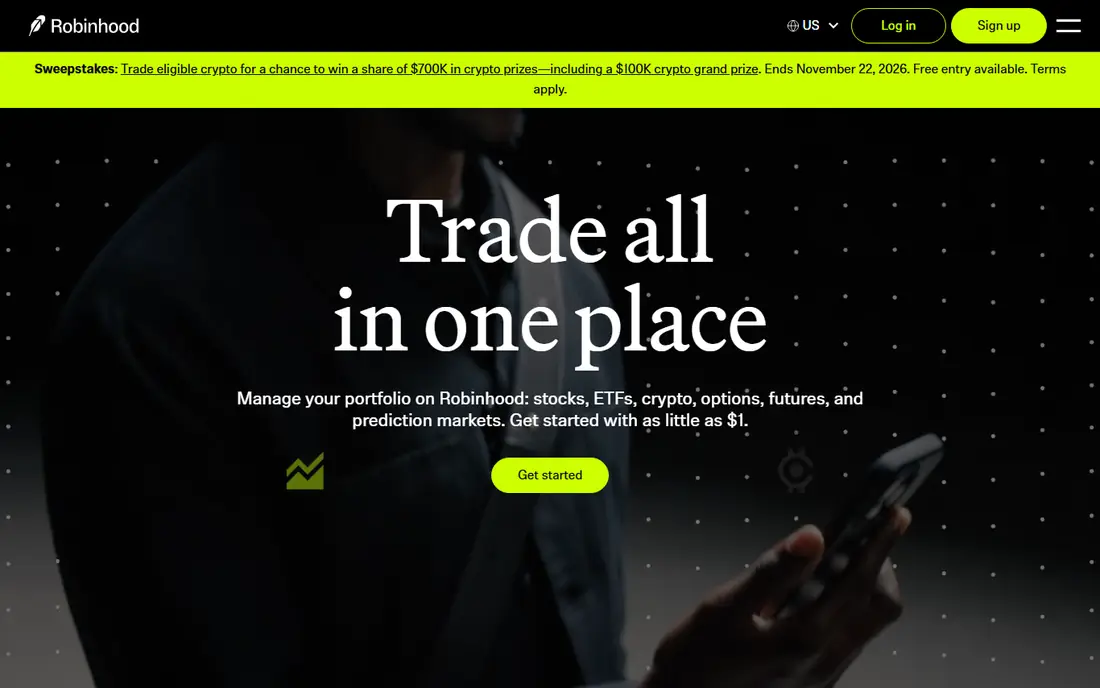
Robinhood suits investors who want to choose their own stocks and ETFs with very little money. Commission-free trading, fractional shares from $1 and a simple mobile interface make it easy to start with a few dollars, and an IRA option with matching has been part of recent offers. The base app is free, with Robinhood Gold at $5 per month adding larger instant deposits and research extras.
Robinhood does not automate investing the way Acorns or Betterment do. There are no round-ups or managed portfolios by default, so the habit depends on your own recurring transfers. The simple interface also makes frequent trading tempting, which can hurt long-term results. For self-directed micro investing on a budget, Robinhood is a strong, low-cost choice.
- Commission-free stocks and ETFs
- Fractional shares from $1
- IRA with matching in recent offers
- No round-ups or managed portfolios by default
- Gold at $5 per month is needed for extras
- Trading tools can encourage overtrading
Public combines commission-free investing with a social feed where users discuss stocks, follow companies and learn from other investors. Fractional shares let users start with small amounts, and the app includes context on companies and market news alongside trading. The base investing account is free, with optional paid features for advanced data and research.
Social investing has a downside. Following crowd sentiment can push beginners toward popular stocks at the wrong time, so treat the feed as education, not advice. Public suits learners who want community context with their first small investments, provided they keep a written plan and avoid chasing trends. For pure automation, a managed app below fits better.
- Commission-free stocks and ETFs
- Fractional shares
- Community discussion and company context
- Social features can distract from a plan
- Fewer managed portfolio options
- Some features need a paid tier
Fidelity is the full-service option that still works for micro investing. It charges no commission on stocks and ETFs, no account fees in recent listings, and offers fractional shares from $1, so a small investor can build a diversified position without a subscription. Research, retirement planning and customer support are far deeper than in most micro apps.
The breadth can overwhelm a first-time investor. Fidelity is a brokerage, not a round-up habit app, so automation depends on setting up recurring investments yourself. For users who want to start small but grow into a full brokerage without switching platforms later, Fidelity is the safest long-term pick. For users who need automation to save at all, Acorns or Betterment may work better.
- Commission-free stocks and ETFs
- Fractional shares from $1
- Deep research and retirement tools
- Interface can feel complex for absolute beginners
- No round-ups by default
- More features than a micro investor needs
SoFi Invest fits users who already bank or borrow with SoFi and want investing in the same app. It offers self-directed trading and automated portfolios, with fractional shares and a clean mobile experience. Keeping checking, savings and investing in one place simplifies money management for people who prefer a single app over several specialist tools.
The trade-off is depth. SoFi's automated portfolios and advice are simpler than those from Betterment or Wealthfront, and some features depend on account type and direct deposit status. Check current fees on the vendor page, since SoFi has changed terms over time. For an all-in-one money app with micro investing included, SoFi is convenient. For specialist portfolio management, a dedicated robo-advisor wins.
- Investing alongside banking, loans and cards in one app
- Automated portfolios
- Fractional shares
- Automated advice is simpler than specialist robo-advisors
- Fee and feature details vary by account
- Ecosystem lock-in risk
Betterment is a robo-advisor that builds and manages a diversified portfolio around goals such as retirement, a home deposit or an emergency fund. It rebalances automatically, harvests tax losses on eligible taxable accounts, and offers human advisor access for an added fee. Pricing is 0.25% of assets per year in recent listings, with a monthly plan option for smaller accounts in some cases.
Percentage pricing changes the math. On a $500 balance, 0.25% is only about $1.25 a year, far less than a $4 monthly flat fee, but the fee grows with the balance. Betterment suits investors who want a managed portfolio and a clear goal plan without picking stocks. It is less suited to micro investors who want round-ups or individual stock picks.
- Goal-based planning and rebalancing
- Tax-loss harvesting on eligible accounts
- Human advisor access for a fee
- No round-ups by default
- Percentage fee suits larger balances
- Individual stock picking is limited
Wealthfront offers automated, diversified portfolios with rebalancing and tax-loss harvesting, plus a cash account for savings alongside investing. The advisory fee is 0.25% per year, which keeps costs low on small balances compared with flat-fee apps. Its interface emphasizes long-term planning over daily trading, which helps beginners avoid impulsive moves.
The minimum is the catch for true micro investors. Wealthfront has listed a $500 minimum for its automated investing account, so users with only a few dollars cannot start there directly. It also lacks round-ups and individual stock picking. For investors who can meet the minimum and want a hands-off portfolio, Wealthfront is a strong choice. For spare-change investing, start with Acorns or a free brokerage first.
- Automated diversified portfolios
- Tax-loss harvesting
- High-yield cash account alongside investing
- Account minimum has been $500 in recent listings
- No round-ups
- Limited individual stock choice
M1 Finance lets investors build a custom portfolio as a pie, with each slice a stock or ETF at a chosen percentage, then automates deposits into that pie. Basic accounts carry no management fee in recent listings, and fractional shares allow small, regular investments. That mix of control and automation suits investors who know what they want to own but do not want to place every trade manually.
Trading works in windows rather than instantly, which frustrates active traders but rarely matters for long-term investors. The interface also takes time to learn, and some premium features, including extra trading windows and borrowing, need a paid tier. For micro investors who want a custom, automated portfolio without a monthly fee, M1 is a distinctive and valuable option.
- Custom portfolio pies with automatic investing
- No management fee on basic accounts
- Fractional shares
- Trading windows rather than instant trades
- Interface takes learning
- Premium features need a paid tier
How we picked these
We compared official pricing and feature pages for US apps that accept small, regular investments through round-ups, recurring transfers or fractional shares in October 2026. We favored apps with published fees, diversified portfolio options and retirement accounts, and we included both automated and self-directed models. We did not claim hands-on testing, and we treated fee claims as starting points, since several apps changed pricing during 2026. This article is not financial advice.
How to start with small amounts safely
Begin with money you can leave invested for years, and set a recurring transfer you can sustain, even if it is only a few dollars a week. Compare the fee to your balance before choosing a flat-fee app, since a $4 or $12 monthly charge can erase early gains on a tiny account. A free brokerage or a percentage-fee robo-advisor often costs less until the balance grows.
Diversify from the start, favoring broad ETFs over single stocks, and keep an emergency fund separate from investing. Avoid borrowing to invest, avoid chasing social media trends, and review fees and holdings once a year. If you are unsure about risk, tax or retirement choices, speak to a licensed financial adviser before committing larger sums.
Frequently asked questions
What is the best micro investing app?
Acorns is best for round-ups, Robinhood and Fidelity are best for free self-directed fractional investing, and Betterment is best for goal-based managed portfolios. The best app depends on whether you want automation, control or guidance most.
How much money do I need to start micro investing?
Many apps let you start with $1 to $5 through fractional shares, and Acorns and Stash accept small round-ups and recurring transfers. Wealthfront is an exception, with a $500 minimum listed for its automated account, so check minimums before choosing.
Is micro investing worth it with small amounts?
It can build a useful habit, but fees matter more than returns at first. A flat monthly fee can outweigh gains on a very small balance, so start with a free or percentage-fee app if your balance will stay low, and increase deposits over time.
Are micro investing apps safe?
Reputable US brokerages hold client assets with custodial protections and SIPC coverage for brokerage accounts, but investing itself carries market risk and SIPC does not protect against market losses. Check each app's disclosures, fees and account protections before depositing money.
Can I lose money with micro investing?
Yes. Stock and ETF prices fall as well as rise, and there are no promised returns. Only invest money you can afford to leave invested for the long term, and diversify rather than betting a small balance on one stock.
Which micro investing app has round-ups?
Acorns is the best-known round-up app, rounding card purchases to the next dollar and investing the change. Stash and SoFi offer related automation, but Acorns remains the clearest round-up-first choice in this list.
Sources
See where you really rank - block by block
ProMapRanker scans Google Maps across a grid of your service area. Simple monthly plans from $19, white-label on every plan.
Start freeKeep reading
 zscaler alternatives
Best Zscaler Alternatives in 2026
Looking for zscaler alternatives? We compare 9 SASE and zero trust platforms on architecture, data protection, pricing, and fit for your network and team.
Read → zapier alternatives free
Best Zapier Alternatives Free in 2026
Nine automation tools for zapier alternatives free in 2026, all with genuinely free tiers, plus free plan limits, starting prices and upgrade paths explained.
Read → which platform is best for online reputation
Which Platform Is Best for Online Reputation in 2026
Wondering which platform is best for online reputation? We compare 8 review, listing, and response tools for small and multi-location businesses and agencies.
Read →