 ProMapRanker
Best MES Software in 2026: 9 Tools Compared

Key takeaways
- Most MES vendors price by quote, so the real comparison is fit for your plant type, your automation stack, and your ERP system.
- Plex and Tulip suit teams that want a faster cloud or app-based start, while Siemens Opcenter and SAP Digital Manufacturing suit large, complex, multi-site operations.
- Electronics and semiconductor plants should shortlist Aegis FactoryLogix and Critical Manufacturing before looking at general-purpose suites.
- Tulip is the clearest on published pricing in this list, with lower plans listed per interface per month.
Quick comparison
| Pick | Great for | Pricing starts at | Free tier | |
|---|---|---|---|---|
 Plex | Cloud MES for discrete manufacturers | See website | No | Visit |
 Siemens Opcenter | Complex multi-site manufacturing | See website | No | Visit |
 SAP Digital Manufacturing | SAP-centered manufacturers | See website | No | Visit |
 Rockwell FactoryTalk ProductionCentre | Rockwell automation plants | See website | No | Visit |
 DELMIA Apriso | Global multi-site operations | See website | No | Visit |
 AVEVA MES | Process and batch manufacturing | See website | No | Visit |
 Tulip | Frontline operations apps | $100 per interface per month | Free trial | Visit |
 Critical Manufacturing | Semiconductor and complex discrete work | See website | No | Visit |
 Aegis FactoryLogix | Electronics assembly | See website | No | Visit |
The best MES software
Manufacturing execution software sits between planning and the shop floor. It turns orders into work instructions, records what actually happened, and gives managers a live view of production, quality, and traceability. We compared official product pages, pricing pages, and current 2026 roundups to build this list.
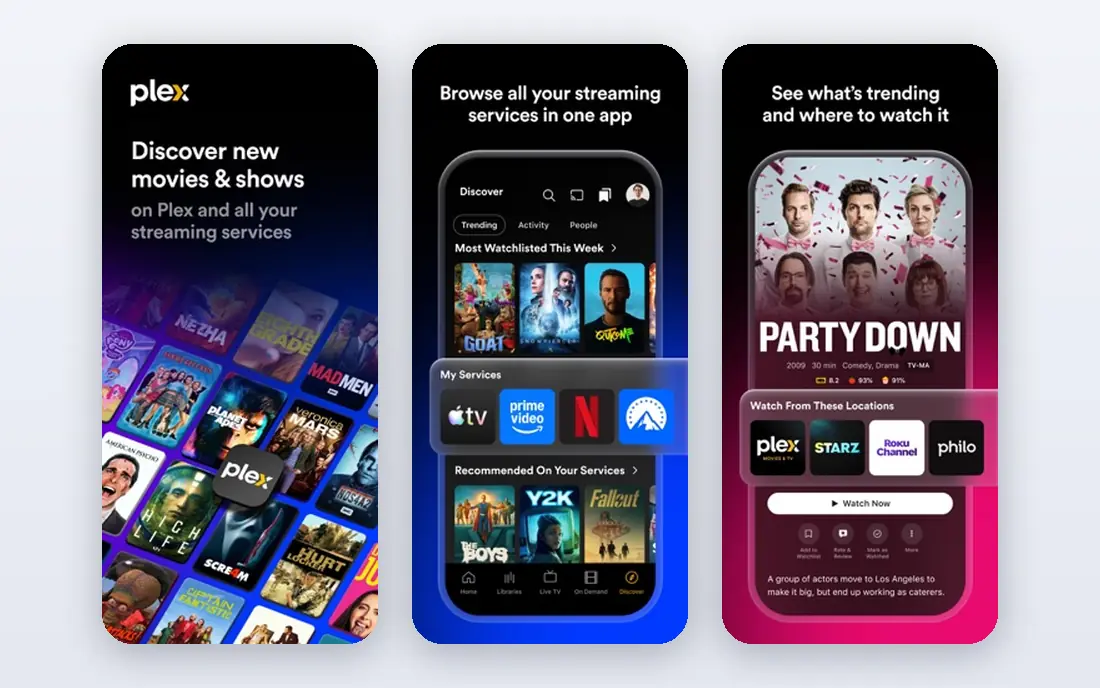
Plex, now part of Rockwell Automation, runs as a cloud platform rather than software you install on plant servers. That matters for multi-plant teams that want one system of record, regular updates, and browser access without maintaining infrastructure. Its MES functions cover production control, quality checks, inventory, and traceability in the same data model, so a quality record can be tied directly to the production run that created it.
Our pick for most mid-market discrete manufacturers that want cloud delivery starts here, provided the team accepts a quote-based price and a proper implementation project. Plex fits automotive suppliers and industrial manufacturers best, and it pairs naturally with Rockwell automation on the floor. Plants already standardized on a different ERP should check where Plex ends and their ERP begins before signing, since overlap can create arguments about which system owns master data.
- Cloud-native delivery
- Combines MES with quality and supply chain tools
- Strong automotive supplier base
- Quote-based pricing
- Implementation is a real project
- Overlaps with an existing ERP in some plants
Siemens Opcenter is less a single product than a family of execution products, covering discrete, process, pharmaceutical, electronics, medical device, and semiconductor production. That breadth is its main selling point for large manufacturers that run different plant types under one standard. It also connects to Siemens automation and product lifecycle tools, which helps when a plant already runs Siemens controls and engineering software.
The catch is scale. Opcenter projects tend to need Siemens partners, strong internal governance, and a budget that reflects enterprise software plus services. Smaller plants should look at the Opcenter X software-as-a-service line, which is aimed at teams that want Opcenter capability without the full on-premises weight. For a large, complex operation, though, few rivals match its coverage.
- Broad portfolio across discrete, process, pharma, and electronics
- Strong digital thread story
- SaaS Opcenter X option
- Enterprise pricing by quote
- Long implementations
- Best value with a wider Siemens commitment
SAP Digital Manufacturing is the natural MES choice for a company already running SAP S/4HANA. Orders, materials, and production data flow between planning and execution without a separate integration project bridging two vendors. That single-vendor path reduces interface risk and keeps one data model from the plan down to the machine.
Outside an SAP environment, the case gets thinner, and the price and timeline still look enterprise-grade. Teams should expect a multi-month rollout and a quote rather than a published price. If your company has already committed to SAP, start here and compare only if a specialist tool clearly beats it on a specific plant requirement. If you have not committed to SAP, a plant-focused MES may deliver faster value.
- Native integration with SAP S/4HANA
- Cloud delivery
- Consistent planning-to-production data
- Quote-based enterprise pricing
- Long rollouts
- Weaker case outside an SAP shop
Rockwell FactoryTalk ProductionCentre
Great for: Rockwell automation plants
FactoryTalk ProductionCentre is Rockwell Automation's established on-premises MES, distinct from the cloud-native Plex platform that Rockwell also owns. For plants already running Allen-Bradley controls, it offers a direct path from the control layer to execution, quality, and genealogy records. That closeness to the automation stack is a real advantage where machine data must be captured reliably and in detail.
The trade-off is the traditional on-premises model, with servers to maintain and a longer upgrade path than a cloud service. Pricing is by quote, and implementations still need planning and integration work. Choose ProductionCentre when your plant is Rockwell-centered and you want execution close to the controls. Choose Plex when you want cloud delivery across several plants.
- Tight fit with Allen-Bradley controls
- Proven on-premises MES
- Suits regulated and discrete plants
- On-premises weight
- Quote-based pricing
- Less attractive as a standalone cloud play
DELMIA Apriso, from Dassault Systemes, is built for manufacturers that need the same execution processes across many plants and countries. It covers production, quality, warehouse, and maintenance operations in one platform, which helps a global company standardize work instructions, traceability, and reporting. Companies with complex bills of material and multi-step routings get the most from that depth.
A single small plant will find Apriso heavy, and the price reflects its enterprise target. Expect a quote, a partner-led implementation, and a governance effort to keep every site on the same template. For a global manufacturer that values consistency across sites over speed at one site, Apriso belongs on the shortlist alongside Siemens Opcenter and SAP Digital Manufacturing.
- Strong multi-site standardization
- Deep manufacturing operations coverage
- Dassault Systemes backing
- Enterprise price and project scope
- Needs skilled implementation partners
- Heavy for a single small plant
AVEVA MES suits chemical, food and beverage, and other process plants where production runs in batches rather than discrete units. It builds on AVEVA's history in plant data and historians, so production records can sit close to the process data engineers already trust. Batch genealogy, recipe handling, and quality checks are central here, not add-ons.
As with other enterprise MES products, pricing is by quote and implementation takes real effort. Plants that do not already use AVEVA tools should compare it against Siemens Opcenter for process work and against SAP Digital Manufacturing if SAP is the ERP standard. Plants already running the AVEVA PI System historian have a simpler decision, since the data path is already in place.
- Strong process industry fit
- Works with AVEVA historian data
- Supports batch records and traceability
- Quote-based pricing
- Best value inside an AVEVA environment
- Enterprise implementation effort
Tulip takes a different approach from the suites above. Instead of one large MES, it lets teams build connected worker apps for specific jobs, such as guided assembly, quality checks, or machine monitoring, without writing code. That makes it a good starting point for a plant that wants to fix one painful process quickly and learn what digital work instructions should look like before committing to a full MES.
Tulip publishes prices for its lower plans at $100 and $250 per interface per month, with a separate Regulated Industries plan that adds features such as 21 CFR Part 11 electronic signatures. That transparency is rare in this market and makes budgeting easier. The honest catch is governance: as apps multiply across lines and sites, a team needs rules for version control, data structure, and ownership, or the app library becomes hard to maintain.
- Published pricing
- No-code apps for operators
- Fast start on one problem
- App governance gets harder at scale
- Regulated plan costs more
- Not a full enterprise MES replacement
Critical Manufacturing
Great for: Semiconductor and complex discrete work
Critical Manufacturing, an ASMPT subsidiary, focuses on semiconductor, electronics, and other complex discrete manufacturing where traceability must follow a product through many intricate steps. Its strength is handling that complexity, including equipment integration and detailed genealogy, without forcing a plant to bend its process to a generic template. High-tech manufacturers with strict quality and traceability demands are its core audience.
General manufacturers will find it more specialized than they need, and pricing is by quote. Compare it directly with Aegis FactoryLogix for electronics and with Siemens Opcenter for semiconductor work, and judge it on reference plants that look like yours. For a fab or a complex discrete plant, that specialist depth can outweigh the broader but shallower coverage of a general suite.
- Deep semiconductor and high-tech fit
- Strong traceability and equipment integration
- ASMPT backing
- Specialist pricing by quote
- Narrower appeal outside high-tech manufacturing
- Implementation depth
Aegis FactoryLogix is built for electronics manufacturing, from new product introduction through assembly, test, and repair. It handles the details electronics plants care about, such as component traceability, machine programs, and test results, in one execution system. That focus helps surface-mount and box-build operations keep control as designs change and volumes shift.
It is not the right pick for a chemical or food plant, and pricing is by quote. Electronics teams should weigh it against Critical Manufacturing and Siemens Opcenter for electronics, and look closely at how each handles their test equipment and component data. For an electronics plant that wants an MES shaped around its own processes, FactoryLogix is a strong specialist choice.
- Electronics manufacturing focus
- Strong shop-floor control and traceability
- Supports new product introduction
- Quote-based pricing
- Electronics-centered, not a general process MES
- Needs integration planning
How we picked these
We compared official vendor product pages and pricing pages with current 2026 MES roundups, and we kept only products that are live and actively sold in October 2026. We favored tools with clear plant-type fit, published reference industries, and a credible path from machine data to production records. Where a vendor does not publish a price, we wrote See website rather than repeating a third-party estimate as if it were a vendor price.
What to check before you buy an MES
Start with your manufacturing model, not a feature list. A discrete plant, a batch process plant, and an electronics plant need different execution strengths, and a suite that leads in one model can disappoint in another. Ask each vendor for reference plants in your industry and at your plant size, and talk to those references about implementation time and support quality.
Next, map your existing stack. Note your ERP system, your automation vendor, your historian, and your quality system, then ask how the MES connects to each one and who owns that integration. A native connection saves months, while a custom interface adds cost and risk. Finally, plan the rollout in phases. Pick one line or one plant, prove the value on traceability and downtime data, and only then standardize across sites.
Questions to ask on a demo
Ask how operators actually use the system on a shift, how a quality hold stops a batch, and how you trace a finished unit back to its components and machines. Ask what happens when the network drops, how upgrades work, and what the total cost looks like over three years, including services and internal staff time. The answers to those questions separate a good demo from a workable plant system.
Frequently asked questions
What is the best MES software?
There is no single best MES software, because the right choice depends on your manufacturing type, your ERP system, and the automation already on your floor. Cloud-focused discrete manufacturers often start with Plex, SAP-centered companies with SAP Digital Manufacturing, and complex multi-site operations with Siemens Opcenter. Specialist plants should also weigh Tulip, Critical Manufacturing, and Aegis FactoryLogix.
How much does MES software cost?
Most MES vendors price by quote, so expect an enterprise discussion rather than a checkout price. Tulip is an exception, with published lower plans at $100 and $250 per interface per month. Budget beyond licenses for implementation services, integration, training, and internal project time, since those costs often rival the license itself.
What are the top MES software companies?
The top MES software companies in this list include Rockwell Automation (Plex and FactoryTalk), Siemens, SAP, Dassault Systemes, AVEVA, Tulip, Critical Manufacturing, and Aegis Software. Each leads in a different corner of the market, from cloud MES to process manufacturing to electronics assembly. Judge them on reference plants in your industry, not on market size alone.
How long does an MES implementation take?
Timelines vary widely by scope. A focused Tulip app can go live in weeks, while a full enterprise MES rollout across several plants can take many months. A single-plant implementation with standard processes usually sits between those extremes. Ask vendors for a phased plan with a live first line before you commit to a full rollout.
Is cloud MES better than on-premises MES?
Cloud MES removes server maintenance and speeds updates, which suits multi-plant teams and companies without large IT staffs on site. On-premises MES can suit plants with strict data control needs or long-stable processes. The better question is which model your team can support well for years, since an MES is a long-term plant system.
Can a small manufacturer use MES software?
Yes, but small manufacturers should start narrow. Tulip apps or a focused module from a larger vendor can cover one line or one quality problem without the cost of a full suite. If your plant runs simple processes and your ERP already covers basic shop-floor tracking, you may not need a full MES yet.
Sources
See where you really rank - block by block
ProMapRanker scans Google Maps across a grid of your service area. Simple monthly plans from $19, white-label on every plan.
Start freeKeep reading
 zoho inventory alternatives
6 Alternatives to Zoho Inventory, Compared on Price and Fit
Zoho Inventory alternatives: 6 tools compared on price, free plans and fit. Katana leads the list for manufacturers. Fit and flaws are laid out for each entry.
Read → zoho crm alternatives
Best Zoho CRM Alternatives (2026)
Need Zoho CRM alternatives? We compare 7 tools on cost, free access and who each suits. Every pick gets a straight assessment. Built for quick decisions.
Read → zelle alternatives
Best Zelle Alternatives in 2026
Compare the best Zelle alternatives for sending money to friends, paying sellers and moving funds abroad, with honest notes on fees, speed and safety in 2026.
Read →