 ProMapRanker
Best Merchant Services Agent Program in 2026


Broad agent program with training · Pricing starts at: See website
Key takeaways
- A merchant services agent program lets you sell payment processing to businesses and earn residuals from their ongoing processing.
- Residual income depends on merchant volume, retention and your contract terms, so earnings vary and no program can guarantee income.
- Training, support, product range and sponsor bank access matter more than a headline split alone.
- Check contract terms on residuals, ownership, chargebacks and termination before you sign with any program.
Quick comparison
| Pick | Great for | Pricing starts at | Free tier | |
|---|---|---|---|---|
| North American Bancard | Broad agent program with training | See website | No | Visit |
 PaymentCloud | High risk and niche merchants | See website | No | Visit |
 Shaw Merchant Group | Agent support and multiple banks | See website | No | Visit |
 Dharma Merchant Services | Values led merchants | See website | No | Visit |
 Payline Data | Competitive agent commissions | See website | No | Visit |
 Host Merchant Services | Small business focused agents | See website | No | Visit |
 Leaders Merchant Services | Agents wanting a large program | See website | No | Visit |
 Electronic Merchant Systems | Agents wanting hardware and gateway options | See website | No | Visit |
The best merchant services agent program
We compared agent and ISO programs from established US payment processors, looking at product range, training, support and residual models. Prices are quote based in this market, so starting prices are listed as See website throughout, and you should request written terms from each program.

North American Bancard is a frequent first stop for new agents because of its scale. Its agent program covers card terminals, point of sale systems, gateways and mobile processing, which gives agents more to offer across retail, restaurant and service businesses. Training and sales support help agents who are new to payments learn pricing and compliance basics.
The trade off is contract detail. Residual splits, bonuses and portfolio ownership terms vary, so two agents can have different deals under the same brand. Read the agent agreement closely, ask how residuals are calculated, and confirm what happens if you leave the program.
- Large processor with broad product range
- Agent training and support
- POS, gateway and mobile options
- Residual splits and bonuses depend on contract
- Large program can feel less personal for new agents
PaymentCloud suits agents who want to serve merchants other processors turn away. Its team works with mid to high risk businesses, including e-commerce and specialty retail, where standard processors may decline accounts. Agents who learn those niches can build a book that generalist agents miss.
The limit is underwriting. High risk merchants face closer review, higher fees and more documentation, which can slow approvals. Agents should learn risk basics early, set merchant expectations clearly, and avoid promising approval timelines they cannot control.
- Experience with high risk and niche industries
- Partner program for agents and ISOs
- Dedicated account support
- High risk focus means stricter underwriting
- Pricing varies widely by merchant risk
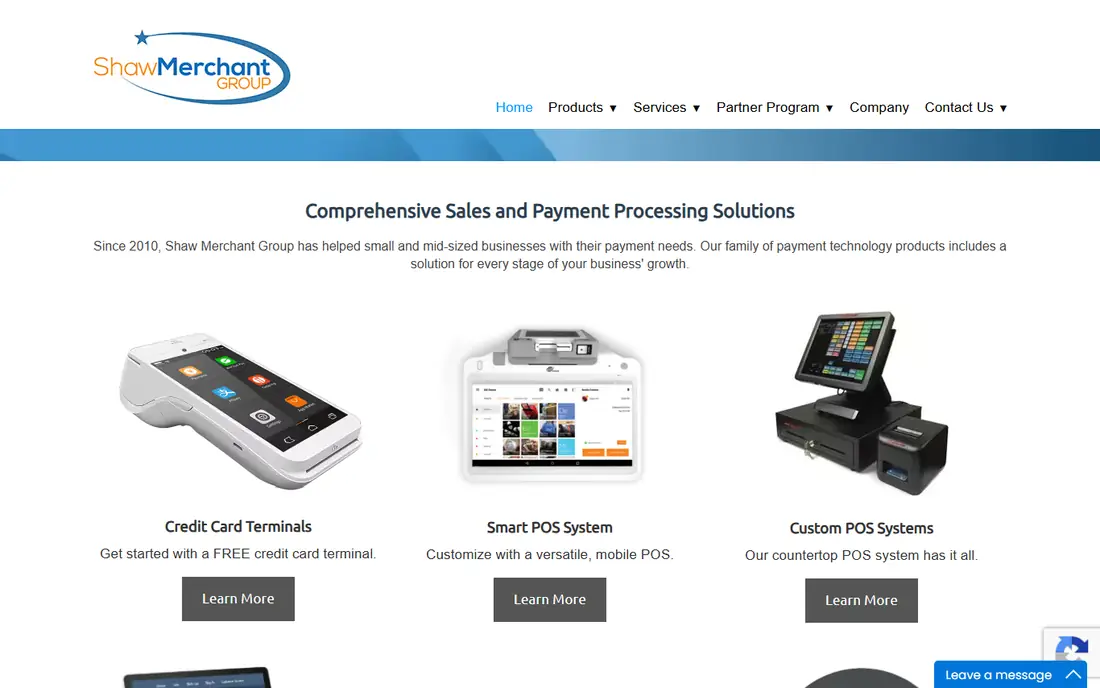
Shaw Merchant Group presents itself as an ISO agent program with access to several banks, which can help agents place merchants that do not fit one bank alone. Its product range covers terminals, POS systems and mobile readers, and its materials describe lifetime residuals for agents while merchants remain active.
As with any ISO program, the exact split, support and ownership terms depend on the agreement you sign. Ask which banks back your deals, how residuals are paid, and what marketing and training support you receive in practice, not just in brochure terms.
- Access to multiple sponsor banks
- Range of POS and terminal products
- Agent bonuses and lifetime residuals described in program materials
- Program terms depend on the specific ISO relationship
- Smaller brand recognition than national processors
Dharma Merchant Services appeals to agents who want to serve businesses that care about social and environmental impact. Its merchant base leans toward mission driven companies, nonprofits and independent businesses, which can make prospecting more focused than cold calling every storefront.
The niche is also the limit. If your local market has few values led businesses, deal flow may be slower than with a generalist program. Agents who combine Dharma with a broader program, where contracts allow, can cover more ground, but check exclusivity rules first.
- Focus on socially responsible businesses
- Agent program with training
- Clear pricing approach for merchants
- Niche focus limits some merchant types
- Smaller scale than national processors
Payline Data is known for a competitive agent program aimed at individuals and firms entering payment sales. Its processing range covers in person, online and mobile payments, which lets agents serve a mix of retail and e-commerce merchants. Training support helps newer agents learn how to price and present processing.
The main friction is transparency before you apply. Exact splits, bonuses and support levels are not published as a single rate card, so you need a direct conversation to compare it fairly. Get the residual schedule, bonus terms and portfolio rules in writing before you choose.
- Agent program with commission focus
- Range of processing solutions
- Training and support for agents
- Commission terms vary by deal
- Program details require a direct conversation
Host Merchant Services fits agents who mainly sell to small businesses. Its merchant pricing stance and support model suit owners who want clear terms without heavy sales pressure, which can help agents build trust and referrals. Small business owners often stay longer when they feel treated fairly.
Scale is the trade off. Host is smaller than national processors, so agents who need deep enterprise or high risk placement may need another partner for those deals. For a local book of cafes, salons, clinics and shops, that focus is often an advantage rather than a limit.
- Focus on small and mid sized merchants
- Transparent pricing stance for merchants
- Agent support
- Smaller processor footprint
- Product range is narrower than the largest programs
Leaders Merchant Services
Great for: Agents wanting a large program
Leaders Merchant Services runs a large agent and ISO program with a broad range of processing products. Agents can sell terminals, POS systems and gateway services to many business types, with sales tools and support to help manage a growing portfolio. That breadth suits agents who want one main partner.
The catch is variation by level. New agents, experienced agents and ISOs often have different splits and support, so a headline claim may not match your starting deal. Ask which tier you qualify for, how you move up, and what happens to residuals if your volume changes.
- Large agent program
- Broad merchant product range
- Sales tools and support
- Terms vary by agent level
- Large program support can feel less tailored
Electronic Merchant Systems
Great for: Agents wanting hardware and gateway options
Electronic Merchant Systems, often called EMS, gives agents a mix of hardware, POS and gateway options for in person and online merchants. That range helps when a prospect needs more than a simple terminal, such as a restaurant POS or an online checkout. US based support is also a practical plus for agents and merchants alike.
As with other programs, the agreement decides the real value. Residual calculation, ownership, chargeback responsibility and termination terms vary, so read them before signing. A strong product range helps only if the contract lets you keep the book you build.
- Range of terminals, POS and gateway products
- Agent program for independent sales
- US based support
- Contract terms require careful review
- Brand is less familiar to some merchants than national names
How we picked these
We compared agent and ISO programs from processors with live US merchant services in October 2026. We favored programs with published agent information, training and support, a usable product range and a residual model. We left out referral only schemes with no ongoing residual rights, since this guide is about agent programs, not one time referrals.
How to judge a merchant services agent program
Read the residual terms first
Residuals are the long term value of an agent book. Ask how the split is calculated, when it is paid, whether it changes with volume, and whether you keep residuals if you leave. A program that pays well at first but strips residuals on exit can cost far more than a slightly lower split with clear ownership.
Check training, support and placement options
New agents need pricing training, compliance basics, underwriting guidance and help with difficult deals. Ask who answers questions, how fast approvals move, and how many sponsor banks back the program. Multiple banks help when one bank declines a merchant type.
Match the program to your market
A high risk specialist, a values led processor and a generalist national program serve different merchants. Pick a program whose merchant fit matches the businesses you can actually reach, whether those are local shops, online stores or niche industries. Earnings vary with volume, retention and contract terms, and no program can guarantee income.
Frequently asked questions
What is a merchant services agent program?
A merchant services agent program lets you sell payment processing under a processor or ISO, earning commissions and ongoing residuals from merchants you sign. Agents prospect businesses, present pricing and hardware, and support merchants after boarding. The processor handles underwriting, processing and settlement.
How do agents earn money in these programs?
Agents usually earn an upfront commission or bonus plus monthly residuals, which are a share of processing revenue from their merchants. Residuals continue while merchants stay active and processing, which is why retention matters as much as new sales. Exact splits vary by program and deal.
Can I earn a guaranteed income as a payment agent?
No. Earnings vary with the number of merchants you sign, their processing volume, retention and your contract terms. No program can guarantee income, and early months often pay little while you build a book. Treat any promise of guaranteed earnings with caution.
Do I need experience to become a merchant services agent?
Many programs accept new agents and provide training, though payments knowledge, sales skill and compliance awareness help a lot. Expect to learn interchange pricing, surcharging rules, PCI compliance basics and underwriting requirements. Prior sales experience helps, but it is not always required.
What is the difference between an agent and an ISO?
An agent usually sells under an ISO or processor, while an ISO is a registered organization that can sign merchants directly and manage sub agents. ISOs have more independence and often larger splits, but also more compliance and financial responsibility. Many agents start as agents and move toward ISO status later.
Should I join one program or several?
That depends on contract exclusivity. Some programs allow multiple partnerships, while others require exclusivity or limit competing products. Check your agreement before joining a second program, and avoid signing merchants to overlapping programs in ways that breach your terms.
Sources
See where you really rank - block by block
ProMapRanker scans Google Maps across a grid of your service area. Simple monthly plans from $19, white-label on every plan.
Start freeKeep reading
 worlds best local seo company
8 Worlds Best Local SEO Companies for Map Pack Growth in 2026
Compare the worlds best local seo company options for Google Business Profile work, citations, reviews, and multi-location rankings and reporting in 2026.
Read → world's best web hosting company
World's Best Web Hosting Company in 2026
Searching for the world's best web hosting company? We compared 10 hosts on price, renewal rates, speed, and support to help you choose well today in 2026.
Read → who's got the best nanny tax services
Who's Got the Best Nanny Tax Services in 2026
We answer who's got the best nanny tax services, comparing full filing, back taxes, software, and pricing so families can handle nanny taxes correctly.
Read →