 ProMapRanker
Best Mentorship for Early-Stage Companies in 2026

Key takeaways
- Accelerators trade equity for capital, network and intensive mentoring, while free programs trade time for access.
- On-demand mentor platforms suit a specific problem this week, while cohorts suit a full company reset.
- Check the real cost before applying, including equity, fees, time and travel.
- The best mentor for your stage matters more than the most famous program name.
Quick comparison
| Pick | Great for | Pricing starts at | Free tier | |
|---|---|---|---|---|
 Y Combinator | High growth tech startups | See website | No | Visit |
 Techstars | Mentor driven accelerator programs | See website | No | Visit |
 Founder Institute | First time founders validating ideas | See website | No | Visit |
 SCORE | Free small business mentoring | Free | Yes | Visit |
 GrowthMentor | On-demand startup mentors | See website | No | Visit |
 500 Global | Global early-stage startups | See website | No | Visit |
 Antler | Pre-team and pre-idea founders | See website | No | Visit |
 Founders Network | Peer advice from fellow founders | See website | No | Visit |
The best mentorship for early-stage companies
We compared official program pages, terms, mentor models and public founder materials for programs that serve early-stage companies. The list mixes accelerators, nonprofit mentoring, on-demand platforms and peer networks, since founders need different help at idea, launch and early growth stages.
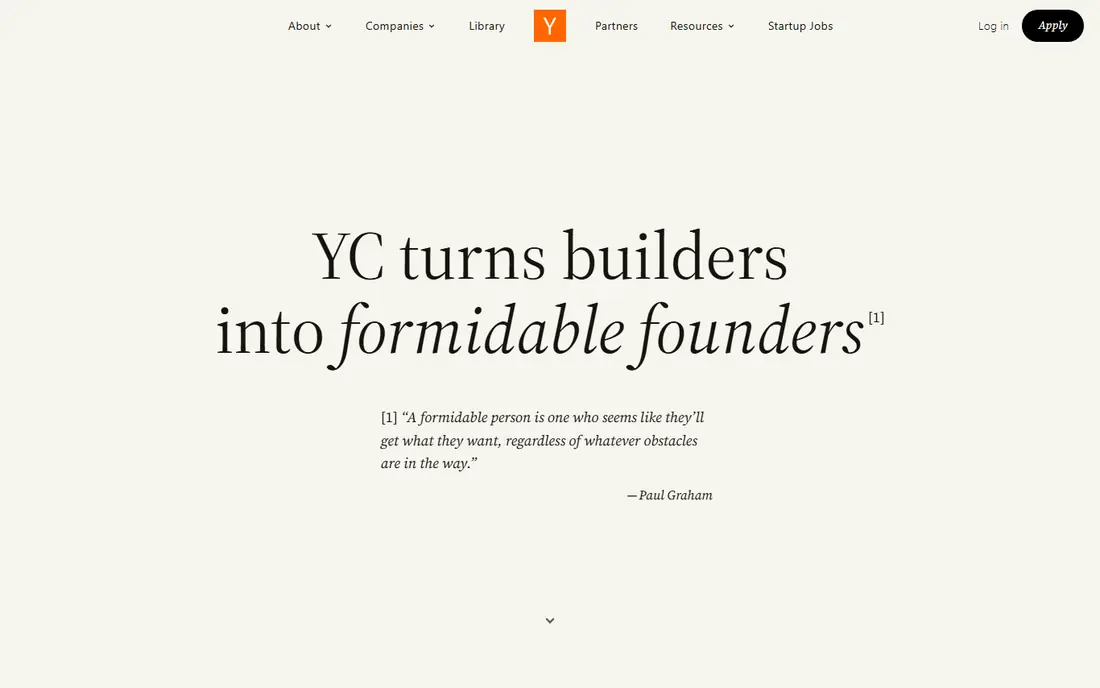
Y Combinator remains the most famous early-stage program because it pairs seed funding with intensive mentoring and a large alumni network. Accepted startups work through a structured batch, meet partners regularly, test product and growth assumptions fast, and present to investors at Demo Day. The alumni community also provides introductions, hiring help and advice long after the batch ends.
The trade-off is selectivity and cost. Y Combinator takes equity under its standard deal, and the program runs on a fixed calendar that demands full founder focus. Founders who are not ready to grow fast, or who want to keep full ownership, may prefer a free or fee based route. For a tech startup aiming for venture scale, the network alone often justifies an application.
- Very large alumni network
- Intensive group and partner mentoring
- Investor access through Demo Day
- Highly selective
- Equity based terms
- Fixed program calendar
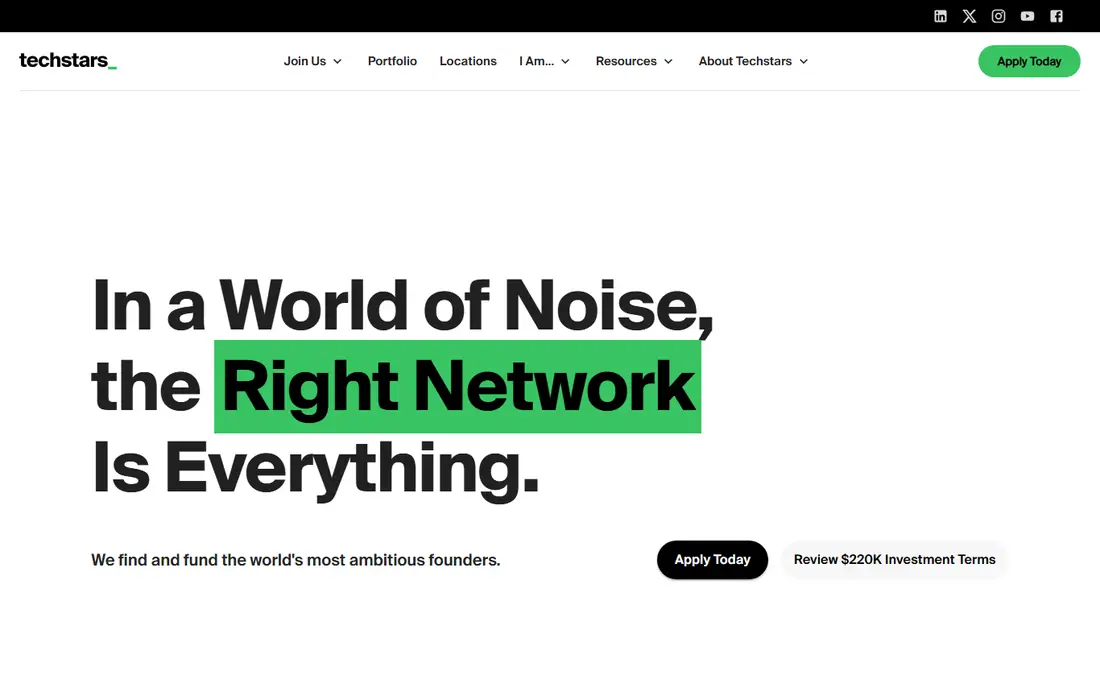
Techstars runs mentor driven accelerator programs across many cities and themes, including fintech, health tech, AI and sustainability. Startups in a program get hands on mentors, workshops, corporate introductions and a Demo Day, with a standard investment that includes equity terms. The mentor network is a core draw, since founders can tap operators, investors and domain experts beyond their own city.
The downside is variation. Program quality, mentor depth and theme fit differ by location, so applicants should research the specific program, not just the Techstars name. Equity terms also mean the program suits venture oriented startups more than lifestyle businesses. For a founder who wants structured mentoring plus a broad network, Techstars is a strong application target.
- Large mentor network
- Industry specific programs
- Corporate and investor connections
- Equity based terms
- Program fit varies by location and theme
Founder Institute helps first time founders move from idea to launch through a structured program with weekly sessions, assignments and mentor feedback. Participants test business models, build a pitch, meet potential co-founders and prepare for fundraising, with mentors drawn from local startup ecosystems. The format suits founders who want accountability and a clear sequence rather than open ended advice.
The catch is cost and workload. Founder Institute charges a course fee that varies by cohort, and some cohorts include an equity collective arrangement tied to later financing, so terms need reading before enrollment. The weekly pace also requires real time each week. For a founder with an idea but no launch plan, the structure can turn months of drifting into a focused launch effort.
- Structured idea to launch curriculum
- Weekly mentor sessions
- Global city chapters
- Fee based with equity style commitments in some cohorts
- Demanding weekly workload
SCORE is the best free starting point for most early-stage companies, especially small businesses outside venture hubs. As a nonprofit partner of the US Small Business Administration, SCORE offers free one to one mentoring from volunteers with business, finance, marketing and operations experience. Mentoring is available in person through local chapters and online, alongside workshops and templates for plans, cash flow and marketing.
The honest weakness is consistency. Volunteer mentors vary in experience and sector fit, so a founder may need to try more than one mentor to find the right match. SCORE also focuses less on venture fundraising and high growth tech scaling than accelerators do. For a founder who needs practical, free guidance on starting and running a business, SCORE should be the first call, even if an accelerator comes later.
- Free one to one mentoring
- Volunteer mentors with business experience
- Workshops and online resources
- Mentor quality varies by chapter
- Less suited to venture scale tech fundraising
GrowthMentor suits founders who do not need a full program but need the right voice on a specific problem this week. Members can browse mentors by skill, including growth, marketing, product, sales and fundraising, and book calls to work through a pricing question, a funnel problem or a hiring decision. Because it is a membership platform, it takes no equity in your company.
The downside is that value depends on mentor selection and preparation. A vague call with the wrong mentor wastes time, while a focused call with a clear question can save weeks. Membership pricing also needs checking against how often you will actually book calls. For a founder between programs, or running a bootstrapped company, GrowthMentor offers flexible help without giving up ownership.
- Book mentors for a specific problem
- No equity taken
- Flexible scheduling
- Membership cost
- Quality depends on choosing the right mentor for the topic
500 Global, formerly 500 Startups, supports early-stage startups through accelerator programs, seed investment and a global network of mentors and investors. Its programs help founders refine product, growth and fundraising plans, and its presence across many countries suits startups that plan to sell internationally from the start. Founders also gain a peer community that spans regions and sectors.
The trade-off is selectivity and terms. Programs are competitive and investment terms involve equity, so founders should compare the offer with other accelerators and with bootstrapping. Program format and focus also vary by region, so the specific cohort matters. For a startup with early traction and global ambitions, 500 Global offers a network that few regional programs can match.
- Global investor and mentor network
- Programs across many countries
- Growth and fundraising support
- Equity based terms
- Competitive selection
- Program formats vary by region
Antler is unusual because it accepts founders before they have a team or a fully formed idea. Participants join a cohort, meet potential co-founders, test ideas with mentors and advisors, and pitch for pre-seed investment. That model suits talented operators, engineers and domain experts who want to start a company but lack a co-founder or a validated concept.
The catch is that Antler takes equity under its investment terms, and the pre-seed stage means founders still face the hard work of finding product market fit after the program. It is also less useful for an existing team with traction that needs growth mentoring. For a solo founder at day zero, Antler offers a structured path to a team, an idea and first funding.
- Helps founders find co-founders before idea stage
- Pre-seed investment
- Global cohorts
- Equity based terms
- Early stage focus means less help for later scaling
Founders Network suits founders who want ongoing peer advice rather than a one off program. Members join a community of tech founders, share problems in forums and events, and get introductions to peers who have faced similar hiring, pricing and fundraising decisions. That peer lens is valuable because fellow founders often give blunt, practical answers that formal mentors soften.
The weakness is scope. Peer advice complements, but does not replace, expert mentoring on legal, financial or deep technical questions, and it does not provide funding. Membership is paid, so founders should check chapter activity in their area before joining. For a founder who wants a lasting community after an accelerator or alongside SCORE mentoring, Founders Network fills a useful gap.
- Ongoing peer community
- Advice from founders at a similar stage
- Events and introductions
- Membership cost
- Peer advice is not a substitute for expert or investor mentoring
How we picked these
We compared official program pages, published terms where available, mentor models and public founder materials, and we favored programs that are currently accepting or actively running cohorts and mentoring. We treated accelerators, nonprofit mentoring, on-demand platforms and peer networks as different models, not direct substitutes. Where terms vary by cohort, we marked pricing as See website rather than stating a single figure as universal.
What to check before you apply
Match the model to your stage
Idea stage founders need validation, co-founder help and a launch plan, while post launch founders need growth, hiring and fundraising help. A famous accelerator can be the wrong choice at idea stage, and a free mentor can be the wrong choice when you need investor introductions fast. Write down your next three decisions, then pick the program whose mentors have solved those decisions before.
Read equity, fees and time terms carefully
Accelerators take equity, some programs charge fees, and all demand time. Compare the total cost, including travel, program length and follow-on obligations, before you apply. Ask what happens if you leave early, what support continues after the program, and whether mentors are paid or volunteer, since that affects follow-up.
Prepare for mentoring to work
Mentors help most when you bring a clear question, recent numbers and a decision you need to make. Prepare a short brief before each session, take notes, and follow up on actions before the next meeting. A founder who treats mentoring as homework, not just conversation, gets far more value from every program on this list.
Frequently asked questions
Is an accelerator worth giving up equity?
It can be, if the capital, network and mentoring clearly speed up a venture scale business more than bootstrapping would. Compare the equity cost with the value of introductions, hiring help and fundraising access for your specific company. For a small business that does not plan venture fundraising, free or fee based mentoring usually fits better.
What is the best free mentorship for early-stage companies?
SCORE is the best free starting point for most US small businesses, thanks to free one to one mentoring and local chapters. Founders can also use public workshops, university programs and community groups at no cost. Free help works best when you bring specific questions and follow through on advice.
How do I find a good mentor?
Start with your specific problem, then look for a mentor who has solved it in a similar company or market. Check their background, ask for a short trial conversation, and judge them on useful questions and honest pushback, not flattery. One strong mentor for pricing beats five general advisors.
Can I join more than one program?
Yes, many founders combine SCORE mentoring with an on-demand platform or a peer network, and later apply to an accelerator. Avoid joining two intensive cohorts at once, since each demands heavy time. Sequence programs so each one solves the next stage of your company.
Do I need a mentor if I already have co-founders?
Yes, co-founders share your blind spots, while outside mentors bring experience from other companies and markets. A mentor can challenge assumptions, open introductions and help with decisions where the founding team disagrees. Even experienced founders benefit from a trusted outside voice.
Sources
See where you really rank - block by block
ProMapRanker scans Google Maps across a grid of your service area. Simple monthly plans from $19, white-label on every plan.
Start freeKeep reading
 worlds best local seo company
8 Worlds Best Local SEO Companies for Map Pack Growth in 2026
Compare the worlds best local seo company options for Google Business Profile work, citations, reviews, and multi-location rankings and reporting in 2026.
Read → world's best web hosting company
World's Best Web Hosting Company in 2026
Searching for the world's best web hosting company? We compared 10 hosts on price, renewal rates, speed, and support to help you choose well today in 2026.
Read → who's got the best nanny tax services
Who's Got the Best Nanny Tax Services in 2026
We answer who's got the best nanny tax services, comparing full filing, back taxes, software, and pricing so families can handle nanny taxes correctly.
Read →